Executive Summary: The Impending Deadline
The U.S. Department of Defense (DoD) is currently embroiled in a high-stakes financial sprint, facing a September 30 deadline that threatens to strip billions from its coffers. At the heart of the crisis is a $152 billion pot of reconciliation funds—a massive budgetary allocation intended to bolster military readiness, technological modernization, and industrial base expansion.
Despite the long-term nature of these investments, a looming fiscal cliff requires the Pentagon to obligate the vast majority of these funds by the close of the current fiscal year. As of late April, the department had successfully placed only $26 billion on contract, leaving a staggering $126 billion uncommitted. If the DoD fails to accelerate its procurement and contracting processes, it faces an automatic 8.3 percent cut to the remaining balance, a penalty that could derail critical defense initiatives.
Chronology: How the Pentagon Found Itself in a Fiscal Bottleneck
The Legislative Genesis
The funds in question originated from legislative reconciliation processes designed to infuse the defense sector with capital. Unlike standard annual appropriations, which follow a predictable, albeit slow, cycle, these reconciliation funds came with specific, stringent expenditure timelines. The goal was to jumpstart projects ranging from munitions manufacturing to next-generation sensor development.
The Slow Start (Q1–Q2 2025)
The early months of 2025 were characterized by bureaucratic friction. Program offices, accustomed to the standard DoD procurement timeline—which often spans years rather than months—struggled to align their internal requirements with the accelerated pace necessitated by the reconciliation mandates. While the intent was to modernize, the administrative reality involved exhaustive vetting, market research, and legal compliance checks that stalled initial contract awards.
The Spring Wake-Up Call
By April 2025, the data became impossible to ignore. A review of obligation rates revealed that the Pentagon had moved through less than 20 percent of its total allocation. The realization that $126 billion remained unspent with only five months left in the fiscal year triggered a department-wide scramble. The Pentagon’s leadership began issuing urgent guidance to program offices, essentially shifting the department into "wartime" procurement mode to prevent the 8.3 percent sequestration-like penalty.
Supporting Data: The Arithmetic of Obligation
The sheer scale of the challenge can be broken down into raw, daunting numbers. To avoid the penalty, the DoD must now obligate an average of $25.2 billion per month between May and September. This is a massive departure from the previous average of roughly $6.5 billion per month.
Breakdown of the Funding Gap:
- Total Reconciliation Pot: $152 Billion
- Obligated as of April 30: $26 Billion
- Remaining Balance: $126 Billion
- Time Remaining: 5 Months
- Required Monthly Velocity: ~$25.2 Billion
This acceleration requirement puts immense pressure on the Defense Contract Management Agency (DCMA) and individual program contracting officers. The "burn rate" required to clear these funds is historically unprecedented for this specific type of funding, raising concerns about the quality of the contracts being signed. When procurement is forced to move at such a rapid pace, the potential for oversight gaps, inflated costs, and suboptimal vendor selection increases exponentially.
Official Responses and Strategic Guidance
In response to the mounting pressure, the Office of the Under Secretary of Defense (Comptroller) has circulated internal guidance to all program offices. The directive emphasizes a shift in priorities: "Speed without sacrificing auditability."
The Pentagon’s "Spend-Down" Strategy
The Department’s strategy is twofold:
- Prioritizing "Shelf-Ready" Contracts: The DoD is focusing on existing indefinite-delivery/indefinite-quantity (IDIQ) contracts. By utilizing pre-vetted vendors and established price structures, the Pentagon can obligate large sums of money without the time-consuming process of initiating new competitive solicitations.
- Increased Oversight: To mitigate the risks of rapid spending, the Pentagon has established a "War Room" within the Comptroller’s office. This task force monitors daily obligation rates and provides real-time intervention for programs that are lagging behind their projected spend targets.
A senior Pentagon spokesperson noted in a recent briefing, "We understand the optics of this. We are not spending for the sake of spending. We are accelerating the procurement of assets that are already in the pipeline but were stalled due to administrative backlogs. Our goal is to ensure the taxpayer gets the capability they paid for, rather than losing those funds to an arbitrary fiscal cut."
Implications: Strategic, Economic, and Operational
Operational Readiness
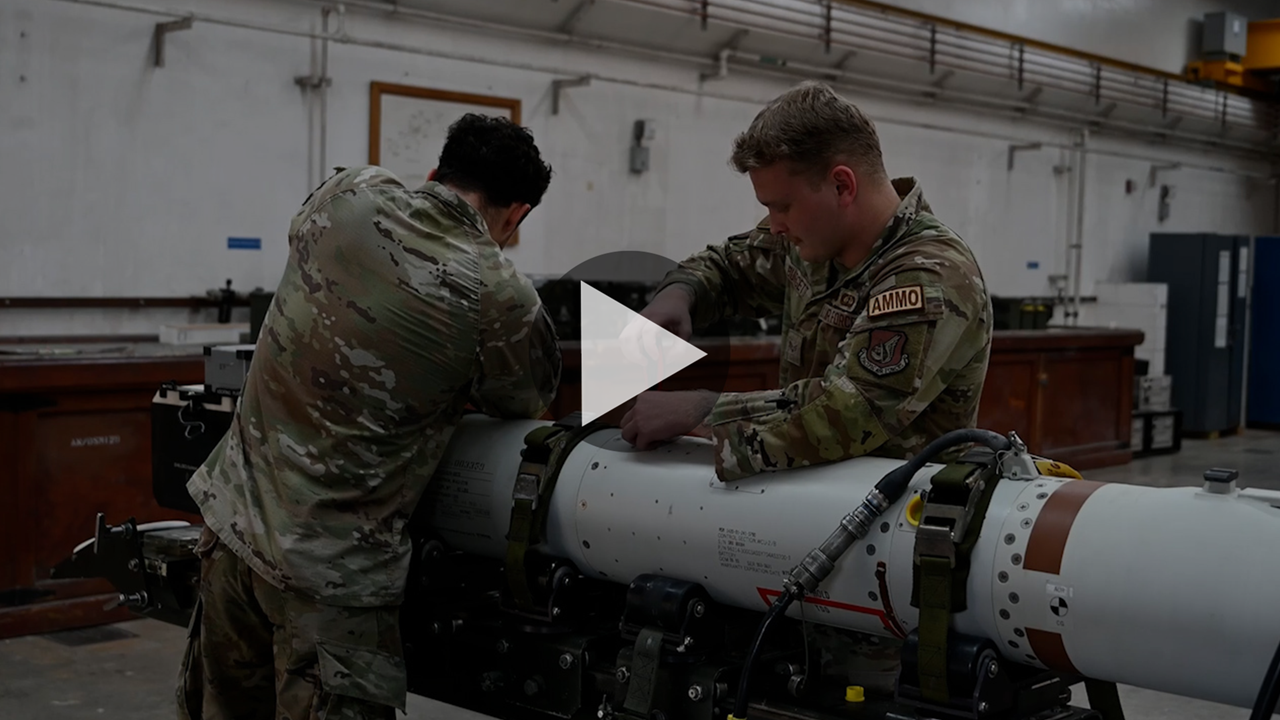
The implications of losing 8.3 percent of the $126 billion are significant. A loss of over $10 billion would not just be an accounting footnote; it would represent a tangible loss in military capability. Munitions stockpiles, which have been severely depleted by recent geopolitical conflicts, are a primary target for these funds. A reduction in budget would necessitate a slowdown in the production of precision-guided missiles and long-range artillery, potentially leaving the U.S. vulnerable during a period of heightened global instability.
Industrial Base Impact
The U.S. defense industrial base is currently reliant on the infusion of these reconciliation funds to scale up production capacity. Many smaller, mid-tier contractors have geared their manufacturing lines to meet the expected demand from these DoD contracts. If the Pentagon fails to sign these contracts, these companies face a "valley of death" where they have invested in capacity they cannot fill. This could lead to layoffs, bankruptcy, or the exit of critical small-business suppliers from the defense ecosystem.
The "Use-It-or-Lose-It" Trap
Economists have long criticized the "use-it-or-lose-it" culture of federal spending, noting that it encourages waste in the final quarter of the fiscal year. By forcing the Pentagon to spend $126 billion in five months, the legislative structure behind these funds is inadvertently rewarding inefficiencies. There is a risk that the Pentagon may prioritize "easy" spend—such as bulk purchases of off-the-shelf items—over the more difficult but necessary long-term R&D investments that require careful planning and oversight.
Geopolitical Signaling
Finally, there is the matter of signaling. Adversaries of the United States closely monitor the U.S. defense budget. A failure to execute these funds effectively could be perceived as a sign of administrative paralysis or a lack of political commitment to modernization. Conversely, a successful "sprint" that results in the rapid deployment of new technologies and supply chain hardening could serve as a powerful deterrent.
The Road Ahead: The Final 120 Days
As the clock ticks toward the September 30 deadline, the eyes of Congress and the defense industry remain fixed on the Pentagon’s contracting portals. The next four months will serve as a stress test for the Department’s procurement bureaucracy.
Can the Pentagon modernize its internal processes to meet the demands of modern warfare? Or will this $126 billion saga be remembered as a classic example of bureaucratic failure in the face of legislative constraints?
The guidance issued to program offices is clear: the money must move. Whether it moves effectively and transparently, or simply as a desperate reaction to a looming deadline, remains to be seen. One thing is certain: in the corridors of the Pentagon, the summer of 2025 will be defined by the sound of ink hitting paper, as the department fights to secure its financial future one contract at a time.
For those following the fiscal health of the nation’s defense, the coming weeks are not merely about budget spreadsheets—they are about the strategic capacity of the United States to maintain its technological edge in an increasingly competitive world. As the Pentagon works to turn these dollars into capability, the industry and the public will be watching closely to see if the "Big Spend" results in true readiness or just another cautionary tale of fiscal mismanagement.