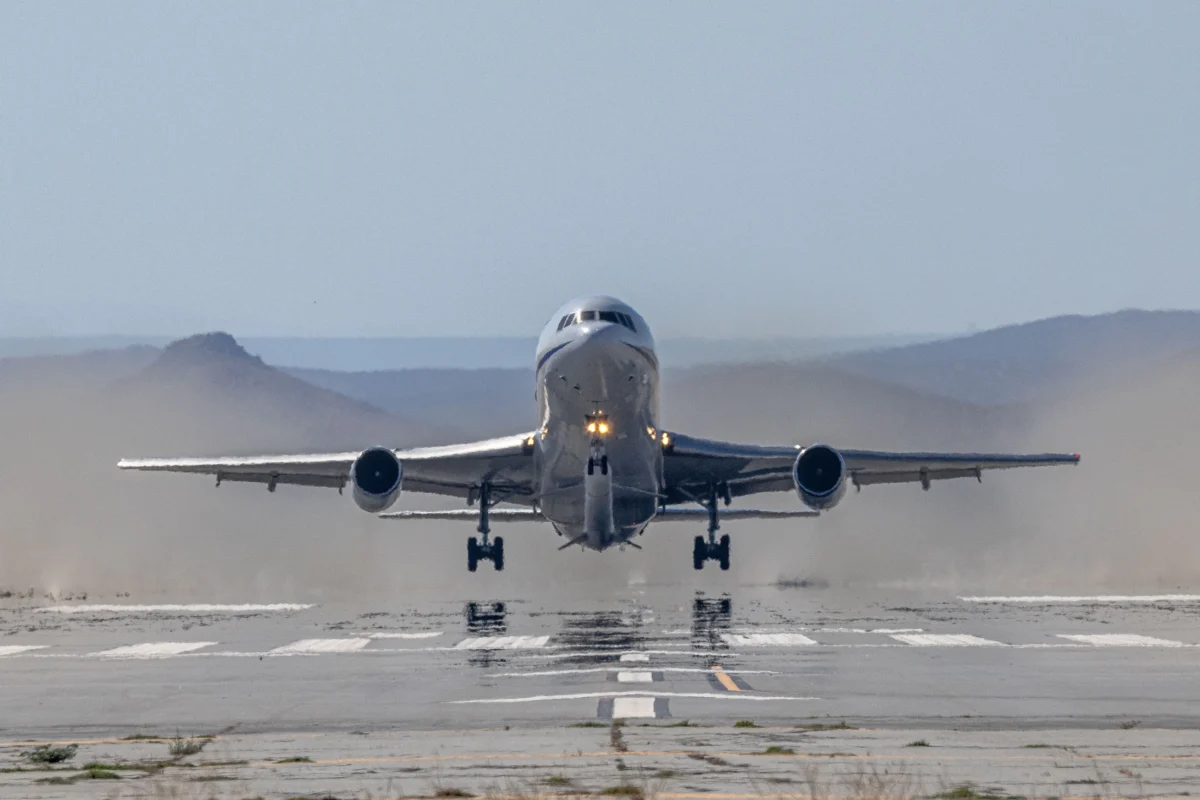
WASHINGTON — In what may be the final chapter for one of commercial spaceflight’s most historic launch vehicles, a Northrop Grumman Pegasus XL rocket successfully took to the skies in the early hours of July 3. Its critical payload: a commercial satellite servicing spacecraft designed to rescue a legendary NASA astrophysics observatory from a premature, fiery demise.
The air-launched rocket, dropped from its L-1011 "Stargazer" carrier aircraft over the Atlantic Ocean, successfully deployed the 425-kilogram Link spacecraft for startup Katalyst Space. The mission represents a bold, high-risk gamble by NASA to extend the life of the Neil Gehrels Swift Observatory, a cornerstone of global gamma-ray burst astrophysics. If successful, the mission will not only save the aging telescope but also validate commercial satellite-servicing technologies that could reshape the economics of low Earth orbit (LEO).
Main Facts
The launch occurred at 4:36 a.m. Eastern on July 3, following three days of frustrating delays caused by uncooperative weather and minor technical anomalies on the ground. The Pegasus XL rocket was released from the belly of the L-1011 carrier aircraft at an altitude of roughly 39,000 feet. After a brief free-fall, the rocket’s first-stage solid motor ignited, propelling the vehicle into space.
Approximately 13 minutes after release, the rocket successfully injected the Link spacecraft into its target low Earth orbit.
+-------------------------------------------------------------+
|                     LAUNCH PROFILE SUMMARY                  |
+-------------------+-----------------------------------------+
| Launch Vehicle    | Northrop Grumman Pegasus XL             |
| Carrier Aircraft  | L-1011 "Stargazer"                      |
| Release Time      | July 3, 4:36 a.m. Eastern               |
| Payload           | Link Spacecraft (Katalyst Space)        |
| Payload Mass      | 425 Kilograms                           |
| Target Orbit      | Low Earth Orbit (approx. 360 km)        |
| Target Inclination| ~21 Degrees                             |
+-------------------+-----------------------------------------+
Approximately seven hours after the launch, NASA confirmed that ground controllers had successfully established two-way communications with the Link spacecraft. While the agency declined to provide immediate, detailed telemetry data on the health of the satellite, the initial contact marked the successful completion of the launch phase of the mission.
The primary objective of the Link spacecraft is to rendezvous with, grapple, and reboost the Neil Gehrels Swift Observatory (Swift). Swift is currently in a rapidly decaying orbit at an altitude of approximately 360 kilometers. Without intervention, atmospheric drag is projected to drag the observatory down to a destructive atmospheric reentry late this year or in early 2027. Link will attempt to raise Swift’s orbit to a safe altitude of 550 to 600 kilometers, extending its operational lifespan by potentially another decade.
Chronology of the Mission
The rapid development and execution of the Swift reboost mission represent an unusually fast turnaround for a NASA astrophysics project, which typically operates on timelines spanning several years, if not decades.
+-----------------------------------------------------------------------------+
|                          MISSION TIMELINE CHRONOLOGY                        |
+-----------------------+-----------------------------------------------------+
| Date                  | Milestone                                           |
+-----------------------+-----------------------------------------------------+
| September (Previous Yr| NASA awards $30 million contract to Katalyst Space  |
| November (Previous Yr)| Katalyst Space selects Pegasus XL launch vehicle    |
| June 17               | Prelaunch press briefing outlines mission risks     |
| June 30 - July 2      | Consecutive launch delays due to weather & tech     |
| July 3, 4:36 AM EDT   | Successful Pegasus XL drop and ignition             |
| July 3, 4:49 AM EDT   | Link spacecraft successfully injected into LEO      |
| July 3, ~11:40 AM EDT | Ground stations establish first contact with Link   |
| Mid-July (Est.)       | Completion of 2-week in-orbit checkouts             |
| Late July (Est.)      | Rendezvous, proximity operations, and Swift survey  |
| August (Est.)         | Grapple attempt and initiation of 3-month reboost   |
| Late November (Est.)  | Reboost complete; Link deorbits; Swift resumes ops  |
+-----------------------+-----------------------------------------------------+
Phase 1: Rapid Development (September to June)
The mission officially began in September of last year, when NASA awarded Katalyst Space a $30 million contract. Katalyst did not build the Link spacecraft from scratch; instead, the company pivoted. They repurposed an existing low Earth orbit technology demonstration vehicle that was already under development to showcase their proprietary satellite servicing technologies. By adapting this platform, Katalyst was able to deliver a flight-ready spacecraft within nine months of the contract award.
Phase 2: Launch and Immediate Checkouts (July)
Following the July 3 launch, the mission entered a critical two-week commissioning phase. During this time, Katalyst engineers are conducting comprehensive in-orbit checkouts of Link’s subsystems, including its power generation, communications, attitude control, and primary propulsion systems.
Phase 3: Proximity Operations and Survey (Late July)
Once commissioning is complete, Link will begin a slow, cautious approach to the Swift observatory. This phase is expected to take two to three weeks. Link will position itself near Swift to conduct a detailed, multi-angle visual and sensor survey of the telescope. Because Swift was never designed to be serviced or captured in orbit, Link’s operators must inspect the aging hardware to find the safest, most secure points for mechanical grappling.
Phase 4: Capture and Reboost (August to November)
Following the survey, Link will attempt to grapple Swift using its three robotic arms. If successful, Link will activate its highly efficient ion engines to slowly raise the combined stack’s orbit from 360 kilometers to between 550 and 600 kilometers. This slow-push reboost process is expected to take approximately three months.
Phase 5: Departure and Resumed Operations (Late November)
Once the target altitude is achieved, Link will release its grasp on Swift. The servicing vehicle will use its remaining propellant to lower its own orbit, ensuring a rapid, safe burn-up in the Earth’s atmosphere. Swift, now safely positioned in a higher orbit with significantly reduced atmospheric drag, will reboot its scientific instruments and resume its mission to study the high-energy universe.
Supporting Data and Technical Specifications
The Swift reboost mission relies on a delicate interplay of orbital mechanics, specialized launch infrastructure, and cutting-edge robotic systems.
The Decaying Orbit of Swift
Launched in November 2004, the Neil Gehrels Swift Observatory has spent nearly two decades detecting and analyzing gamma-ray bursts (GRBs)—the most powerful explosions in the universe. However, because it resides in a low Earth orbit, it is subject to the thin upper remnants of Earth’s atmosphere.
Solar activity heats and expands the atmosphere, increasing drag on satellites in low orbits. Swift’s orbit has decayed to approximately 360 kilometers. If its altitude drops below 300 kilometers, the atmospheric density becomes too high for a low-thrust servicing vehicle like Link to safely maneuver or counteract the drag, rendering any rescue mission impossible. This created a hard deadline of October for the launch and rendezvous.
       Altitude (km)
          ^
      600 |========================= (Target Orbit: 550-600 km)
          |
          |
      400 |
          |   * (Current Orbit: ~360 km)
          |
      300 |------------------------ (Critical Rescue Threshold: 300 km)
          |
          |       v (Decay Path without Reboost)
        0 +-------------------------> Time
The Link Servicing Vehicle
The Link spacecraft, designed by Katalyst Space, is a 425-kilogram servicing platform. Its key technical characteristics include:
- Robotic Arms: Link is equipped with three highly articulable robotic arms. These arms do not rely on standard docking collars (which Swift lacks). Instead, they are designed to adaptively clamp onto structural elements of the observatory, such as its launch adapter ring or structural struts.
- Propulsion: Link utilizes a high-efficiency electric (ion) propulsion system. While ion engines produce very low thrust compared to chemical rockets, they are incredibly fuel-efficient, allowing a 425-kilogram satellite to perform the massive delta-V (velocity change) maneuver required to raise the orbit of the much larger Swift observatory.
- Autonomous Guidance: To safely approach an "unprepared" satellite, Link utilizes advanced LiDAR and optical cameras paired with real-time, onboard relative navigation software.
The Pegasus XL Launch Vehicle
The selection of the Pegasus XL rocket was dictated by the unique orbital parameters of the Swift observatory. Swift resides in a low-inclination orbit of approximately 21 degrees. Launching directly into such a low inclination from standard U.S. East Coast launch sites (like Cape Canaveral) is highly inefficient for traditional vertical-launch rockets, as it requires energy-intensive "dog-leg" maneuvers to avoid flying over populated landmasses.
The air-launched Pegasus XL solves this problem. Because it is carried aloft by the L-1011 "Stargazer" aircraft, the launch platform can fly to optimal coordinates over the ocean before releasing the rocket, allowing a direct injection into the 21-degree inclination orbit.
+-------------------------------------------------------------+
|               PEGASUS XL HISTORICAL CONTEXT                 |
+-------------------+-----------------------------------------+
| First Flight      | 1990                                    |
| Developer         | Orbital Sciences Corp. (now Northrop)   |
| Peak Activity     | 5-6 launches per year (1990s)           |
| Recent Frequency  | Only 6 flights in the last 15 years     |
| Prior Launch      | June 2021 (U.S. Space Force mission)    |
| Status            | No future flights currently scheduled   |
+-------------------+-----------------------------------------+
To secure this flight on what is widely considered the penultimate or final Pegasus rocket, Katalyst Space took advantage of a surplus vehicle. Northrop Grumman had a Pegasus XL rocket sitting in storage, originally built for a customer who later cancelled their mission. Northrop offered this vehicle to Katalyst at a significantly reduced cost, making the $30 million mission budget financially viable.
Official Responses and Stakeholder Perspectives
The launch has drawn significant commentary from NASA leadership, the private aerospace sector, and the scientific community, highlighting both the extreme risks and the high rewards associated with the mission.

NASA’s Perspective: "High-Risk, High-Reward"
NASA officials have been candid about the experimental nature of the mission. Shawn Domagal-Goldman, director of NASA’s astrophysics division, emphasized that the decision to fund the rescue was based entirely on the unique scientific value of the Swift observatory.
"This is an observatory with unique capabilities for astrophysics. So we decided, yeah, we want to go save this one this time because of how special it is."
— Shawn Domagal-Goldman, Director of NASA’s Astrophysics Division
However, Domagal-Goldman also clarified that NASA does not intend to make satellite reboosting a standard policy for all decaying assets. The agency wants to avoid setting a precedent where every orbital asset is expected to be saved, regardless of cost or scientific return.
Katalyst Space: Aggressive Timelines and Cooperative Partners
Kieran Wilson, the principal investigator for Link at Katalyst Space, highlighted the extraordinary engineering effort required to bring the spacecraft from contract to launchpad in under nine months.
"This is an absolutely unprecedented development timeline. We’re confident that as long as we have a spacecraft that can function at a fundamental level, that gives us the freedom and flexibility to work through any issues that we find during rendezvous and the more challenging dynamical operation."
— Kieran Wilson, Principal Investigator for Link at Katalyst Space
Wilson also shed light on the mechanics of the upcoming rendezvous, describing Swift as an "unprepared but cooperative" target. While Swift does not have docking fixtures, its ground control team will actively coordinate with Link’s operations team. Swift will perform programmed attitude adjustments to present its best grapple points to Link as the servicing vehicle closes the distance.
Northrop Grumman: Defending the Air-Launch Legacy
Despite speculation that this launch marks the retirement of the Pegasus program, Northrop Grumman executives expressed hope that the successful flight would revitalize interest in air-launched systems. Wes Collier, vice president of launch systems at Northrop Grumman, emphasized the system’s rapid-response capabilities.
"Ready for launch in under eight months, Pegasus is the go-to choice for missions that need to get off the ground now. Its air-launch design and proven Orion motors mean payloads can get to orbits that are harder for other rockets to reach. We certainly are open to follow-on contracts or new opportunities for Pegasus."
— Wes Collier, VP of Launch Systems at Northrop Grumman
Broader Implications for Space Sustainability and Launch Infrastructure
The successful launch of the Link spacecraft carries profound implications that extend far beyond the immediate survival of the Swift observatory.
A New Era for Satellite Servicing
Historically, satellites have been treated as disposable assets. Once their fuel is depleted or their orbit decays, they are abandoned to burn up in the atmosphere or join the growing cloud of space debris. The Swift reboost mission serves as a critical test case for a different model: the circular space economy.
If Katalyst Space successfully executes the rendezvous and reboost of an "unprepared" satellite, it will prove that existing space assets can be serviced, repaired, and kept operational without the need for expensive, built-in docking ports. This could trigger a wave of commercial interest in life-extension services for valuable communications, weather, and military satellites currently in LEO and geostationary orbit (GEO).
The Fate of the Hubble Space Telescope
The most immediate beneficiary of a successful Swift reboost could be the Hubble Space Telescope. Like Swift, Hubble’s orbit is slowly decaying. The legendary telescope is currently projected to reenter the Earth’s atmosphere sometime in the mid-to-late 2030s.
+-----------------------------------------------------------------------------+
|                     REBOOST COMPARISON: SWIFT VS. HUBBLE                    |
+-------------------+---------------------------+-----------------------------+
| Metric            | Swift Observatory         | Hubble Space Telescope      |
+-------------------+---------------------------+-----------------------------+
| Mass              | ~1,500 kg                 | ~11,100 kg                  |
| Current Altitude  | ~360 km                   | ~515 km                     |
| Est. Reentry Date | Late 2026 / Early 2027    | Mid-to-late 2030s           |
| Servicing History | Never serviced            | Serviced 5 times (Shuttle)  |
| Target Reboost    | Link (Katalyst)           | Proposed Commercial Mission |
+-------------------+---------------------------+-----------------------------+
NASA has previously explored proposals for a commercial reboost of Hubble. Shawn Domagal-Goldman indicated that NASA remains highly interested in a Hubble servicing mission, provided the operational costs can be kept low. A success for Katalyst’s Link mission would provide NASA with the operational data and confidence needed to greenlight a similar, albeit much larger, rescue mission for Hubble.
The Sunset of Pegasus and the Air-Launch Paradigm
For the Pegasus rocket, the Link mission is a poignant moment. As the world’s first privately developed space launch vehicle, Pegasus revolutionized the industry when it debuted in 1990. It demonstrated that commercial companies could reliably build and operate orbital class rockets.
However, the launch landscape has shifted dramatically. The rise of highly efficient, vertical-takeoff rockets—most notably SpaceX’s Falcon 9—has commoditized space launch. Falcon 9’s mass-rideshare programs offer launch costs per kilogram that Pegasus, with its complex air-launch logistics and solid-fuel motors, simply cannot match.
While Northrop Grumman maintains that Pegasus remains an active system, the lack of future manifest flights suggests that the July 3 launch was likely the swan song for this pioneering rocket. If this is indeed the final flight, the Pegasus XL has finished its career exactly as it began: pushing the boundaries of what is possible in low Earth orbit, leaving behind a legacy of innovation that paved the way for the modern commercial space age.