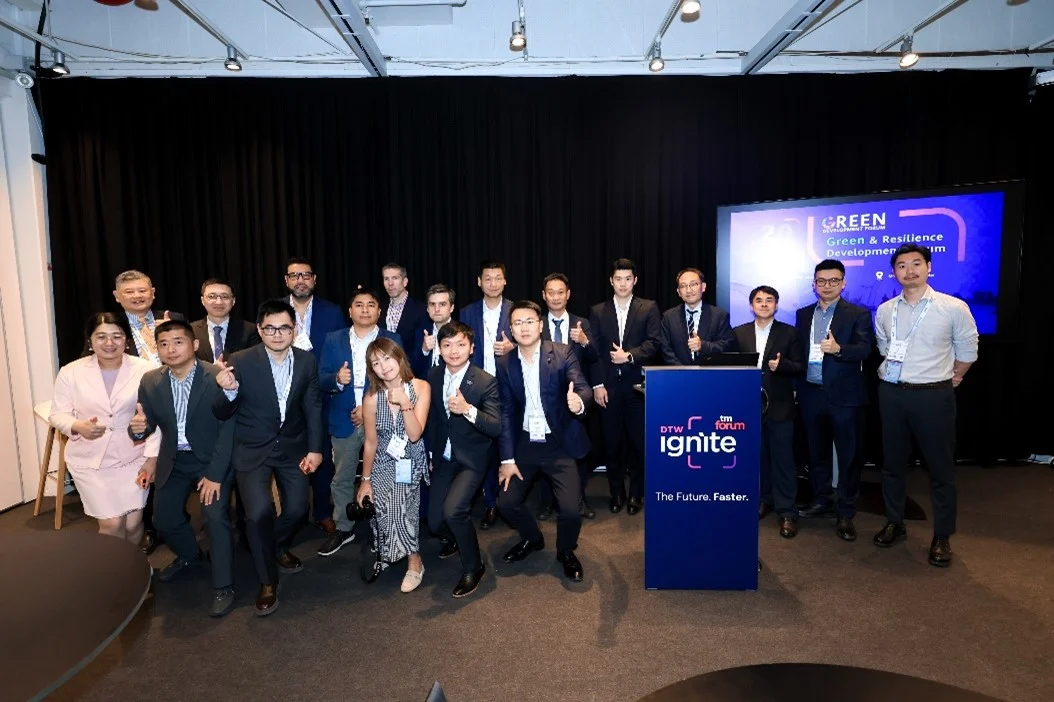
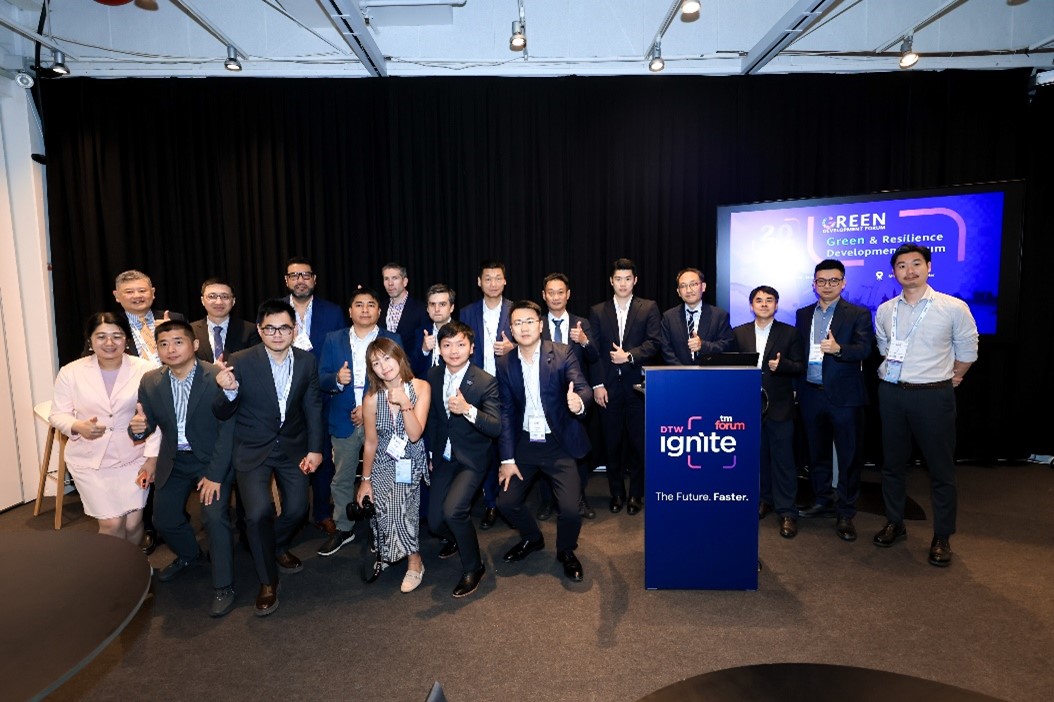
[Copenhagen, Denmark, June 24, 2026] — As the telecommunications industry grapples with the dual pressures of exponential data growth and the urgent mandate for carbon neutrality, a transformative blueprint for the next decade of infrastructure development has emerged. At the 5th Green & Resilience Development Forum, hosted at Digital Transformation World (DTW) 26, global industry leaders—led by Huawei in partnership with the TM Forum and GSMA Intelligence—converged to signal a critical evolution: the transition from passive energy conservation to active, AI-driven network intelligence.
The event, which brought together policymakers, network operators, and technology architects, solidified a new industry consensus: green energy and infrastructure resilience are no longer competing interests or optional upgrades. Instead, they are the "dual engines" that will drive the communications sector toward the 2030 zero-carbon horizon.
The Strategic Shift: Green and Resilience as Dual Engines
The forum opened with a keynote from Tim Niu, President of Huawei’s Network Consulting and System Integration Department. Setting the stage for the discussions, Niu framed the current technological era under the theme: "AI-Driven Green & Resilience: New Blueprint for Zero-Carbon and Reliable Network Architecture."
Niu articulated a stark reality for modern operators: "Green networks are no longer a ‘nice-to-have’ or a CSR initiative; they are an operational essential. Resilience serves as the baseline for a sustainable network, while AI acts as the necessary accelerator to reach our 2030 goals."
Huawei’s strategic vision focuses on two primary pillars: the Green Network Index (GNI) standard and the Hedera architecture. According to Niu, the objective is to build infrastructure that is not only low-carbon and measurable but also resilient, verifiable, and inherently evolvable. By weaving AI into the fabric of network management, operators can transform their infrastructure from static, power-hungry hardware into dynamic, energy-aware ecosystems.
Chronology of the Green Transition: From Compliance to Strategy
The trajectory of the green movement in telecommunications has evolved significantly over the last decade. Early initiatives were largely driven by regulatory compliance and cost-cutting measures. However, as the 2026 forum highlighted, the industry has entered a phase of "Strategic Integration."
- The Foundation (2015–2019): Early efforts focused on incremental hardware efficiency—replacing legacy components with more energy-efficient silicon and optimizing power supply units.
- The Measurement Phase (2020–2024): The industry began to standardize how energy efficiency was calculated, leading to the birth of the Green Network Index (GNI). This allowed operators to benchmark their progress against global peers.
- The Intelligent Era (2025–Present): With the integration of AI and machine learning, the industry is moving toward autonomous network optimization. AI agents now predict traffic patterns and adjust power consumption in real-time, effectively eliminating energy waste at the source.
Supporting Data: The Case for AI-Driven Efficiency
The forum provided concrete evidence that the investment in green technology is yielding tangible financial and environmental returns. Marc Einstein, Director of Research at Counterpoint Research, presented findings that debunk the myth that increasing network capacity must inevitably lead to higher carbon footprints.
Key Performance Indicators (KPIs) of Success:
- Energy Savings at Scale: AI-driven optimization, as reported by Counterpoint, has already achieved annual energy savings exceeding 4 billion kWh globally.
- The Telefónica Benchmark: A decade-long case study of Telefónica provided a compelling look at successful decoupling. While the operator saw data traffic surge by 1,200% since 2015, total network energy consumption actually fell by 12%. Most impressively, the energy density ratio—the amount of energy required to transmit a unit of data—dropped by 92%.
- Operational Outperformance: David Yu, General Manager of Huawei’s Green Resilience Target Network Solution, reported that current deployments utilizing AI-driven digital twins and advanced data governance are performing over 30% ahead of traditional industry benchmarks.
These figures represent more than just internal efficiency; they underscore the growing role of telecommunications networks as the "green backbone" of the digital economy.
Official Perspectives: Industry Leaders Weigh In
The GSMA Intelligence Report
Peter Jarich, Head of GSMA Intelligence, unveiled the second round of the Green Network Index (GNI) findings. This iteration of the GNI is significantly more granular, covering entire network ecosystems, individual network segments, and specific base stations. With over 20 global mobile and fixed-line operators now participating, the GNI has moved from a conceptual framework to an actionable digital platform. This platform allows operators to compare their energy performance against global standards, fostering a culture of transparency and continuous improvement.
HKT’s Integrated Approach
Lloyd Chan, Vice President of Strategic Transformation at HKT, shared the operator’s experience in balancing modernization with resilience. For HKT, the challenge was threefold: integrating green practices, maintaining robust cyber resilience, and ensuring AI-readiness. By modernizing legacy power systems and implementing a resilient architecture design, HKT has not only lowered its OPEX but has also built the capacity to support the high-compute demands of the AI era. "Network modernization is not just about speed," Chan noted. "It is about creating a foundation that supports the complex, emerging application requirements of our business and residential customers."
Technological Innovation: The Role of Digital Twins and Hedera
A significant portion of the forum was dedicated to the "how-to" of network transformation. David Yu of Huawei identified three critical industry stressors: the escalating impact of climate change on infrastructure, rising OPEX due to energy costs, and the "legacy trap"—the presence of inefficient, outdated equipment that remains difficult to replace.
The solution, according to Yu, lies in the Hedera Architecture. By leveraging digital twin technology, operators can create a virtual replica of their network, allowing them to simulate the impact of energy-saving configurations before deploying them in the physical world.
Furthermore, the transition of traditional, power-intensive wireless base stations into "Green Smart Sites" is a core focus. By converting legacy equipment rooms into edge data centers, operators can leverage local computing power to reduce latency while simultaneously optimizing energy usage across mobile, home, and business scenarios. This architectural shift ensures that the network is not just a pipe for data, but a smart, adaptive utility.
Implications: The Path to 2030 and Beyond
The 5th Green & Resilience Development Forum concluded with a unified message: the industry has moved beyond the "trade-off" mentality. For years, the industry debated whether high performance and resilience were compatible with low energy consumption. The data presented at DTW 26 suggests that the opposite is true—in an AI-enabled environment, energy efficiency and high availability are mutually reinforcing.
Key Implications for the Future:
- From Passive to Active Intelligence: The future of network management is autonomous. AI agents will shift from providing recommendations to actively managing power consumption, ensuring that every watt of energy is used only when and where it is needed.
- Standardization as a Catalyst: The maturation of the GNI will likely lead to greater industry-wide accountability. As investors and regulators increasingly look at ESG (Environmental, Social, and Governance) scores, the ability to "verify" green claims through the GNI will become a competitive advantage.
- Resilience as a Service: As climate-related disruptions become more frequent, "resilience" will evolve from a network design philosophy into a marketable service offering for enterprise clients who require guaranteed uptime in volatile environments.
Final Thoughts
As the industry looks toward 2030, the collaboration between Huawei, GSMA Intelligence, and major carriers like HKT marks a pivot point. The focus has shifted from mere power consumption to the strategic integration of intelligence into every node of the network. By treating green and resilient development as a unified strategic imperative, the communications sector is proving that it can sustain its rapid expansion while shrinking its environmental footprint.
The blueprint for the "Zero-Carbon and Reliable Network" is no longer a vision—it is an active project, fueled by the conviction that in the AI era, a sustainable network is the only network that can truly thrive.