Xi’an, the ancient capital of China, is a city where the modern skyline frequently brushes against the weathered stone of history. As the cradle of Chinese civilization—having served as the seat of power for 13 dynasties over a millennium—the city is globally synonymous with the Terracotta Army. Yet, in the 21st century, Xi’an is defining its legacy not just by its past, but by its pioneering role in the future of artificial intelligence.
With an annual influx of approximately 330 million visitors, the challenge for city planners and tourism operators is to balance the preservation of heritage with the rising expectations of a tech-savvy public. Tourists today are no longer satisfied with static plaques and traditional audio guides; they demand conversational, personalized, and deeply immersive digital interactions. To meet this demand, Huawei and the Shaanxi Culture Industry Investment Group (SCG) have introduced BoGuan, the world’s first commercial multimodal large language model (LLM) purpose-built for the cultural tourism sector.
The Genesis of BoGuan: A Data-Driven Masterpiece
The development of BoGuan represents a departure from the "one-size-fits-all" approach that defines general-purpose generative AI models. While models like GPT-4 or Claude excel at broad knowledge, they often stumble when tasked with the nuanced, specialized requirements of museology, archaeology, and local history.
To overcome this, the partnership between Huawei and SCG invested two years in a massive data engineering effort. The result is a foundation built upon a staggering 1.2-petabyte dataset. This repository comprises 31 million images, 4.4 million minutes of video, and 960 million pieces of structured text, all meticulously curated to ensure historical accuracy.
BoGuan acts as a "unified gateway," aggregating 10 distinct open and closed-source models, including Huawei’s own PanGu. This architecture allows the platform to function as an intelligent brain for tourism, transforming raw historical archives into verifiable data assets with clear ownership, effectively bridging the gap between academic research and commercial application.
Chronology: From Concept to Cultural Revolution
The development of the BoGuan ecosystem has been marked by a rigorous, phased rollout designed to ensure stability and scalability:
- 2022–2023: The Foundation Phase. Huawei and SCG embark on a two-year collaborative project to ingest and label vast amounts of historical, archaeological, and cultural data. Huawei Cloud Data Engineering is utilized to standardize the disparate formats of text, audio, and video.
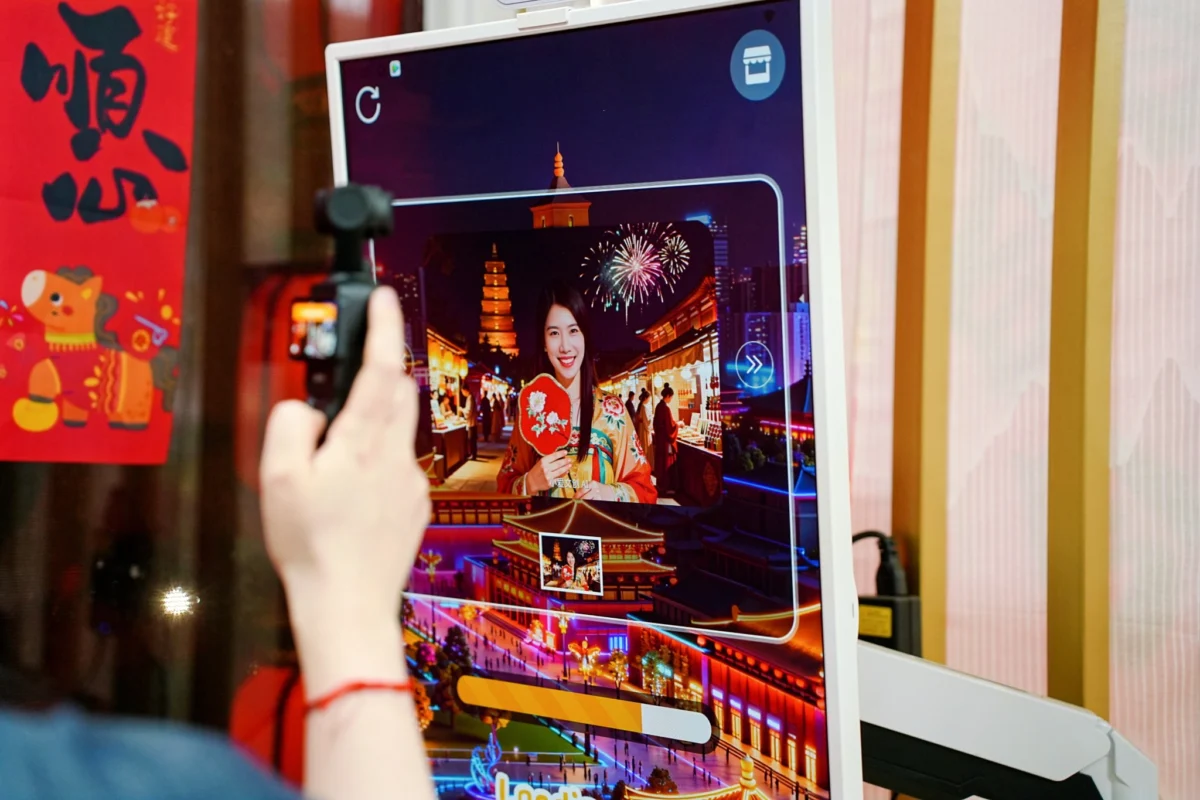
- September 2023: The Pilot Launch. The platform goes live with initial consumer-facing applications. The "Xiaoqi" travel companion on the GO-SHAANXI app is introduced, alongside the Zhiying Camera mini-program, allowing tourists to integrate their likenesses into historically accurate AI-generated settings.
- Late 2023–Early 2024: Scaling Operations. Following successful initial adoption, the infrastructure is bolstered by a 48P computing platform utilizing Huawei’s SuperPoD architecture. Simultaneously, China Telecom Shaanxi begins a massive deployment of 5G Advanced infrastructure in the Grand Tang Mall.
- Mid-2024: Economic Validation. SCG reports a 30–40% revenue increase for its digital division, validating the B2B and B2C potential of the model.
- Future Outlook: The project expands beyond Shaanxi, with initial collaborations in Xinjiang and Guizhou to localize the BoGuan framework for nationwide application.
Infrastructure: The Silent Engine of Innovation
The deployment of a model as complex as BoGuan requires more than just code; it necessitates a physical infrastructure that can handle massive concurrency. Thousands of tourists interacting with AI assistants in real-time creates a "high-traffic, high-concurrency" environment that would cripple standard networks.
To address this, SCG deployed an on-premise 48P computing platform built on Huawei’s SuperPoD architecture. The "secret sauce" is the UnifiedBus technology, which allows multiple physical servers to communicate at such high speeds that they behave as a single, massive logical server.
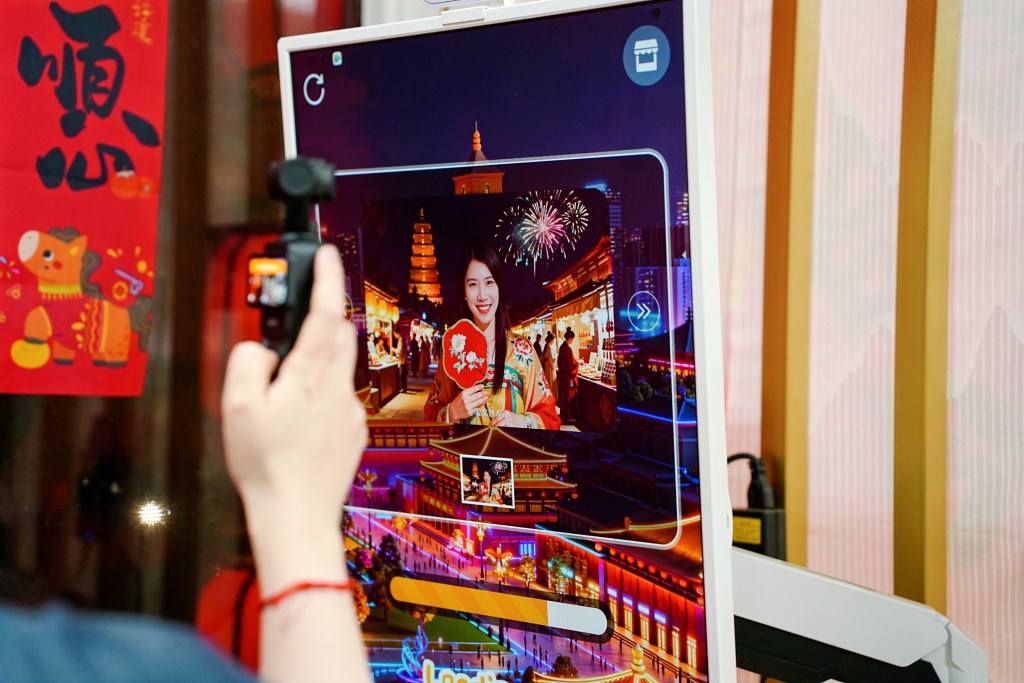
However, local compute is only half the battle. To ensure the experience is seamless for the end-user, China Telecom Shaanxi and Huawei have transformed the Grand Tang Mall into a testbed for 5G Advanced connectivity. By deploying 46 base stations in a highly concentrated area—far exceeding the density of standard city districts—the network delivers 3.5 Gbps downlink and 600 Mbps uplink speeds. These base stations are not merely passive nodes; they are equipped with AI-powered control boards that dynamically allocate bandwidth the moment a tourist initiates a resource-heavy task, such as real-time photo generation.
Official Perspectives: Navigating the Talent Deficit
Despite the technological success, the human element remains a significant hurdle. Edric Chu, General Manager of Huawei’s Shaanxi Rep Office, is candid about the "interdisciplinary gap."
"The industry faces a deficit of millions of professionals who can bridge the divide between cultural tourism and AI," Chu noted. "In Shaanxi alone, we are looking at a gap of 30,000 to 50,000 workers. Nationally, that figure could exceed one million by 2030."
To prevent this talent bottleneck from stalling progress, the project has evolved into an educational initiative. SCG and Huawei have partnered with over 10 institutions to create a specialized talent training base. By aligning vocational certifications with Huawei’s AI curriculum, they aim to produce 1,000 trained specialists this year, with that number tripling in 2025. This focus on human capital ensures that the "BoGuan" ecosystem is not a fleeting project, but a sustainable industry vertical.
Implications: A Blueprint for the Global Tourism Economy
The implications of the BoGuan model extend far beyond the borders of China. For telecommunications operators and cultural agencies globally, the project serves as a compelling case study on how to move beyond basic connectivity.
- Revenue Diversification: The "Video Factory," which automates the production of high-quality short dramas and advertisements, provides a direct B2B revenue stream. Meanwhile, digital collectibles and AI-enhanced photography have generated over 2 million RMB ($300,000) in a very short window.
- Vertical Integration: By combining cloud compute, high-speed 5G, and specialized domain knowledge, operators can offer "AI-as-a-Service" platforms that are far more valuable than raw bandwidth.
- Data Sovereignty and Accuracy: In an age of AI "hallucinations," the BoGuan model demonstrates that by training on closed, verifiable, and expert-curated datasets, organizations can offer AI experiences that are not only engaging but factually reliable.
As the BoGuan framework begins its expansion into regions like Guizhou and Xinjiang, it is becoming clear that the future of heritage tourism lies in this marriage of the ancient and the algorithmic.
"Artificial intelligence is not simply a stack of technologies," concluded Chu. "In Shaanxi, it has become a key enabler that can activate thousands of years of cultural heritage, reshape travel experiences, and inject new momentum into the industry."
For the millions who walk the streets of Xi’an, the city is no longer just a museum of the past. Through the lens of BoGuan, it has become a living, breathing, and conversational testament to the power of human ingenuity—both that of the ancient architects who built the capital and the modern engineers who are ensuring its story continues to be told.