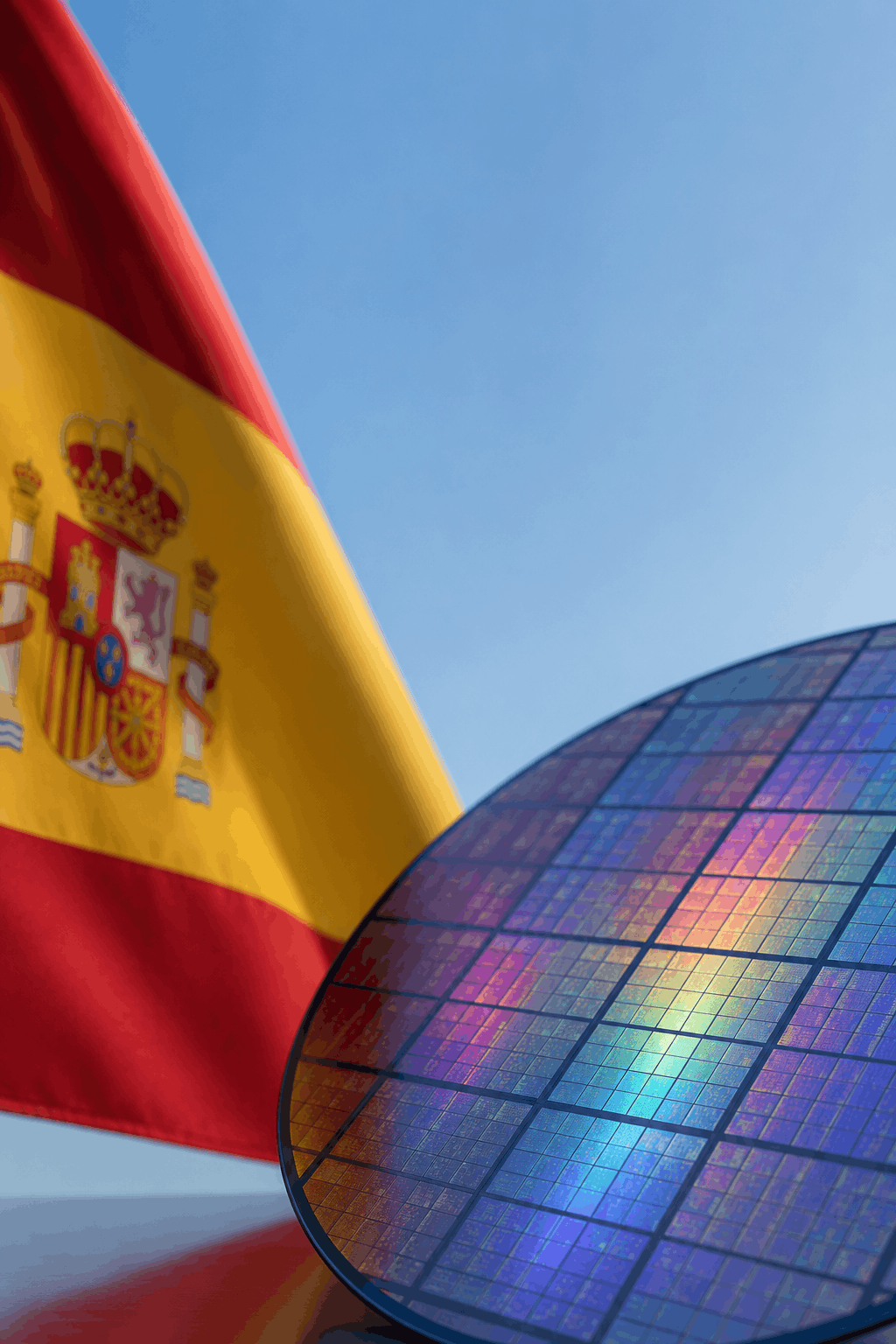
In the high-stakes arena of global semiconductor manufacturing, Europe has long grappled with a fundamental identity crisis. While the European Union’s initial "Chips Act" sparked a race to attract massive, multi-billion-euro fabrication plants (fabs), a quiet, more strategic shift is occurring in Southern Europe. Spain is not attempting to replicate the monolithic manufacturing hubs of Germany or the United States. Instead, it is carving out a sophisticated, distributed ecosystem that leverages high-end research, quantum agility, and photonics expertise to secure its place in the post-silicon era.
The Strategy: Specialization Over Scale
Spain’s semiconductor ambitions are defined by a move away from the "bigger is better" manufacturing philosophy. Rather than competing directly for the capital-intensive commodity chips that dominate the headlines, Spain is focusing on the "high-value-add" nodes: photonics, quantum computing, advanced packaging, and bespoke chip design.

This approach is best exemplified by the interplay between two distinct regional powerhouses: Catalonia and the Canary Islands. Catalonia serves as the industrial and research engine, leveraging a dense network of institutes, startups, and private-sector coordination. Simultaneously, the Canary Islands provide a unique case study in "technology migration," where specialized expertise in astronomy and optics—traditionally used to gaze at the stars—is being repurposed to solve the grueling metrology challenges of modern semiconductor packaging.
Chronology of an Ecosystem: From Research to Revenue
The evolution of Spain’s semiconductor landscape has been a multi-year effort, accelerating significantly between 2024 and 2026.

- 2024: The Spanish government and various regional agencies, including ACCIÓ in Catalonia, begin formalizing the "distributed semiconductor network" model. This period sees an influx of funding aimed at bridging the "valley of death" between academic research and commercial industrialization.
- 2025: The PIXEurope initiative, coordinated by the Institute of Photonic Sciences (ICFO), gains momentum. This project, backed by €400 million in funding, marks a pivotal moment in the attempt to industrialize integrated photonics for AI-driven computing systems.
- Late 2025: Wooptix, a startup born from astronomy research in the Canary Islands, commercially launches its advanced wavefront-sensing metrology tools, directly addressing the bottleneck in 300-mm wafer production.
- Mid-2026: Qilimanjaro Quantum Tech integrates its analog quantum system with the digital quantum infrastructure at the Barcelona Supercomputing Center (BSC), signaling a maturation in the hybrid-compute landscape.
Supporting Data: The Architecture of Innovation
Spain’s success is not measured in square meters of cleanroom space, but in the density of its specialized infrastructure. The ecosystem rests on four primary pillars:
1. Distributed RTO Model (Research and Technology Organizations)
Catalonia has successfully fostered a "distributed RTO" model. By linking the Barcelona Supercomputing Center (BSC) with the IMB-CNM (Institute of Microelectronics of Barcelona) and Eurecat, the region has created a seamless pipeline where a design concept can be prototyped, tested for stability, and then scaled for commercial application.

2. The Photonics-AI Convergence
Integrated photonics is the backbone of the next generation of AI-era computing. Through the PIXEurope pilot line, Spain is positioning itself as the European hub for high-speed, low-energy optical interconnects. This is not just theoretical; it is a direct response to the heat and latency constraints currently throttling the growth of large-scale AI models.
3. Quantum Security and Analog Computing
Companies like Quside are moving beyond the hype cycle of quantum computing. By focusing on commercial security hardware—specifically, quantum random number generation (QRNG) chips—they are shipping products that provide immediate value in the cybersecurity market. Meanwhile, Qilimanjaro’s work in analog quantum computing addresses the specific computational needs of optimization and AI, offering an alternative to the error-correction-heavy path of digital quantum machines.

4. Astronomy as a Semiconductor Enabler
The case of Wooptix serves as the ultimate proof-of-concept for cross-disciplinary innovation. By migrating wavefront-sensing technology—originally designed for telescope optics—into the semiconductor metrology space, they have provided a solution for wafer-shape analysis in 3D integration. This "tech-transfer" model is being touted as a blueprint for other emerging tech sectors in Spain.
Official Responses and Industry Leadership
The debate surrounding the future of European semiconductor policy—specifically the transition toward "Chips Act 2.0"—has been heavily influenced by Spanish industry voices. Leaders such as Maria Marced and Francesc Guim have been instrumental in presenting a new blueprint to Brussels.

Their argument is clear: Europe’s initial focus on massive fabrication was insufficient. To achieve true digital sovereignty, the EU must shift its focus toward demand-side incentives, design-centric ecosystems, and the scaling of startups. Marced and other stakeholders emphasize that a "fab-only" policy leaves Europe vulnerable to global market shifts, whereas a design-and-specialization strategy builds long-term resilience.
In a recent policy discussion, representatives from these organizations noted: "The goal isn’t to out-produce the Asian markets in volume. The goal is to ensure that when the next leap in computing occurs—whether through photonics, quantum, or advanced packaging—the core intellectual property and the critical toolsets are designed and manufactured within the European ecosystem."

Implications for the Global Semiconductor Industry
The implications of Spain’s trajectory are profound for the broader global semiconductor industry, which is currently facing a period of rapid procurement instability and component obsolescence.
A Model for Resilience
By building a distributed network rather than a single hub, Spain is inherently more resilient to regional disruptions. This decentralized approach allows for specialized clusters to thrive without being entirely dependent on the same supply chains as traditional high-volume manufacturers.

Addressing the Packaging Bottleneck
The industry is currently obsessed with "More than Moore" technologies, specifically advanced packaging. Companies like Wooptix are essential here. As chip designs become more complex and 3D integration becomes the standard, the ability to measure and correct wafer deformation is no longer a luxury; it is a requirement for yield. Spain is quietly positioning itself as a leader in this critical "hidden" sector.
AI and High-Performance Computing
The integration of Qilimanjaro’s analog systems with the Barcelona Supercomputing Center highlights a growing trend: the move toward heterogeneous computing. As AI compute demands surge, the industry is looking for ways to reduce energy consumption and improve error rates. Analog quantum computing, while niche, represents a high-potential path to solving these specific problems.

Conclusion: A Quiet Evolution
Spain’s semiconductor story is one of calculated patience. By avoiding the temptation to chase the "commodity chip" market, the nation has instead fostered a deep-tech environment that is increasingly indispensable to the global AI and photonics supply chain.
As the industry looks toward the next decade, the "Spanish Model"—characterized by the migration of scientific expertise, a focus on high-value hardware, and a distributed network of research-to-industry hubs—may well prove to be the most sustainable path for European digital sovereignty. The ecosystem is still evolving, but as the June 2026 data indicates, the foundations are not just in place; they are already generating commercial value that connects Spain to the most critical frontiers of the semiconductor world.