By Jonny Evans
July 16, 2026
The global technology landscape is undergoing a tectonic shift. For decades, the mantra of the tech industry was defined by "offshoring"—the pursuit of the lowest possible labor costs and the most efficient supply chain logistics in East Asia. However, in 2026, the narrative has fundamentally changed. Apple’s recent $30 billion multi-year commitment to Broadcom, coupled with a massive $100 billion expansion by TSMC in Arizona, signals a decisive pivot: the high-value "brains" of the digital age are coming home to the United States.
While the phrase "Made in the USA" once seemed relegated to niche markets, it is now becoming a cornerstone of the most sophisticated supply chain in history. But what does this actually mean for the average consumer, the economy, and the future of Apple’s device ecosystem?
The Strategic Foundation: Apple’s Multi-Front Investment
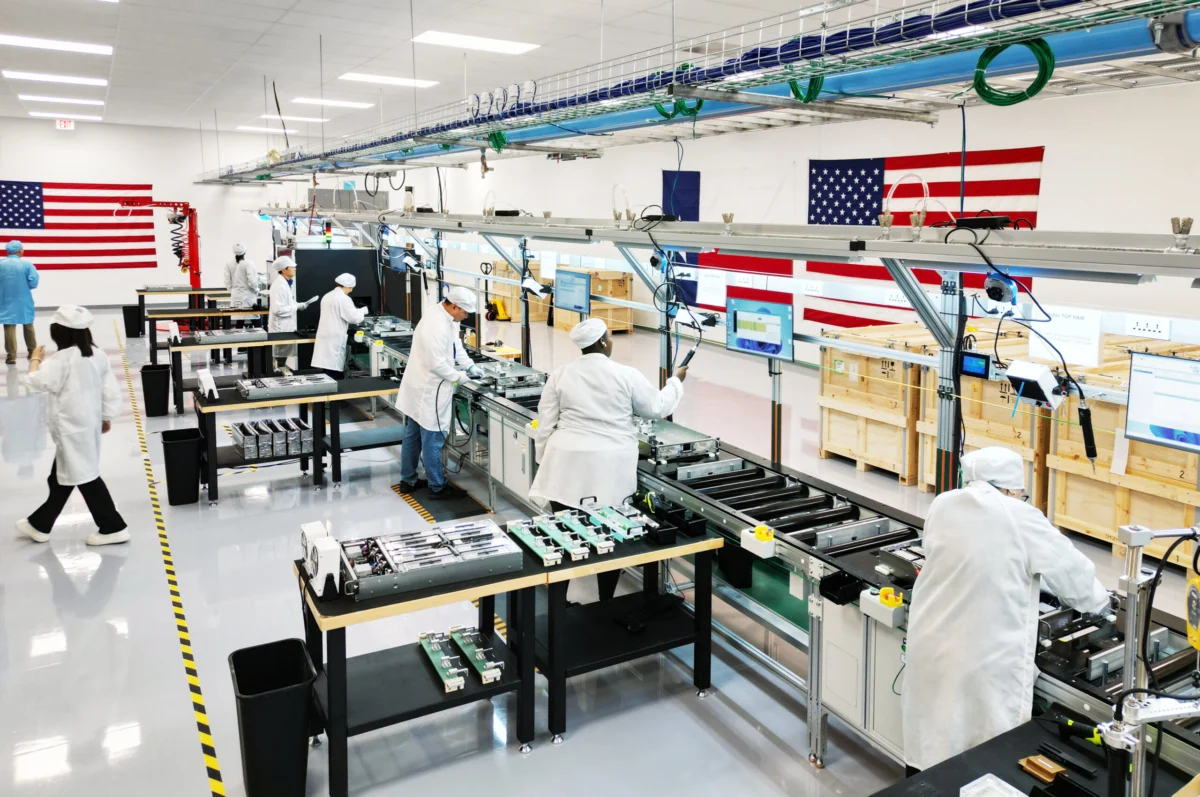
The cornerstone of this shift is Apple’s American Manufacturing Program (AMP), launched in August 2025. As part of a staggering $600 billion, four-year investment pledge, Apple is systematically de-risking its supply chain by repatriating critical production nodes.
The $30 billion Broadcom deal is not merely a contract for components; it is a declaration of intent. Broadcom is set to manufacture billions of chips within the United States, specifically focusing on custom silicon, radio frequency (RF) components, and advanced wireless connectivity modules. These include the Wi-Fi, Bluetooth, and cellular hardware that form the nervous system of every iPhone, iPad, and Mac.
By localizing these technologies, Apple is creating a robust, end-to-end silicon supply chain that bypasses the geopolitical volatility often associated with international logistics. This is not just about bringing jobs back; it is about securing the technological sovereignty required to lead in the age of Artificial Intelligence.
Chronology of a Reshoring Revolution
To understand how we reached this point, one must look at the timeline of the last 24 months, which transformed theoretical supply chain diversification into a tangible American industrial reality.
- August 2025: Apple officially launches the American Manufacturing Program (AMP) with a commitment of $600 billion over four years. This marks the formal start of the "Silicon Homecoming."
- Late 2025: Apple begins integrating domestic partners into the design-to-manufacture pipeline for next-generation hardware.
- Q1 2026: TSMC begins the initial phase of its expanded Arizona project, signaling a move beyond simple fabrication into advanced packaging.
- Q2 2026: TSMC posts record-breaking revenue figures and confirms the $100 billion additional investment into four new US-based plants, including a dedicated 2nm production facility.
- July 2026: Apple confirms the $30 billion procurement deal with Broadcom, solidifying the domestic manufacturing of critical RF and ASIC components.
This sequence of events illustrates a deliberate, phased transition. Rather than a chaotic scramble, the industry is seeing a methodical move toward a "distributed global assembly" model, where the most complex intellectual property is forged in the US, while final assembly remains fluid.
TSMC Doubles Down: Beyond Simple Fabrication
The most significant pillar of this movement is the unprecedented commitment from Taiwan Semiconductor Manufacturing Company (TSMC). With a total of $165 billion already committed to the US, the latest $100 billion expansion is a game-changer.
TSMC is not merely building "foundries" in the traditional sense; they are building a complete, modern semiconductor ecosystem. The new plants will be capable of churning out the most advanced 2nm processors—the same silicon that powers the next generation of generative AI models and heavy-compute mobile applications.
Crucially, TSMC is investing heavily in "advanced packaging." This is the sophisticated process of combining memory, processor cores, and networking nodes onto a single System-on-Chip (SoC). In the past, this step often occurred in overseas facilities. By bringing this capability to Arizona, the United States is capturing the high-value "final mile" of chip production. This means the chips destined for Apple’s flagship devices will be fabricated, packaged, and tested entirely within American borders.
Supporting Data: The Economic and Industrial Impact
The sheer scale of these investments—nearly $300 billion in confirmed chip-focused capital—is equivalent to roughly 1.5 times Apple’s total annual revenue in the Americas. This investment is not just creating jobs; it is creating a specialized industrial workforce.

The Breakdown of Value:
- The Brains (TSMC): High-end logic, 2nm processors, and AI-optimized silicon.
- The Connectivity (Broadcom): RF filters, Wi-Fi/Bluetooth modules, and ASIC development.
- The Ecosystem (AMP): A broader network of domestic partners focusing on secondary components and automation technology.
While Apple is no longer TSMC’s sole primary customer—due to the massive surge in demand from AI-focused firms—Apple remains a critical anchor tenant. The presence of these factories creates a "cluster effect," where ancillary businesses, specialized chemical suppliers, and high-tech equipment manufacturers gravitate toward these hubs, further embedding the semiconductor industry into the US economy.
Official Responses and Strategic Outlook
The response from industry leadership has been clear: this is a long-term strategic necessity.
In a recent briefing to analysts, TSMC CEO C.C. Wei stated: "We believe this investment will help to further foster the development of the US semiconductor ecosystem, strengthen the supply chain, and support an increasing number of high-tech, high-paying jobs in the United States."
Apple’s stance is equally firm. In its official announcement regarding the Broadcom deal, the company noted that it is working closely with the federal government and private sector partners to build an "end-to-end silicon supply chain in America."
This is a departure from the "just-in-time" manufacturing philosophies of the 2010s. The new philosophy is "resilient, local, and automated." By concentrating the most difficult-to-manufacture components in the US, Apple minimizes the risk of supply chain disruptions while maintaining the ability to ship smaller, lightweight components to final assembly plants across the globe.
Implications: Is the Supply Chain Truly "Home"?
The question remains: Is manufacturing coming home?
The answer is nuanced. We are not seeing the return of the massive, labor-intensive assembly lines that defined the late 20th century. Final device assembly, which relies on thousands of human hands for intricate manual tasks, remains globally distributed for the sake of flexibility and cost.
However, the "intelligence" of the devices—the logic boards, the wireless connectivity, and the advanced processing power—is absolutely returning to the United States. This is a strategic pivot that favors the high-value, high-tech components that are becoming increasingly difficult to automate and expensive to ship.
The Cost Factor
The lingering question for consumers is cost. Domestic manufacturing involves higher labor costs and strict regulatory environments. While Apple has not provided a specific roadmap for how this will affect device pricing, the industry consensus suggests that the cost of "Made in the USA" silicon will likely be higher than international alternatives. Whether Apple absorbs these costs through its massive margins or passes them on to the consumer remains to be seen.
The Future of the Enterprise
For businesses that rely on Apple’s hardware, this shift offers a significant advantage: supply chain predictability. As geopolitical tensions fluctuate, having a domestic manufacturing base for the "brains" of the operation provides a level of security that was previously impossible.
Conclusion
Apple’s $600 billion, four-year commitment is not a reactionary measure; it is a proactive restructuring of the global tech economy. By investing in the foundation of the silicon age—logic, connectivity, and advanced packaging—Apple is ensuring that the United States remains at the center of the technological map.
The "Silicon Homecoming" is well underway. While it may not look like the manufacturing boom of the 1950s, it is a sophisticated, AI-driven, and highly resilient industrial strategy that will define the next decade of personal computing. As these factories go online, the "Made in the USA" stamp on the next generation of Apple silicon will represent far more than just a label—it will signify a new era of American technological autonomy.