WASHINGTON — The U.S. Navy’s ambitious push to modernize its fleet with Medium Unmanned Surface Vessels (MUSVs) has hit a significant legal roadblock. Two prominent players in the maritime autonomous technology sector—Blue Water Autonomy and Saildrone—have filed separate lawsuits against the service, alleging that the Navy’s selection process for its new MUSV marketplace was arbitrary, opaque, and inconsistent with the stated requirements of its own solicitation.
The litigation, unsealed this week, threatens to upend the timeline for a critical component of the Navy’s future naval architecture. At the heart of the dispute is a fundamental disagreement over whether the Navy’s acquisition team followed its own rubric or unfairly sidelined innovative, venture-backed companies in favor of established defense incumbents.
The Genesis of the Conflict: From MASC to MUSV
To understand the current impasse, one must look at the shifting sands of the Navy’s acquisition strategy. In July 2025, the Navy sought to accelerate the development of autonomous maritime platforms by launching the Modular Attack Surface Craft (MASC) program. Blue Water Autonomy, a startup that had attracted significant investment from high-profile venture capital firms including Google Ventures, performed well in this initial phase. According to court filings, the Navy had previously vetted and selected Blue Water’s solution through a multi-stage evaluation process.
However, in a move that blindsided many industry observers, the Navy abruptly canceled the MASC program in March. In its place, the service stood up the "MUSV marketplace," a new procurement vehicle designed to streamline the adoption of commercial off-the-shelf and near-ready autonomous technologies.
The transition from a targeted prototyping program (MASC) to a broader, more competitive marketplace (MUSV) left many companies, including Blue Water and Saildrone, in a precarious position. Despite significant financial investment and, in the case of Blue Water, prior validation by the Navy, both firms were excluded from the list of seven companies selected to move forward to the highly anticipated at-sea testing phase.
Chronology of the Dispute
- July 2025: The Navy initiates the MASC program to solicit rapid USV prototyping ideas. Blue Water Autonomy is selected during the early stages of this process.
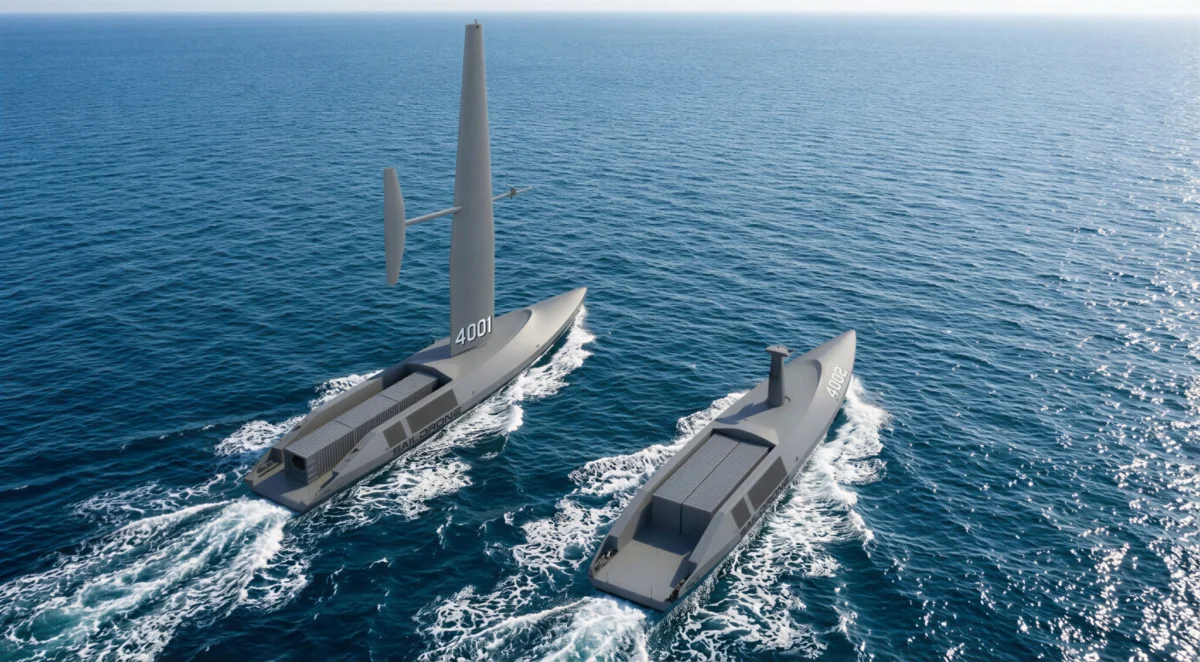
- December 2025: Saildrone secures American Bureau of Shipping (ABS) certification for its Spectre MUSV, a key industry milestone indicating design maturity.
- March 2026: The Navy abruptly cancels the MASC program, citing a shift in strategy. The MUSV marketplace is launched, and a Request for Proposals (RFP) is issued.
- June 2026: The Navy announces the seven companies selected for at-sea testing. Saildrone and Blue Water are notably excluded.
- Late June 2026: Blue Water and Saildrone file separate complaints in federal court. Saildrone attempts a pre-litigation resolution with the Department of Justice, which the Navy declines.
- August 2026: The lawsuits are officially unsealed, revealing the depth of the friction between the service and the industrial base.
The Plaintiffs’ Allegations: Arbitrary Exclusions
The core of the legal challenge rests on the assertion that the Navy failed to follow the technical guidelines outlined in the March RFP. Both companies argue that their proposals not only met but in some cases exceeded the mandatory criteria for the MUSV marketplace.
Blue Water Autonomy’s Request for Injunction
Blue Water’s case is perhaps the most aggressive. The company is seeking an injunction that would effectively freeze the Navy’s progress on the entire MUSV program. The complaint argues that the Navy "arbitrarily and prematurely" excluded the firm, denying it the opportunity to demonstrate its capabilities through the required at-sea testing.
Blue Water contends that it invested heavily in its Liberty MUSV design based on the Navy’s explicit desire to leverage commercial innovation. By shutting the door before a physical demonstration could occur, the company argues, the Navy is failing to fulfill its mandate to provide the warfighter with the best available technology.
Saildrone’s Targeted Challenge
Saildrone has taken a slightly more surgical approach. While the company is also seeking a court-ordered reevaluation of its proposal, it has explicitly stated that it does not wish to halt the entire MUSV test event for other participants. Saildrone’s grievance is centered on a lack of transparency; the company claims it only learned of its rejection through public news reports, and that the Navy provided specific feedback only after the company formally requested an explanation.
Saildrone further alleges that the Navy’s Portfolio Acquisition Executive (PAE) for Robotic and Autonomous Systems (RAS) applied a double standard. Their complaint notes that other firms were selected despite having "design-maturity, fielding, manufacturing-readiness, or test readiness issues more significant than the issues RAS cited against Saildrone."
Technical Requirements: A High Bar
The MUSV marketplace solicitation set rigorous performance benchmarks. To qualify, platforms were required to:
- Accommodate at least two 40-foot shipping containers.
- Travel 2,500 nautical miles at a sustained speed of 25 knots.
- Operate effectively in Sea State 4 conditions.
- Carry a payload of 25 metric tons on the deck.
While the exact reasons for the disqualification of Blue Water and Saildrone remain redacted in the public court filings, both firms insist that their designs—the Liberty and Spectre, respectively—were fully compliant with these specifications.
Official Silence and Industry Frustration
The Navy’s response to these developments has been characteristically guarded. A spokesperson for the service stated that they do not comment on pending litigation. This silence, however, stands in contrast to the public sentiments expressed by top leadership earlier this year.
At a Center for Strategic and International Studies (CSIS) event in March, Chief of Naval Operations Adm. Daryl Caudle acknowledged the frustration within the industry regarding the Navy’s acquisition cycles. "I get equally frustrated with the number of times we’ve tried to start doing modules in the Navy," Caudle noted, acknowledging the friction between the service’s desire for rapid innovation and the rigid, often slow-moving bureaucracy of the defense procurement system.
The seven firms currently moving forward—which include industry giants like Leidos, Huntington Ingalls Industries (HII), and the nimble startup Saronic—are currently preparing for the at-sea testing phase, which is slated to conclude in October. Those who pass will receive $15 million in funding and become eligible for lucrative follow-on production contracts.
Implications for the Future of Autonomous Warfare
The stakes for this program are massive. The marketplace is being funded by the $2.1 billion allocated for MUSVs under the "One Big Beautiful Bill," signed into law by President Trump in July 2025. This funding represents a cornerstone of the U.S. military’s strategy to counter peer competitors by saturating the seas with inexpensive, modular, and autonomous platforms.
If the courts rule in favor of the plaintiffs, the Navy could be forced to pause its testing schedule, potentially delaying the fielding of these assets by months or even years. Such a delay would be a major setback for the Pentagon’s broader effort to modernize the fleet in the face of rising global tensions.
Furthermore, the case highlights a cultural divide within the Department of Defense. On one side are the traditionalists, who favor established contractors and proven manufacturing processes. On the other are the venture-backed disruptors who believe that the government’s procurement processes are too archaic to keep pace with rapid advancements in robotics and AI.
As the legal proceedings unfold, the defense industry will be watching closely. For companies like Saildrone and Blue Water, this is a fight for their role in the future of naval power. For the Navy, it is a high-stakes test of its ability to manage a modern, competitive, and transparent acquisition process—one that is ultimately designed to ensure that the U.S. military remains the undisputed master of the maritime domain.