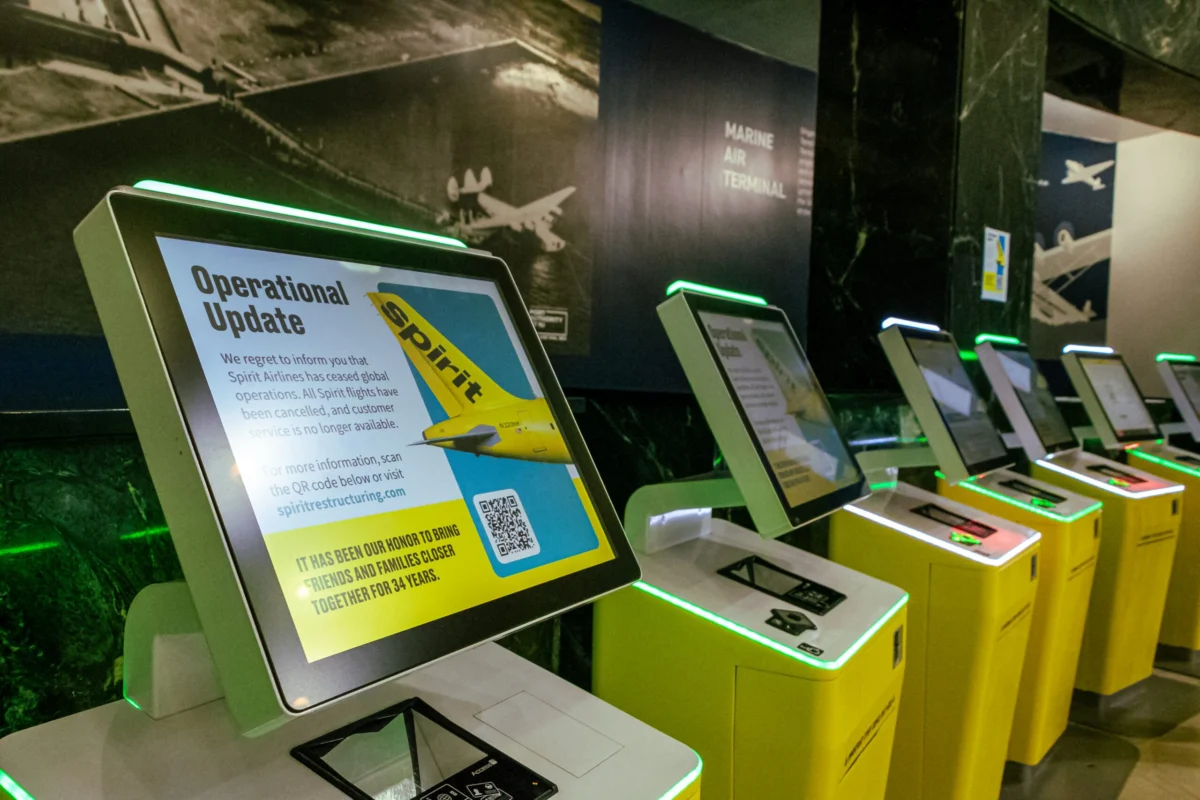
In the wake of Spirit Airlines’ collapse, the company’s physical assets—planes, hangars, and equipment—are not the only items on the auction block. A high-stakes legal and ethical battle has erupted over the carrier’s most intangible, yet arguably most valuable, asset: its data.
As Spirit navigates the complex machinery of bankruptcy proceedings, a massive repository of internal communications, operational logs, and customer service records has become the subject of an intense bidding war. Tech giants and AI startups alike are vying for access to a trove of information that could prove instrumental in training Large Language Models (LLMs) to better understand human interaction, professional workflows, and corporate operations.
However, the former employees of the airline, represented by powerful labor unions, have drawn a line in the sand. They are now challenging the sale in federal court, raising fundamental questions about data privacy, worker rights, and the extent to which a company can monetize the personal digital footprints of its workforce to settle its debts.
The Anatomy of a Digital Gold Mine
The data in question is staggeringly vast. According to reports from industry observers and court filings, the Spirit Airlines data cache contains:
- 600 million email and internal chat records involving 17,000 employees.
- 17 million individual OneDrive files.
- 20.5 million SharePoint items.
- 30 million recorded customer service interactions.
For an AI developer, this is not merely "data"; it is a comprehensive map of human communication. Unlike curated datasets used in academic research, this cache contains the "messy" reality of corporate life: the informal shorthand of internal Teams chats, the nuanced tone of conflict resolution in customer service calls, and the evolving workflows of a major transportation company over several decades.
Training an AI on this data allows models to simulate professional environments with unprecedented realism. It provides a blueprint for how employees navigate complex operational crises, how they communicate with one another, and how they manage the high-pressure demands of the aviation industry. To companies like Google and Micro1, this is the fuel required to move from generic AI chatbots to specialized, enterprise-grade intelligent agents.
Chronology of a Corporate Controversy
The road to this courtroom showdown has been marked by rapid-fire bidding and mounting tensions.
The Initial Auction
As part of the bankruptcy liquidation process, Spirit Airlines sought to extract maximum value from its digital assets. A formal auction was held, attracting interest from several major players in the AI sector. Google emerged as the initial victor, placing a $10 million bid to secure the rights to the data. This figure surpassed a $7.5 million offer from Mercor, an AI-focused startup.
The Rise of Counter-Bids
The perceived value of the data only increased following the auction. Shortly after Google’s acquisition was finalized in principle, the AI data firm Micro1 entered the fray with a staggering $12.5 million offer. This move underscored the volatility of the market for "human-generated" training data, which has become a scarce resource as AI companies hit the limits of publicly available internet text.
The Legal Intervention
Following the announcement of the Google sale, the Association of Flight Attendants-CWA (AFA-CWA) and other representative unions moved to block the transfer. Filing an objection in federal bankruptcy court, the unions argued that the sale constitutes a breach of privacy and a violation of the implicit contract between employer and employee.
Supporting Data: Why Tech Giants Need "Real" Data
The fervor surrounding the Spirit Airlines dataset is symptomatic of a broader trend in the Artificial Intelligence industry. As the internet becomes saturated with AI-generated content, companies are finding that "synthetic data"—data created by other AIs—can lead to model degradation.
To create "General Artificial Intelligence" that can function in the real world, models require massive volumes of human-to-human interaction. This is why private enterprise data—such as internal company communications—has become the new oil.
Research suggests that LLMs trained on internal corporate communication demonstrate a superior ability to grasp:
- Contextual Nuance: Understanding the unspoken hierarchies and priorities within a workplace.
- Conflict Resolution: Learning how humans negotiate, de-escalate, and solve problems under pressure.
- Domain Expertise: Capturing the specialized terminology and operational logic unique to the airline industry.
For a company like Google, which is locked in a global race for AI dominance, the opportunity to ingest 30 million customer service calls is worth far more than the $10 million asking price. It represents a shortcut to developing customer-facing AI agents that sound, react, and problem-solve like seasoned human representatives.
Official Responses and Union Outrage
The human cost of this liquidation has been at the forefront of the labor unions’ defense. Sara Nelson, the international president of the Association of Flight Attendants-CWA, has become the primary voice of opposition. Representing over 5,500 former Spirit flight attendants, Nelson has leveled sharp criticism at both the bankrupt airline and the potential buyers.
"It is fundamentally wrong for a company that has failed its employees to treat their personal, private communications as a liquidation asset," Nelson stated in recent interviews.
The unions argue that many of their members have yet to receive their final paychecks, accrued vacation time, or severance packages. The irony of the situation is not lost on the workforce: while they are struggling to recover the financial compensation they are owed, their own digital labor—their words, their feedback, and their professional contributions—is being sold to the highest bidder to pay off creditors.
Furthermore, the unions point to the lack of informed consent. When these employees joined Spirit Airlines, they did not sign up to have their private emails used to train the very machines that might one day displace their labor market counterparts. The legal argument hinges on whether the employment contract inherently grants the employer ownership of an employee’s "intellectual and behavioral data" in perpetuity.
Implications: The Future of Digital Privacy
The resolution of the Spirit Airlines case will set a significant legal precedent for the digital age. Several key implications are emerging:
1. The Ownership of Digital Labor
If courts rule that this data can be sold, it establishes a dangerous precedent for the modern workforce. It suggests that every email sent, every file shared, and every chat message typed during one’s employment is a property asset of the firm, fully transferable upon bankruptcy. This could lead to a future where workers are forced to treat every digital interaction with the caution of a public statement.
2. The Anonymization Paradox
Industry experts suggest that the "middle ground" may lie in robust anonymization. If Google or any other buyer can strip the data of all personally identifiable information (PII) before it is fed into an AI, some argue that the privacy concerns could be mitigated. However, critics point out that "re-identification" technology is becoming increasingly sophisticated. In a dataset of 600 million emails, there is a high statistical probability that sensitive personal information could be inadvertently leaked or reconstructed by an advanced model.
3. Bankruptcy Law vs. Data Ethics
Current bankruptcy laws were designed for physical inventory and intellectual property like patents or trademarks. They are ill-equipped to handle the nuances of "human behavioral data." The Spirit Airlines case highlights the urgent need for new legislation that protects the digital identities of workers during corporate insolvency.
Conclusion: A Moral Reckoning for AI
The battle over the Spirit Airlines data cache is more than a commercial dispute; it is a moral reckoning for the tech industry. As AI companies continue to reach for ever-larger datasets, they are beginning to run headlong into the rights of the individuals whose lives constitute that data.
If the court allows the sale to proceed without strict guardrails, it will signal that in the digital economy, the "human" element of the workplace is officially a commodity. Conversely, if the union’s legal challenge succeeds, it could force a radical rethink of how data is collected, stored, and liquidated.
For the 17,000 employees of the now-defunct airline, the case is about dignity. They have already lost their livelihoods; they are now fighting to ensure that their digital selves are not auctioned off to build the next generation of corporate AI. As the legal proceedings move forward, the entire tech industry—and the workers who power it—will be watching closely. The outcome will define whether our digital footprints belong to us, or to the highest bidder.