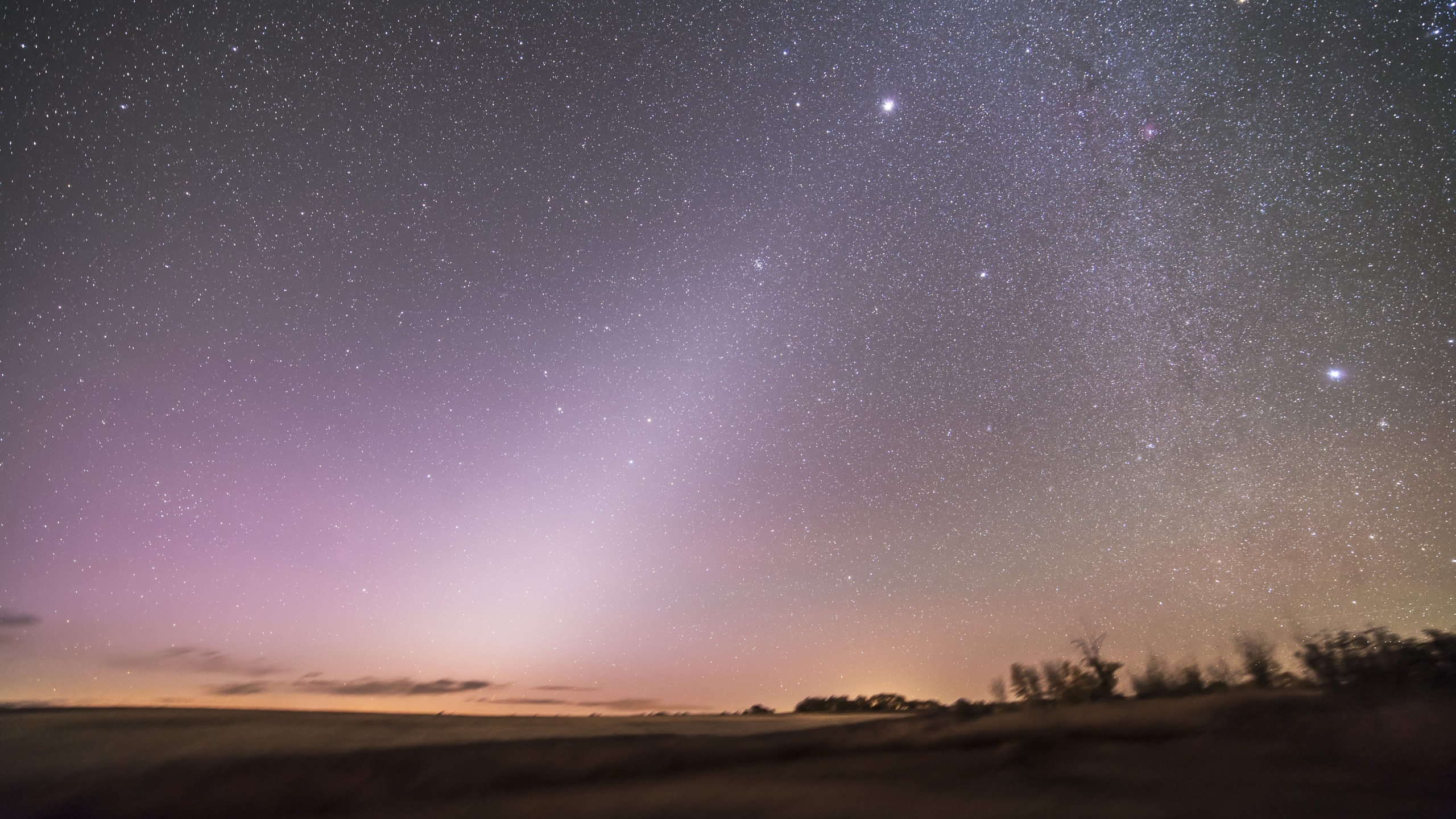
As the autumnal equinox approaches, the early morning skies of the Northern Hemisphere offer a fleeting, ethereal spectacle that has captivated astronomers and poets for millennia. Beginning September 9, skywatchers are granted a rare window to witness the "zodiacal light," a diffuse, pyramid-shaped glow that rises in the eastern horizon long before the first true rays of the sun begin to break the darkness. Often described as a celestial ghost, this phenomenon represents one of the most subtle and profound displays in the natural world.
The Science of the False Dawn
The zodiacal light is not a product of atmospheric activity, nor is it a light show generated by the aurora borealis. Instead, it is the result of sunlight scattering off billions of tiny, microscopic particles of interplanetary dust that occupy the plane of our solar system.
This dust—remnants from the formation of the solar system, as well as debris from passing comets and colliding asteroids—is spread throughout the ecliptic, the imaginary plane defined by the Earth’s orbit around the sun. When the sun is positioned just below the horizon, these particles scatter the solar rays, creating a soft, triangular pillar of light that extends upwards into the heavens.
The term "false dawn" is a misnomer born from centuries of observation by mariners and farmers. In the pre-electric age, when the night sky was truly dark, this glow was often mistaken for the early arrival of morning twilight. However, while true dawn is a brightening of the sky caused by atmospheric scattering of sunlight, the zodiacal light is a structured, conical manifestation that follows the path of the zodiac constellations. It is an astronomical manifestation of the "interplanetary medium," a reminder that the space between planets is not a vacuum, but a bustling environment of debris and cosmic dust.
A Chronology of Observation
For observers in the Northern Hemisphere, the timing of this event is dictated by the geometry of the Earth’s orbit. In the weeks surrounding the autumnal equinox, the ecliptic—the path the sun, moon, and planets travel across the sky—stands at a particularly steep angle relative to the eastern horizon in the pre-dawn hours.
- September 9 – Early September: The window begins. As the sun sits in the constellation of Virgo, the "cone" of the zodiacal light becomes visible in the East.
- Late September to Mid-October: This is widely considered the "prime time" for observation. During this period, the morning geometry is at its most favorable, allowing the zodiacal light to climb higher and appear more distinct against the backdrop of the dark, autumnal sky.
- The Winter Solstice: As the season progresses, the angle of the ecliptic changes, and the light becomes increasingly difficult to distinguish from the light pollution of modern civilization or the encroachment of true twilight.
Supporting Data: Conditions for Success
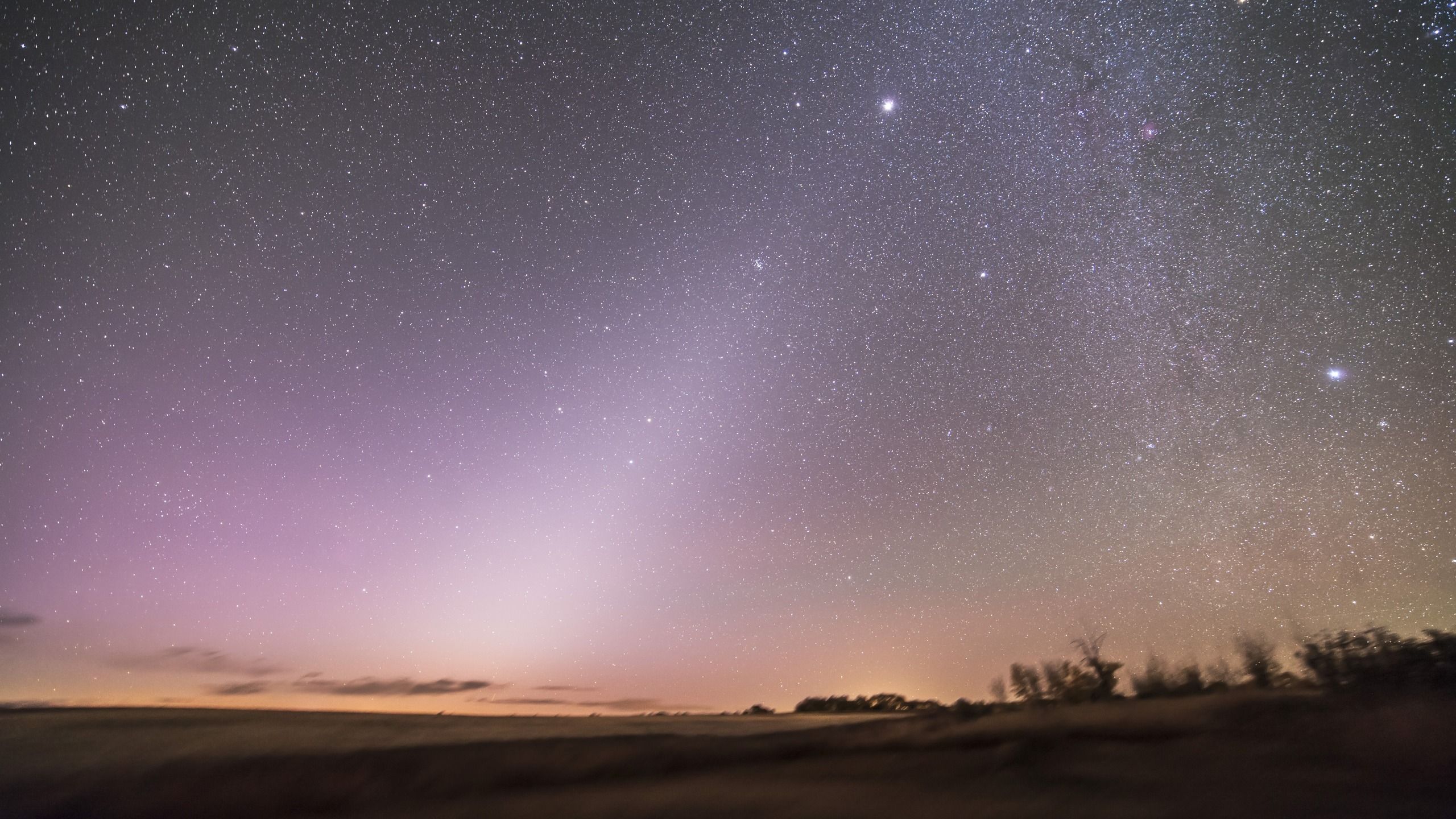
Observing the zodiacal light is not a task for the casual stargazer in a metropolitan area. Because the phenomenon is exceptionally faint—often appearing no brighter than the Milky Way on a moonless night—it requires near-perfect conditions.
Location and Light Pollution
The most critical factor is the absence of light pollution. Astronomers recommend traveling to a "Bortle Class 3" or lower site—areas where the Milky Way is clearly visible and the natural glow of the night sky is not obscured by artificial lighting. Even a small amount of light haze from a nearby city can completely wash out the zodiacal light.
Temporal Constraints
The ideal time to begin your search is around 4:00 a.m. EDT. This provides enough time for the "false dawn" to rise sufficiently above the horizon while remaining long before the onset of astronomical twilight. Observers must allow their eyes at least 20 to 30 minutes of complete darkness to achieve full "scotopic" (night) vision. Avoid looking at smartphones or car headlights, as a single glance at a white-light source will reset your dark adaptation and make the faint zodiacal glow invisible.
Navigating the Constellations
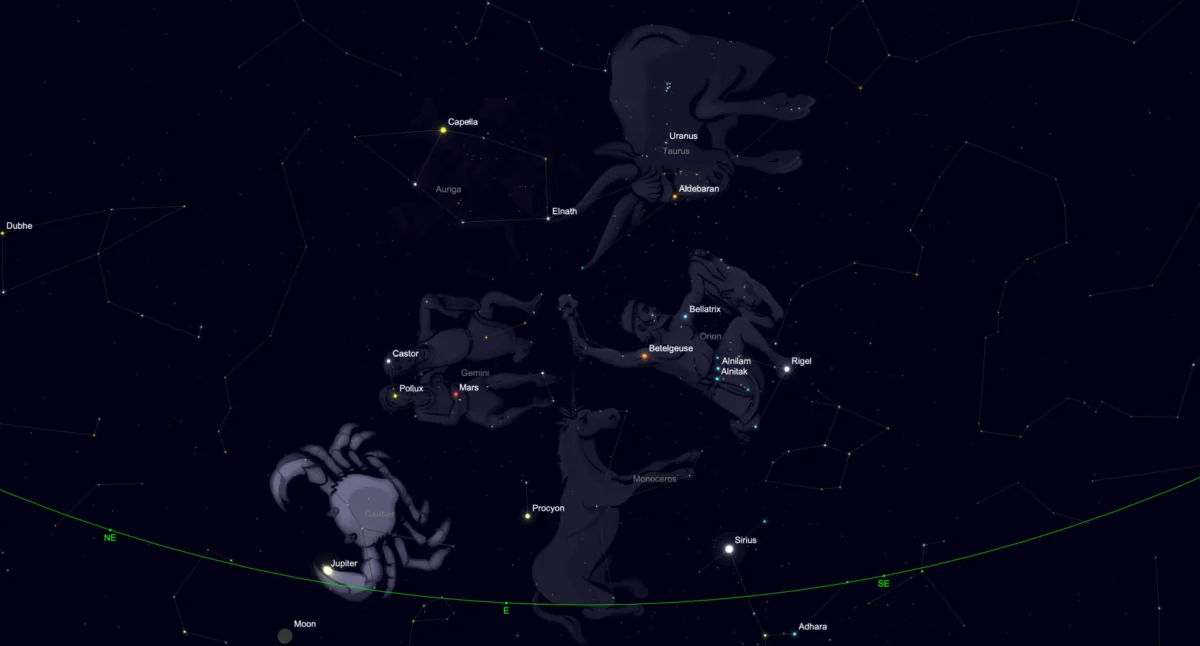
To locate the light, direct your gaze toward the eastern horizon. The base of the pyramid will sit near the constellation of Cancer, with the peak of the cone stretching upward through the stars of Gemini, eventually reaching toward the brilliant constellation of Taurus. If the conditions are optimal, the wedge of light will appear to widen near the horizon and taper into a thin, ghostly needle as it reaches higher into the sky.
Expert Perspectives and Photographic Techniques
For those looking to document the phenomenon, the challenge is significant. Capturing the zodiacal light requires a technical approach similar to long-exposure astrophotography used for the Milky Way.
"The key is balance," notes seasoned astrophotographer Jules-Pierre Malartre. "You are dealing with an incredibly faint light source. You need a fast, wide-angle lens—14mm to 24mm—with an aperture of at least f/2.8 to collect enough photons."
Recommended Settings:
- Aperture: f/2.8 or wider (f/1.4 to f/2.0 is ideal).
- ISO: 1600 to 3200. High sensitivity is required, though this increases the risk of digital noise.
- Exposure Time: 15 to 20 seconds. Beyond 20 seconds, the rotation of the Earth will cause the stars to "trail," blurring the delicate edge of the zodiacal light cone.
- Equipment: A sturdy tripod is non-negotiable. Even the slightest vibration will ruin the long-exposure capture.
Many professionals suggest using a "star tracker" mount to compensate for the Earth’s rotation, allowing for longer exposures without trailing. However, because the zodiacal light is diffuse, many enthusiasts prefer the simplicity of a fixed tripod to keep the landscape foreground sharp, which helps provide context for the scale of the light cone.
Implications: A Vanishing Heritage
The increasing prevalence of light pollution has turned the zodiacal light into a "vanishing" sight for much of the world’s population. In many parts of North America and Europe, the glow is now virtually impossible to see, even on the clearest of nights.
The implications of this loss extend beyond mere aesthetics. The zodiacal light serves as a vital diagnostic tool for planetary scientists. By studying the intensity and polarization of the light, researchers can map the distribution of dust in the inner solar system, gaining insights into the collisional history of asteroids and the outgassing of comets. When we lose the ability to see the zodiacal light, we are not just losing a beautiful view; we are losing our ability to engage with the immediate, dusty environment that surrounds our own planet.
Organizations like the International Dark-Sky Association (IDA) have long argued that protecting dark skies is a scientific imperative. The ability to observe phenomena like the zodiacal light provides a baseline for understanding the interplanetary medium. As urban sprawl continues to encroach on rural areas, the "false dawn" is becoming a barometer for the health of our night sky.
Conclusion: The Call to the Night
For those who have the patience and the opportunity to escape the city, the search for the zodiacal light is a rewarding pursuit. It is a moment of connection with the larger architecture of our solar system. As you stand in the pre-dawn silence, looking toward the horizon as the ancient light of the sun reflects off the debris of long-dead comets, you are participating in a tradition that spans the entirety of human history.
This September, if you find yourself awake before the sun, take a moment to look East. Look past the horizon, past the constellations of Gemini and Taurus, and into the soft, pyramid-shaped glow of our own solar system’s dusty veil. The false dawn awaits.