WASHINGTON — The landscape of modern aerial warfare is undergoing a tectonic shift. As the conflict in Ukraine and other global hotspots have demonstrated, the age of cheap, mass-produced drone swarms and precision missile barrages has rendered traditional, high-cost air defense architectures increasingly unsustainable. In a decisive move to address this, Helsing—Germany’s most prominent defense technology unicorn—has officially unveiled "Contra," an AI-native, autonomous air defense ecosystem designed to redefine how nations protect their sovereign airspace.
The announcement, which includes both the software-defined command system and two specialized, low-cost interceptors, signals a broader pivot within the NATO defense industrial base toward "industrial-scale" attrition warfare.
The Core Innovation: Contra’s AI-Driven Command Architecture
At the heart of the announcement is Contra, an AI-controlled autonomous air defense system. Unlike legacy systems that rely on human-in-the-loop verification for every engagement, Contra is designed to process massive volumes of sensor data in real-time, allowing it to autonomously track and engage "hundreds or thousands" of incoming threats simultaneously.
Helsing’s approach treats air defense as a computational problem. By integrating existing sensors—such as legacy radar arrays and electro-optical systems—into a unified AI backbone, Contra creates a "common operational picture" that minimizes latency. The system’s primary value proposition lies in its ability to solve the "saturation problem." In conventional defense, an attacker can overwhelm a high-end system like the Patriot by launching dozens of cheap drones, forcing the defender to expend million-dollar interceptors on low-value targets. Contra is engineered to identify, prioritize, and neutralize these threats using a tiered approach, ensuring that expensive hardware is only utilized when absolutely necessary.
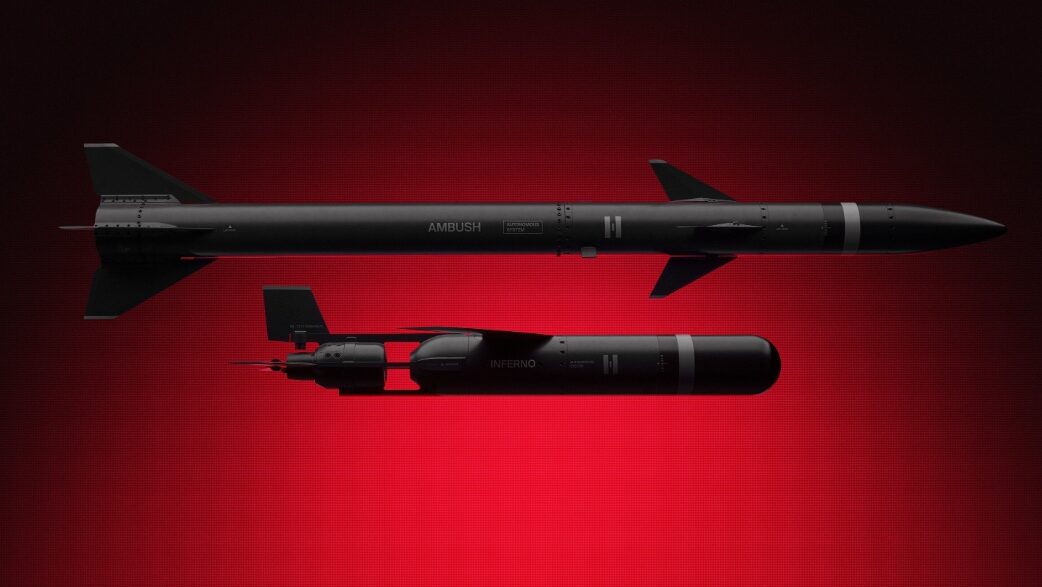
The Arsenal: AD-1 Inferno and AD-2 Ambush
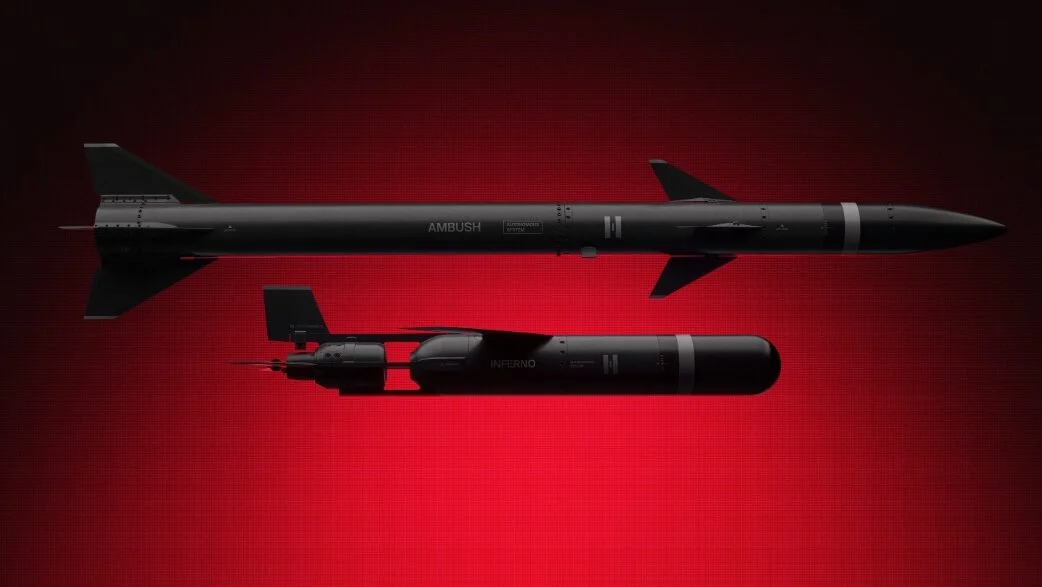
To complement the software suite, Helsing has introduced two new, container-launched interceptor missiles. These assets are specifically designed to be manufactured rapidly and deployed in high volumes, addressing the critical shortage of munitions that has plagued Western defense ministries.
The AD-1 Inferno: The Loitering Interceptor
The AD-1 Inferno represents a departure from the "fire-and-forget" paradigm. Powered by a jet engine, the Inferno is capable of aerial loitering. This allows the missile to remain in a designated engagement zone for extended periods, effectively serving as a "hunter-killer" in the sky. Its ability to swarm and re-engage targets makes it a potent tool for intercepting persistent drone threats that may attempt to maneuver or hide.
The AD-2 Ambush: High-Speed Precision
For threats requiring a more immediate response, the AD-2 Ambush provides a high-velocity solution. Utilizing a solid-rocket motor, the Ambush is capable of reaching speeds of Mach 2.5 with an operational range of approximately 20 kilometers (12.5 miles). Designed for rapid interception, the Ambush provides the "hard kill" capability necessary to neutralize incoming cruise missiles or high-speed tactical drones before they can reach critical infrastructure.
Chronology: The Rapid Ascent of Helsing
Helsing’s emergence as a key player in the European defense sector has been nothing short of meteoric. Founded by veterans of the intelligence and technology sectors, the company has successfully bridged the gap between Silicon Valley-style software agility and the rigorous requirements of European defense ministries.
- 2021–2022: Helsing establishes its presence, focusing initially on AI-based situational awareness and battlefield analytics. The company gains early traction by providing software updates for existing armored vehicles and surveillance platforms.
- 2023–2024: Following the escalation of the war in Ukraine, Helsing pivots toward the development of autonomous systems, recognizing the need for software that can process complex, fast-moving threat environments.
- Early 2026: Increased pressure from NATO partners to reduce dependence on non-European supply chains prompts Helsing to formalize its work on independent, modular interceptor hardware.
- October 2026: The official launch of the Contra system, marking the company’s transition from a pure software provider to a comprehensive defense prime capable of delivering both "brains and brawn."
Supporting Data: The Economics of Attrition
The defense industry is currently witnessing a "race to the bottom" regarding the cost of interceptors. As the threat of inexpensive, off-the-shelf drones becomes the new normal, the economic model of the Patriot and NASAMS systems is being stress-tested to the point of failure.
Helsing’s strategy aligns with a broader trend across the Western defense sector. In just the last few weeks, the market has seen a surge of "low-cost interceptor" announcements:
- Anduril Industries: Unveiled the Steelfin interceptor, specifically designed to counter massed drone swarms at a fraction of the cost of current PAC-3 missiles.
- Lockheed Martin: Announced the PAC-3 EDGE, an iteration of their legendary platform focused on software-driven upgrades to maintain relevance in a swarm-heavy environment.
- CHAOS Industries: Introduced the Vespid system, another modular approach designed for rapid, industrial-scale production.
Helsing’s competitive advantage, according to company leadership, lies in its dual European supply chains and an all-weather radar seeker that reduces the reliance on expensive, proprietary guidance components. By lowering the unit cost, Helsing hopes to make it economically viable for nations to "out-produce" the adversary, a necessity for long-term strategic stability.
Official Perspectives: A Shift in Strategic Doctrine
In the announcement, Helsing President and co-Founder Niklas Köhler emphasized that the Contra system is not intended to replace existing infrastructure, but to "link" it.
"Our AI links existing sensors and effectors in real time and adds our interceptors, AD-1 and AD-2," Köhler stated. "With jet and rocket propulsion, a low-cost all-weather radar seeker, and two independent European supply chains, they deliver autonomous fire superiority up to ten kilometres high — affordable and at industrial scale."
The emphasis on "independent European supply chains" is particularly significant. Following the supply chain disruptions of the early 2020s, there is a renewed push for "strategic autonomy" within the European Union. By ensuring that both the software and the hardware components of Contra are manufactured within Europe, Helsing is positioning itself as a vital partner for national security projects that require immunity from non-European export controls or geopolitical volatility.
Implications: The Future of Autonomous Air Defense
The introduction of Contra raises profound questions regarding the future of warfare and the ethics of autonomous systems.
1. The Proliferation of AI Autonomy
The shift toward autonomous "fire superiority" suggests that human operators will increasingly move into a supervisory role rather than an engagement role. The speed of modern drone warfare makes human reaction times insufficient; Contra represents a shift where the AI decides which target is the greatest threat and allocates the appropriate interceptor without waiting for a command signal. While this is necessary for survival in a swarm scenario, it creates a new paradigm of "machine-managed combat."
2. Economic Sustainability
The current Western defense model is unsustainable if we continue to use multi-million dollar missiles to destroy $50,000 drones. If Helsing and its peers (Anduril, CHAOS) succeed in bringing the cost of interceptors down by an order of magnitude, it will fundamentally change the calculation of the aggressor. If the cost of attacking is significantly higher than the cost of defending, the strategic utility of swarm warfare is diminished.
3. The New Industrial Base
Helsing’s focus on "industrial scale" implies that the company is prepared to move away from the "boutique" manufacturing of the past. The ability to churn out thousands of AD-1 and AD-2 units will require a manufacturing footprint that mirrors the commercial sector. This represents a significant challenge for the defense industry, which has traditionally struggled to scale production during peacetime.
Conclusion
Helsing’s announcement of Contra is a clear signal that the defense industry is moving toward a post-legacy future. As AI becomes the central nervous system of the battlefield, the winners will be those who can integrate software agility with the hard-edged reality of missile production. By offering a platform that is autonomous, low-cost, and regionally sourced, Helsing is not just selling a new weapon system; it is providing a template for how the next generation of air defense will be fought—and won.