The landscape of artificial intelligence is undergoing a profound shift. For the past two years, the industry has been dominated by "request-response" models—chatbots that act as glorified autocomplete engines. You provide a prompt, the model generates a static response, and the interaction concludes. However, the true frontier of AI development lies in autonomous agency.
An AI agent is not merely a conversational partner; it is an active participant in your workflow. By leveraging the new OpenAI Agents SDK, developers can now build intelligent systems that reason, utilize external tools, maintain stateful memory, and execute multi-step workflows without the arduous task of manually architecting custom tool-calling loops. This guide explores the mechanics of building your first AI agent, transforming basic Python scripts into sophisticated, task-oriented assistants.
The Core Concept: What Defines an AI Agent?
To understand why agents are the next evolution in software, one must first distinguish them from standard Large Language Model (LLM) applications.
The Traditional Flow
In a standard LLM implementation, the architecture is linear: Prompt → Model → Response. The model is entirely passive. It lacks the ability to verify its own facts against the live internet, perform calculations beyond its training data, or remember the context of a conversation once the session terminates.
The Agentic Workflow
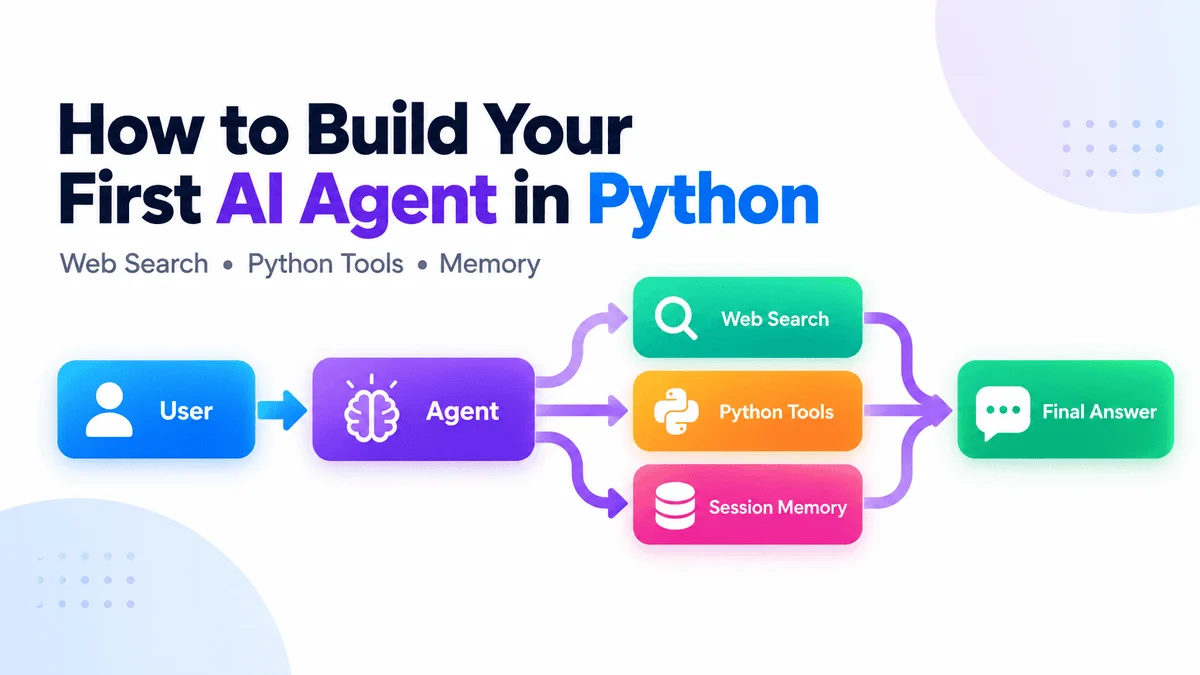
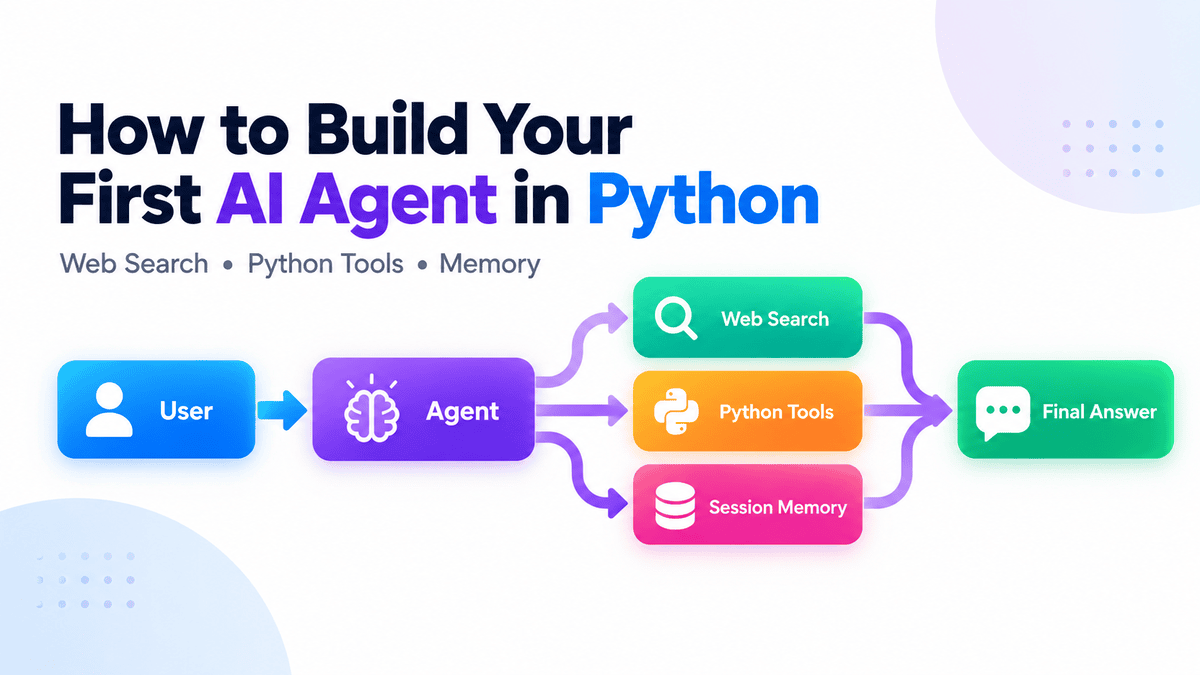
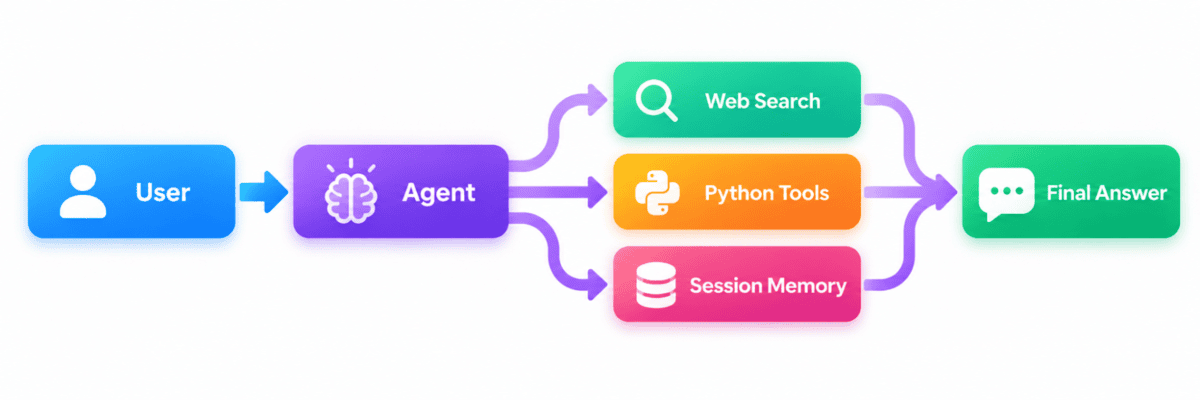
An AI agent introduces an execution loop and tool integration. The flow evolves into: User → Agent → Tool (if needed) → Agent → Final Response.
The "Agentic" advantage lies in the model’s ability to reason. When presented with a complex query, the agent performs an internal assessment: Do I have the information required to answer this, or do I need to fetch external data? If it determines that a web search or a mathematical calculation is necessary, it pauses the generation of text, executes the relevant function, interprets the result, and integrates that data into its final response. The OpenAI Agents SDK manages this lifecycle via the Runner class, which handles the orchestration of the agent’s logic, the execution of tools, and the iterative feedback loop.
Chronology of Development: From Setup to Production
Building a functional agent follows a logical progression, moving from environmental configuration to the integration of complex persistent systems.
1. Setting the Foundation
The first step is establishing a clean development environment. Utilizing uv (a modern, high-speed Python package manager) allows for efficient dependency management. By initializing a project and installing openai-agents, you provide your environment with the core libraries necessary for high-level orchestration.
Crucially, security is paramount. Configuring your OPENAI_API_KEY as an environment variable ensures that your credentials remain decoupled from your source code. Whether you are operating on a Unix-based system or Windows, the principle remains: keep your API keys secure and accessible to your environment.
2. Implementing the "Research Assistant"
The initial implementation of an agent focuses on functionality. By defining an Agent object with specific instructions—such as "You are a concise research assistant"—you set the system prompt that guides the model’s behavior.
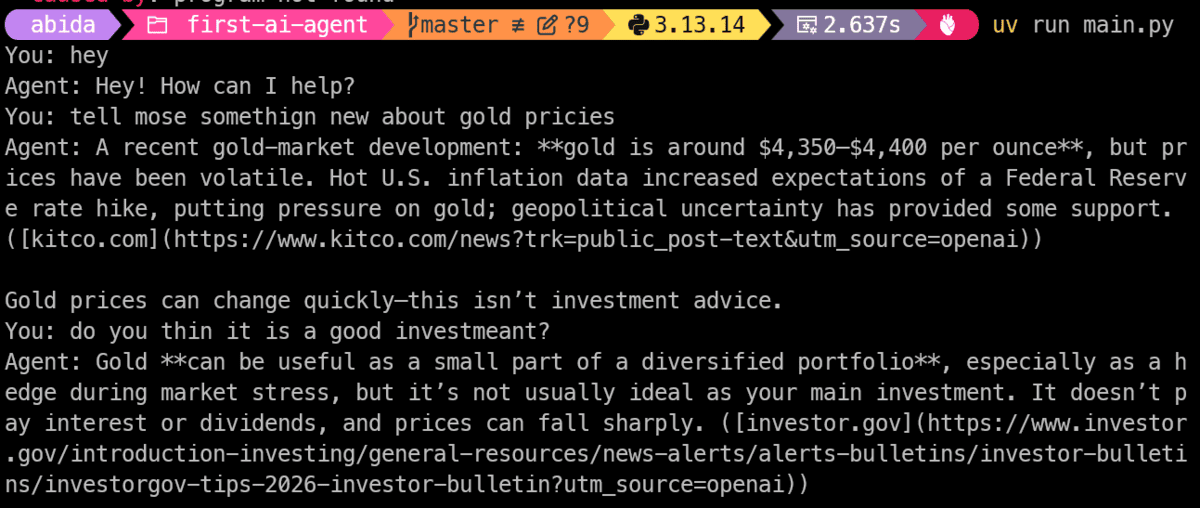
Using the WebSearchTool(), the agent gains access to real-time information. In testing, this agent correctly identifies the latest stable releases of software (e.g., Python 3.14.7), demonstrating that it can effectively discern when to abandon its pre-trained weights in favor of live, verified data.
3. Expanding Capabilities with Custom Tools
While web search is powerful, an agent’s true utility is realized when it interacts with your proprietary code. By utilizing the @tool decorator, developers can transform any standard Python function into a tool the agent can invoke.
The SDK performs the heavy lifting, automatically parsing function names, type hints, and docstrings to create a machine-readable schema. This allows the model to "understand" the purpose of your code, enabling it to execute complex logic, such as calculating order costs, on the fly. This effectively bridges the gap between natural language interaction and backend execution.
4. Establishing Persistent Memory
A stateless agent is often a source of frustration for users. To achieve true conversational continuity, the implementation of a SQLiteSession is essential. By passing a session object into the Runner, you enable the agent to maintain a "memory" of previous turns.
The advantage of using a persistent backend like SQLite (or alternatives like Redis or MongoDB) is twofold: it allows for natural, multi-turn conversation and ensures that the agent retains context even after the application has been restarted.
Supporting Data: Why Tool Calling Matters
The efficiency of this approach is backed by the way the OpenAI Agents SDK abstracts complexity. Without this library, a developer would need to manually:
- Construct and validate JSON schemas for every function.
- Implement a
whileloop to check for tool-call requests from the model. - Serialize and deserialize data between the model and the local environment.
- Handle error states when tools fail or return unexpected data types.
By automating these steps, the SDK reduces the "Time to First Agent" from days to minutes. Furthermore, the inclusion of default tracing provides an invaluable diagnostic tool. Developers can access the OpenAI dashboard to view the exact chain of thought—the specific prompts, tool arguments, and sequential reasoning steps that led the agent to a particular conclusion. This transparency is the difference between a "black box" system and a professional-grade software solution.
Official Perspective and Implementation Strategy
OpenAI’s design philosophy for the Agents SDK centers on the concept of "gradual complexity." The official recommendation is not to attempt to build an autonomous, system-wide agent on day one. Instead, developers are encouraged to follow a modular implementation strategy:
- Define the Persona: Establish clear, concise instructions that dictate the agent’s scope.
- Modular Tool Integration: Add tools only when necessary. Ensure each tool is documented with clear, descriptive docstrings, as the model relies heavily on these strings to select the correct action.
- Session Management: Implement persistent storage early to ensure a seamless user experience.
- Iterative Debugging: Use the built-in tracing to refine the agent’s behavior. If an agent consistently misuses a tool, it is often a sign that the tool’s docstring is too vague or the instructions are contradictory.
Implications for the Future of Software Development
The emergence of these tools has significant implications for how we conceive of software. We are moving away from the era of hard-coded, rigid software interfaces toward intent-based interfaces.
1. The Democratization of Automation
Complex automation, which once required significant engineering effort to bridge disparate APIs and databases, can now be achieved through natural language orchestration. A non-technical user can, in theory, interact with an agent that manages their cloud infrastructure, performs market research, and updates their financial spreadsheets.
2. The Shift in Development Paradigms
For developers, the focus is shifting from writing the "logic" of a workflow to managing the "context" of a workflow. The agent is responsible for the logic; the developer is responsible for providing the right tools, the right guardrails, and the right data environment.
3. Future-Proofing with MCP and Guardrails
As these systems scale, the next logical steps include integrating Model Context Protocol (MCP) servers to allow agents to interact with standardized data sources, and implementing robust guardrails to ensure that agents operate within defined ethical and operational boundaries.
Final Thoughts
Building your first AI agent is less about the complexity of the code and more about the shift in perspective. By providing an LLM with the ability to "act" upon the world through tools and memory, you transition from building a static chatbot to building an intelligent digital assistant.
Whether you are looking to automate internal research, build dynamic calculation engines, or create conversational interfaces that remember their history, the pattern remains consistent. Start with a clear purpose, provide the necessary tools, and let the SDK manage the underlying complexity of the execution loop. As your needs grow, you can incrementally add specialized tools and agents, creating an ecosystem that evolves alongside your requirements. The era of the agentic application has arrived; the only question is how you will use it to augment your workflows.