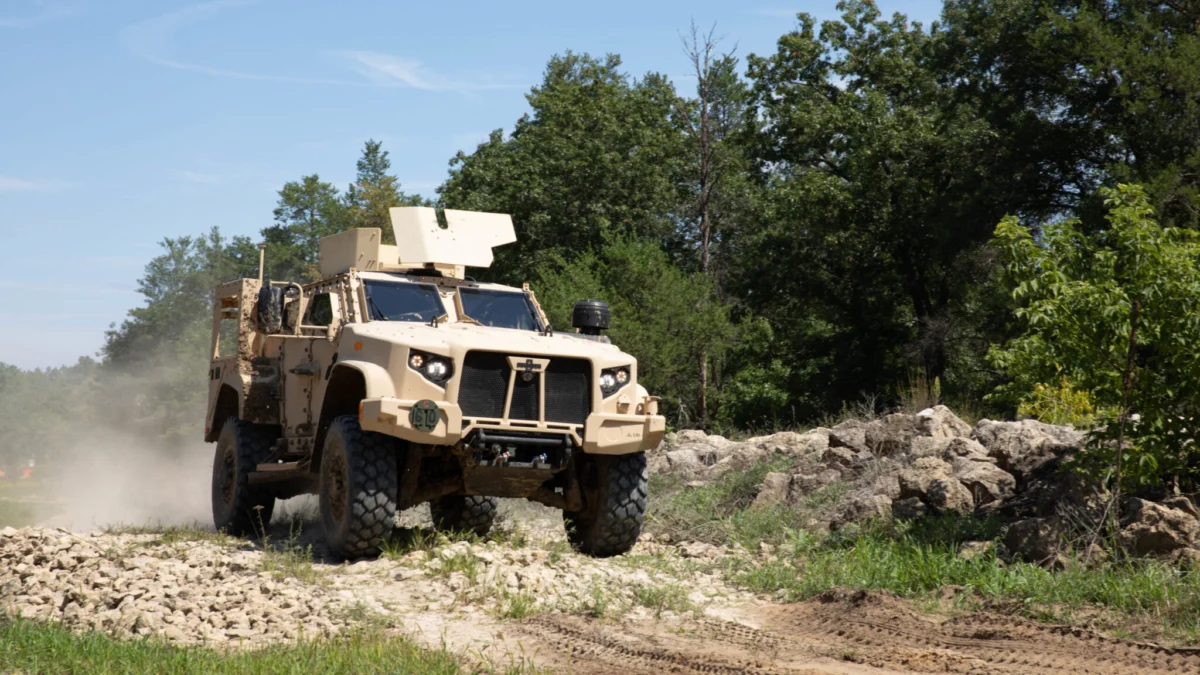
OSHKOSH, Wis. — The future of the United States Marine Corps’ Joint Light Tactical Vehicle (JLTV) fleet hangs in a precarious balance. Oshkosh Defense, the original manufacturer of the program, has issued a firm deadline of October 31 for the Marine Corps to decide on a "production bridge" proposal. This offer, designed to mitigate persistent supply chain and manufacturing delays currently plaguing the program’s successor, represents a high-stakes pivot point for military readiness and industrial base stability.
As AM General—the firm that secured the follow-on contract for the upgraded A2 variant—struggles to resolve production bottlenecks, Oshkosh is positioning itself as the necessary safety net. With no official word from the Pentagon, Oshkosh has launched an aggressive campaign to demonstrate that its manufacturing lines are ready to resume, effectively daring the Marine Corps to address its widening modernization gaps.
The Core Conflict: A Race Against Modernization
The "production bridge" concept proposed by Oshkosh is, by their own definition, an "insurance program." Under the current trajectory, the Marine Corps faces a widening gulf between its desired fleet objective and the reality of its inventory.
"Every day that units aren’t hitting the fleet is a day later that modernization occurs, and so their mission is what’s at risk," said Logan Jones, chief growth officer for Oshkosh Corporation’s transport segment.
Oshkosh argues that the proposal is not an attempt to cannibalize AM General’s contract but rather a strategic buffer. By providing the A1 variant while AM General works through its "complex transition issues," the Marine Corps could theoretically bypass the current logjam. However, this proposal is tethered to a ticking clock. Oshkosh has already invested $50 million in private capital to secure long-lead materials and prep facilities. If the Marine Corps fails to signal intent by October 31, the company asserts that the current logistics and workforce assumptions will become untenable, forcing the firm to reallocate its resources elsewhere—potentially toward international partners or other defense programs like the ROGUE Fires system.
Chronology of a Procurement Struggle
The current state of the JLTV program is the result of a decade-long evolution in defense contracting:
- 2015: Oshkosh Defense wins the initial contract to become the sole supplier of the JLTV A1 variant, setting a new standard for protected mobility for the Army and Marine Corps.
- 2023: In a significant market shift, AM General secures the follow-on production contract for the A2 variant, valued at up to $7.3 billion, promising an upgraded vehicle for the next phase of the program.
- May 2026: Sensing a decline in production tempo, the Marine Corps publishes a formal solicitation seeking a second, "mature, production-ready" supplier to reduce fielding risk.
- June 2026: Lawmakers, including Sen. Tammy Baldwin (D-Wis.), express severe frustration with the pace of deliveries, labeling the performance of the current contract as "unacceptable."
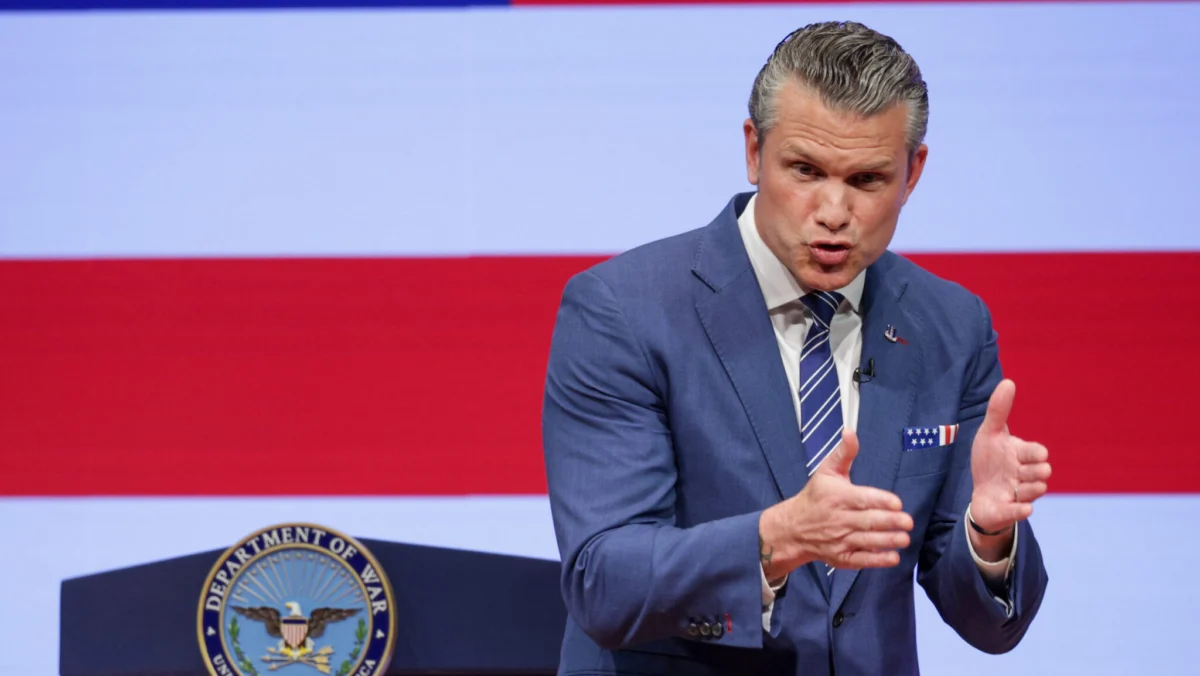
- August 2026: Secretary of Defense Pete Hegseth tours Oshkosh facilities as part of his "Arsenal of Freedom" initiative, highlighting the manufacturing capacity sitting dormant in Wisconsin.
- October 31, 2026: The absolute deadline set by Oshkosh for a decision on the proposed production bridge to remain viable under current cost and schedule assumptions.
Supporting Data: The Capability Gap
The numerical reality of the Marine Corps’ fleet remains a point of contention. The service has an stated acquisition objective of 12,500 JLTVs. According to internal estimates provided by Oshkosh, the Corps has received less than 60 percent of that total.
The fiscal year 2027 budget request includes $244.9 million to procure 340 A2 variants. Critics, however, point to the two-year delay cited by lawmakers as evidence that this funding may not translate into physical hardware as quickly as needed.
Oshkosh’s proposal offers a massive surge capacity: 1,200 vehicles annually. Under this plan, the first units would reach the Marine Corps in just ten months. The firm emphasizes that this is not a developmental effort; it is a continuation of a proven, active line that has already been vetted and integrated into the Marine Corps’ existing maintenance and training ecosystems.
Official Responses and Strategic Silence
The silence from the Department of the Navy and the Marine Corps has been deafening. Despite multiple requests for comment, the service has maintained a cautious, bureaucratic stance. In a statement released following the initial solicitation in May, the Corps noted, "The service continuously evaluates acquisition options to ensure it can meet approved JLTV requirements, preserve readiness, and reduce fielding risk."
Conversely, the manufacturing sector has been more vocal. AM General’s CEO, John Chadbourne, addressed the concerns in June, defending the firm’s transition and citing the complexity of moving to the A2 variant. He remains confident that full-rate production will be achieved by 2027.
Oshkosh’s leadership, meanwhile, is treading a fine line between assertive marketing and cooperative optics. Pat Williams, chief programs officer at Oshkosh Defense, stated, "This could be misunderstood or misconstrued that we have some agenda to push AM General to fail. That’s actually not the case. I hope that they find a way to make it work. Our whole goal is to help the Marine Corps find a bridge to buy AM General time."
Implications: The Future of the Industrial Base
The implications of this standoff extend far beyond the procurement of a single tactical vehicle. The "production bridge" serves as a case study for the broader challenges of the post-2020s defense industrial base.
1. The Risk of "Winner-Take-All" Contracts
The transition from Oshkosh to AM General highlights the inherent risks of recompeting established, high-volume production programs. When a new vendor takes over a legacy platform—or an upgraded version of one—the "learning curve" can often result in significant delays that degrade military readiness. The Marine Corps’ current situation suggests that relying on a single, primary supplier for mission-critical assets may be a liability if that supplier encounters unexpected technical or supply chain hurdles.
2. Modernization vs. Industrial Stability
There is a fundamental tension between the military’s need for the "newest and best" (the A2 variant) and the necessity of "maintaining the fleet" (the A1 variant). By forcing a decision, Oshkosh is asking the Marine Corps to choose between holding out for the upgraded technology or accepting a known, reliable capability that is currently available. If the Marine Corps declines the bridge, they risk a total loss of the A1 production capacity, leaving them entirely dependent on the speed of the A2 rollout.
3. Congressional Oversight and Funding
Lawmakers are increasingly involved in the granular details of defense procurement. The scrutiny directed at AM General’s performance—and the explicit support for competitive solutions—suggests that the military will face growing pressure to ensure that contracts deliver results on time. Should the Marine Corps ignore the bridge proposal and fail to accelerate A2 deliveries, they may face a hostile reception during the upcoming budget hearing cycles, where fiscal responsibility and operational readiness are the primary metrics of success.
4. International Market Shifts
Oshkosh’s pivot to international partners—most notably the Netherlands—signals that the firm is not waiting indefinitely for a domestic signal. If the U.S. government does not prioritize the maintenance of this specific production line, the manufacturing expertise and specialized tooling may be permanently diverted to fulfill foreign military sales. This creates a strategic irony: the U.S. military may find itself needing to re-buy capacity from a firm that has moved on to servicing the needs of global allies.
Final Outlook
As October 31 approaches, the ball remains firmly in the court of the Marine Corps. The service must decide whether the "bridge" is a necessary tactical maneuver to secure the future of its ground mobility, or if it represents an unnecessary complication in an already complex procurement lifecycle.
For now, the vehicles wait in Oshkosh, Wis., in various stages of assembly. Whether they are destined for the U.S. Marines or international partners will be determined by a choice that reflects the broader challenge of maintaining a cutting-edge military force in an era of supply chain volatility and tightening budgets. The "Arsenal of Freedom" may be ready to deliver, but it requires a customer—and a decision—to keep the gears turning.