The global fight against cybercrime reached a significant milestone this week as two prominent members of the prolific hacking collective known as "Scattered Spider" pleaded guilty in a United Kingdom court. Their admissions, delivered on the opening day of what was slated to be a high-stakes six-week trial, mark the collapse of a digital crime spree that crippled major infrastructure, extorted millions in ransom, and compromised the data of hundreds of organizations worldwide.
The two men—20-year-old Thalha Jubair of East London and 18-year-old Owen Flowers of Walsall—appeared before a British judge to answer for their roles in a series of sophisticated cyberattacks. Their guilty pleas represent a major victory for international law enforcement, including the UK’s National Crime Agency (NCA) and the U.S. Department of Justice (DOJ), both of which have been tracking the group’s meteoric rise since 2022.
The Scope of the Charges
The charges brought against Jubair and Flowers highlight the terrifying reach of modern cyber-mercenaries. Both men admitted to conspiring to commit unauthorized acts against the computer systems of Transport for London (TfL), an attack that paralyzed public transport across the Greater London area in August 2024. The prosecution emphasized that the nature of the attack—which targeted critical infrastructure—posed a severe risk to human welfare.
In addition to the TfL incident, Flowers entered a plea regarding his participation in a conspiracy to infiltrate U.S.-based healthcare providers, specifically SSM Health Care Corporation and Sutter Health, in September 2024.
For Jubair, the legal troubles extend far beyond British borders. U.S. prosecutors in New Jersey have unsealed a comprehensive indictment detailing his involvement in a staggering 120 separate computer network intrusions across 47 U.S. entities. Between May 2022 and September 2025, the group’s victims reportedly paid at least $115 million in ransom—a figure that underscores the sheer profitability of their criminal enterprise.
A Chronology of Chaos
The trajectory of Scattered Spider has been defined by rapid escalation, moving from petty digital harassment to the orchestration of multi-million-dollar ransomware events.
- Summer 2022: The group launched a massive, coordinated SMS phishing campaign. By leveraging stolen single sign-on (SSO) credentials, they infiltrated over 130 organizations, including industry giants such as LastPass, DoorDash, Mailchimp, Plex, and Signal.
- September 2023: Scattered Spider gained international notoriety for a high-profile ransomware attack on MGM Resorts and Caesars Entertainment in Las Vegas. The disruption was so severe that it ground casino operations to a halt, leading to significant financial losses. Sources familiar with the investigation identified Owen Flowers as the individual who anonymously engaged with the media to brag about the breach in the immediate aftermath.
- August 2024: The group targeted Transport for London, proving their ability to pivot from corporate targets to critical public infrastructure.
- July 2025: Following a cross-border investigation, Flowers and Jubair were apprehended in the UK, alongside allegations linking them to attacks on British retailers Marks & Spencer, Harrods, and the Co-op Group.
- September 2025: U.S. prosecutors unsealed formal indictments against Jubair, cataloging his extensive involvement in fraud and money laundering.
- April 2026: Tyler "Tylerb" Buchanan, another core member of the group, pleaded guilty to wire fraud conspiracy, admitting to his role in the 2022 phishing spree that resulted in the theft of $8 million in cryptocurrency.
- July 15, 2026: The scheduled sentencing date for Flowers and Jubair in a London court.
The Mechanics of the Enterprise: "Star Chat" and Beyond
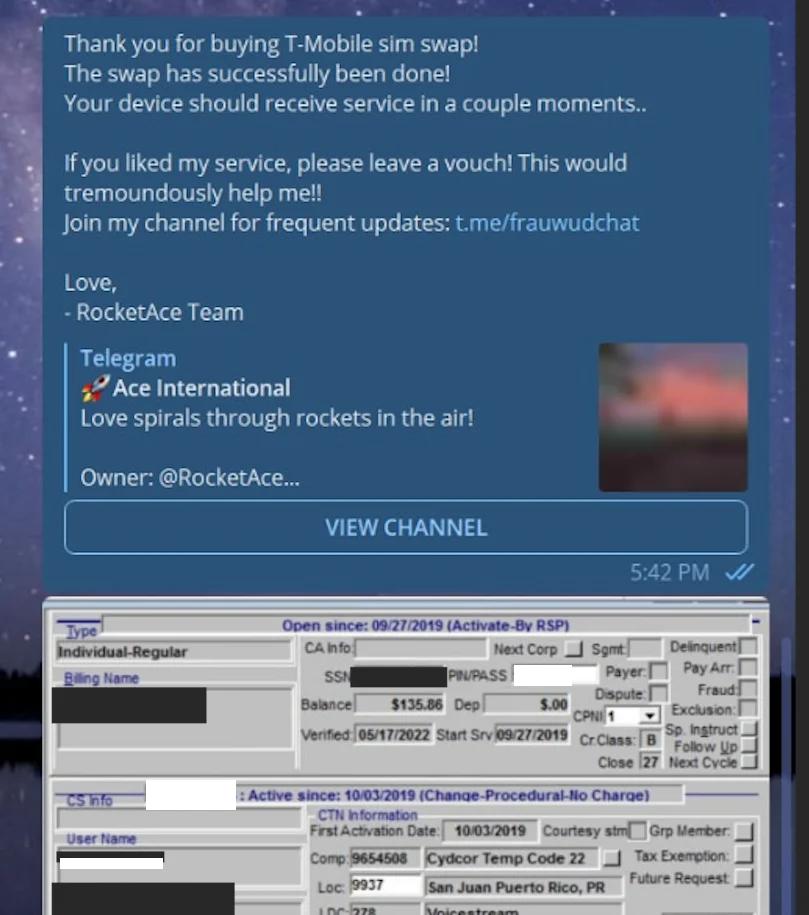
Evidence uncovered by investigators reveals that the group was not merely a collection of loosely affiliated hackers but a highly structured criminal syndicate. Thalha Jubair is accused of co-managing a notorious Telegram channel known as "Star Chat." This platform served as the central hub for a SIM-swapping operation that exploited internal employee tools at major U.S. and UK wireless providers.
By gaining access to these carrier systems, the group could redirect a target’s phone number to a device under their control. This allowed them to intercept two-factor authentication (2FA) codes, effectively bypassing the security measures that are supposed to protect high-value accounts.

Jubair’s digital footprint was vast. As a teenager, he operated under the alias "Everlynn," where he specialized in "emergency data requests." In this scheme, he would spoof the email addresses of law enforcement and government agencies to trick major tech companies into handing over sensitive user data—such as IP addresses and account details—by falsely claiming that the requests concerned urgent, life-and-death matters.
The Global Law Enforcement Response
The dismantling of Scattered Spider has been a testament to the effectiveness of international cooperation. While Flowers and Jubair face sentencing in the UK, other members of the group are being prosecuted in the United States.
In August 2025, Noah Michael Urban, a 20-year-old from Florida, was sentenced to 10 years in federal prison and ordered to pay $13 million in restitution. Meanwhile, the DOJ continues to pursue several other alleged members, including Ahmed Hossam Eldin Elbadawy, Evans Onyeaka Osiebo, and Joel Martin Evans.
The sheer volume of indictments and the swiftness of the plea deals suggest that investigators have successfully mapped the internal hierarchy of the group. By cutting off the "middle management"—individuals like Jubair and Flowers who maintained the infrastructure (like Star Chat) used by others—authorities have effectively neutralized the group’s operational capacity.
Implications for Corporate and Public Security
The rise and fall of Scattered Spider provide a sobering lesson for cybersecurity professionals. The group’s success was rarely built on the discovery of "zero-day" exploits or complex code. Instead, they relied on "social engineering"—the art of manipulating people to divulge information.
By targeting employees through SMS phishing and exploiting the human element of corporate security, they bypassed firewalls and encryption with relative ease. The implications for the private sector are clear:
- Authentication Vulnerability: As long as SMS-based multi-factor authentication remains a standard, groups like Scattered Spider will find ways to intercept those codes. Transitioning to hardware-based security keys is no longer an optional upgrade; it is a necessity.
- Infrastructure Fragility: The attack on Transport for London serves as a warning that public infrastructure is a primary target. Cyber-resilience must be baked into the design of transport, water, and power systems.
- The Telegram Factor: Encrypted messaging platforms like Telegram have become the modern-day "underground marketplace." The role of "Star Chat" in this case underscores the difficulty of policing decentralized criminal communication hubs.
As Flowers and Jubair await their sentencing, the cybersecurity community is left to assess the damage. While these two individuals are now effectively removed from the digital battlefield, the methods they pioneered—SIM-swapping, emergency data request fraud, and mass SMS phishing—remain in the toolkit of other bad actors. The legal victories against Scattered Spider are a significant deterrent, but the war against such agile, borderless digital syndicates remains an ongoing, complex challenge for the global security apparatus.