In the vast, churning expanse of our solar system, the sun acts as an unpredictable engine, frequently releasing massive, magnetized clouds of plasma known as coronal mass ejections (CMEs). While these solar "burps" are common occurrences, a specific event on December 15, 2024, has fundamentally shifted how heliophysicists view the architecture of space weather. By leveraging a unprecedented network of 17 distinct spacecraft, researchers have uncovered that CMEs are not always the uniform, singular fronts they were once thought to be. Instead, this particular ejection revealed a startling, lopsided anatomy that had previously allowed a dangerous, Earth-bound component to slip by undetected.
This landmark study, recently published in the journal Science Advances, represents a milestone in solar physics. By aggregating data from a wider array of vantage points than ever before, scientists have peeled back the curtain on the hidden complexities of solar storms, highlighting the critical need for a more comprehensive "multi-view" monitoring network to protect the future of human space exploration.
The Anatomy of an Asymmetric Ejection
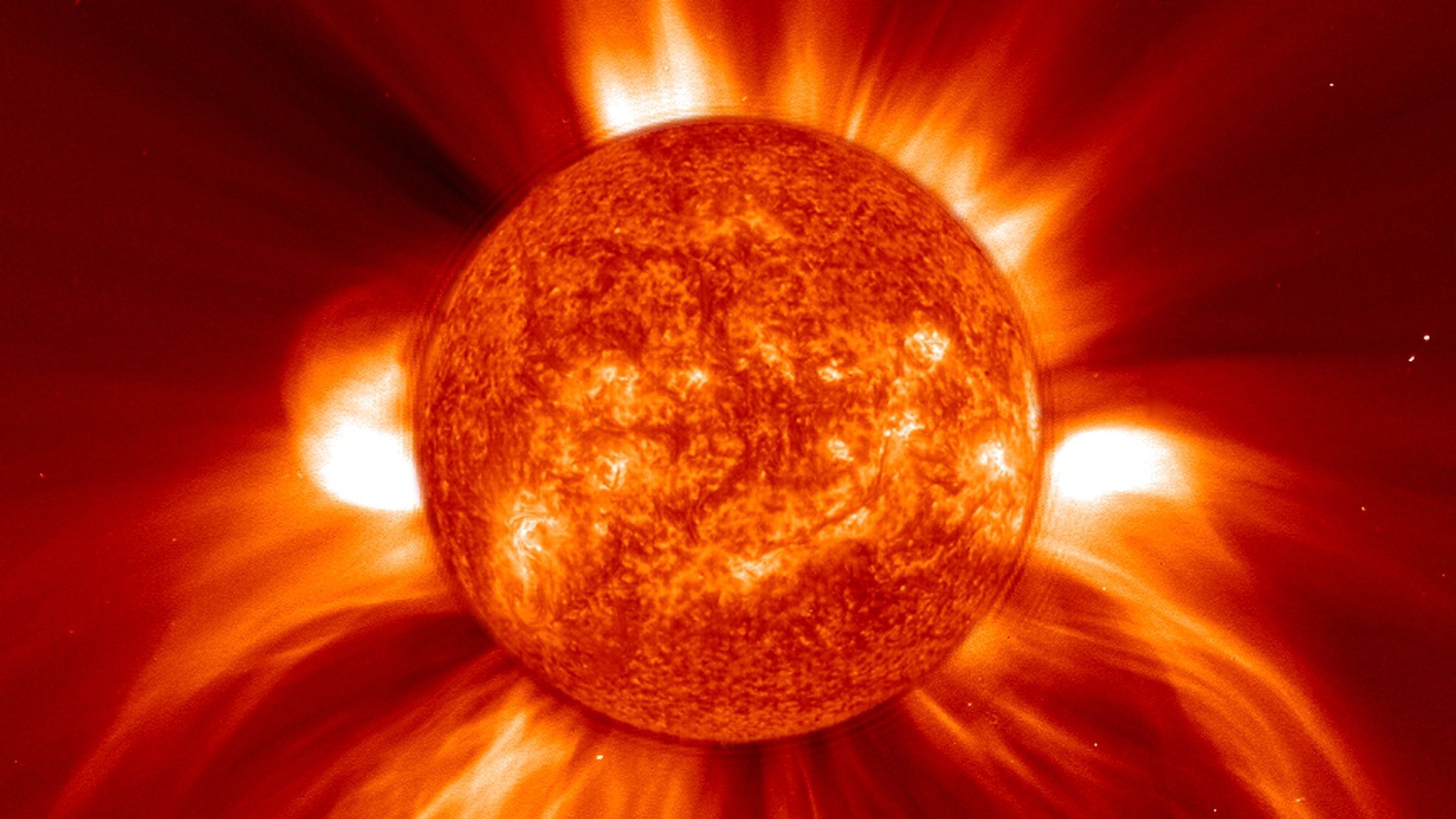
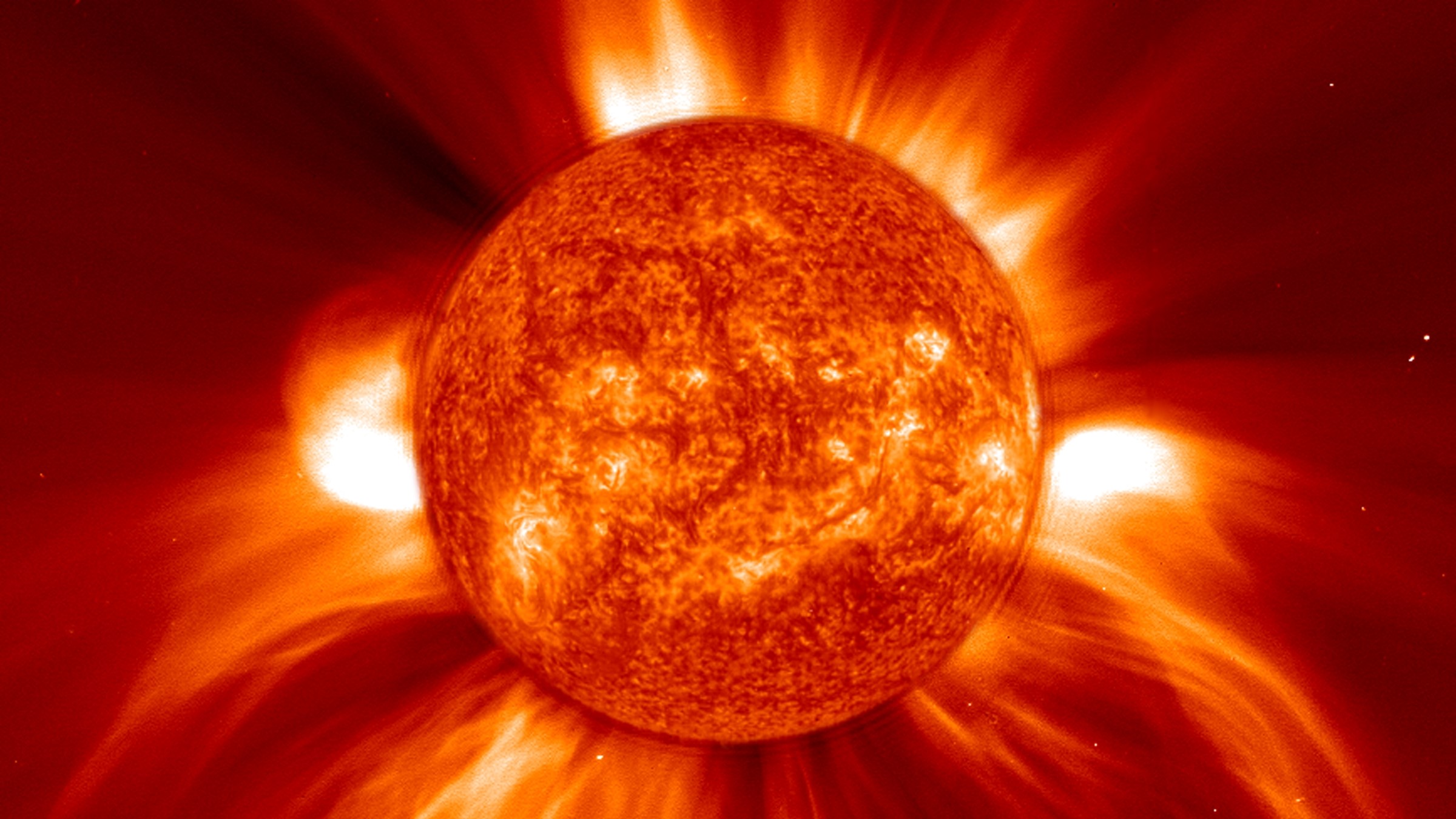
At its core, a coronal mass ejection is the result of magnetic energy released by solar flares. These eruptions blast billions of tons of charged particles into the heliosphere. When these clouds interact with Earth’s magnetosphere, they can trigger geomagnetic storms—the same phenomena responsible for the breathtaking dance of the aurora borealis. However, they also carry significant risks; the intense radiation can threaten the delicate electronics of satellites, disrupt global power grids, and pose a lethal hazard to astronauts operating outside the protection of Earth’s magnetic field.
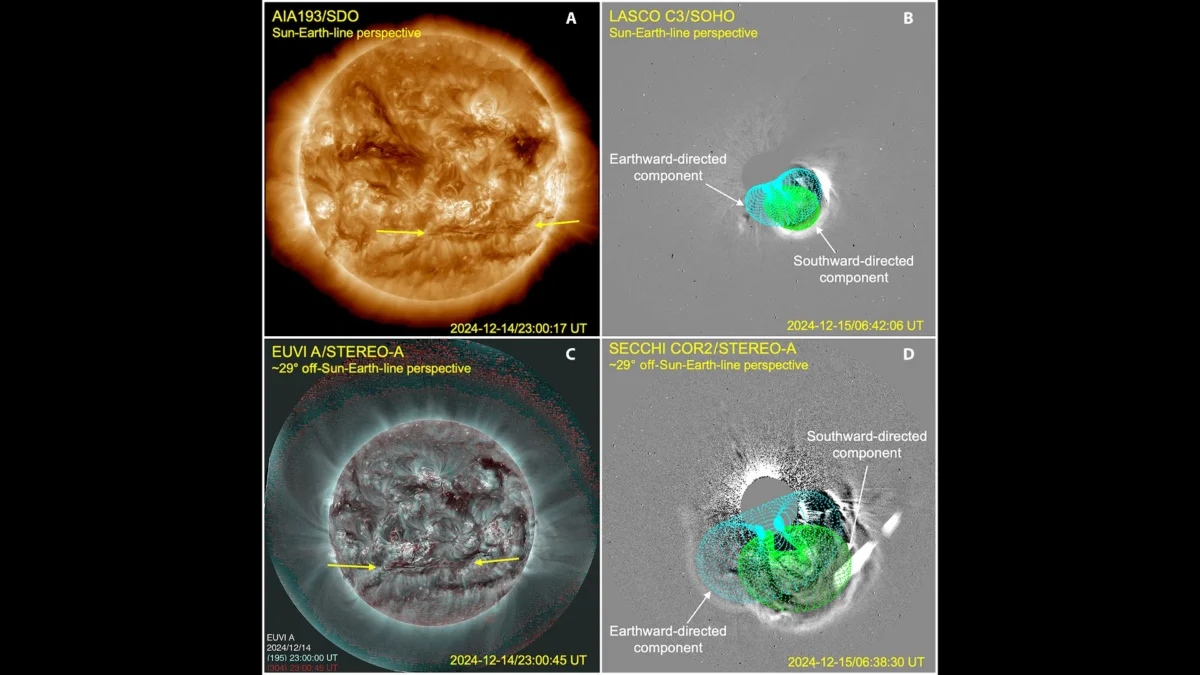
The December 2024 event was unique in its structure. Rather than a singular, expansive cloud, this CME manifested as a bifurcated, asymmetric entity. The eruption possessed two distinct "lobes": a fast-moving, high-energy component aimed directly at Earth and Mars, and a slower, larger, and more diffuse lobe that traveled at a sharp tangent toward the western sector of the solar system.
This duality was the key to the event’s "misbehavior." Because the slower, larger lobe dominated the initial imagery provided by the Solar and Heliospheric Observer (SOHO)—a veteran satellite that has monitored the sun for over three decades—the faster, more hazardous lobe heading for Earth remained effectively hidden in the glare and wake of its slower sibling.
A Chronology of Discovery: Tracking the Plasma Cloud
The journey of this complex CME began on December 15, 2024, at 00:48 UT. The initial detection was standard, captured by SOHO’s coronagraphs. However, the true nature of the event only became apparent as the cloud propagated through the inner solar system, encountering an array of scientific sentinels.
Phase 1: Near-Sun Detection
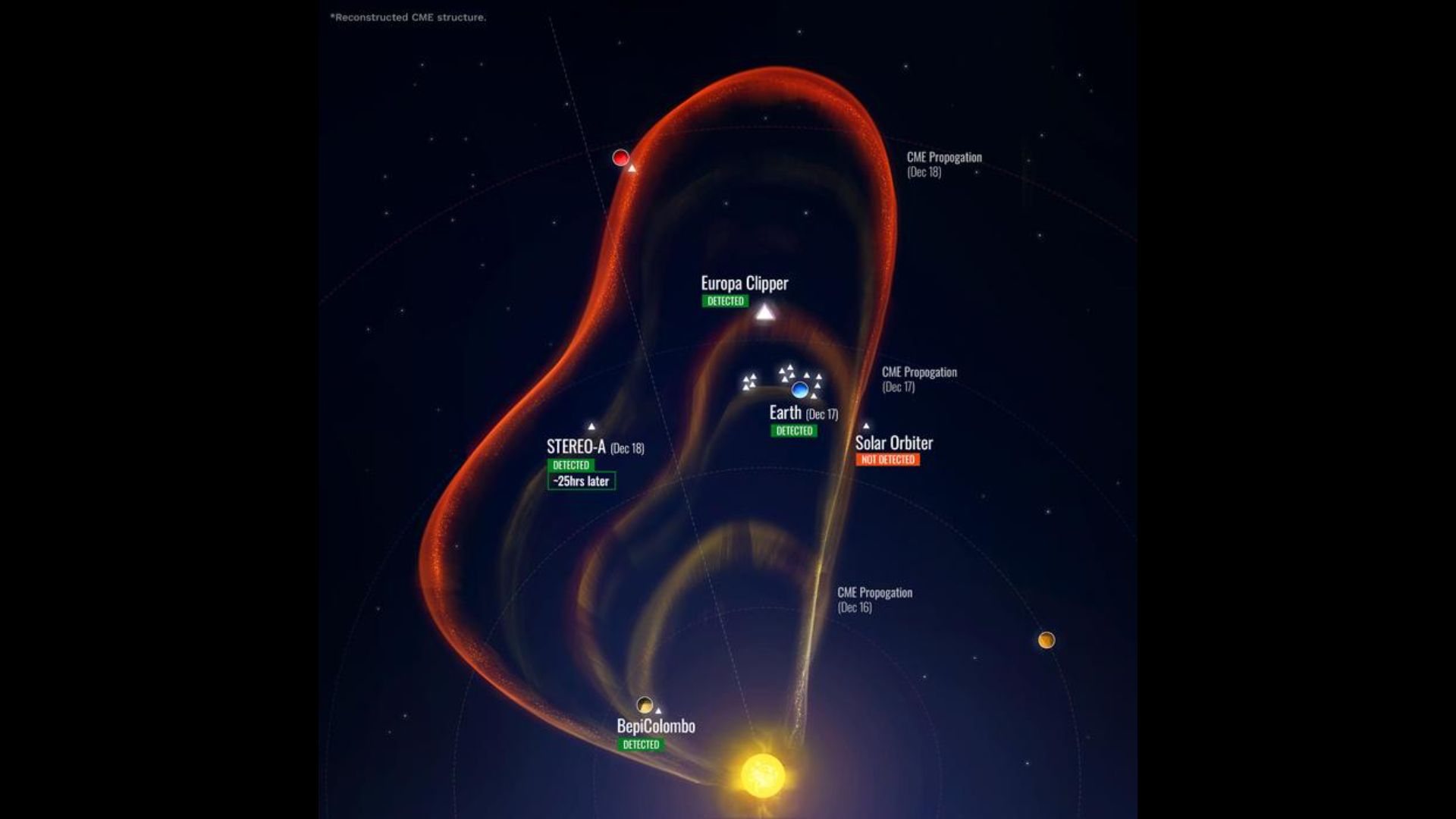
On December 16, the CME reached a distance of 0.35 astronomical units (AU) from the sun. Here, the European Space Agency’s (ESA) BepiColombo mission, currently on its long-haul journey to Mercury, recorded the passage of the slower lobe. This measurement provided the first clue that the eruption was not moving as a unified wall of plasma.
Phase 2: Earth and the "Missing" Data
On December 17, the "hidden" faster lobe finally reached Earth. A massive constellation of assets, including the Magnetospheric Multiscale (MMS) mission, the ARTEMIS lunar orbiters, and standard Earth-orbiting monitors like GOES and DSCOVR, recorded the impact. While the event was not powerful enough to spark major auroral displays, the data collected was invaluable. Curiously, the ESA’s Solar Orbiter, despite being positioned at 0.94 AU, did not detect the CME. This "null result" was, in fact, a vital data point, allowing scientists to geometrically constrain the shape and trajectory of the eruption.
Phase 3: The Slow-Motion Lobe
By December 18, the secondary, slower lobe reached NASA’s STEREO-A spacecraft, which orbits the sun at roughly the same distance as Earth but leads our planet in its orbit. The velocity differential was stark: while the Earth-directed lobe maintained an average speed of 522 miles per second (840 km/s), the trailing lobe moved at a sluggish 332 miles per second (534 km/s). By the time it crossed the path of STEREO-A, friction with the ambient solar wind had decelerated this secondary lobe to just 248.5 miles per second (400 km/s).
Phase 4: Beyond the Red Planet
The final stages of the event were tracked as the faster lobe pushed outward toward Mars. NASA’s Europa Clipper mission, while in its cruise phase toward the Jovian system, captured the passage of the high-speed front at 1.19 AU. Shortly thereafter, the MAVEN orbiter at Mars confirmed the detection of the event between December 19 and 20, marking the conclusion of the event’s primary observation phase.
The Power of 17: A New Standard for Heliophysics
"We used observations from 17 spacecraft to track and characterize this CME," says Adrienn Luspay-Kuti of the Johns Hopkins University Applied Physics Laboratory, who spearheaded the research. "This was a record number of spacecraft for tracking a single CME, and it gave us an exceptionally detailed view of how the CME evolved."
The previous record for such a collaborative observational effort stood at 10 spacecraft, but those were largely aligned in a "string of pearls" configuration from the sun to Earth. This one-dimensional approach limited the ability to map the three-dimensional morphology of an eruption. By contrast, the December 2024 event benefited from a wide, multi-point distribution that allowed researchers to "triangulate" the CME’s shape.
The list of contributors is a "who’s who" of modern solar science: SOHO, BepiColombo, the Solar Dynamics Observatory (SDO), STEREO-A, the four MMS probes, two ARTEMIS orbiters, the Wind and ACE satellites, GOES, DSCOVR, Europa Clipper, MAVEN, and the Solar Orbiter. This diverse array of sensors provided not just timing data, but also information on magnetic field orientation and plasma density, painting a comprehensive picture of the "bow shock," the turbulent sheath of gas, and the eventual wake left behind in the solar wind.
Implications for Future Human Exploration
The discovery of such extreme asymmetry carries profound implications for the safety of future crewed missions to the Moon and Mars. As humanity looks to establish permanent outposts beyond the protective shield of Earth’s magnetosphere, the ability to predict space weather becomes a matter of life and death.
"This matters for future human exploration because a missed CME can mean losing valuable warning time," explains Luspay-Kuti. If a CME is misidentified or its full structure goes unseen—as the faster lobe of this event nearly did—astronauts could be exposed to unexpected bursts of high-energy particles. These solar energetic particles (SEPs) can penetrate spacecraft shielding, causing radiation sickness and long-term health risks for crew members.
The research suggests that our current forecasting models, which often treat CMEs as symmetrical bubbles or "toroids," may be oversimplifying a more chaotic reality. If highly asymmetric CMEs are a common occurrence, our reliance on single-point monitoring (such as a single satellite at the L1 Lagrange point) is fundamentally insufficient.
The Road Ahead: The L5 Perspective
While the December 2024 event was a success of international cooperation, it also highlighted a blind spot. To mitigate these risks, the scientific community is already looking toward the next generation of solar monitoring.
A major addition to the space weather arsenal will be the European Space Agency’s "Vigil" mission, scheduled for launch in 2031. Vigil will be stationed at the L5 Lagrange point, located 60 degrees behind Earth in its orbital path. From this position, Vigil will provide a "side-on" view of the sun, allowing scientists to see solar eruptions before they rotate toward Earth. By pairing the L1 "head-on" data with L5 "side-on" imagery, meteorologists hope to capture the full, three-dimensional evolution of CMEs, ensuring that no hidden lobes—or unexpected, fast-moving fronts—can catch us by surprise again.
As for the mystery of why this particular CME was so lopsided, the investigation is ongoing. Researchers are currently modeling the solar magnetic field at the time of the eruption to determine if the asymmetry was caused by internal magnetic pressures, interactions with the surrounding solar corona, or the specific way the magnetic field lines "snapped" during the initial flare.
For now, the lesson is clear: the sun is far more creative in its destruction than we previously dared to imagine. The 2024 event serves as both a warning and a template for the future, proving that only by spreading our eyes across the solar system can we truly hope to understand the temperamental star that gives us life.