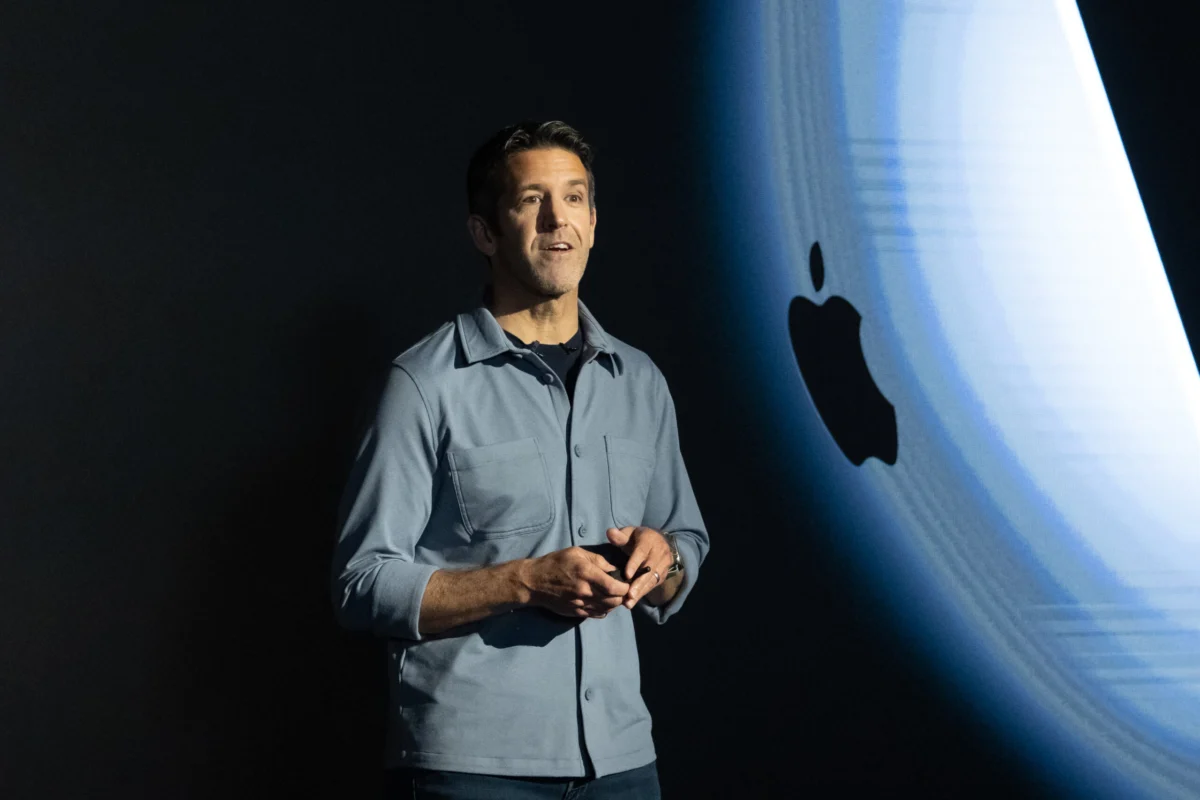
The landscape of Silicon Valley shifted irrevocably this week as one of the most consequential tenures in corporate history came to a quiet close. Tim Cook, the man who steered Apple from a successful hardware company into the world’s first $3 trillion enterprise, has officially stepped down as Chief Executive Officer. In his place, former hardware chief John Ternus has ascended to the throne, inheriting a company at a crossroads between its legendary hardware heritage and an uncertain, AI-driven future.
The transition marks more than just a change in leadership; it signals a potential shift in the "Apple DNA." As the industry watches with bated breath, the question is not merely whether Ternus can maintain Apple’s momentum, but whether he can redefine it.
Main Facts: A Seamless Succession
The transition was announced in a press release that emphasized continuity. Tim Cook, 65, is not departing the company entirely. He will transition into the role of Executive Chairman, where he will focus on high-level corporate governance, policy, and, crucially, the complex geopolitical relationships that have defined his later years at the helm.
John Ternus, formerly the Senior Vice President of Hardware Engineering, takes the CEO seat with immediate effect. His first act as CEO was a company-wide memo that was as urgent as it was brief, promising a "huge launch next week." This immediate pressure—having to oversee a massive iPhone event before he has even fully unpacked his office—highlights the "sink or swim" reality of his new mandate.
Chronology of a Leadership Shift
- The Cook Decade: Since succeeding Steve Jobs in 2011, Cook transformed Apple from a niche tech giant into a consumer services behemoth. Under his leadership, the company launched the Apple Watch, AirPods, and the Apple Vision Pro.
- The Strategic Succession: Internal discussions regarding succession planning have been rumored for years, with Ternus long seen as the most "Apple-native" candidate, having spent decades mastering the supply chain and hardware engineering cycles that are the lifeblood of the company.
- The Announcement: On Monday, the Board of Directors confirmed the transition. The stock market reacted with cautious optimism, acknowledging that while Cook’s steady hand is a loss, the promotion of an internal veteran like Ternus provides much-needed stability.
- The Immediate Horizon: The upcoming product launch event, scheduled for next week, will serve as the first litmus test for Ternus’s public-facing persona. Investors are looking for signs of a refined vision for the company’s AI strategy.
Supporting Data: The Legacy and the Burden
To understand the weight of the mantle Ternus is assuming, one must look at the numbers. Under Cook, Apple’s revenue grew from roughly $108 billion in 2011 to over $380 billion in the most recent fiscal year. However, the growth rate of iPhone sales has plateaued in key markets, and the regulatory environment in the EU and the U.S. has become increasingly hostile toward the "walled garden" ecosystem.
- Market Capitalization: Apple currently holds a market cap that fluctuates around the $3.5 trillion mark, a testament to the massive scale of its services division, which now accounts for a significant portion of profit margins.
- The AI Imperative: Competitors like Microsoft, Google, and NVIDIA have aggressively pivoted to generative AI. While Apple has introduced "Apple Intelligence," it is currently viewed by some analysts as playing catch-up.
- Regulatory Friction: As evidenced by recent disputes—such as the viral controversy surrounding map labels and regional data sovereignty—the role of the CEO now requires a diplomat as much as a product visionary.
Official Responses and Internal Sentiment
In his parting message to employees, Tim Cook expressed immense confidence in his successor. "Apple is in the hands of a product builder," Cook wrote, emphasizing that the company’s strength lies in its ability to marry technology with human values.
John Ternus, in his own memo, kept his cards close to his chest but hinted at a renewed focus on product integration. "Our work is defined by the things we create, and next week, we will show the world that our best work is still ahead of us," Ternus stated.
Inside Apple, the sentiment is described as "guarded but ready." Employees who have worked under Ternus in the Hardware Engineering group describe him as a "details-obsessed pragmatist"—someone who understands the supply chain constraints as well as he understands the aesthetic requirements of a flagship device.
Implications: The Ternus Era and the Software Question
On the latest episode of TechCrunch’s Equity podcast, hosts Kirsten Korosec and Sean O’Kane dissected the implications of this change. They posited a fascinating theory: while Ternus is a "hardware guy" by trade, his greatest impact may actually lie in software.
The AI Transformation
In the age of Artificial Intelligence, hardware is increasingly becoming a commodity. To differentiate, Apple must ensure its silicon (the M-series chips) is perfectly synchronized with its AI software stack. Ternus, having overseen the transition to Apple Silicon, is arguably the best person to lead this integration. If he can leverage his deep understanding of how hardware limits and empowers software, he may be able to squeeze more performance out of Apple’s AI models than any other executive.
The "Policy" Burden
A major implication of the new structure—with Cook remaining as Executive Chairman—is the bifurcation of the CEO role. Ternus is tasked with the product, while Cook is tasked with the "noise." This is a significant strategic move. By offloading the burden of regulatory battles and geopolitical lobbying to Cook, the company is effectively shielding Ternus, allowing him to focus entirely on the product pipeline.
Shareholder Patience
The biggest question remains: how much "rope" will shareholders give the new CEO? If the "huge launch" next week fails to impress, or if the transition leads to internal friction, the board may face pressure to pivot to a more market-focused leader. However, the current consensus is that the board is betting on continuity. They aren’t looking for a radical disruptor; they are looking for a steward who can navigate the company through the volatile transition into the AI era without breaking the machine.
Conclusion: A New Blueprint
The transition from Tim Cook to John Ternus is not the end of an era so much as it is a tactical evolution. Cook provided the scale; Ternus is expected to provide the refinement. As Apple enters its next chapter, the focus will likely shift toward tighter hardware-software integration, more aggressive AI deployment, and a continued effort to balance innovation with the mounting pressures of global regulation.
Whether Ternus can live up to the "product builder" label in a world that demands rapid, software-first innovation remains to be seen. But for now, the gears at Apple are turning, the "huge launch" is imminent, and the world is waiting to see if the Ternus era will be one of maintenance or one of a bold, new, and unexpected direction for the most valuable company on Earth.
For more in-depth analysis on this leadership transition and the broader implications for the tech industry, listen to the full episode of the Equity podcast on Spotify, Apple Podcasts, or wherever you get your audio. You can also follow the hosts, Kirsten Korosec and Sean O’Kane, on X and Threads for ongoing coverage.