
Washington D.C. – The United States wireless spectrum market is undergoing a significant transformation, signaling a new era of investment and innovation. The Federal Communications Commission (FCC) is poised to unlock over 1,000 MHz of crucial spectrum in the 12 GHz and 42 GHz bands, paving the way for expanded satellite broadband services. Concurrently, telecommunications giants AT&T and T-Mobile, alongside satellite innovator SpaceX, are actively engaged in substantial spectrum acquisitions and strategic restructuring, collectively reshaping the landscape of future connectivity.
This surge in activity underscores the escalating competition for essential radio frequencies, vital for powering next-generation mobile, satellite, and potentially 6G services. The decisions and investments made today will have profound implications for broadband availability, technological advancement, and the nation’s digital infrastructure for years to come.
FCC’s Bold Move: Unlocking Spectrum for a Connected Future
At the forefront of this dynamic shift is the FCC’s ambitious proposal to allocate a substantial portion of the 12 GHz and 42 GHz bands for satellite broadband. This initiative, slated for a commission vote on September 30, 2026, promises to significantly enhance the capabilities of space-based communication networks.
H2: Expanding Satellite Broadband Horizons
The FCC’s latest directive aims to make critical spectrum resources available for expanded space-based communications. This move is not merely about increasing capacity; it’s about fostering greater resilience and connectivity across a diverse range of applications.
H3: Enhanced Connectivity for Mobile and Industrial Applications
The newly accessible spectrum is anticipated to bolster satellite network resilience and broaden connectivity for a multitude of platforms. This includes providing high-speed broadband to homes, enabling seamless internet access for aircraft in flight, and ensuring robust communication for ships at sea. Furthermore, the spectrum can support advanced functionalities such as inter-satellite links, crucial for efficient data transfer between satellites, and sophisticated traffic-routing mechanisms within satellite ground networks.
Beyond traditional connectivity, this spectrum expansion is expected to catalyze new industrial and commercial applications. Imagine enhanced data collection from remote sensors, improved operational efficiency for logistics and transportation, and more reliable communication for emergency services in disaster-stricken areas. The potential economic benefits are substantial, with an earlier FCC decision in April 2026 to ease satellite spectrum power restrictions already projected to generate around $2 billion from increased broadband availability.
H3: A Precedent for Innovation
This forward-thinking approach by the FCC follows a significant policy adjustment earlier in 2026, where power restrictions on satellite spectrum were eased. This prior decision directly benefits satellite broadband providers like Starlink, allowing for more intensive use of their allocated frequencies and paving the way for greater service capabilities. The ongoing spectrum initiatives from the FCC are becoming increasingly critical as both terrestrial telecom operators and burgeoning satellite companies vie for frequencies that can support the ever-increasing demands of next-generation connectivity. The convergence of these two sectors, facilitated by strategic spectrum allocation, signals a significant evolution in how the world connects.
Telecom Giants Reshape Spectrum Holdings: A Strategic Land Grab
While the FCC charts a course for satellite expansion, major terrestrial players are not standing still. AT&T and T-Mobile are actively engaging in substantial spectrum transactions, solidifying their positions and optimizing their networks for the future.
H2: AT&T’s Mega-Acquisition: Bolstering 5G and Beyond
In one of the most significant recent investments in the US spectrum market, AT&T completed a monumental acquisition of EchoStar spectrum licenses in July 2026, a deal valued at approximately $23 billion. This transaction represents a strategic move to significantly enhance its wireless infrastructure.
H3: Adding Crucial Mid-Band and Low-Band Spectrum
The acquisition brought approximately 50 MHz of nationwide spectrum into AT&T’s portfolio, distributed across more than 400 markets. A key component of this deal includes roughly 30 MHz of highly sought-after 3.45 GHz mid-band spectrum, which is critical for delivering high-speed 5G services. Additionally, AT&T gained approximately 20 MHz of 600 MHz low-band spectrum, essential for providing broad geographic coverage and reliable connectivity, especially in rural areas.
H3: Immediate Impact on 5G Performance
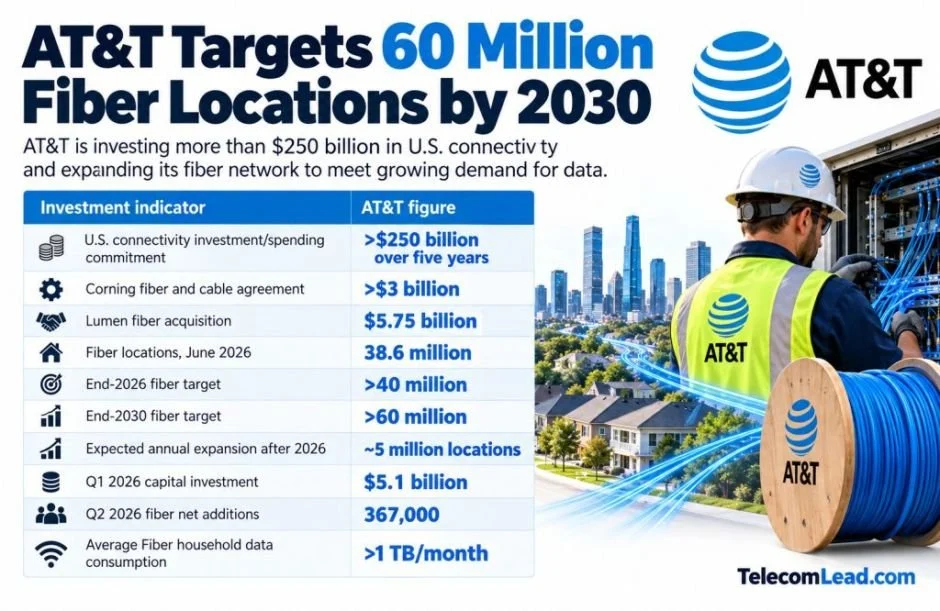
AT&T had already been utilizing a portion of the acquired 3.45 GHz spectrum through a lease agreement, deploying it across nearly 23,000 cell sites and reaching over 5,300 cities in 48 states. The company reported that this additional capacity significantly boosted 5G download speeds, with increases of up to 80 percent observed in areas where the spectrum was deployed. This acquisition is a cornerstone of AT&T’s broader network investment strategy, which projects annual capital expenditures of $23 billion to $24 billion between 2026 and 2028, underscoring the company’s commitment to leading in the 5G era and beyond.
H2: T-Mobile’s Strategic Spectrum Swap: Balancing Coverage and Capacity
T-Mobile is also actively refining its spectrum portfolio to optimize its network performance. In August 2026, the carrier executed a strategic transaction with Grain Management, exchanging its 800 MHz spectrum holdings for $2.9 billion in cash and, critically, Grain Management’s 600 MHz licenses.
H3: Enhancing Coverage with Low-Band Strength
This exchange significantly strengthens T-Mobile’s low-band spectrum assets. The newly acquired 600 MHz licenses will complement its existing extensive 2.5 GHz mid-band spectrum, which currently forms the backbone of its 5G network’s capacity. Low-band spectrum is invaluable for its ability to travel long distances and penetrate obstacles, making it ideal for providing consistent coverage across wide geographical areas, including rural and suburban environments.
H3: A Balanced Approach to Network Evolution
The T-Mobile transaction exemplifies a growing trend among US operators: the strategic balancing of low-band frequencies for robust coverage with mid-band spectrum for high-speed capacity. This dual-pronged approach is essential for building a comprehensive and high-performing mobile network that can meet the diverse needs of consumers and businesses, from dense urban centers to remote rural communities.
SpaceX’s Bold Investment: Direct-to-Cellular Revolution on the Horizon
Perhaps the most disruptive player in the evolving spectrum market is SpaceX, leveraging its satellite expertise to pioneer direct-to-cellular connectivity. The company has made significant, multi-billion dollar investments in spectrum traditionally associated with terrestrial mobile networks.
H2: SpaceX’s Strategic Spectrum Acquisitions
SpaceX’s involvement in the US spectrum market has been marked by substantial agreements with EchoStar, signaling a strategic pivot towards integrating satellite technology with mobile devices.
H3: Billions Invested in AWS-4 and H-Block Spectrum
In a landmark deal, EchoStar agreed to sell its AWS-4 and H-block spectrum licenses to SpaceX for approximately $17 billion. This massive transaction included a combination of cash and SpaceX stock, with up to $8.5 billion in cash and an equivalent value in SpaceX equity. These frequencies are slated to become the foundation for SpaceX’s next-generation Starlink Direct-to-Cell network.
H3: Expanding the Direct-to-Cellular Ecosystem
The partnership between SpaceX and EchoStar was further solidified with an additional transaction valued at approximately $2.6 billion, involving unpaired AWS-3 spectrum. This series of agreements highlights a critical trend: satellite operators are increasingly acquiring spectrum traditionally reserved for terrestrial wireless networks. The ultimate goal is to enable direct connectivity between satellites and standard mobile devices, effectively bypassing traditional cell towers for a truly global mobile communication network. This disruptive approach has the potential to revolutionize mobile coverage, bringing connectivity to areas previously underserved or entirely unserved by terrestrial networks.
FCC Auctions: A Resurgence of Spectrum Availability
Beyond direct acquisitions and exchanges, spectrum auctions remain a vital mechanism for the FCC to allocate valuable radio frequencies to operators. The recent AWS-3 Auction 113 demonstrates the sustained demand for these critical resources.
H2: AWS-3 Auction: Generating Significant Revenue and Capacity
The FCC’s 2026 AWS-3 Auction 113 concluded after 72 intense bidding rounds, generating substantial gross proceeds of $3.573 billion. This auction offered 200 licenses across portions of the 1695-1710 MHz, 1755-1780 MHz, and 2155-2180 MHz bands.
H3: Key Frequencies for 5G and Future Networks
Seven bidders successfully secured all the available licenses, underscoring the high demand and strategic importance of these particular frequency bands. These frequencies are crucial for expanding 5G capacity and laying the groundwork for future wireless technologies, including the anticipated 6G services.
H3: Future Mid-Band Spectrum on the Horizon
The FCC is actively preparing for further mid-band spectrum availability, with a significant allocation of at least 100 MHz of Upper C-Band spectrum slated for auction by July 2027. This upcoming auction is of particular interest to major carriers like AT&T, Verizon, and T-Mobile, as it will provide them with vital spectrum to further enhance their 5G networks and prepare for the technological advancements of 6G.
Implications: A Converging Future for Connectivity
The confluence of FCC initiatives, major carrier investments, and the emergence of satellite-direct-to-cell technologies signals a profound shift in the US spectrum market. Competition is no longer confined to traditional mobile networks but is expanding to encompass a more integrated and multifaceted approach to connectivity.
H2: Spectrum Competition Beyond 5G
The recent developments clearly indicate that US spectrum competition has transcended the immediate goals of 5G deployment. The sheer scale of the transactions – AT&T’s $23 billion acquisition, SpaceX’s approximately $19.6 billion in EchoStar deals, T-Mobile’s $2.9 billion-plus spectrum exchange, and the FCC’s $3.57 billion AWS-3 auction – all attest to the escalating strategic value of wireless frequencies.
H3: Accelerating Convergence of Terrestrial and Satellite Networks
The FCC’s proposal to open over 1,000 MHz for satellite broadband is poised to significantly accelerate this convergence. This move will enable terrestrial and satellite networks to offer increasingly integrated connectivity solutions. This means seamless broadband experiences for homes, ubiquitous mobile connectivity for smartphones, and reliable internet access for aircraft, ships, and vehicles.
H3: A New Spectrum Strategy: Beyond 5G Capacity
For US telecom operators, the overarching spectrum strategy is undergoing a fundamental evolution. It’s no longer solely about expanding 5G capacity; it’s about building sophisticated networks capable of harmonizing terrestrial mobile services, direct-to-device satellite communication, and the nascent potential of future 6G connectivity. This holistic approach promises to usher in an era of unprecedented connectivity, where the lines between different communication technologies blur, and users experience a truly unified and resilient digital world.