
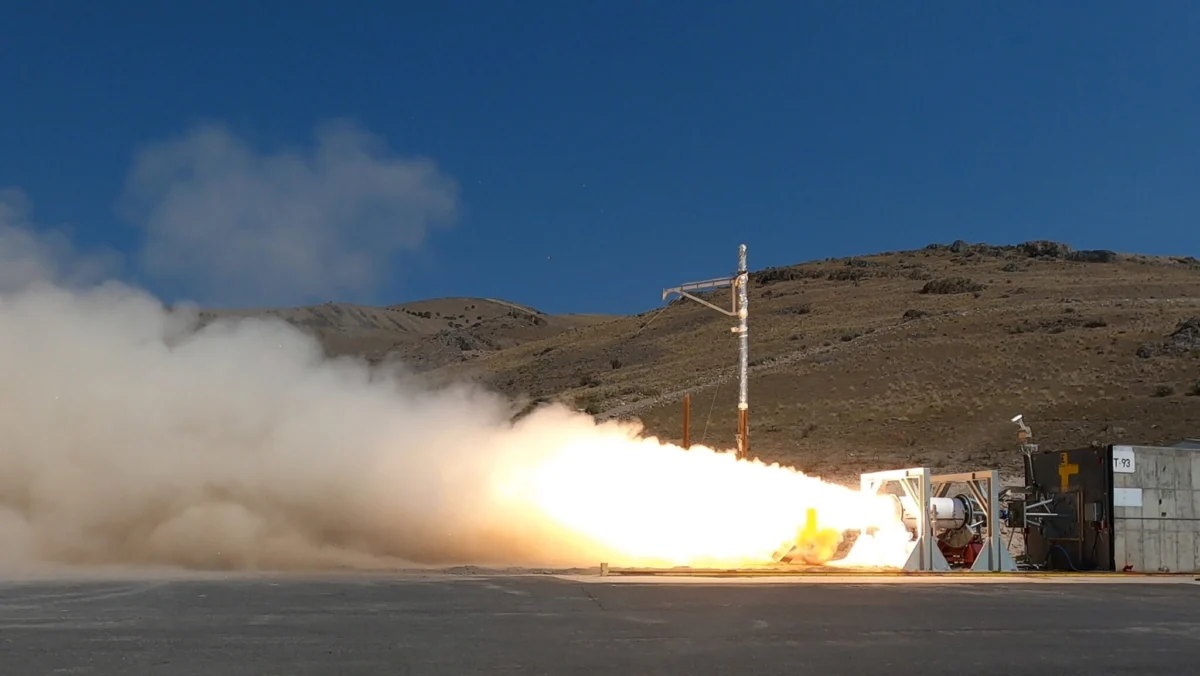
WASHINGTON — A sweeping new report from the Government Accountability Office (GAO) has cast a long shadow over the Pentagon’s multibillion-dollar effort to field hypersonic missiles. The watchdog’s findings reveal that the Department of Defense (DoD) lacks a unified investment strategy for the Navy and Army’s hypersonic programs, a strategic oversight that is fueling project delays, cost overruns, and significant industrial capacity shortfalls.
As the services race to deploy the Conventional Prompt Strike (CPS) capability—a strategic asset designed to strike targets anywhere in the world within minutes—the lack of integrated oversight has left the program vulnerable to inefficiency. With over $50 billion currently earmarked for these efforts, the GAO warns that without a drastic shift in management, the U.S. remains at risk of burning through taxpayer funds while failing to meet critical national security milestones.
The Core Conflict: A House Divided
At the center of the controversy is the misalignment between the Navy and the Army. While both branches share the same underlying technology for the Common Hypersonic Glide Body—the "warhead" portion of the missile that maneuvers at five times the speed of sound—they operate under disparate procurement and management structures.
The Navy is currently integrating the CPS capability into its fleet of Zumwalt-class destroyers and plans to equip Virginia-class submarines with the technology. Simultaneously, the Army is developing its own ground-launched variant, dubbed "Dark Eagle." Although the Navy is technically responsible for managing the production of the common missile glide body, the GAO notes that the services are making critical investment decisions in silos.
"While Navy and Army officials told GAO that they coordinate with each other, the services largely manage investment decisions for these programs separately, which contributes to inefficiencies and delays," the report stated. This decentralized approach has created a "portfolio-wide" blind spot, preventing the DoD from effectively balancing production throughput and funding priorities across the entire enterprise.
Chronology of a Program in Flux
The path to fielding hypersonic weapons has been fraught with technical and logistical hurdles since the program’s inception. The following timeline highlights the mounting pressure on the DoD to deliver:
- Initial Conception: The Pentagon identifies hypersonic weapons as a top-tier modernization priority, aiming to counter rapid advancements by global competitors in high-speed, maneuverable missile technology.
- 2023: The Navy requests approximately $3.6 billion over a five-year period to produce 64 CPS rounds, signaling an aggressive push toward operational readiness.
- January 2026: The USS Zumwalt is reported as 94% complete with its conversion to accommodate CPS missiles, yet the project falls behind schedule due to "unplanned work" and integration challenges.
- Mid-2026: Original timelines for flight testing are abandoned. The initial 2025 goal is pushed back to 2027, citing a cocktail of funding volatility and rigorous testing failures.
- Present Day: The GAO releases its findings, highlighting that the production line for the missile glide body is failing to meet the requirement of 12 rounds per year, operating instead at roughly half capacity.
The delay of the Zumwalt integration is particularly emblematic of the broader struggle. What was once intended to be a flagship demonstration of American naval power is now a case study in how complex, multiservice integration projects can become bogged down by the very bureaucracy meant to manage them.
Supporting Data: The Industrial Bottleneck
The GAO report provides a sobering look at the limitations of the current industrial base, with Lockheed Martin—the prime contractor for the CPS missile—struggling to keep pace with the Pentagon’s demands.
Production Throughput
The envisioned stockpile for the combined Navy and Army effort is 224 missiles. With each round costing tens of millions of dollars, the stakes for the taxpayer are immense. However, the GAO found that Lockheed Martin’s current capacity is limited to just six to seven rounds annually. This is a far cry from the stated goal of 12 units per year, creating a significant "throughput gap."
Quality and Cost
The report explicitly identifies that the contractor is facing persistent challenges in manufacturing the missiles "at anticipated rates and costs." When production volume fails to reach expected thresholds, the per-unit cost naturally inflates, further straining the already stretched $50 billion budget.
Supply Chain Resilience
Beyond simple manufacturing volume, the report hints at deeper supply chain vulnerabilities. The complexities involved in the materials required for hypersonic flight—which must withstand extreme heat and pressure during the glide phase—mean that any delay in the specialized supply chain cascades immediately to the final assembly line.
Official Responses and Institutional Stance
The reaction to the GAO’s findings has been a mix of professional acknowledgment and defensive posturing.
Lockheed Martin, while not commenting directly on the GAO report, issued a statement to industry observers emphasizing their commitment to the program. "We’re confident in the quality of our capabilities and are working across the industrial base to strengthen supply chain resilience," a company spokesperson stated. They notably deflected specific questions regarding the Army’s Dark Eagle system to the Office of the Secretary of War, highlighting the compartmentalized nature of the program.
The Department of Defense has officially agreed with the GAO’s core recommendation: that the Under Secretary of Defense for Acquisition must force a reconciliation between the Navy and Army’s procurement strategies. However, the DoD provided this agreement "without further comment," leaving questions about how quickly or effectively they intend to implement a unified management structure. The Navy, when approached for further clarification, declined to provide additional details beyond the existing reports.
Implications: A Strategic Gamble
The implications of these findings are profound. In an era of "Great Power Competition," the ability to strike time-sensitive targets with hypersonic precision is considered a cornerstone of conventional deterrence.
The Cost of Inaction
If the Navy and Army continue to operate without a "comprehensive strategy," the Pentagon risks more than just delays. It risks the "inefficient use of taxpayer funds" that the GAO explicitly warns against. In a fiscal environment defined by increasing national debt and competing priorities, such as the modernization of the nuclear triad and the expansion of the naval fleet, the hypersonic program cannot afford to be an outlier in terms of fiscal waste.
The Risk to Deterrence
Strategically, the delay in fielding the CPS and Dark Eagle systems creates a window of vulnerability. While the U.S. continues to refine its manufacturing processes and navigate its internal bureaucratic hurdles, international competitors continue to test and deploy their own versions of these weapons. The longer it takes to reach full-rate production, the longer the U.S. remains at a disadvantage in the hypersonic arms race.
The Path Forward
The GAO’s recommendation—a centralized portfolio management office or a unified strategy directive—is not merely a bureaucratic suggestion; it is a necessity for survival in a complex defense landscape. For the Pentagon, the path forward requires more than just money; it requires a fundamental restructuring of how the military branches share information, procurement authority, and industrial capacity.
As the program heads toward 2027 and the next round of testing, the spotlight will remain fixed on the Under Secretary of Defense for Acquisition. Whether they can enforce a unified vision upon the Navy and the Army will determine if the United States succeeds in fielding a credible, cost-effective hypersonic deterrent or continues to be hamstrung by the very systems it designed to maintain its global edge.