In a move that signals a seismic shift in the artificial intelligence landscape, the AI coding startup Cognition has officially acquired The Interaction Company of California, the developer behind the popular AI assistant, Poke. The deal, which industry insiders value in the "low nine figures," marks a strategic pivot toward prioritizing personality and conversational nuance in high-utility AI tools.
By integrating Poke’s unique interaction model with Cognition’s flagship coding assistant, Devin, the acquisition aims to bridge the gap between cold, mechanical utility and the warmth of human-like collaboration. As the industry moves beyond simple LLM performance metrics, Cognition is betting that the future of professional software engineering lies in agents that feel less like software and more like trusted colleagues.
The Core Transaction: Why Personality Matters
The acquisition brings together two of the most innovative entities in the generative AI space. Cognition, known for its high-performance coding agent, Devin, is now looking to scale its user experience by adopting the "friend-like" architecture of Poke.
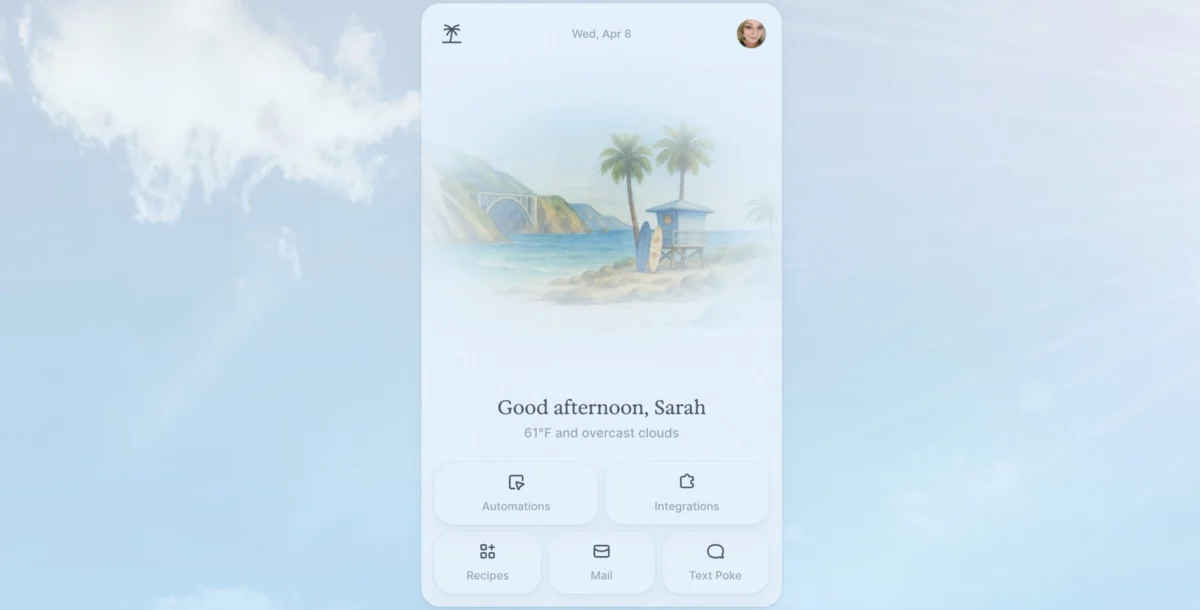
Poke, which debuted in March 2026, differentiated itself by abandoning the sterile, command-line interface typical of enterprise AI. Instead, it functions as a conversational partner, utilizing slang, humor, and natural, empathetic flow to handle tasks ranging from travel planning and health tracking to scheduling and complex administrative workflows.
For Cognition, the goal is to transform Devin from a specialized tool into a persistent, personality-driven teammate. As Cognition co-founder Scott Wu noted in a blog post, the company’s leadership—including Wu and co-founder Walden Yan—were early believers in the project, having served as angel investors in The Interaction Company long before the acquisition discussions took shape.
Chronology: A Rapid Ascent
The trajectory of Poke has been nothing short of meteoric. Below is a timeline of the platform’s rise and its subsequent integration into the Cognition ecosystem:
- March 2026: The Interaction Company launches Poke, an AI agent accessible via standard messaging protocols, including SMS, Telegram, and iMessage.
- Spring 2026: User engagement surges, with the platform recording over 100 million messages exchanged in a three-month window.
- June 2026: Poke achieves a significant milestone by becoming the first AI agent approved for Apple’s "Messages for Business" platform, signaling a new level of maturity in its deployment.
- Late 2026: Cognition finalizes the acquisition, signaling a transition from an independent consumer product to an integrated component of a broader software engineering platform.
- 2027 and Beyond: The companies plan a phased integration, with Poke beginning to leverage Cognition’s powerful SWE-1.7 software engineering model, while Devin begins to absorb the personality-first communication style of Poke.
Supporting Data and Operational Challenges
Despite its immense popularity, the journey for The Interaction Company was not without hurdles. While Poke attracted hundreds of thousands of users, the cost of infrastructure and maintenance created a difficult path to profitability.
Marvin von Hagen, co-founder of The Interaction Company, acknowledged that while the high volume of traffic proved the demand for "conversational AI," the operational expenses were significant. By joining forces with Cognition, Poke gains the infrastructure and technical backing of a well-capitalized unicorn, allowing it to pivot from a growth-at-all-costs consumer model to a deeply integrated productivity powerhouse.
The data supports the transition: users have demonstrated a clear preference for persistent, proactive assistance. Productivity tasks—specifically email management, calendar coordination, and ongoing to-do lists—emerged as the primary use cases for the platform, proving that users are looking for agents that can remember context over time.
Official Responses: A Vision for the Future
The leadership of both organizations has expressed a shared vision: the death of the "robotic" coworker.

"You probably prefer it if you have co-workers that have personality, rather than if you have co-workers that are just robots," said Marvin von Hagen in an interview with TechCrunch. "When you have co-workers that are also software engineers, they can also make a joke. And you’ll find it funny and enjoyable."
Scott Wu, echoing this sentiment, emphasized that the acquisition is about more than just technology; it is about the "feel" of work. "The Interaction team has built an agent that people love: it’s proactive, it knows you, and it’s fun to talk to. That’s exactly how working with Devin should feel, and now we get to build it together," Wu stated.
Implications: The New Frontier of AI Interaction
The acquisition of Poke represents a broader, industry-wide acknowledgment that the "intelligence" of an AI is no longer the sole competitive advantage. As LLMs become commoditized, the differentiator becomes the User Experience (UX) and the Agentic Workflow.
1. From Command-Line to Conversation
For years, coding assistants were designed as utility interfaces—you provide an input, the AI provides a code snippet. The integration of Poke suggests that the future of engineering will be conversational. Developers will be able to "chat" with their codebase, requesting changes, debugging, and refactoring with a partner that understands not just the syntax, but the developer’s specific preferences and working style.
2. Persistence as the Next Paradigm
One of the most exciting prospects mentioned by von Hagen is the concept of a "persistent co-worker." Currently, many AI coding tools function in a vacuum; once the session ends, the context is often lost. By utilizing Poke’s ability to orchestrate tasks across sessions, Cognition aims to create a workflow where Devin can manage long-term project goals, remember previous design decisions, and proactively suggest improvements without being prompted.
3. Orchestration over Execution
The acquisition also points toward the rise of "orchestrator" agents. Von Hagen noted that while Devin is exceptional at executing specific tasks like pull requests, there is significant value in having an orchestrator (Poke) that can manage multiple Devin sessions. This multi-agent approach could allow developers to delegate entire feature sets to an AI team, with the "personality" layer ensuring that the communication between the human and the machine remains fluid and intuitive.
What Happens Next?
For the remainder of the year, users of Poke should expect stability. The service will continue to operate on the Apple Messages for Business platform, maintaining its current functionality.
Starting in the new year, the integration phase begins. We can expect to see the following developments:
- Technical Upskilling: Poke will begin to utilize Cognition’s SWE-1.7 model, allowing it to perform more complex, engineering-focused tasks.
- Cross-Platform Integration: The unique "personality" and conversational flow of Poke will be gradually grafted onto the Devin interface.
- Increased Reliability: With the resources of Cognition, the platform aims to reduce latency and improve the consistency of its responses, moving away from the "expensive to run" prototype phase and into a robust, enterprise-grade offering.
The acquisition of The Interaction Company of California is a clear signal: the era of the robotic, task-based AI assistant is coming to an end. We are entering the era of the AI colleague—one that doesn’t just write code, but understands the humor, context, and rhythm of the humans it works alongside. As Cognition and Poke merge their capabilities, the definition of a "software engineering team" is about to undergo a permanent, and perhaps very human, transformation.