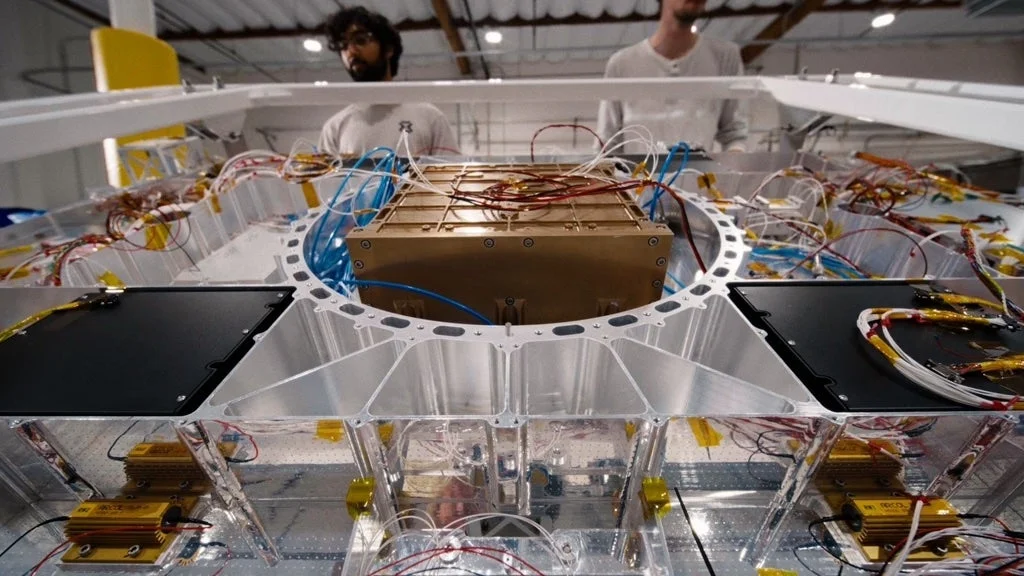
In a milestone for the burgeoning space economy, Solstar Space has successfully validated its "Deke" Space Communicator, proving that reliable, high-speed Wi-Fi connectivity can be maintained in the harsh, high-velocity environment of low-Earth orbit (LEO). During a complex rendezvous and proximity operations (RPO) mission involving a NASA CubeSat and the Momentus Vigoride-7 orbital service vehicle, the Deke system facilitated the seamless transmission of telemetry and multi-modal imagery, marking a significant step forward in the development of an "in-space internet."
This demonstration, conducted through the experimental use of the Iridium satellite constellation, suggests that the future of space infrastructure will rely less on bespoke, proprietary data links and more on standardized, off-the-shelf connectivity protocols.
The Mission: A Technological Symphony in Orbit
The demonstration centered on a coordinated flight between the NASA R5-S10 CubeSat and the Momentus Vigoride-7, an orbital transfer vehicle (OTV) designed to maneuver satellites and perform complex space logistics.
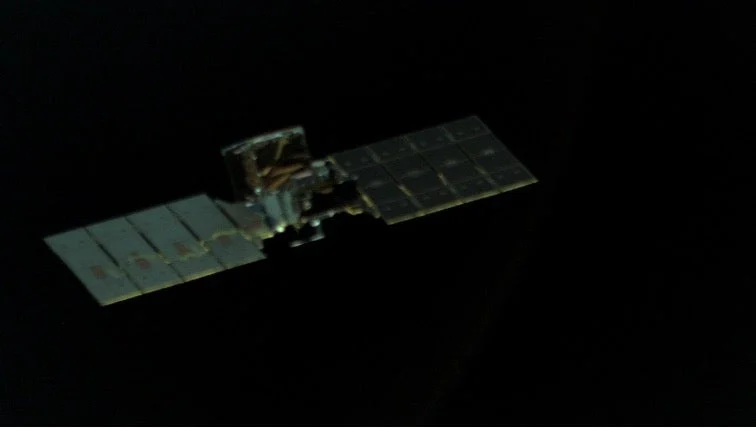
As the R5-S10 flew in formation with the Vigoride-7, it performed a series of proximity operations, maneuvering around the Momentus craft to perform a visual health and performance assessment. In the vacuum of space, where line-of-sight communication is often jittery and bandwidth is traditionally constrained, the Solstar Deke Communicator acted as the vital bridge. It captured, processed, and relayed high-fidelity mission data—including optical, infrared, and LiDAR sensor outputs—directly from the CubeSat to the Vigoride-7, and subsequently down to NASA’s Johnson Space Center (JSC) on Earth.
Chronology of the Demonstration
- Initialization: The Vigoride-7 vehicle, carrying the Solstar Deke payload, established a secure Wi-Fi handshake with the NASA R5-S10 CubeSat as it entered the designated proximity zone.
- The Proximity Window: Over a 30-minute operational window, the R5-S10 executed a series of controlled maneuvers, maintaining a stable formation while capturing diagnostic imagery of the Vigoride-7’s exterior.
- Data Acquisition: The Deke system successfully ingested over 2,300 distinct files. This data included high-resolution images, thermal IR data, and LiDAR point clouds, all transmitted via localized Wi-Fi protocols.
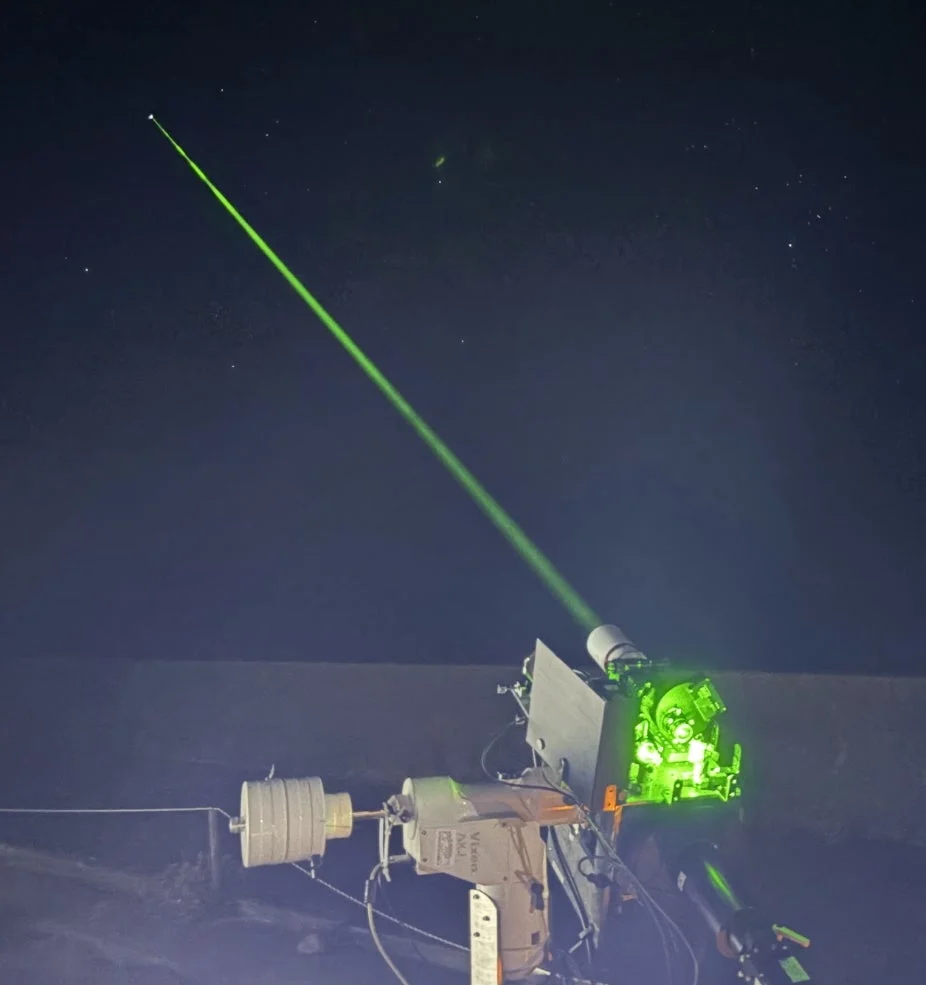
- Relay and Downlink: Acting as a celestial router, the Deke Communicator utilized the Iridium network to beam the accumulated data to terrestrial ground stations, allowing mission controllers at NASA JSC to monitor the health and status of the Vigoride-7 in near real-time.
The Technical Backbone: Why Wi-Fi in Space Matters
Traditionally, spacecraft-to-spacecraft communication has been handled through custom-built radio frequency (RF) links. While reliable, these systems are often closed-loop, meaning they cannot easily integrate with third-party hardware or software.
Solstar’s Deke Communicator represents a departure from this paradigm. By bringing the IEEE 802.11 Wi-Fi standard into the orbital domain, Solstar is essentially democratizing access to mission data. The ability for a CubeSat to "talk" to a larger service vehicle via standard wireless protocols significantly lowers the barrier to entry for small-satellite operators.
During this mission, the sheer volume of data—2,300 files in just half an hour—highlights the robustness of the system. The successful transmission of multi-modal sensor data (LiDAR and Infrared) proves that the link is not merely for basic telemetry, but is capable of supporting the high-bandwidth requirements of modern, autonomous robotic operations.
Official Perspectives and Industry Implications
The success of the mission has drawn praise from both the private sector and federal research agencies. The demonstration serves as a proof-of-concept for the "Space Service Layer," a theoretical network architecture that would allow various spacecraft to exchange data, navigation signals, and software updates as easily as devices on an office network.
Insights from Solstar Leadership
Brian Barnett, Founder and CEO of Solstar Space, emphasized the strategic importance of this achievement. "This important program shows how Solstar’s technology can help spacecraft stay connected and deliver critical mission data in near real-time to flight controllers, space operators, and mission operations engineers," Barnett stated. "We are effectively laying the groundwork for more capable, coordinated, and autonomous activity in space."
According to Barnett, the ultimate goal is to remove the "data silo" problem in orbit. By providing a standardized communications interface, Solstar aims to allow diverse spacecraft—built by different companies and government agencies—to interact without the need for bespoke, mission-specific engineering.
NASA’s Strategic Interest
For NASA, the successful collaboration between a CubeSat and a commercial orbital transfer vehicle provides a blueprint for future inspection missions. RPO missions are notoriously difficult; the ability to share sensor data between a small, agile observer (the CubeSat) and a primary vehicle (the Vigoride) is essential for future satellite servicing, debris removal, and in-orbit assembly. The use of the Iridium network as a relay further demonstrates NASA’s interest in leveraging commercial constellations to reduce the reliance on the Deep Space Network (DSN) for near-Earth missions.
Implications for the Future of the Space Economy
The implications of this demonstration extend far beyond a single mission. As the orbital environment becomes increasingly crowded, the need for intelligent, networked coordination between assets will become a safety requirement.
1. The Rise of In-Orbit Servicing
We are entering an era where satellites are no longer "set and forget" assets. Companies like Momentus, Astroscale, and others are actively developing vehicles capable of refueling, repairing, and upgrading satellites in orbit. These servicing missions require constant, high-speed data exchange to manage robotic arms, proximity sensors, and docking mechanisms. Solstar’s Wi-Fi technology provides the backbone for this "orbital maintenance shop."
2. Standardizing the Orbital IoT
The successful use of Wi-Fi in space suggests that the Internet of Things (IoT) will soon extend to Earth orbit. Small, inexpensive sensors—CubeSats and hosted payloads—could theoretically "ping" a passing service vehicle, upload their health data, and receive command updates. This would significantly lower the cost of operations for university-led CubeSat missions, as they would no longer need to maintain expensive, proprietary ground-station arrays.
3. Real-Time Situational Awareness
As orbital debris becomes a growing concern for space agencies and private companies, real-time situational awareness is critical. The ability to use LiDAR and optical sensors to map an object and transmit that data immediately via a space-based relay allows for a level of transparency and safety that current systems cannot match. The data captured by the R5-S10 is exactly the type of intelligence needed to prevent orbital collisions.
Conclusion: A Connected Frontier
The Solstar Deke Space Communicator mission is more than a successful tech demo; it is a signal that the infrastructure of the space economy is maturing. By applying familiar, battle-tested terrestrial standards to the orbital environment, Solstar has bridged a gap that has hampered space operations for decades.
As we look toward the future—a future defined by space stations, lunar gateways, and satellite repair fleets—the ability to maintain persistent, reliable connectivity will be the defining factor in mission success. With this latest achievement, the "in-space internet" is no longer a futuristic concept. It is here, it is operational, and it is ready to scale.
The successful relay of 2,300 files from a CubeSat to Earth via an orbital service vehicle serves as a reminder that as humanity expands its footprint in the cosmos, our ability to stay connected will be our greatest asset. Solstar Space, in partnership with Momentus and NASA, has taken a pivotal step toward ensuring that the next generation of space exploration is not just well-funded, but well-connected.