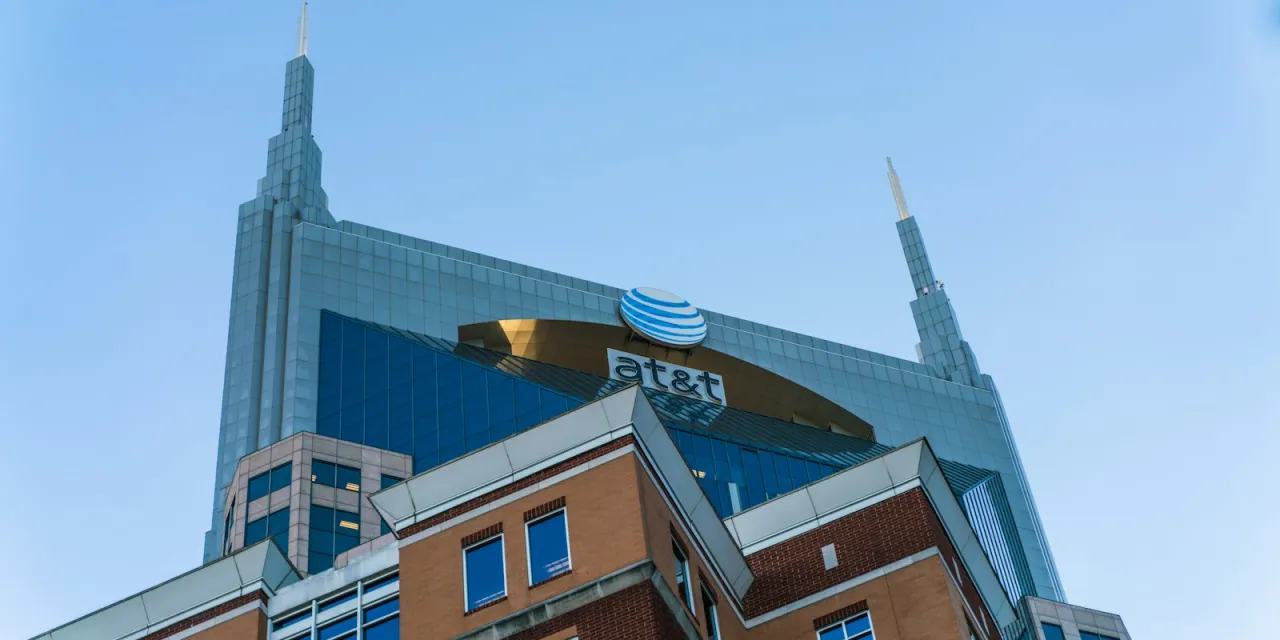
In a definitive move to reshape its global footprint, telecommunications giant AT&T has announced a definitive agreement to divest its Mexican subsidiary, AT&T Mexico, to a consortium comprising Grupo Televisa and Fintech Holdings. The transaction, valued at $2 billion in cash at closing—subject to customary adjustments and additional contingent benefits—marks the end of a decade-long attempt by the Dallas-based operator to challenge the dominance of América Móvil’s Telcel in the Mexican wireless market.
This divestiture is not merely a regional withdrawal; it represents a fundamental recalibration of AT&T’s corporate strategy. By shedding its Latin American assets, AT&T is signaling an aggressive pivot toward its domestic core, prioritizing the expansion of its fiber-optic broadband and 5G wireless infrastructure to support the surging demands of the artificial intelligence (AI) era.
The Deal Mechanics and Ownership Structure
Under the terms of the agreement, the acquisition will see Grupo Televisa and Fintech Holdings each assume a 50% stake in AT&T Mexico. The structure of the deal suggests a strategic synergy between the two buyers. Televisa, a media and telecommunications powerhouse, gains critical wireless infrastructure that complements its existing fixed broadband and broadcasting assets. Fintech Holdings, an investment vehicle controlled by Mexican billionaire David Martinez, further cements its influence in the regional telecoms landscape, having already held a significant 22.3% stake in Televisa.
The deal, which has been under negotiation since at least December 2025, is currently subject to standard regulatory approvals in Mexico. Both parties anticipate the transaction will finalize by the first quarter of 2027.
A Historical Retrospective: The Rise and Fall of AT&T Mexico
To understand the gravity of this exit, one must look back to 2015, a year that marked the beginning of an ambitious expansion for AT&T. At that time, the company aggressively entered the Mexican market, spending a combined $4.375 billion to acquire mobile operators Iusacell ($2.5 billion) and Nextel Mexico ($1.875 billion).
The mandate was clear: consolidate these entities into a single, formidable brand—AT&T Mexico—and disrupt the monolithic grip that Telcel, owned by Carlos Slim’s América Móvil, held over the country. For years, AT&T invested heavily in network density and marketing, succeeding in building the country’s second-largest mobile network. However, the objective of "displacing" the incumbent remained elusive.
By March 2026, the subscriber chasm had become impossible to ignore. Telcel reported approximately 84.5 million mobile subscribers, whereas AT&T Mexico hovered around 24 million. Despite the capital expenditure and the introduction of advanced mobile technologies, AT&T found itself in a position where further investment to gain marginal market share was no longer efficient, especially when compared to the high-margin opportunities available in the United States.
Chronology: Key Milestones of the Mexico Operation
- January 2015: AT&T completes the acquisition of Iusacell, marking its official entry into the Mexican mobile market.
- April 2015: The acquisition of Nextel Mexico is finalized, providing the necessary spectrum and footprint to challenge incumbents.
- 2015–2024: A period of aggressive network expansion and service bundling. AT&T Mexico establishes itself as the primary alternative to Telcel but struggles to achieve profitability at scale.
- December 2025: Initial reports surface confirming that AT&T is in formal negotiations with Grupo Televisa regarding a potential divestment of its Mexican assets.
- February 2027: The formal announcement of the $2 billion sale is made, setting a clear timeline for the transition of ownership.
- Q1 2027 (Expected): Targeted closure of the transaction pending regulatory oversight.
Official Perspectives: The Strategic Rationale
The rhetoric surrounding the sale focuses heavily on the concept of "converged networks." John Stankey, Chairman and CEO of AT&T, emphasized in a recent press release that the divestiture is a calculated step toward a future defined by AI and high-density connectivity.
"We have articulated a strong belief that the AI future will run on converged networks with dense fiber assets," Stankey noted. "This move positions AT&T Mexico to participate in that evolution and is consistent with our long-term strategy to focus our capital allocation on opportunities for growth in the vibrant U.S. market."
For AT&T, the "vibrant U.S. market" is currently defined by the massive rollout of fiber-to-the-premises (FTTP) and the densification of 5G sites. By exiting Mexico, the company frees up balance sheet capacity and management bandwidth to focus on these high-growth domestic sectors, which are increasingly viewed as the bedrock of the next generation of digital infrastructure.
Market Implications: What This Means for Mexico
The acquisition is set to fundamentally alter the competitive landscape of the Mexican telecommunications sector. Televisa’s current market share of fixed and wireless subscribers is expected to climb from 8% to 19% post-merger.
For Consumers: The Rise of the "Quad-Play"
For the Mexican consumer, this consolidation could be a double-edged sword. On one hand, Televisa will now possess the necessary assets to offer a true "quad-play" service—bundling mobile, fixed broadband, television, and telephony. This creates a stronger challenger to Telcel’s dominant market position, potentially driving innovation in service bundles and pricing.
For Competitors: The Weight of the Incumbent
Telcel, however, remains a formidable force. With over 84 million subscribers, the incumbent benefits from massive economies of scale and an deeply entrenched infrastructure. While the Televisa-Fintech consortium represents a more integrated competitor than AT&T was on its own, it remains to be seen whether the combined entity can bridge the gap in network quality and reach that has historically kept Telcel in the lead.
Supporting Data and Financial Context
The $2 billion valuation represents a pragmatic exit for AT&T. While it falls short of the initial capital invested nearly a decade ago, the company has managed to extract value from a market where it had reached a growth plateau. The move allows AT&T to report a cleaner balance sheet, reducing exposure to currency fluctuations in emerging markets and focusing on the USD-denominated cash flows of its domestic fiber and wireless business.
- Subscriber Gap: The 84.5 million (Telcel) vs. 24 million (AT&T) ratio highlights the difficulty of competing against a dominant regional incumbent that also controls the lion’s share of legacy infrastructure.
- Capital Allocation: By pivoting away from the Mexican market, AT&T is reallocating billions in potential future CAPEX back to the U.S., where the ROI on fiber expansion and 5G densification is currently higher due to enterprise demand for AI-ready infrastructure.
The Future Landscape: AT&T’s Domestic Focus
As the telecommunications industry enters the era of 6G development and massive AI-driven data processing, the physical network has never been more important. AT&T’s strategy is clearly to own the "pipes" of the future. By concentrating on U.S. fiber and wireless, the company is positioning itself to be the primary provider for hyperscalers and enterprises that require low-latency, high-bandwidth connectivity to power their AI models and cloud services.
The exit from Mexico is the final piece of a puzzle that has seen AT&T shed various international and media-related assets (such as its earlier divestment of WarnerMedia) to return to its roots as a pure-play connectivity provider.
Conclusion
The sale of AT&T Mexico is a bellwether for the global telecom industry. It highlights a growing trend among multinational operators: the retreat from competitive, capital-intensive international markets in favor of domestic consolidation. For AT&T, the focus is now squarely on the U.S. fiber-to-the-home and 5G markets. For the Mexican market, the deal marks the beginning of a new chapter where Grupo Televisa, bolstered by Fintech Holdings, will attempt to leverage integrated service offerings to provide a meaningful alternative to the long-standing market leader. As the regulatory bodies review the deal, the industry will be watching closely to see if this consolidation truly creates a more competitive environment or simply reshuffles the deck in a market that has long resisted disruption.