By Industry Correspondent
The telecommunications landscape is undergoing a profound metamorphosis. As the initial "gold rush" of nationwide fibre-to-the-premises (FTTP) deployments begins to stabilize in mature markets like the United Kingdom, the industry is shifting its focus from raw volume to operational efficiency and service diversification. At the heart of this transition stands NETS International, a company that has evolved from a lean startup into a multinational infrastructure powerhouse.
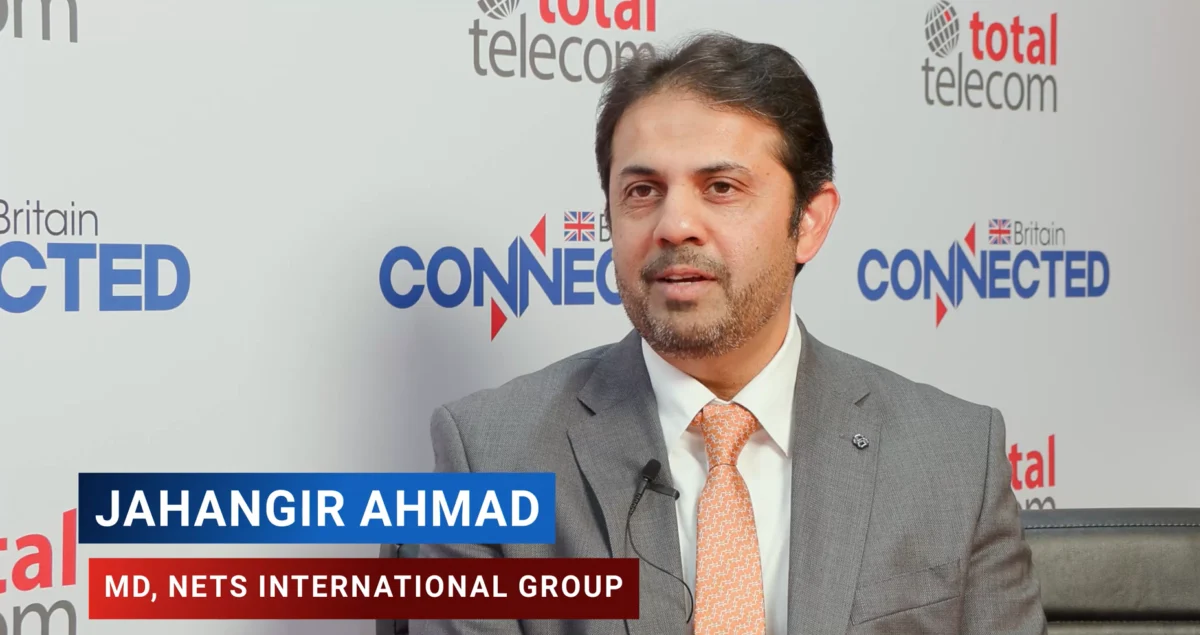
At Connected Britain 2026, we sat down with Jahangir Ahmad, Managing Director of NETS International, to chart the company’s trajectory—a journey marked by aggressive growth, tactical geographic expansion, and a bold leap into the next generation of smart technology and energy infrastructure.
Main Facts: The Evolution of a Telecom Powerhouse
NETS International has moved beyond the traditional bounds of network deployment. Since entering the UK market in 2020, the firm has undergone a remarkable metamorphosis. Starting with a foundational team of just two individuals, the company has scaled to a robust workforce of approximately 180 employees.
This expansion is not merely quantitative; it is strategic. While NETS continues to play a pivotal role in the UK’s fibre network rollout—a critical component of the government’s mission to achieve nationwide gigabit-capable connectivity—it is concurrently diversifying its portfolio. The company’s current operational footprint spans the United Kingdom, Germany, and the United States, positioning it as a key player in the global infrastructure supply chain.
The core of NETS’ current strategy is a pivot toward "converged infrastructure." This involves leveraging their deep expertise in fibre optics to enter adjacent high-growth verticals, including data centres, 5G densification, smart home integration, and the rapidly expanding EV charging ecosystem.
Chronology: A Trajectory of Rapid Scaling
To understand the current success of NETS International, one must look at the timeline of its development:
- 2020: The UK Entry. NETS enters the British market at a time of immense pressure on the telecom sector to accelerate connectivity. With a lean team of two, the company begins establishing its operational processes, focusing on high-quality fibre deployment.
- 2021-2023: The Growth Phase. As demand for FTTP surges, NETS scales its recruitment and operational capacity. The company secures key contracts, positioning itself as a reliable partner for Tier 1 and Tier 2 network operators.
- 2024: Geographic Diversification. Recognizing that market maturity in the UK would eventually necessitate broader horizons, NETS expands operations into Germany and the United States. This internationalization allows the company to hedge against localized market fluctuations.
- 2025: Vertical Integration. NETS shifts its focus toward data centres and 5G infrastructure, leveraging existing relationships with operators to provide turnkey solutions for complex digital environments.
- 2026: The Smart Future. At Connected Britain 2026, NETS officially announces its commitment to the "Smart Vertical," specifically targeting the intersection of energy and connectivity, including the installation and management of EV charging networks.
Supporting Data: The Maturation of the Telecom Industry
The shift in NETS’ business model reflects broader macroeconomic and industry-specific data. According to recent industry reports, the UK fibre market has moved past the "land grab" phase. As of 2026, the focus has shifted toward:
- Customer Experience (CX): With network availability reaching high percentages, the differentiator is now the installation experience and ongoing maintenance. NETS has invested heavily in workforce training to ensure that the final mile of connectivity is as seamless as the engineering behind it.
- Operational Efficiency: Inflationary pressures and the cost of capital have forced firms to prioritize operational efficiency. NETS’ ability to manage large-scale deployments while maintaining low overheads has been a key factor in its continued contract wins.
- Sustainability Mandates: The integration of EV charging is not a random pivot; it is a calculated response to the UK’s Net Zero 2050 targets. By combining network installation with electrical infrastructure, NETS is capturing a larger share of the "Green Build" market.
Official Responses: Insights from Jahangir Ahmad
During our discussion at Connected Britain, Jahangir Ahmad emphasized that the company’s success is rooted in adaptability.
"When we started in 2020, the goal was simple: execute flawlessly on fibre," Ahmad explained. "But you cannot remain static in this industry. The UK market is maturing. It is no longer just about digging trenches and blowing fibre; it is about providing long-term value to the operator and the end consumer."
Addressing the company’s move into EV charging and smart homes, Ahmad noted the natural synergy between connectivity and energy. "Everything in the future smart home relies on a robust data pipe. Whether it is an EV charger that needs to report grid usage in real-time or a smart energy management system, these devices are essentially edge-computing nodes. We are building the infrastructure that connects these nodes to the wider grid and the cloud."
Ahmad also highlighted the importance of workforce development. "Scaling from two people to 180 is not just about hiring; it’s about culture. We’ve focused on creating a workforce that understands that they are not just engineers—they are architects of the digital economy."
Implications: The Convergence of Connectivity and Energy
The implications of NETS International’s strategy are significant for the broader infrastructure sector.
1. The Rise of the "Total Infrastructure Partner"
Companies that can provide a multi-disciplinary service—covering fibre, 5G, data centre cooling/connectivity, and electrical vehicle infrastructure—are becoming more attractive to private equity and large telecom operators. NETS is successfully positioning itself as this "one-stop-shop," reducing the complexity for clients who would otherwise have to manage multiple subcontractors.
2. Resilience Through Geographic Hedging
By operating in the UK, Germany, and the US, NETS is better protected against regional economic downturns. The German market, with its focus on industrial digitization (Industry 4.0), presents a different set of challenges and opportunities compared to the residential-heavy UK market. This diversity of experience fosters a unique technical expertise that gives NETS a competitive edge globally.
3. Addressing the "Energy-Connectivity Gap"
One of the biggest hurdles to the adoption of EVs and smart homes is the lack of integrated infrastructure. By entering the EV charging market, NETS is essentially acting as a bridge between the utility sector and the telecom sector. This convergence is expected to be a primary driver of industry growth over the next decade.
4. Long-Term Value Creation
The industry’s shift toward maintenance and operational efficiency suggests that the "easy money" of new-build fibre is tapering off. NETS’ pivot ensures that they remain relevant even after the initial build-out phase is complete. By focusing on the "smart home" and "data centre" verticals, the company is securing a pipeline of work that is maintenance-heavy and recurring, rather than strictly project-based.
Conclusion: Looking Toward 2030
As the interview concluded, it was clear that NETS International views the current maturity of the UK telecom market not as a ceiling, but as a launchpad. The company has successfully transitioned from a specialized fibre contractor to a diversified infrastructure firm.
For the industry, the message from NETS is clear: the future belongs to those who can integrate disparate technologies. As 5G, IoT, and green energy collide, the need for skilled, reliable, and multi-faceted infrastructure partners will only grow. NETS International, under the steady hand of Jahangir Ahmad, appears well-prepared to meet that demand, proving that even in a highly competitive market, there is always room for a company that can redefine its purpose to match the changing needs of the digital age.
For those interested in the future of the digital economy, the discussions held at Connected Britain 2026 serve as a stark reminder: connectivity is the lifeblood of the modern world, and companies like NETS are the arteries that keep it flowing.