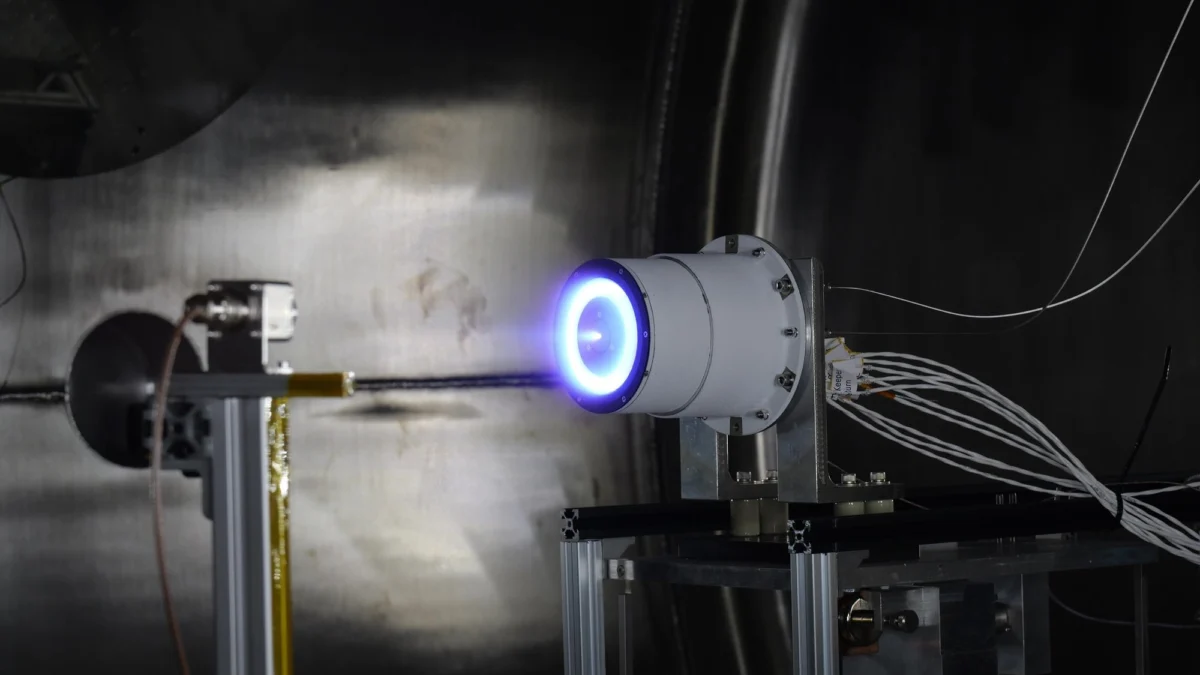
In a move that signals a significant expansion of its orbital capabilities, Impulse Space—the California-based aerospace firm founded by propulsion veteran Tom Mueller—has officially unveiled "Electra." This proprietary electric propulsion system represents the company’s strategic pivot toward long-duration, high-efficiency space operations. By integrating this technology into its existing spacecraft architecture, Impulse Space aims to redefine the logistics of the “last mile” in orbit, offering a hybrid approach that combines the raw power of chemical rockets with the sustained endurance of electric propulsion.
Main Facts: The Electra Propulsion System
The Electra system is not merely a component upgrade; it is a fundamental shift in how Impulse Space approaches mission architecture. Developed in-house, the system is designed to provide high-specific-impulse maneuvers, which are essential for tasks requiring prolonged operation in space, such as station-keeping, altitude maintenance, and complex orbital phasing.
Key highlights of the Electra system include:
- Vertical Integration: Impulse Space has achieved near-total vertical integration, manufacturing both the thruster hardware and the supporting avionics in-house. This strategy ensures tighter quality control and a faster iterative design cycle.
- The Hybrid Advantage: Impulse characterizes the synergy between its systems as a "sprinter vs. marathon runner" dynamic. Chemical propulsion provides the high-thrust bursts necessary for rapid orbital insertion and collision avoidance, while Electra handles the low-thrust, high-efficiency requirements of long-term orbital positioning.
- Mission Integration: The system is specifically engineered to be modular, facilitating its integration with the company’s Mira spacecraft, as well as upcoming platforms in the firm’s growing fleet.
Chronology: From Concept to Qualification
The timeline of Electra’s development underscores the rapid pace at which Impulse Space operates. Despite being a relatively young company, its ability to transition from concept to hardware testing is reflective of its team’s deep industry pedigree.
- Mid-2025: Impulse Space first signaled its interest in expanding beyond chemical propulsion. At the time, the announcement was framed as an exploratory R&D initiative intended to broaden the company’s portfolio of orbital transfer vehicles (OTVs).
- Early 2026: Within a remarkably tight six-month window, the engineering team transitioned from initial design reviews to the first successful firing of the propulsion system. This rapid prototyping phase proved the viability of the electric thruster core.
- Mid-2026: Following the successful test-fire results, the company shifted into a formal qualification phase. Currently, the engines are undergoing rigorous stress testing to ensure flight readiness for integration into the Mira spacecraft.
- Future Outlook: The system is slated for its inaugural in-space demonstration on the GEO Express 1 mission. Following that, it is scheduled to fly on the Caravan 1 mission, projected for 2027.
The Engineering Philosophy: Sprinters and Marathon Runners
To understand why Impulse Space is investing heavily in electric propulsion, one must look at the physics of orbital mechanics. Chemical propulsion systems rely on energetic reactions to provide high-thrust, short-duration maneuvers. These are essential for leaving a parking orbit or escaping a planetary gravity well. However, they are fuel-intensive.
Electric propulsion, conversely, utilizes ionized gas accelerated by electromagnetic fields. While the thrust is significantly lower than a chemical engine, the efficiency—measured by specific impulse—is vastly superior. By utilizing Electra for "station-keeping"—the process of keeping a satellite in its precise orbital slot—Impulse Space preserves its precious chemical fuel for maneuvers that require high-velocity changes.
This duality allows for missions that were previously economically unfeasible. By offloading maintenance tasks to the electric system, a spacecraft can remain operational for years longer than a platform reliant solely on chemical thrusters. This directly addresses the growing demand for sustainable, long-term orbital operations in the increasingly crowded Geosynchronous Earth Orbit (GEO) environment.
Official Responses and Strategic Vision
The development of Electra is deeply rooted in the vision of Impulse Space Founder, CEO, and CTO Tom Mueller, a name synonymous with high-performance rocket engines. Mueller, whose background includes a foundational role in the development of SpaceX’s Merlin engines, views the "space economy" as a logistics challenge.
“As launch becomes more accessible, the next frontier is enabling spacecraft to do more once they arrive in orbit,” Mueller stated during the announcement. “Our strategy has always been to develop the mobility technologies needed to support all missions after launch, and electric propulsion is an essential component of that strategy.”
Mueller’s emphasis on "mobility technologies" points to a broader corporate goal: becoming the premier service provider for the space industry’s "middle mile." By providing a fleet of vehicles that can pick up payloads from launch vehicles and deliver them to specific orbital slots, Impulse Space is effectively building the "trucking company" of the orbital economy.
Implications for the Space Economy
The introduction of Electra has several far-reaching implications for the commercial space sector:
1. Enabling the GEO Rideshare Market
Impulse Space’s new GEO rideshare program is arguably the most significant beneficiary of the Electra system. GEO is a premium, high-value orbit, but it is notoriously expensive to reach. By offering a rideshare model, Impulse allows smaller satellite operators to share the cost of reaching GEO. The Electra system makes this economically viable, as the OTV can perform the final, precise orbital insertion maneuvers without exhausting its fuel supply, thus increasing the payload capacity for secondary customers.
2. Reducing Orbital Debris and Increasing Longevity
As orbital slots in GEO become increasingly congested, the ability to maneuver precisely is becoming a regulatory requirement. Satellites equipped with long-duration electric propulsion can perform end-of-life de-orbiting maneuvers more reliably, mitigating the risk of dead spacecraft becoming hazardous debris. Furthermore, by extending the operational lifespan of satellites, operators can maximize their return on investment, shifting the industry toward a model of sustainable asset management.
3. Vertical Integration as a Competitive Edge
By building the thruster and the avionics in-house, Impulse Space is insulating itself from supply chain volatility. In an era where aerospace components often face lead times measured in years, controlling the manufacturing process is a strategic advantage. It allows Impulse to rapidly integrate feedback from mission telemetry directly into the next batch of hardware, creating a "software-like" development cadence in the heavy manufacturing sector.
4. A Shift in Market Power
Impulse Space is positioning itself as a "third-party logistics" provider for space. By creating a standardized, high-performance propulsion system, they are lowering the barrier to entry for other companies. Startups that lack the capital to develop their own high-efficiency propulsion can now look to Impulse Space to provide the "mobility" needed to get their hardware where it needs to be.
Conclusion
The unveiling of the Electra propulsion system is a milestone that marks Impulse Space’s transition from a startup with a promising engine design to a mature space logistics firm with a diversified product portfolio. By successfully balancing the aggressive, high-thrust requirements of chemical propulsion with the sustained, efficient performance of electric thrusters, the company is tackling the most critical bottleneck in the space economy: the need for affordable, long-term mobility.
As the company moves toward the GEO Express 1 and Caravan 1 missions, the industry will be watching closely. If Electra performs as expected, it will provide the backbone for a new generation of orbital infrastructure, potentially unlocking new business models in satellite servicing, debris removal, and persistent orbital observation. In the grander narrative of space exploration, Impulse Space is not just building engines; they are building the infrastructure that will allow humanity to operate in space with the same ease and efficiency as we do on the ground.