The global electric vehicle (EV) industry is currently tethered to a paradox. While manufacturers race to increase efficiency, range, and power density, they remain heavily reliant on Permanent Magnet Synchronous Motors (PMSMs). These motors, which utilize high-performance rare-earth magnets, have become the industry standard. However, this reliance introduces significant vulnerabilities: volatile supply chains, geopolitical trade risks, and inherent physical limitations regarding thermal management and high-speed efficiency.
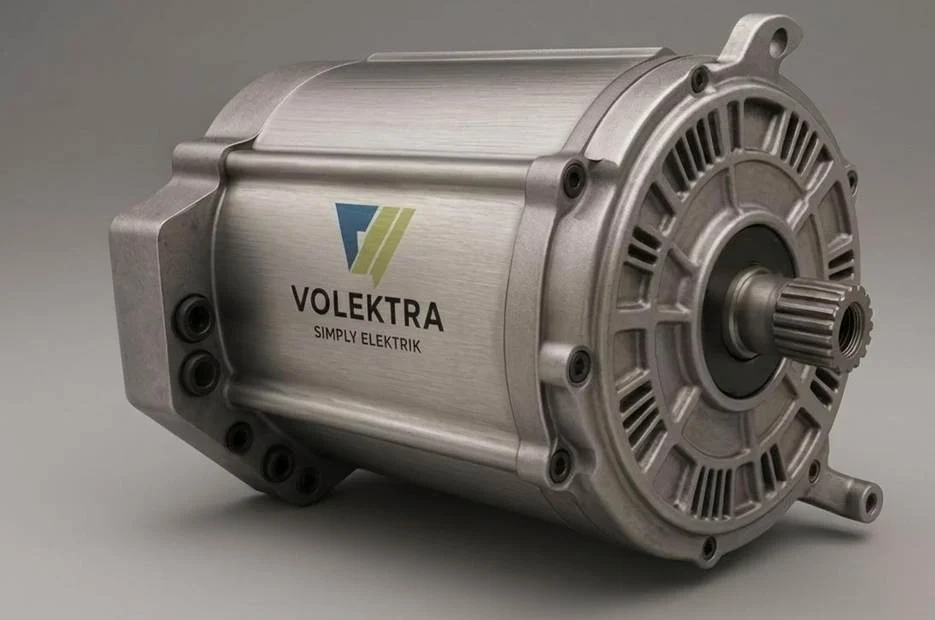
Enter Vimag Labs, an Indian startup that claims to have cracked the code to a "rare-earth-free" future. By introducing its Virtual Magnet Synchronous Motor (VMSM)—marketed under the Volektra brand—the company aims to decouple EV performance from the availability of restricted materials, leveraging software-defined electromagnetism to achieve what was previously thought to be impossible without physical magnets.
The Problem: The "Permanent" Limitation
Permanent magnets, while effective, are essentially "locked" in their state. This rigidity creates two primary headaches for automotive engineers. First, they are sensitive to heat. As magnets reach their Curie temperature, they begin to lose their magnetic properties, necessitating elaborate and costly cooling systems.

Second, there is the issue of "field-weakening." At high rotational speeds, permanent magnets generate a back electromotive force (back EMF). As this force approaches the battery voltage, the motor’s controller must actively oppose the rotor’s magnetic field to keep the motor spinning, a process that consumes significant electrical power and degrades efficiency.
"The problems we wanted to solve were twofold," says Manish Seth, founder and CEO of Vimag Labs. "One was getting rid of magnets. Second, magnets themselves have certain technical issues that limit the potential of the powertrain."
Chronology: From First Principles to Road-Ready
The development of the VMSM did not happen overnight. The team at Vimag Labs began their journey in 2020, intentionally avoiding a "copy-paste" approach to existing technology.

- 2020–2021: The foundational research phase. Vimag evaluated switched reluctance, synchronous reluctance, and AC induction motors, concluding that none could match the torque and power density of a PMSM. The team decided to return to first principles.
- 2021–2022: The "Eureka" moment. The team developed a prototype that utilized inductive power transfer to energize copper windings in the rotor, effectively creating an electromagnet that could be controlled via software.
- 2024: Formal incorporation of Vimag Labs. The company moved from the "proof of concept" phase to the development of production-intent hardware.
- Late 2026: Having achieved Technology Readiness Level 8 (TRL 8), the company is now transitioning into on-road vehicle testing with OEMs and Tier 1 suppliers, signaling a move toward mass-market commercialization.
The Architecture: Rethinking the Rotor
Vimag Labs’ VMSM is an evolution of the externally excited synchronous machine (EESM). Historically, EESMs have been used by manufacturers like BMW, but they typically rely on brushes and slip rings to deliver power to the rotor. These mechanical components are notorious for wear, electrical noise, and high maintenance—factors that have prevented them from becoming the universal choice for EVs.
Vimag Labs has circumvented these issues by developing a proprietary, patented inductive wireless power transfer system. By transmitting power across an air gap to the rotor, the motor eliminates physical electrical contact. The "Virtual Magnet" is created by copper windings that, when wirelessly energized, behave exactly like a permanent magnet—except the field strength is entirely tunable.
This effectively shifts the complexity of the motor from the mechanical realm to the digital realm. The motor becomes a "software-defined" component where torque, efficiency, and magnetic flux can be adjusted in real-time based on the vehicle’s operating conditions.

Supporting Data: Efficiency and Performance
The performance metrics reported by Vimag Labs suggest that the VMSM is not merely a "green" alternative but a technical upgrade. According to the company, the VMSM demonstrates:
- Increased Torque: By leveraging advanced control methods that optimize current distribution and magnetic saturation, the VMSM provides a 20% to 30% increase in torque for the same current compared to conventional designs.
- Superior High-Speed Efficiency: Because the rotor current can be modulated dynamically, the VMSM avoids the heavy efficiency penalties incurred by PMSMs in the field-weakening region.
- Dynamic Response: The system executes control calculations at rates exceeding 20 kHz. Whether the vehicle is climbing a steep incline or cruising at high speeds, the software determines the precise balance between stator current and rotor excitation, effectively "tuning" the magnet’s strength on the fly.
"If you are going over a slope, the software dynamically understands whether it needs to generate more torque through the stator or whether it needs to make a stronger magnet," Seth explains. "It’s a multi-variable system that requires real-time intelligence."
The "Brain" of the Motor: Proprietary Algorithms
Perhaps the most significant aspect of Vimag Labs’ strategy is its refusal to rely on hardware brute force. While many competitors focus on larger processors, Vimag focuses on code efficiency. The company uses standard automotive-grade microcontrollers but optimizes its software through a blend of logic-based algorithms, regression models, and machine learning.

Crucially, Vimag Labs has decided to keep these algorithms as "trade secrets" rather than patenting them. By keeping the "brain" of the motor proprietary, they ensure that the unique performance characteristics of their VMSM remain difficult for competitors to replicate. The long-term roadmap involves migrating these functions into custom-designed SoCs (System-on-Chips) and eventually proprietary silicon to further reduce costs and board space.
Implications for the Automotive Industry
The implications of the VMSM technology are profound. For OEMs, the shift represents a potential escape from the "rare-earth trap."
- Supply Chain Resilience: By removing the reliance on rare-earth materials, automakers can insulate themselves from price spikes and supply chain bottlenecks in China and other regions where these materials are processed.
- Scalability: Because the hardware is designed to be compatible with existing vehicle platforms, the VMSM can be integrated into current assembly lines with minimal disruption. The "customization" happens in the software calibration layer.
- Cost Dynamics: As the industry moves toward specialized semiconductor devices for motor control, the cost-benefit profile of the VMSM is expected to improve further.
Vimag Labs is currently targeting the entire spectrum of the EV market, from two- and three-wheelers to heavy-duty trucks and passenger cars. With programs already underway in Europe and ongoing discussions in the U.S., the company is positioning itself as a pivotal player in the next generation of powertrain design.

Conclusion: A New Era of "Virtual" Engineering
As the EV industry matures, the limitations of "fixed" hardware are becoming increasingly apparent. The success of Vimag Labs’ VMSM suggests that the future of automotive propulsion lies not just in better magnets, but in the ability to transcend them entirely. By moving from the constraints of permanent, physical materials to the flexibility of software-defined electromagnetism, Vimag Labs is challenging the industry to think differently about how we move.
"The bottleneck," as Manish Seth suggests, "shifts from the motor to the semiconductor." If Vimag Labs continues its successful trajectory, the next generation of EVs may be defined not by the strength of their magnets, but by the intelligence of their code.