The global semiconductor landscape is undergoing a tectonic shift, one defined not by the cyclical fluctuations of consumer demand, but by the insatiable, structural hunger of Artificial Intelligence. As hyperscale data centers race to deploy increasingly complex Large Language Models (LLMs), they have created a massive bottleneck in the hardware stack: Dynamic Random-Access Memory (DRAM). Industry analysts are now warning that the current supply shortage is not a temporary blip, but a persistent, multi-year reality that may define the memory market through 2027 and beyond.
The New Paradigm: AI as the Primary Driver
Historically, the DRAM market operated on a predictable, albeit volatile, boom-and-bust cycle. Success was tethered to the health of the PC and smartphone sectors. When consumer demand waned, memory makers saw prices collapse under the weight of excess inventory. However, the rise of generative AI has fundamentally decoupled memory demand from consumer electronics.
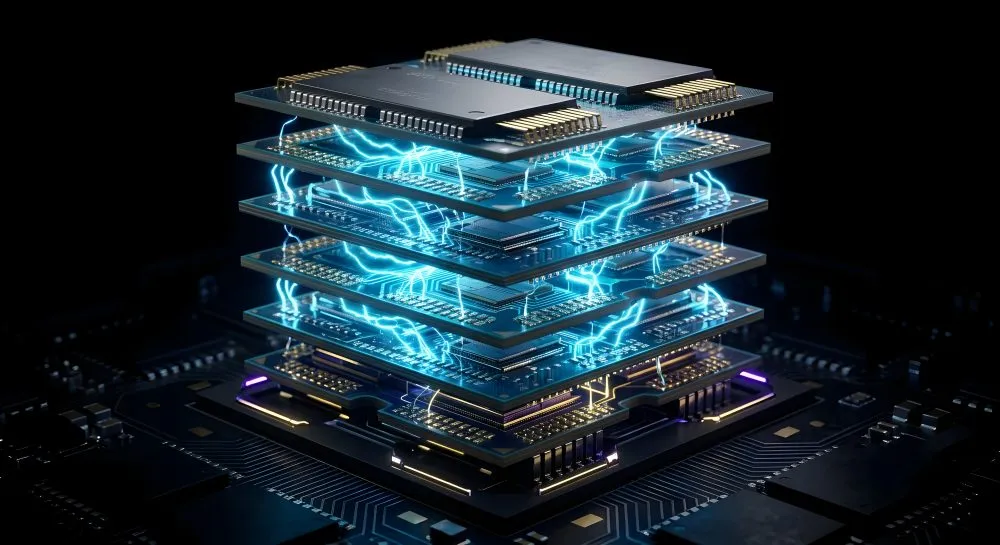
"This is the most undersupplied the DRAM market has been in decades," says Mike Howard, director of DRAM and memory markets at TechInsights. Unlike the past, where memory was a secondary commodity, AI has elevated DRAM—and specifically High-Bandwidth Memory (HBM)—to the status of a "gating semiconductor component." It is no longer just a supporting element; it is the bottleneck that dictates how fast an AI system can train, infer, and scale.

Chronology of the Crisis: From Surge to Structural Shortage
The seeds of the current supply crunch were sown during the initial explosion of generative AI investments in 2023. By early 2024, the industry began to realize that standard DDR5 DRAM would be insufficient for the bandwidth requirements of next-generation GPUs.
- 2023: Initial AI infrastructure buildouts begin to consume significant portions of HBM production capacity.
- 2024: Memory manufacturers shift capital expenditure (CapEx) toward AI-optimized nodes, effectively tightening supply for traditional compute markets.
- 2025 (Current Period): The supply-demand gap widens as physical AI and edge-compute requirements begin to emerge alongside cloud-based LLMs.
- 2026–2027 (Forecast): Analysts anticipate that demand growth will continue to outpace the industry’s ability to bring new fabrication plants (fabs) online, cementing the shortage.
Industry experts note that even as manufacturers plan new capacity, the complexity of manufacturing advanced DRAM means that adding supply is not an overnight process. It requires years of facility construction, clean-room certification, and yield optimization.
Data-Driven Insights: Quantifying the Scarcity
The severity of the situation is reflected in the latest industry reports. According to the Dell’Oro Group, worldwide data center IT semiconductor and component revenue for servers and storage systems surged by a staggering 182% in the second quarter of 2026. This growth is directly attributable to the triple-digit increase in demand for DRAM and specialized storage systems.

Furthermore, Omdia has upwardly revised its 2026 semiconductor revenue forecast, projecting a 94.1% year-over-year surge. Perhaps most tellingly, memory integrated circuits (ICs) are now expected to constitute more than 50% of total semiconductor revenue for the year—a dramatic shift from historical norms where logic chips often dominated the revenue share.
Brad Gastwirth, global head of research and market intelligence at Circular Technology, reinforces this data-heavy outlook. "I don’t see a scenario where you have excess supply in the next 18 months," Gastwirth noted. "The capacity coming online next year is already fully committed."
The Strategic Shift: Discipline Over Expansion
One of the most intriguing aspects of the current cycle is the newfound restraint of memory manufacturers. In previous eras, suppliers often rushed to build excess capacity at the first sign of a market upturn, eventually leading to a supply glut and price crashes.

Today, that behavior has been replaced by a "disciplined" strategy. Suppliers are focusing on long-term supply agreements and customer-funded expansion plans. By tying capacity expansion directly to pre-committed demand from hyperscalers like Microsoft, Google, and Amazon, memory manufacturers are significantly de-risking their investments.
"They’ve been very methodical and very careful to spend money because of what’s happened cycle after cycle," Gastwirth explains. This shift in corporate strategy is a structural change that may dampen the volatility that has historically defined the DRAM industry.
Implications: The Consumer Squeeze
The ripple effects of this "AI-first" priority are being felt far beyond the data center. Because hyperscale customers are willing to pay significant premiums for HBM and advanced DDR5, consumer electronics manufacturers—the historical backbone of the DRAM market—find themselves at the bottom of the priority list.

The Bill of Materials (BOM) Problem
For a smartphone or laptop manufacturer, DRAM can account for upwards of 30% of a device’s total Bill of Materials. When supply is tight and prices are elevated, this cost structure becomes unsustainable. Consequently, consumers can expect two outcomes:
- Increased Retail Prices: To maintain margins, OEMs will likely pass on the elevated cost of memory to the end-user.
- Product Scarcity: Smaller consumer device manufacturers may struggle to secure sufficient memory components, leading to a reduced variety of mid-range and budget-tier hardware.
Future Horizons: The Role of Physical AI
While data centers remain the primary engine of current demand, analysts are already looking toward the next phase of the AI evolution: "Physical AI." This refers to robotics, autonomous vehicles, and industrial automation—systems that must ingest, process, and act upon vast streams of real-time sensor data.
"When you get the robotics really starting to pick up, you need duplicate and triplicate systems for robots to really work," Gastwirth notes. Unlike an LLM, which resides in the cloud, physical AI requires local processing with massive amounts of high-speed memory to facilitate real-time decision-making.

The integration of these systems into the global economy could create a "second wave" of demand that sustains the memory cycle well past the initial data center infrastructure buildout.
Assessing the "AI Bubble" Risk
Inevitably, the question arises: Is the industry building toward an AI bubble that is destined to pop?
Howard acknowledges the validity of the concern, noting that the market is inherently sensitive to over-investment. However, he remains bullish on the long-term utility of the technology. "The economic promise of AI and the need for increasingly capable computing systems support ongoing investment," he asserts.

Gastwirth shares this sentiment, arguing that the transformative impact of LLMs on productivity and business processes is already too deeply embedded to be reversed. While adoption timelines may shift and labor market adjustments will occur, the foundational need for high-performance compute and the massive memory buffers that support it is likely here to stay.
Conclusion: A New Era for Memory
The semiconductor industry is currently navigating a period of unprecedented demand, where memory has transitioned from a cyclical commodity to a critical strategic asset. With AI applications expected to command up to 75% of total DRAM revenue within the next few years, the supply constraints are not merely a logistical challenge—they are the defining economic factor of the AI era.
As we look toward 2027, the industry remains in a delicate balance. Whether it is through the lens of data center expansion or the coming wave of physical AI, the requirement for memory will continue to define the limits of what is possible in computing. For manufacturers, the key will be maintaining their newfound discipline; for consumers, the era of "cheap and plentiful" memory may be in the rearview mirror for quite some time.