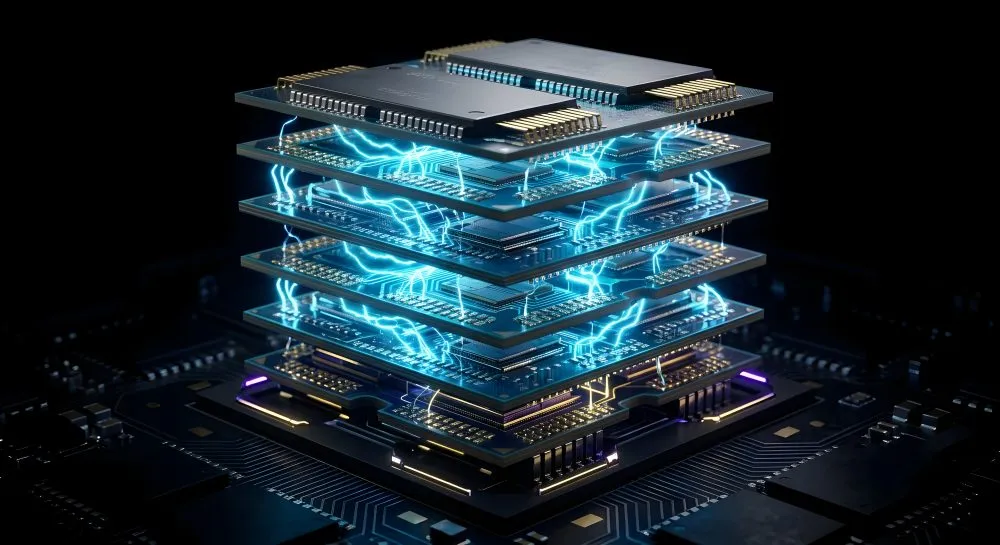
The landscape of quantum computing underwent a seismic shift this week as Anderon, the burgeoning quantum chip foundry and IBM subsidiary, secured a monumental $1 billion award under the U.S. CHIPS and Science Act. This capital infusion, granted by the U.S. Department of Commerce, is not merely a financial boost; it is a strategic mandate to industrialize the production of quantum wafers on American soil. As the quantum sector pivots from experimental lab-bench science to high-volume manufacturing, the role of specialized foundries has become the industry’s most critical bottleneck—and its most significant opportunity.
The Strategic Imperative: Scaling the Quantum Frontier
For years, the promise of quantum computing was confined to the realm of theoretical physics and delicate, one-off prototypes. However, the narrative is changing. Industry leaders, including IBM, are now racing to achieve "quantum advantage"—the point at which a quantum machine can solve problems that are intractable for the most powerful classical supercomputers.
With its headquarters in Albany, New York, Anderon has positioned itself as the bedrock of this transition. By specializing in 300-mm quantum wafers, the company is bridging the chasm between experimental design and commercial scalability. The $1 billion award is earmarked to expand these capabilities, ensuring that the U.S. maintains a competitive edge in a field that is increasingly viewed as a pillar of future national security and economic prosperity.

"IBM’s quantum roadmap requires a manufacturing foundation that can scale at the pace our work demands," said Jay Gambetta, director of IBM Research. "Anderon’s focus on wafer fabrication gives us exactly that and strengthens our ability to execute and accelerate progress toward the next era of quantum computing."
A Chronology of the Quantum Industrial Revolution
The emergence of the "quantum foundry" model is a relatively recent phenomenon, accelerating rapidly since the dawn of 2026. The journey from research to industrial-grade production has been marked by several key developments:
- Pre-2026: Quantum chip production was largely vertical. Companies like IBM and Google maintained bespoke, internal fabrication facilities. Academic and startup efforts were hampered by the lack of specialized foundry access, forcing them to rely on academic cleanrooms or repurposed legacy semiconductor equipment.
- Early 2026: The industry began to acknowledge that "moving a quantum design into a conventional semiconductor fab" was a failed hypothesis. The unique material requirements—superconducting circuits, specialized substrates, and extreme cryogenic packaging—demanded a new breed of foundry.
- July 2026: IonQ’s acquisition of SkyWater marked a major consolidation in the market, signaling that pure-play quantum manufacturing was becoming a core competitive asset for system developers.
- September 2026: The U.S. Department of Commerce finalized the $1 billion CHIPS Act award for Anderon. This move effectively signaled government endorsement of the foundry model as the primary mechanism for domestic quantum scaling.
- The 2029 Horizon: With IBM aiming to release its "Starling" quantum computer by 2029, the next three years represent a frantic window for building out the physical infrastructure required to produce the necessary components at scale.
The Technical Hurdles of Quantum Fabrication
Why are traditional semiconductor giants like TSMC and Samsung not leading the charge? According to Heather West, IDC’s lead for quantum research, the answer lies in the fundamental incompatibility between classical and quantum manufacturing.

"Quantum devices can require specialized process flows, materials, metrology, packaging, and yield optimization that a traditional semiconductor foundry may not have developed," West explained. "At the same time, quantum has long R&D cycles and relatively low volumes, which makes it difficult for any single manufacturing model to serve the entire market efficiently."
The complexity is best exemplified by companies like Xanadu, which utilizes a hybrid approach. The Canadian firm partners with UMC in Taiwan to produce thin-film lithium niobate while simultaneously managing III-V semiconductor assembly in Canada. This fragmented supply chain highlights the desperation for a "one-stop" foundry solution that Anderon hopes to provide.
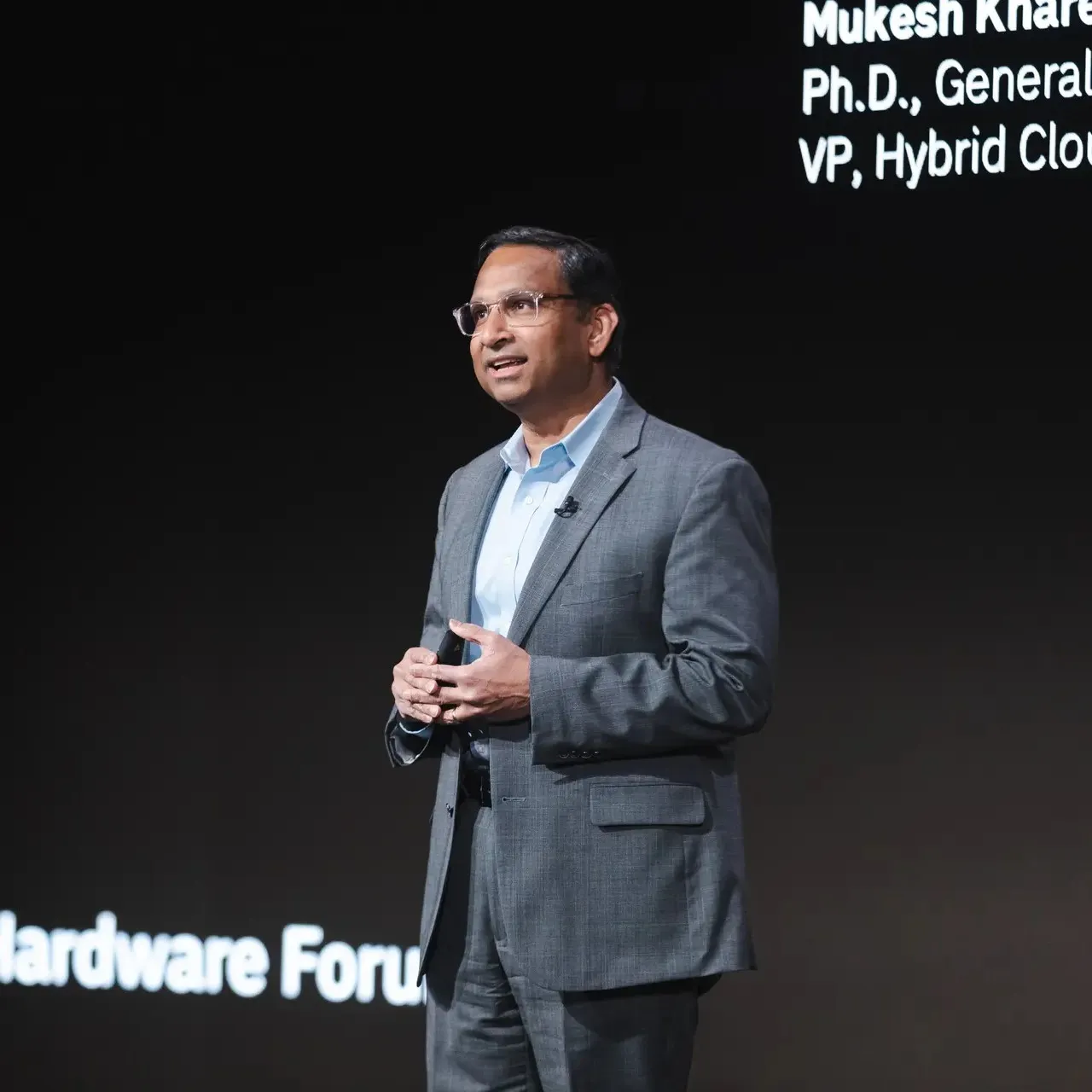
Anderon’s current portfolio is focused on superconducting qubit arrays, high-performance input/output signaling, and readout components. However, newly appointed CEO Mukesh Khare has signaled that the company’s ambition extends far beyond its current scope. "We are actively engaging with potential customers across the quantum ecosystem," Khare said. "We plan to expand to other quantum chip modalities, including spin qubits, to ensure we are a platform-agnostic partner for the future."

Official Perspectives: The Foundry as an Ecosystem Catalyst
The decision by the U.S. government to back Anderon is being interpreted by analysts not as a subsidy for IBM’s specific architecture, but as an investment in the nation’s technological infrastructure.
"I would characterize the award as backing the development of a U.S. quantum manufacturing capability rather than making a government bet on IBM’s particular quantum architecture," West noted. "The fact that Anderon is structured as a pure-play foundry and intends to serve the broader quantum ecosystem is important here."
Mukesh Khare echoed this sentiment in his inaugural statements as CEO. By positioning Anderon as a resource for fabless processor developers, national laboratories, and full-system builders, the company is attempting to create a "neutral ground" where intellectual property is protected while manufacturing consistency is guaranteed. This is essential for startups that lack the capital to build their own multi-billion-dollar fabrication facilities.

Implications: The Road to 2029 and Beyond
As the industry moves toward the 2029 deadline for systems like the Starling, the implications of the Anderon investment are three-fold:
- Supply Chain Sovereignty: By anchoring quantum production in Albany, the U.S. is insulating itself from the geopolitical risks inherent in globalized semiconductor supply chains. This ensures that the next generation of computing power—which will be vital for chemical engineering, material discovery, and encryption—remains under domestic control.
- Standardization of Processes: The foundry model encourages the standardization of quantum materials and metrology. As Anderon and its peers (GlobalFoundries, SkyWater) refine their process flows, the "trial and error" phase of quantum chip design will likely give way to more predictable, repeatable manufacturing cycles, lowering the barrier to entry for the broader research community.
- Cross-Modal Versatility: The competition between superconducting qubits, trapped ions, and quantum dots remains fierce. By developing a foundry that can theoretically pivot between these modalities, Anderon is hedging its bets against the uncertainty of which architecture will ultimately dominate.
The next few years will be a crucible for the quantum industry. The transition from the "era of the experiment" to the "era of the foundry" is now underway, fueled by a billion-dollar investment and the cold, hard logic of industrial scaling. While the race for quantum advantage continues between titans like Google and IBM, the real winner may be the foundry model itself—the silent, unseen engine that will eventually power the quantum revolution.
As the industry looks toward the late 2020s, the focus remains clear: manufacturing scale, process control, and the establishment of a robust supply chain are the keys to unlocking the quantum future. With the CHIPS Act providing the necessary capital, the foundation has been laid. Now, it is up to the engineers and scientists at facilities like Anderon to transform that potential into reality.