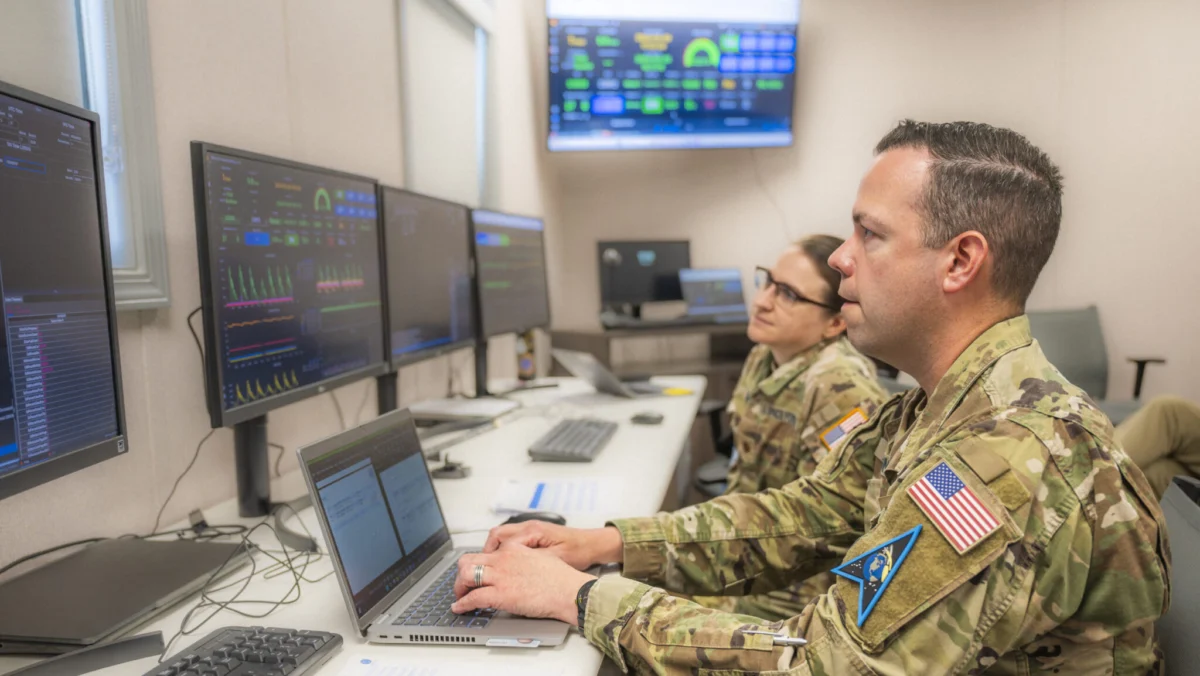
WASHINGTON — In a move designed to address growing anxieties among senior leadership regarding operational readiness, the U.S. Space Force has officially tapped 15 industrial partners to compete for a staggering $981 million contract pool. The initiative, titled the National Space Test and Training Complex (NSTTC) Innovative Technology & Engineering — Space Test and Range (NITE-STAR) Capability Development, aims to overhaul the way the service trains its Guardians for the complexities of modern, high-stakes space warfare.
As the Space Force expands its mission sets and faces an increasingly contested orbital environment, officials have grown increasingly vocal about a dangerous lack of instructors, specialized facilities, and high-fidelity simulators. The NITE-STAR program is the service’s primary response to these deficiencies, serving as a multi-award, indefinite-delivery/indefinite-quantity (IDIQ) vehicle designed to accelerate the deployment of advanced training tools that ensure Guardians are prepared for peer-adversary engagements.
The Strategic Imperative: Why NITE-STAR Matters
For the Space Force, training is no longer just about classroom instruction; it is about simulating the chaotic, high-speed reality of electronic, cyber, and orbital warfare. Currently, the service relies heavily on “live” mission assets—such as active GPS satellites or primary space-tracking radar networks—to conduct training exercises. This operational necessity creates a hazardous dilemma: to train, the service must often take vital assets offline, potentially creating gaps in national security coverage.
The NITE-STAR contract, managed by Space Systems Command’s (SSC) System Delta 81, is the linchpin for the service’s broader goal: the creation of an Operational Test and Tracking Infrastructure (OTTI). This architecture will integrate physical infrastructure, sophisticated simulation software, and live-asset testing environments under a unified portfolio overseen by the service’s newly established portfolio acquisition executive (PAE) office for infrastructure.
The 15 Winning Contractors
The selected companies represent a blend of traditional aerospace titans and agile, innovative firms, signaling the Space Force’s intent to leverage a wide spectrum of expertise. The winning vendors are:
- Amentum Technology
- BAE Systems
- CACI
- Firefly Aerospace
- L3Harris Technologies
- Lockheed Martin Space
- Northrop Grumman
- Pacific Crest Alliance
- Parsons Government Services
- Redwire Space Missions
- Rocket Lab USA
- Sierra Space Corporation
- The Boeing Company
- Viasat
- York Space Systems
A Chronology of Readiness: The Road to NITE-STAR
The road to this $981 million investment was paved by months of internal auditing and increasingly blunt assessments from top military leaders.
Late 2024: Internal reviews at Space Systems Command highlight the growing disconnect between the rapid expansion of Guardians and the static nature of available training resources. Leadership identifies "training debt" as a primary risk to long-term force projection.
January 2026: SSC moves to finalize the reorganization of its System Deltas, creating a more cohesive structure to oversee the procurement of training capabilities. Plans are solidified to establish a contractor pool specifically for physical and live-training requirements.
July 17, 2026: Lt. Gen. Greg Gagnon, head of Combat Forces Command, provides a sobering assessment of the service’s readiness during a presentation at the Mitchell Institute. His testimony serves as the catalyst for public discussion on the “red-Xed” status of several critical mission areas.
Present Day: With the announcement of the 15 NITE-STAR vendors, the Space Force shifts from the assessment phase to the procurement phase, initiating a five-year sprint to modernize its training infrastructure.
Supporting Data: The "Report Card" of Space Readiness
Lt. Gen. Gagnon’s recent remarks provided a candid “report card” on the state of Space Force training, highlighting that the service’s readiness is currently a “mixed bag.”
The Successes: Missile Warning and Orbital Warfare
The Space Force has successfully cleared the hurdle for missile warning and tracking. According to internal metrics, simulated training in this area is robust, earning a “green checkmark” from commanders. Similarly, the service has made significant progress in orbital warfare (Delta 9). While operators there have historically had to rely on real mission equipment, the service has fully resourced the requirement for simulators, placing the training capability on a clear “glide path” toward full maturity.
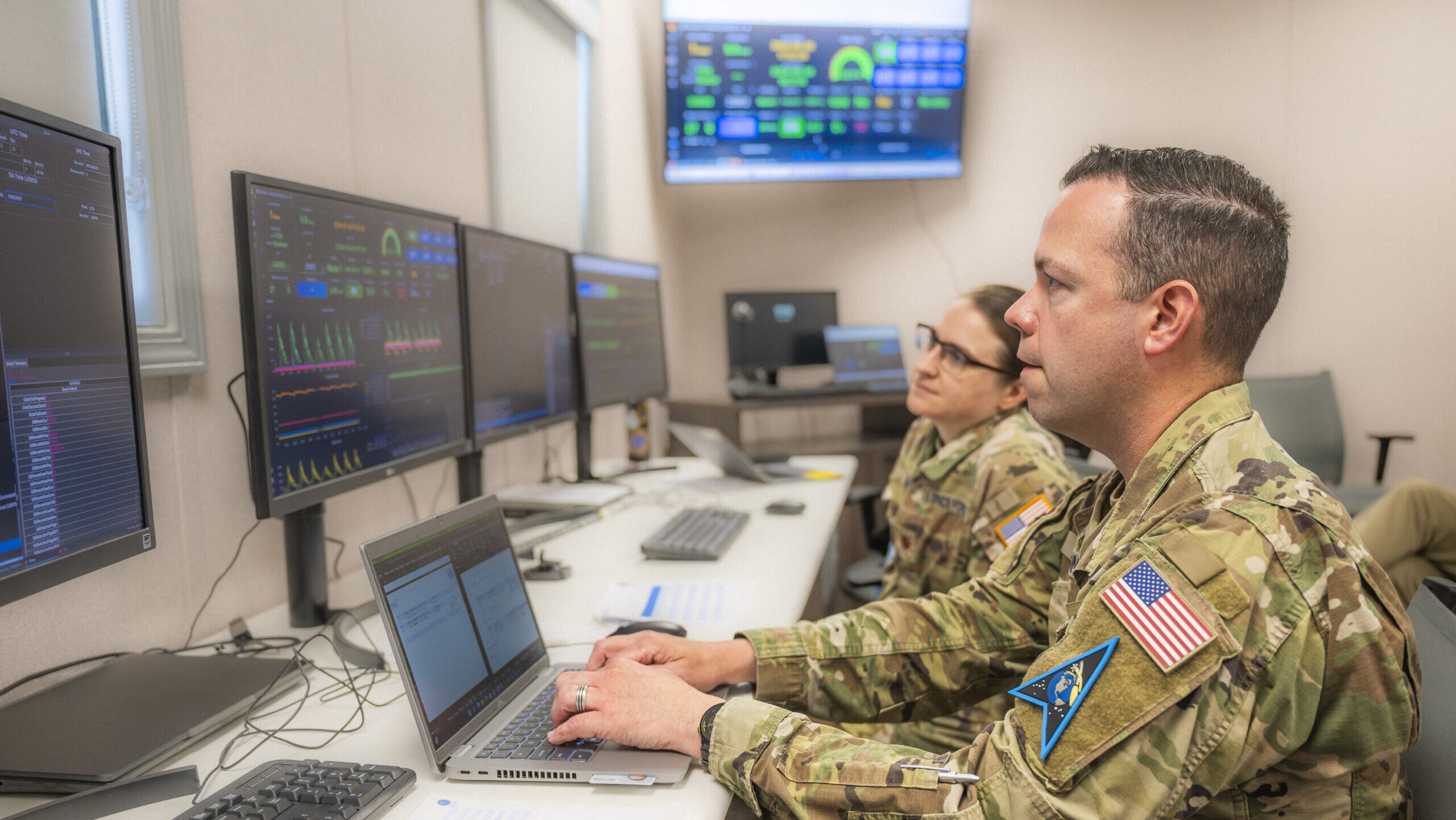
The Challenges: Space Domain Awareness and Intelligence
Despite these successes, the service remains in a deficit regarding Space Domain Awareness (SDA) and intelligence capabilities. These mission areas are notoriously difficult to simulate because they rely on a “confluence of different, unique systems” that must be aggregated to provide a complete picture of the space environment.
“Both of them are really unique,” Gagnon noted. “It’s a confluence of different unique systems that do precise things, and then we aggregate them. So, I’m still kind of red-Xed on those.”
The NITE-STAR contract is specifically designed to provide the engineering support needed to integrate these disparate systems into a unified training platform, effectively turning those “red-Xes” into green checkmarks.
Official Responses and Strategic Philosophy
The shift toward a more robust training environment reflects a fundamental change in the Space Force’s philosophy. By creating the OTTI architecture, the service is moving away from ad-hoc, episodic training and toward a continuous, integrated model.
The role of the newly formed PAE office for infrastructure is critical here. By centralizing the acquisition of physical and virtual training assets, the Space Force intends to streamline the procurement cycle, ensuring that as new hardware is deployed to the fleet, corresponding simulation software is developed simultaneously. This “digital twin” approach is intended to ensure that Guardians are already experts on new systems before they officially hit the field.
Senior leadership, including Chief of Space Operations Gen. Chance Salzman and Maj. Gen. James Smith of the Space Training and Readiness Command (STARCOM), have emphasized that the current reliance on active assets is unsustainable. The collaboration between SSC and STARCOM—facilitated by the NITE-STAR vehicle—is designed to ensure that the “operational feedback loop” is closed, allowing training gaps to be identified and addressed within months, rather than years.
Implications: The Future of Space Deterrence
The implications of the NITE-STAR initiative extend far beyond mere procurement; they are foundational to the future of American space deterrence.
1. Shift from Reactive to Proactive Readiness
By investing nearly $1 billion into this infrastructure, the Space Force is signaling that it will no longer accept a "wait-and-see" approach to training. The ability to simulate high-end threats—such as anti-satellite (ASAT) testing or non-kinetic electronic warfare—in a controlled environment allows Guardians to test their limits without risking a diplomatic incident or a catastrophic loss of hardware.
2. Economic Impact and Industrial Base Integration
The inclusion of 15 vendors, ranging from established primes to smaller, specialized aerospace companies like Firefly and Rocket Lab, highlights the service’s desire for a competitive, resilient industrial base. By keeping the contract pool diverse, the Space Force ensures that it has access to both the deep pockets of traditional contractors and the disruptive, agile development cycles of newer players in the space economy.
3. Strengthening the "Guardians" Culture
Training is a core component of professional identity. By providing high-fidelity simulators, the Space Force is validating the professional development of its Guardians. When operators can train in environments that accurately reflect the challenges of the current geopolitical landscape, the overall effectiveness of the service increases.
4. Mitigating Strategic Risk
The most significant implication is the mitigation of operational risk. If the Space Force can successfully move its training out of active, critical mission systems and into the OTTI, it effectively "unlocks" its operational fleet. This provides the Department of Defense with a greater margin of safety during times of tension, as the service will no longer have to choose between keeping the lights on in space and training the next generation of space operators.
As the NITE-STAR program moves forward, the primary metric of success will be the transition of the "red-Xed" mission areas into the green. With $981 million now committed to the effort, the Space Force has provided its commanders with the resources required to meet the challenges of the next decade, ensuring that when the time comes to defend the high ground, its Guardians will be more than ready.