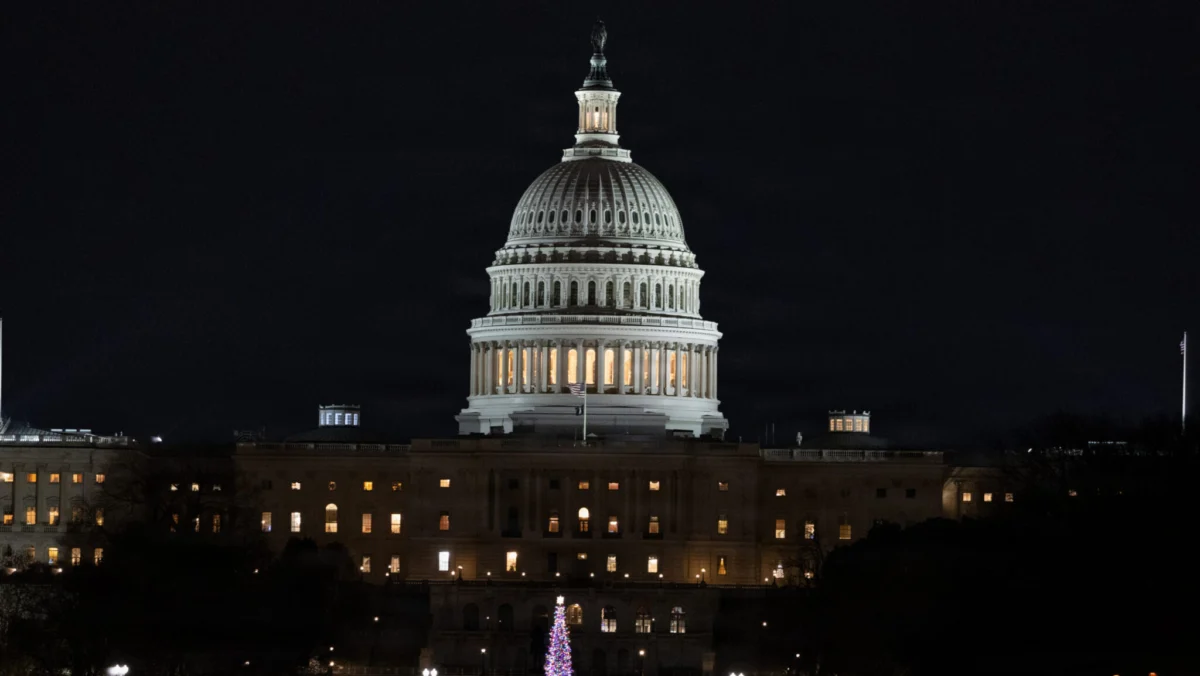
WASHINGTON — In a move designed to stabilize the Pentagon’s financial and acquisition leadership, the U.S. Senate voted 51-47 today to confirm Jules “Jay” Hurst as the Under Secretary of Defense (Comptroller). The confirmation ends an 18-month vacancy in one of the most critical offices in the federal government, providing the Department of Defense (DoD) with a confirmed financial steward as it faces a massive backlog of spending requirements and evolving budgetary pressures.
The vote was part of a larger legislative package that also saw the confirmation of 73 other nominees, including pivotal appointments for the Air Force’s space acquisition portfolio and the National Reconnaissance Office (NRO).
Main Facts: A New Era for Defense Finance and Space
The confirmation of Jules Hurst marks the beginning of a high-stakes tenure. Having served as the acting comptroller from August 2025 until May 2026, Hurst is no stranger to the inner workings of the Pentagon’s fiscal machinery. By stepping into the role officially, he assumes direct oversight of the department’s multi-trillion-dollar budget, including the delicate task of managing massive supplemental funding requests related to ongoing operations in the Middle East and the development of the Fiscal Year 2028 (FY28) budget.
Simultaneously, the Senate approved Erich “HB” Hernandez-Baquero as the Assistant Secretary of the Air Force for Space Acquisition and Integration. As only the second permanent appointee to this role—a position established by the 2020 National Defense Authorization Act—Hernandez-Baquero faces the daunting challenge of managing a Space Force budget that has tripled in scope, jumping from $18.9 billion in FY26 to $59 billion in the proposed FY27 spending request.
Furthermore, the intelligence community sees a leadership transition at the NRO, with the confirmation of Roger Mason, a defense industry veteran and former intelligence official, to succeed the long-serving Chris Scolese as head of the agency.
Chronology: The Road to Confirmation
The journey to these confirmations has been characterized by political friction and organizational urgency.
- August 2025 – May 2026: Jules Hurst serves as the Acting Under Secretary of Defense (Comptroller), navigating the Pentagon through a period of budgetary uncertainty.
- April 2026: The White House formally nominates Hurst, alongside industry veterans Hernandez-Baquero and Mason, signaling a shift toward private-sector expertise in defense management.
- June 10, 2026: The Space Force finalizes its reorganization, establishing nine Portfolio Acquisition Executives (PAEs) to streamline procurement, setting the stage for the incoming assistant secretary.
- July 2026: Hurst appears before the House Armed Services Committee, outlining his primary goal: a clean audit of the Pentagon by 2028.
- August 2026: The Senate rejects specific requests for “Trump-era” battleship munitions in a stopgap funding bill, highlighting the contentious fiscal environment awaiting the new comptroller.
- Today: The Senate votes 51-47 to end the 18-month vacancy, confirming the trio of officials.
Supporting Data: Financial Hurdles and Expanding Budgets
The incoming leadership team is walking into a “perfect storm” of fiscal and bureaucratic challenges.
The Comptroller’s “Do-or-Die” Deadline
Hurst’s most immediate crisis is not a long-term strategy, but a ticking clock. The Pentagon is currently under extreme pressure to obligate $152 billion in 2025 reconciliation spending by September 30. Failure to move these funds into contracts by the end of the fiscal year will trigger an automatic 8.3 percent cut to the remaining balance—a significant blow to the defense industrial base.
Space Force Scaling
The investment profile for space has fundamentally shifted. With a budget growth from $18.9 billion in FY26 to $59 billion in FY27, the Space Force is essentially moving from a startup phase to a large-scale acquisition enterprise. Hernandez-Baquero must oversee this transition while simultaneously implementing the new PAE structure. The nine PAEs—covering domains such as Advanced Capabilities, Electromagnetic Warfare, Cyber, and Space Combat Power—are intended to reduce the bureaucratic friction that previously slowed down satellite deployment.

Intelligence Continuity
Roger Mason’s appointment to the NRO brings a blend of industry experience and deep familiarity with the intelligence community. His background as the first Assistant Director of National Intelligence for Systems and Resource Analyses ensures that he understands the cross-agency requirements of the NRO’s satellite constellation, which remains the backbone of U.S. space-based reconnaissance.
Official Responses and Strategic Vision
During his confirmation hearings, Jules Hurst laid out a roadmap that prioritizes modernization over legacy processes. His three-pronged strategy centers on:
- The 2028 Audit: Hurst has pledged to force the Pentagon to achieve its first-ever clean financial audit, a goal that has eluded his predecessors for years.
- Strategic Alignment: He intends to ensure that budget requests are not merely incremental increases, but are explicitly tied to the “evolution of warfare,” focusing on AI, autonomous systems, and long-range fires.
- Industrial Base Expansion: Hurst believes the Pentagon must act as a guarantor for the defense industrial base, providing the predictable funding streams necessary for companies to invest in domestic manufacturing capacity.
Regarding the space portfolio, Secretary of Defense Pete Hegseth has emphasized that the transition to the PAE structure is non-negotiable. “We are moving to a wartime footing,” Hegseth has noted, suggesting that the new appointees are expected to prioritize speed and agility over the traditional, risk-averse procurement cycles that have historically plagued DoD acquisition programs.
Implications: What This Means for Defense Strategy
The confirmation of these three officials represents a significant consolidation of power for the current administration’s defense agenda.
The Return of Private Sector Expertise
All three confirmants come with heavy private-sector or specialized technical backgrounds. By moving away from career civil servants toward executives like Mason (V2X) and Hernandez-Baquero, the Pentagon is signaling a preference for “acquisition reform from the inside out.” The implication is that the DoD will prioritize supply chain efficiency and commercial technology integration over traditional internal development.
Budgetary Discipline vs. Combat Necessity
The Senate’s narrow 51-47 vote for Hurst reflects deep-seated partisan disagreements regarding how the Pentagon manages its supplemental funding. While Hurst is viewed as a competent administrator, he will be forced to walk a tightrope: he must satisfy the Pentagon’s urgent need for combat munitions and modernization funding while facing a Senate that is increasingly wary of the total cost of these supplemental requests.
A Finalized Space Command Structure
With Hernandez-Baquero now at the helm of space acquisition, the Space Force’s new PAE structure is fully validated. The military service now has the leadership to execute the “portfolio” model, which aims to group space assets by mission capability rather than by the traditional siloed programs. This represents a major departure from the bureaucratic fragmentation of the early 2020s.
The Long-Term Fiscal Outlook
Ultimately, the success of the new Pentagon leadership will be judged by the FY28 budget cycle. If Hurst can successfully navigate the current fiscal cliff while simultaneously laying the groundwork for a transparent, audit-ready financial system, he will have achieved what no other comptroller in recent memory has managed. However, should the September deadline be missed or the audit fail once again, the political fallout could jeopardize the administration’s broader defense modernization goals.
As the Pentagon shifts into this new phase of leadership, the focus remains squarely on the horizon: the integration of new space capabilities, the stabilization of financial systems, and the imperative to ensure that the American warfighter is equipped for a rapidly changing, high-intensity global threat environment.