WASHINGTON — In a move designed to radically compress the timeline for fielding next-generation missile defense capabilities, the U.S. Army has launched a sweeping initiative to open its domestic and international testing infrastructure to private industry. By streamlining access to high-demand ranges, the service hopes to shift from a legacy procurement model—characterized by agonizing wait times and rigid bureaucratic hurdles—to an agile, market-driven ecosystem that mirrors the rapid innovation cycles seen in the commercial sector.
The initiative, announced this week by Secretary of the Army Dan Driscoll, addresses a persistent "pain point" for defense startups and nontraditional vendors: the inability to validate their technology due to a lack of available range space.
Main Facts: A New "Concierge" Approach to Innovation
At the heart of the Army’s strategy is the launch of a dedicated digital portal—testrange.army.mil—designed to provide what Secretary Driscoll calls "concierge access" to testing facilities. Previously, companies seeking to test interceptors or related hardware at premier sites like the White Sands Missile Range in New Mexico faced daunting wait times ranging from 12 to 18 months. Under the new policy, the Army’s objective is to reduce that lead time to a mere 30 days.
To qualify for this expedited access, companies must meet strict criteria:
- Self-Funding Requirement: Firms must utilize Internal Research and Development (IRAD) funds to develop their systems. The Army will not subsidize travel, logistics, or the research itself.
- Proof of Maturity: This program is not intended for early-stage conceptual work. The Army is targeting "pent-up demand" from companies that have functional, near-production-ready hardware but have been stifled by the lack of testing infrastructure.
- The "Concierge" Portal: The website serves as a centralized clearinghouse where firms can request range time, effectively bypassing the fragmented and opaque scheduling processes of the past.
Chronology: From Bureaucratic Inertia to Rapid Deployment
The shift in policy follows years of mounting pressure from both the private sector and military leadership to modernize how the Army integrates new technology.
- Pre-2025 (The Legacy Era): Defense companies, particularly small-to-mid-sized tech firms, struggled to secure testing slots. The backlog at primary facilities like White Sands created a "valley of death," where promising prototypes languished for years because they could not be flight-tested, leading to investor fatigue and project abandonment.
- July 2025: The U.S. Africa Command (AFRICOM) and the Moroccan Royal Armed Forces sign a landmark memorandum of understanding, creating the Africa Multidomain Training and Experimentation Center. This serves as the pilot for the Army’s international range expansion.
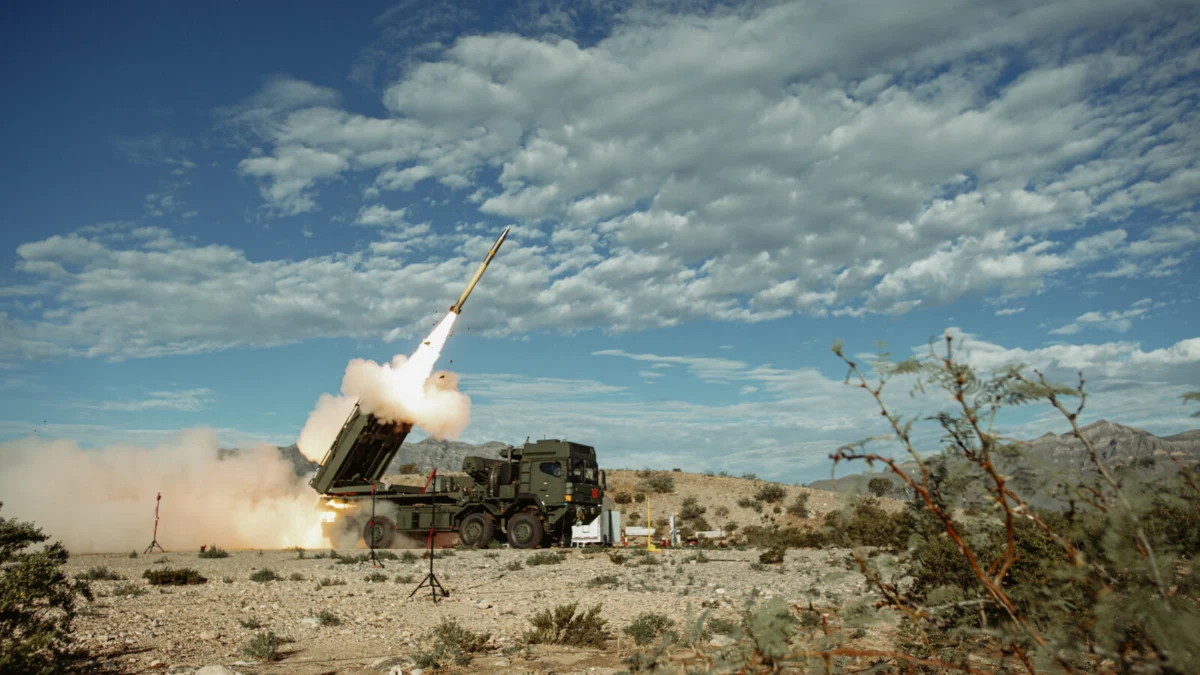
- Early August 2025: The GMARS (Global Mobile Artillery Rocket System), a joint venture between Lockheed Martin and Rheinmetall, conducts its first successful live-fire demonstration at White Sands, underscoring the ongoing value of range testing for major systems.
- Today: The Army officially opens four domestic ranges—Camp Grayling (Michigan), Camp Shelby (Mississippi), Dugway Proving Ground (Utah), and the West Cibola sector of Yuma Proving Ground (Arizona)—to private IRAD-funded testing, alongside the new international facility in Morocco.
- Late August 2025: Covenant Industries, a California-based startup, becomes the first private entity to utilize the Morocco range, successfully testing its "Anthem" interceptor system.
Supporting Data: The Geography of the New Range Network
Maj. Gen. Patrick Gaydon, commanding general of the Army Test and Evaluation Command, has emphasized that the selection of these five ranges was deliberate, aimed at distributing the testing load away from the over-burdened White Sands complex.
Domestic Infrastructure
- Camp Grayling, Michigan: Offers extensive space for ground-to-air testing in varied environmental conditions.
- Camp Shelby, Mississippi: Provides flexible scheduling for high-velocity interceptor trials.
- Dugway Proving Ground, Utah: Known for its isolated geography, ideal for sensitive, high-energy missile tests.
- Yuma Proving Ground (West Cibola), Arizona: Previously an underutilized section of the larger Yuma facility, this site is now being scaled for increased IRAD testing throughput.
International Expansion
The Multidomain Training Area in Morocco represents the most significant departure from traditional doctrine. By leveraging international partnerships, the Army is effectively "offshoring" its testing capacity to accommodate the sheer volume of new entrants into the defense market.
Official Responses and Strategic Rationale
Secretary Driscoll’s rhetoric reflects a profound sense of urgency, specifically referencing the conflict in Ukraine as a bellwether for modern warfare.
"If you look at what Ukraine has done so incredibly well, it’s this innovation through necessity and it’s innovation at the speed that is near or close to matching the commercial sector," Driscoll stated. "What we, the Army, are trying to do is break down every single barrier that we have put up over the last 20 or 30 years."

The Army is actively seeking to foster "escape velocity"—a startup-world term describing the moment a product achieves market dominance through overwhelming demand. By removing the friction of range access, the Army believes it can identify which startups have the potential to scale, effectively turning the testing range into a crucible for competitive selection.
Covenant Industries, which has moved quickly to capitalize on this initiative, expressed optimism about the new timeline. Abby Denburg, a key executive at the firm, confirmed that the company is on track to deliver production-ready assets by early 2027, provided the momentum in testing continues.
Implications: A New Era of Defense Acquisition?
The decision to open these ranges carries profound implications for the defense-industrial base.
1. The Death of the "Valley of Death"
By shortening the testing queue from over a year to 30 days, the Army is effectively lowering the barrier to entry for smaller firms. This could lead to a surge in private capital flowing into missile defense, as investors are more likely to fund companies that have a clear, rapid path to product validation.
2. Globalizing the Supply Chain
Secretary Driscoll has made it clear that this initiative is not meant to be an "America-only" project. His vision includes inviting allied nations and their domestic industries to utilize these ranges. This fosters interoperability; if a European firm can test its interceptor on an Army range, the resulting system is more likely to be compatible with U.S. and NATO architecture.
3. Shift Toward "MVP" Procurement
The Army’s embrace of the "Minimum Viable Product" (MVP) concept—a standard in Silicon Valley but a radical departure for the Department of Defense—suggests a shift toward iterative development. Instead of waiting for a "perfect" system that takes a decade to build, the Army is signaling a willingness to field "good enough" systems today, then upgrading them in the field as technology advances.
4. Risks and Challenges
Despite the optimism, the plan faces significant logistical and security hurdles. Moving private companies—some with varying levels of security clearance—onto military installations requires rigorous oversight. Furthermore, the reliance on IRAD funding shifts the financial risk entirely onto the private sector, which could potentially exclude smaller companies that lack the venture capital backing to sustain a full-scale test program without government assistance.
Conclusion
The Army’s push to "unleash escape velocity" is a calculated gamble. By decentralizing testing and prioritizing speed over the traditional, slow-moving procurement bureaucracy, the service is attempting to force a cultural change. If successful, the initiative will transform the Army from a gatekeeper of innovation into a platform provider, allowing the best ideas from the commercial sector to reach the warfighter before the next major conflict begins. The success of the Anthem test in Morocco is likely just the first of many trials that will determine whether this new, high-speed model can truly keep pace with the rapidly evolving global threat landscape.