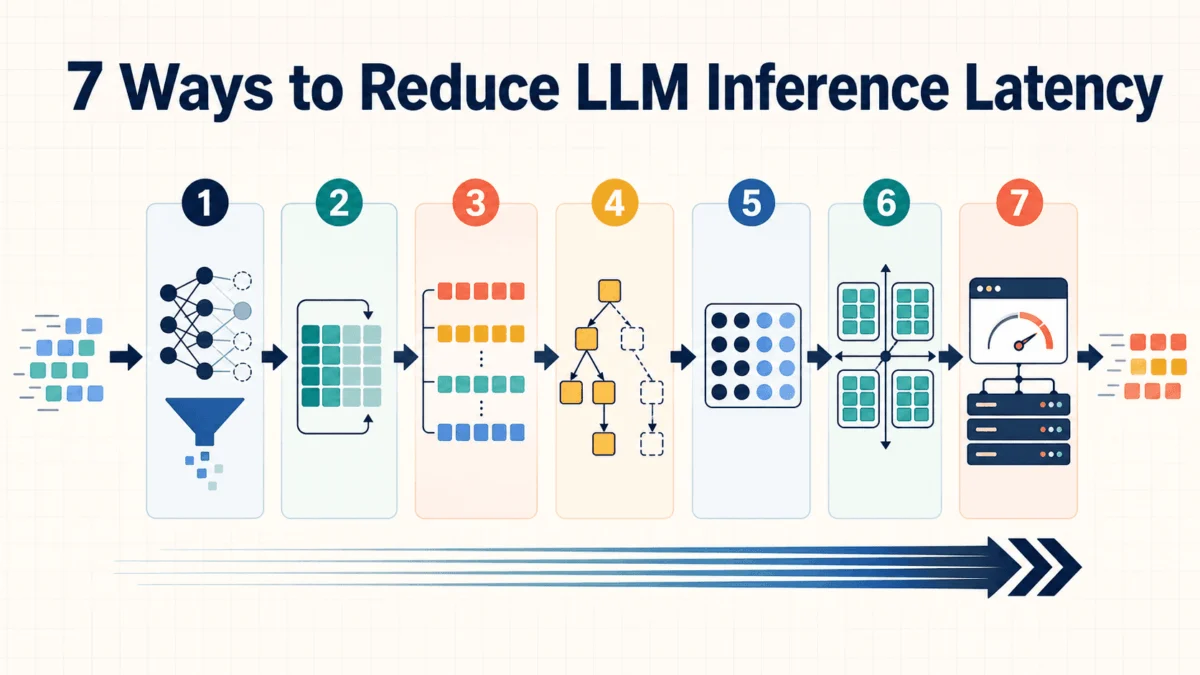
As Large Language Models (LLMs) transition from the experimental sandboxes of research labs to the high-stakes environment of enterprise production, engineering teams are encountering a sobering reality: building a high-performing model is only the prologue. The true test lies in the "serving layer"—the complex engineering infrastructure required to deliver intelligent responses in real-time.
In the world of generative AI, inference is the operational phase where a trained model consumes a prompt and generates a response. The primary enemy of a seamless user experience during this phase is inference latency. While traditional web applications typically operate on a millisecond budget, unoptimized LLM workflows can easily stretch into multi-second delays. This latency not only frustrates end-users but also drives up compute costs to unsustainable levels.
Understanding how to mitigate these delays requires a deep dive into the "anatomy" of a slow response, categorized by two critical metrics: Time to First Token (TTFT), which measures the initial responsiveness of the model, and Time Per Output Token (TPOT), which dictates the perceived fluency and speed of the text stream.
The Anatomy of Latency: Why LLMs Lag
LLM generation is bifurcated into two distinct phases. First, the prefill phase, where the model processes the entire input prompt to generate the initial KV (Key-Value) states. Second, the decoding phase, where the model generates tokens one by one in an auto-regressive loop.
Because LLMs are inherently sequential—meaning they cannot generate token $N$ without the output of token $N-1$—the bottlenecks are often hardware-bound, specifically related to memory bandwidth. To address these limitations, engineers must move beyond "out-of-the-box" implementations and adopt a rigorous, multi-layered optimization strategy.
1. Model Quantization: Shrinking the Memory Footprint
At the hardware level, an LLM is a colossal matrix of numerical weights, traditionally stored in 16-bit floating-point (FP16 or BF16) format. A 70-billion-parameter model in FP16 demands approximately 140 GB of VRAM just to reside in memory. The act of moving these weights across the GPU’s memory bus for every single token creates a catastrophic bottleneck.
Quantization serves as the primary solution. By converting these weights from 16-bit to 8-bit (INT8) or even 4-bit (INT4) integers, we reduce the model’s memory footprint by up to 75%. This allows for faster data movement across the GPU, directly slashing TPOT. Techniques such as Activation-aware Weight Quantization (AWQ) and GPTQ have revolutionized this space, allowing models to retain near-original reasoning quality despite the drastic reduction in precision.
2. KV Caching: Eliminating Redundant Computation
The Transformer architecture, the backbone of modern LLMs, relies on a self-attention mechanism that maps relationships between tokens. As a model reaches the 100th token, it must reference the preceding 99. Without intervention, the model would be forced to re-calculate these relationships from scratch at every step.
Key-Value (KV) Caching solves this by storing the previously computed attention states in VRAM. The model retrieves these historical states rather than recalculating them, significantly reducing computation time. However, this is a double-edged sword: as context windows grow, the KV cache expands, potentially consuming massive amounts of VRAM. Sophisticated infrastructure management is required to balance the size of this cache against the speed of generation.
3. Speculative Decoding: The Parallelization Breakthrough
Perhaps the most significant innovation in recent months is Speculative Decoding. Recognizing that the sequential nature of LLMs prevents parallelization, this method uses a "draft and verify" approach.
- The Draft Model: A smaller, ultra-fast model (the "draft") predicts the next several tokens.
- The Target Model: The larger, more capable model (the "target") performs a single parallel pass to verify those tokens.
If the draft model is accurate, the target model accepts multiple tokens in a single step, bypassing the sequential bottleneck. This can result in a 2x to 3x increase in generation speed with zero loss in output quality. Frameworks like Hugging Face have integrated this by allowing developers to pass an assistant_model parameter, automating the verification loop.
4. Continuous Batching: Maximizing GPU Utilization
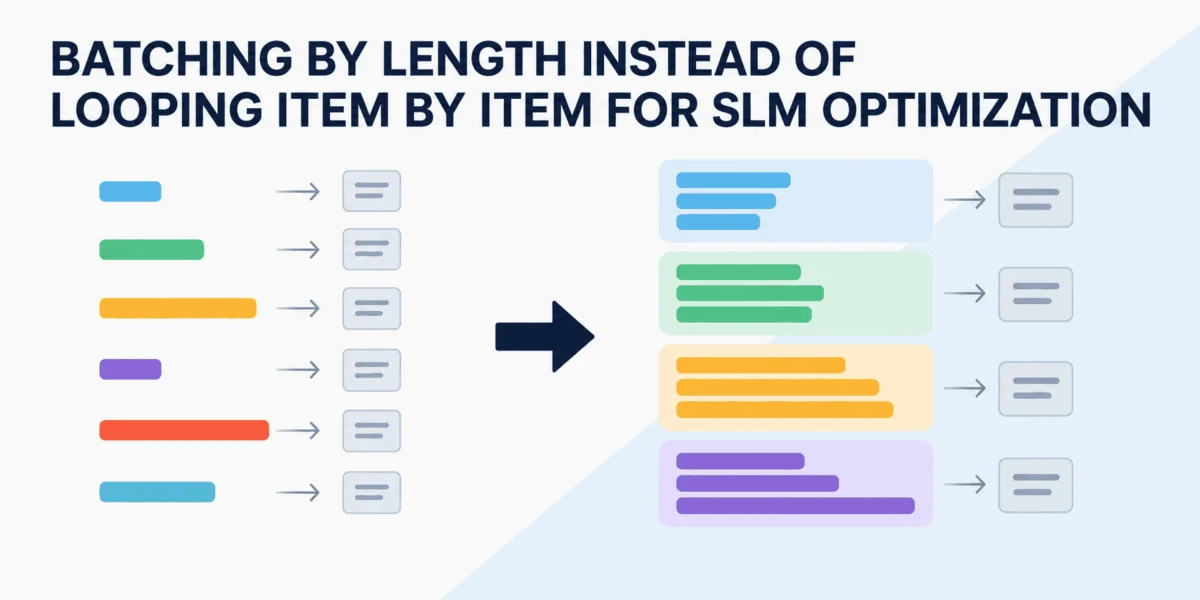
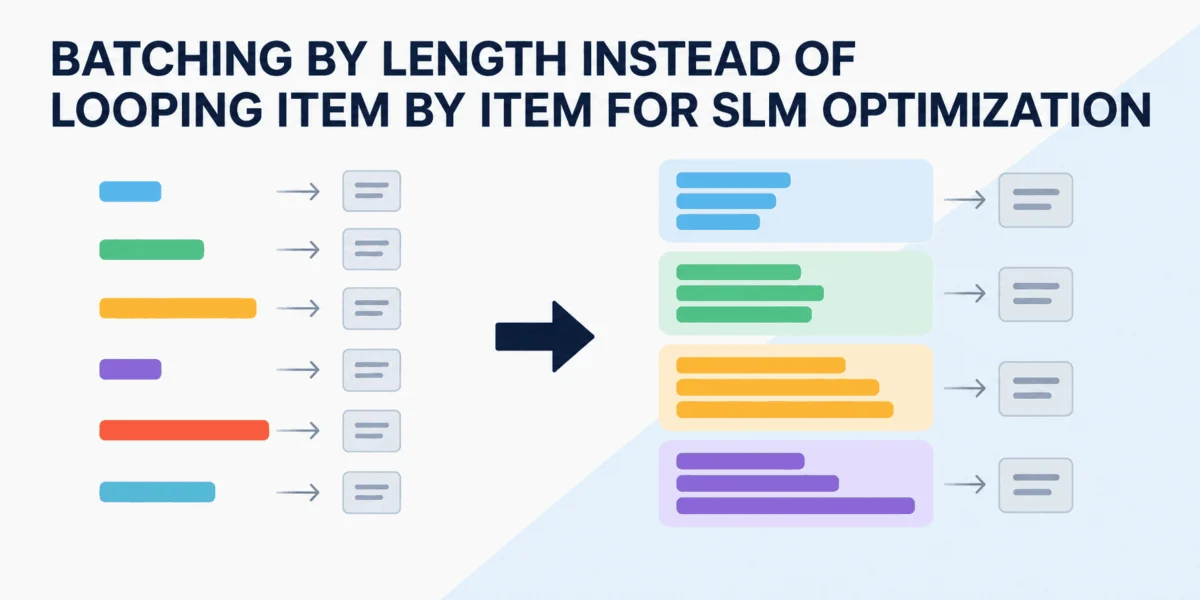
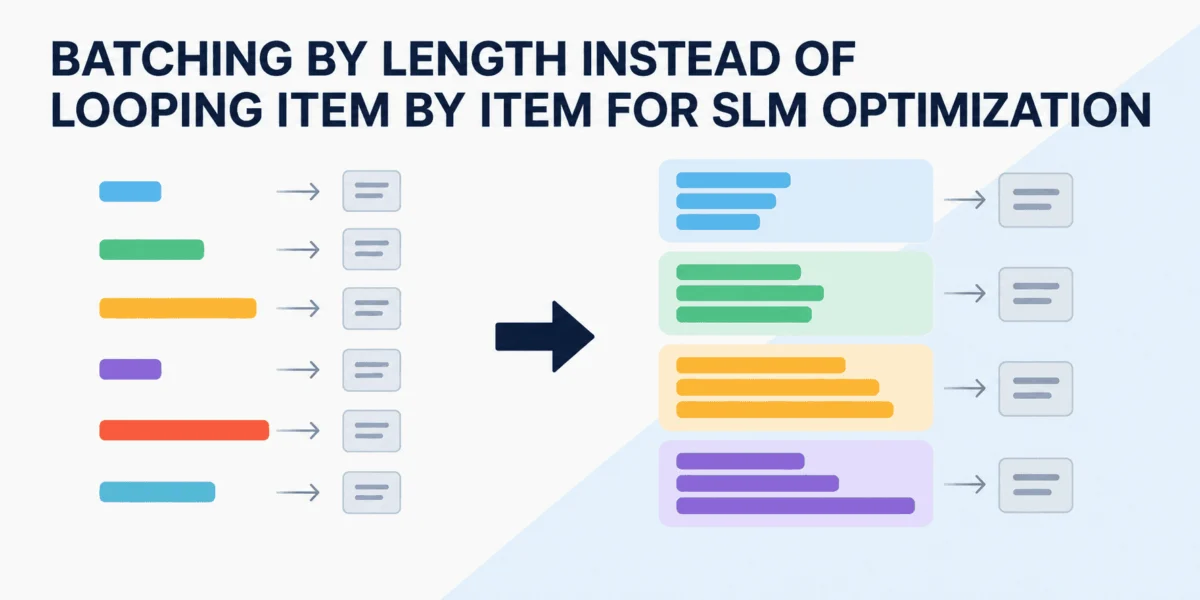
In traditional software, requests are grouped into static batches. However, LLM outputs are highly variable; a simple "Yes/No" response takes a fraction of the time of a 2,000-word essay. Static batching forces the entire group to wait for the slowest request to finish, leaving GPU resources idle.
Continuous Batching (or iteration-level scheduling) solves this by treating the batch as a fluid entity. The inference engine injects new requests and evicts finished ones at the token level. The moment a short request completes, the server immediately fills that compute slot with a new query. This optimization is arguably the most effective way to improve throughput and reduce total system wait times.
5. Pruning and Distillation: Leaner Architectures
Not every parameter in a massive neural network is essential. Model Pruning involves identifying and stripping away redundant neurons or attention heads that contribute minimally to the model’s performance.
Complementary to this is Knowledge Distillation, where a smaller "student" model is trained to mimic the output distribution of a larger "teacher." For specialized tasks—such as sentiment analysis or structured data extraction—a distilled 8B-parameter model often outperforms a 70B-parameter generalist model in both speed and cost, often reaching latency levels in the tens of milliseconds.
6. Optimized Inference Engines: Moving Beyond Default Libraries
Developers who rely on basic libraries to serve models are often surprised by sub-optimal performance. Standard libraries prioritize research flexibility, not high-throughput production. Dedicated serving frameworks are now the industry standard:
- vLLM: Leverages PagedAttention to optimize memory management.
- Text Generation Inference (TGI): A Rust/Python-based engine designed for high-availability production environments.
- TensorRT-LLM: NVIDIA’s high-performance C++/CUDA framework, optimized for maximum hardware utilization.
These engines automatically implement continuous batching, tensor parallelism, and optimized kernels, often reducing latency by orders of magnitude with minimal changes to the codebase.
7. Strategic Context Management
Finally, the most effective way to reduce latency is often the simplest: send less data.
In Retrieval-Augmented Generation (RAG) pipelines, there is a tendency to "over-inject" context. Every extra token in the prompt increases the prefill compute time. Prompt compression techniques—using smaller, faster NLP models to distill the retrieved context before it hits the LLM—can drastically reduce the input workload. Furthermore, Prompt Caching allows systems to store the precomputed KV state of static system prompts, ensuring that the model doesn’t re-process the same instructions for every new user.
Implications and Future Outlook
Reducing inference latency is a cumulative process. It is rarely the result of a single "silver bullet," but rather the result of stacking these seven layers of optimization. A modern, optimized stack—incorporating quantization, continuous batching, and speculative decoding—transforms the performance profile of an AI application from a lagging, costly service into a snappy, responsive product.
However, speed is not the only metric. As organizations implement these strategies, they must weigh the engineering complexity against the ROI. The goal is not just speed for the sake of speed, but the creation of sustainable, scalable AI infrastructure that can handle the demands of modern users without breaking the budget.
As the industry moves forward, the trend is clear: the winners in the AI space will be those who master the "invisible" work of infrastructure, ensuring that the promise of generative AI is met with the performance that users demand.
About the Author:
Vinod Chugani is an AI and data science educator focused on bridging the gap between emerging LLM research and enterprise application. With a background in quantitative finance and technical mentorship, Chugani specializes in helping data professionals build high-performance, agentic AI workflows.