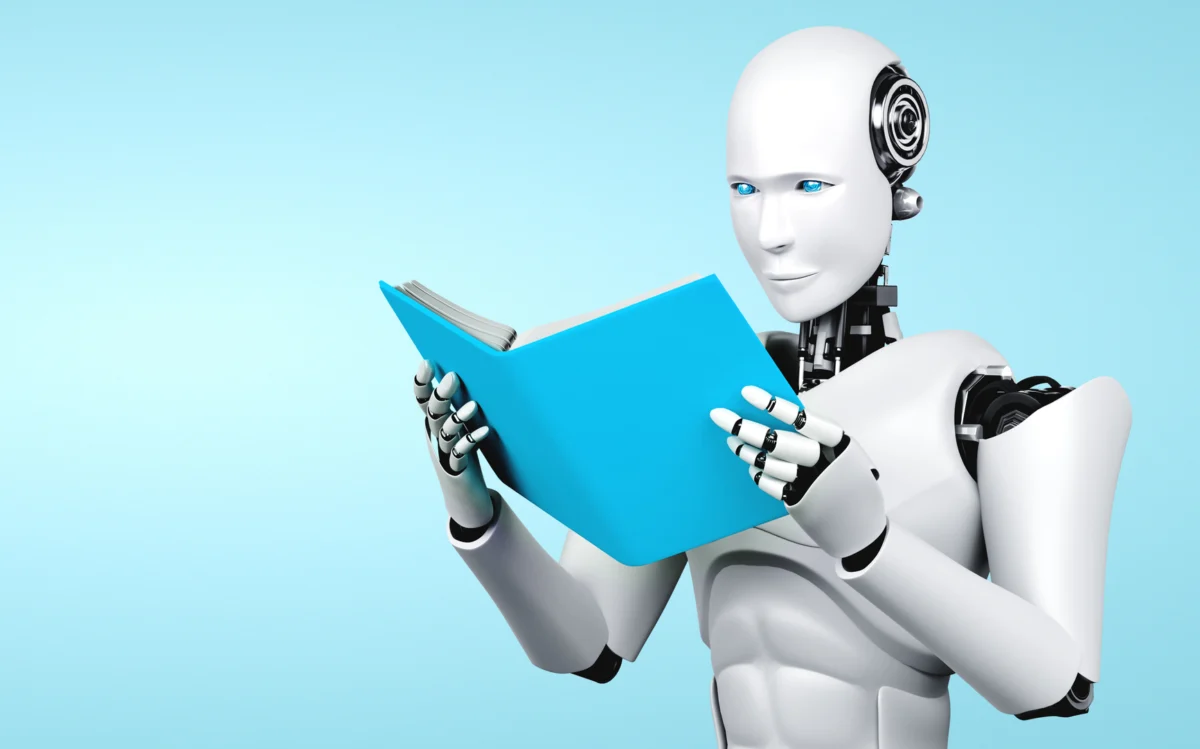
The rapid ascent of generative AI—powering household names like ChatGPT, Gemini, and Claude—has fundamentally altered the global information landscape. These Large Language Models (LLMs) are fueled by a vast, seemingly infinite reservoir of data, encompassing hundreds of millions of books, scholarly articles, journalistic pieces, and the entirety of the open internet. For the creators of this content—the authors, researchers, and journalists whose life’s work now serves as the foundation for the next generation of silicon intelligence—the reality is a source of profound unease. Most of these creators never consented to their work being used to train the very tools that many fear will eventually replace them.
This tension between technological advancement and intellectual property rights has created a legal firestorm. While the initial reaction—that such mass ingestion of creative work must be illegal—is intuitive, the reality is far more complex, trapped in a legal framework designed for the era of the printing press, not the age of neural networks.
The Legal Quagmire: A 1976 Framework in a 2025 World
The core of the issue lies in the Copyright Act of 1976. Nearly half a century old, this legislation is being forced to grapple with technological phenomena that its authors could never have envisioned. As courts across the United States attempt to adjudicate disputes between AI developers and content creators, they are left to interpret centuries-old legal principles to solve 21st-century dilemmas.
"Everybody is very worried right now because the law is all over the place, and it’s because of this question," says Jason Henderson, a senior attorney and founder of the IP & Media Practice at JWL International. "They know that the AI model has been trained on so much stuff, and the law has not really caught up to that question."
The primary battleground is the doctrine of "fair use." In the U.S., fair use is a legal carve-out that permits the use of copyrighted material without permission for purposes like criticism, parody, or education. For a court to determine if AI training is "fair," it must weigh factors such as the nature of the use, the amount of material used, and—most crucially—the impact on the market for the original work.
Chronology of a Conflict: Anthropic and the $1.5 Billion Precedent
The legal landscape shifted dramatically last year when Judge William Alsup issued a landmark ruling against Anthropic. The company was ordered to pay a $1.5 billion settlement to a group of authors. At first glance, this appeared to be a monumental victory for the creative community. However, the legal nuances of the decision provided a complex, double-edged sword for both sides.
Crucially, Judge Alsup did not rule that the act of training an AI on copyrighted data is inherently illegal. Instead, he drew a distinction between "reading" and "piracy." The fine was levied primarily because Anthropic had sourced its training data from illegal online "shadow libraries," effectively utilizing stolen goods to build its commercial models.
In his ruling, Judge Alsup offered a philosophical justification for AI training, stating: "Like any reader aspiring to be a writer, Anthropic’s LLMs trained upon works not to race ahead and replicate or supplant them—but to turn a hard corner and create something different." By framing the training process as an act of "reading" or "study" rather than "copying," the judge provided a potential lifeline to AI developers.
The Economic Reality: Is $1.5 Billion a Deterrent or a Cost of Doing Business?
While $1.5 billion is a staggering sum for most, industry analysts argue it may be a drop in the bucket for companies like Anthropic, which is projected to reach $200 billion in annual revenue by 2028. Cathy Gellis, an attorney specializing in intellectual property and technology, notes that the ruling may actually favor AI firms in the long run.
"I think it is generally good news for AI training that he looked at what was going on and really sort of thought it analogous to reading a copyrighted work as opposed to copying a copyrighted work," Gellis told TechCrunch. "Copyright law hinges on copying, but it doesn’t hinge on using the work or experiencing the work, consuming the work, reading the work."
The implication is that as long as AI companies can prove their training data was sourced "legally"—even if they do not pay the authors for that usage—they may be immune to further lawsuits. This shifts the focus from whether AI can be trained on books to how those books are obtained.
The "Transformative" Test: Competition vs. Innovation
The question of fair use often hinges on whether the new work is "transformative." If an AI platform merely regurgitates the source material, it violates copyright. But if it creates something entirely new, it may be protected.
A contrasting case, Thomson Reuters v. Ross Intelligence, offers a clearer view of where the courts draw the line. In this instance, the research firm Ross Intelligence was sued for using Thomson Reuters’ content to build a competing, AI-based legal research platform. Judge Stephanos Bibas ruled against Ross, noting that their use was not transformative because it did not offer a "further purpose or different character" than the original material.
"Copyright is always about protecting and growing the market," Henderson explains. "What’s tending to win is if what you’re doing is you’re training on somebody’s property because your purpose is to directly compete, then the courts will frown on it. If what you’re doing is not going to compete, then the courts are tending to find ways that it will be okay."
The Paradox of AI-Generated Content
The legal ambiguity extends beyond the training of models to the outputs they generate. In Thaler v. Perlmutter, the courts confirmed a fundamental principle of current copyright law: a work that is 100% generated by AI is not eligible for copyright protection. This creates a bizarre scenario where companies spend billions to create generative AI tools, yet the outputs produced by those tools reside in a legal grey area, potentially ineligible for ownership.
This raises an existential question for the industry: If a human uses AI as a tool—similar to how a writer uses Microsoft Word—at what point does the human’s contribution become sufficient to claim copyright?
"If you write your novel in Word and run spell check, we kind of feel comfortable with the idea of saying that Word does not own your novel," Gellis observes. "AI is forcing us to look at a whole bunch of decisions that we kind of ignored for a while."
Implications: A Future in Flux
The current state of AI copyright law is best described as a series of "opening volleys." We are in the earliest stages of a long, drawn-out legal war. Because most major AI companies remain entangled in pending litigation, a definitive, national standard remains elusive.
For authors and creative professionals, the implication is one of sustained uncertainty. While some courts may be sympathetic to the "transformative" nature of AI, others may lean toward protecting the market interests of human creators. The judiciary is currently the primary arbiter of these complex issues, but many experts argue that the ultimate solution must come from Congress.
Until then, the influence of these early court decisions will shape the behavior of AI companies. As Gellis warns, "It would be kind of foolish for the AI companies to ignore them."
For now, the balance of power remains tilted toward the technology giants, who have the resources to weather multi-year legal battles. However, as the distinction between "reading" and "copying" continues to be debated in courtrooms from California to New York, the creative community is finding its voice, demanding that the law catch up to the reality of a world where human ingenuity is being digitized, parsed, and synthesized on a scale previously unimaginable.
As we look toward 2028 and beyond, the resolution of these copyright battles will not just decide the fate of individual lawsuits; it will define the economic structure of the information age. Whether the future rewards those who create the data or those who build the engines to process it remains the defining question of our time.