The modern automobile is undergoing a metamorphosis. Once a mechanical marvel defined by pistons, valves, and combustion cycles, the vehicle of today is essentially a high-performance data center on wheels. As the industry pivots toward electrification, software-defined architectures, and autonomous driving, the thermal management demands have transcended the capabilities of legacy cooling systems. Engineers are now facing an unprecedented challenge: how to dissipate massive heat fluxes from compact, densely packed electronic systems while maintaining vehicle reliability and range.
Main Facts: The End of Traditional Thermal Paradigms
Historically, automotive cooling was a straightforward affair. Systems were designed to manage the heat generated by internal combustion engines (ICE) and standard cabin climate controls. This paradigm relied on airflow and conventional liquid cooling loops to maintain operating temperatures for a handful of engine-critical components.

Today, that landscape has shifted. Modern vehicles are laden with electric powertrains, high-speed AI processors for autonomous driving, LiDAR sensors, cameras, and sophisticated power electronics. These components generate high-density heat—often referred to as "heat flux"—in confined spaces. The integration of wide-bandgap (WBG) semiconductors, such as silicon carbide (SiC) and gallium nitride (GaN), has allowed for more efficient 800V electrical architectures. While these materials switch faster and operate with lower losses, they also create localized "hot spots" that traditional air-cooling methods cannot address.
The industry is currently at a turning point where conventional, macroscopic cooling loops are yielding to microscopic, embedded thermal management solutions.

Chronology of Thermal Evolution
To understand the urgency of this transition, one must look at the progression of automotive electronics over the last several decades:
- The Mechanical Era (Pre-2000s): Cooling was dominated by mechanical radiators and engine-driven fans. Electronics were largely peripheral, limited to simple engine control units (ECUs) and rudimentary sensors.
- The Sensor Integration Phase (2000–2015): As power steering, braking systems, and proximity sensors became electronic, the "thermal load" of a vehicle began to increase. This period saw the introduction of more complex, integrated cooling circuits.
- The Electrification Inflection (2015–2022): The mass-market arrival of battery electric vehicles (BEVs) necessitated massive liquid-cooling infrastructures for lithium-ion battery packs and traction inverters.
- The Software-Defined & AI Era (2023–Present): The current shift is defined by the need to cool central processing units (CPUs) and GPUs capable of handling petabytes of data for ADAS and autonomous driving. This has moved the focus from "system-level" cooling to "chip-level" thermal management.
Supporting Data: Managing the Heat Flux
The data suggests a widening gap between traditional cooling capacities and modern requirements. Conventional air cooling is typically limited to heat fluxes below 100 W/cm². In contrast, the latest high-performance power electronics and AI chips are pushing toward and exceeding 1,000 W/cm².

The Role of Advanced Materials and Structures
To bridge this gap, engineers are looking to:
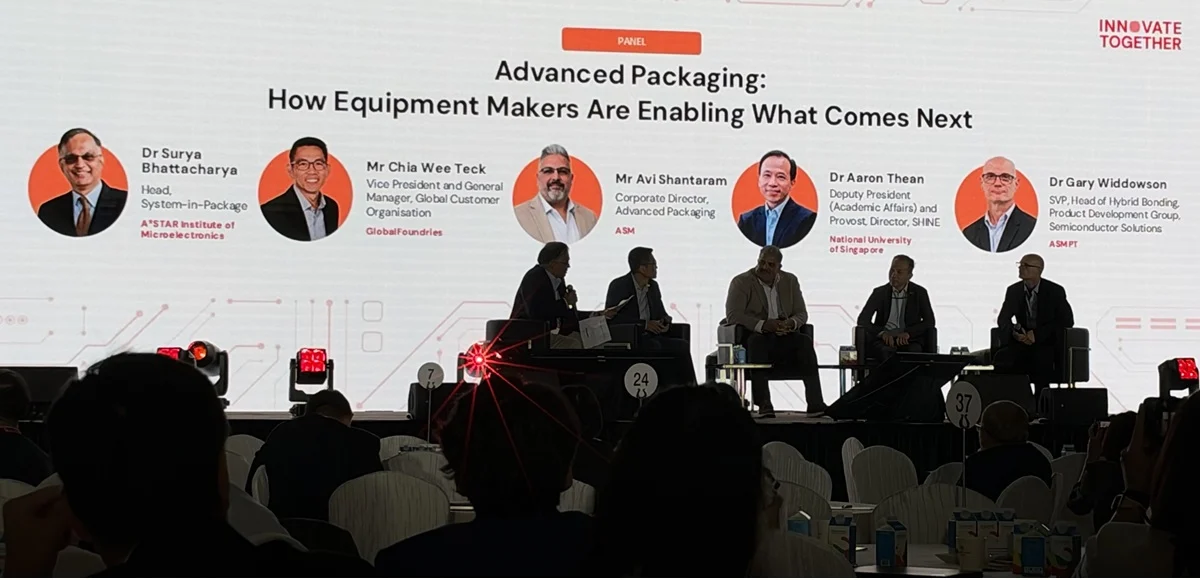
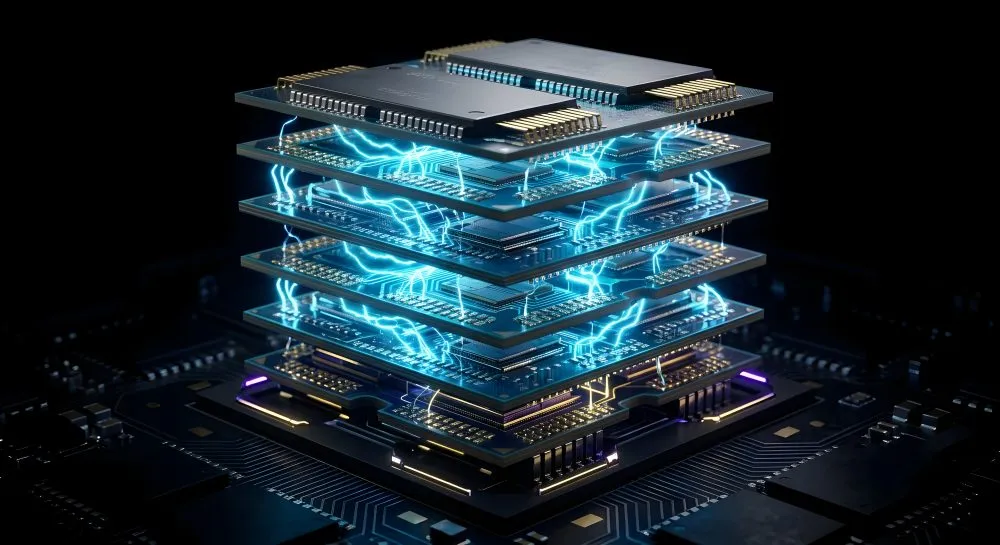
- Hybrid Bonding: By reducing thermal interface resistance through direct metal-to-metal bonding in multichip modules, engineers can facilitate better heat transfer away from the silicon die.
- Vapor Chambers: Long used in high-end smartphones, vapor chambers are being adapted for automotive use. These systems utilize a phase-change mechanism where a working fluid vaporizes at the heat source, spreads rapidly, and condenses, effectively "spreading" the heat over a larger surface area to be dissipated.
- TPMS Geometries: Triply Periodic Minimal Surface (TPMS) structures are being 3D-printed or micro-machined to create complex, internal cooling pathways. These structures provide significantly more surface area than standard fluid channels, allowing for more efficient heat extraction in compact volumes.
Official Industry Perspectives and Innovations
Industry leaders emphasize that there is no "silver bullet" for thermal management. Instead, a multi-layered approach is required, combining system-level design with granular material science.

Axial Flux Motor Cooling
A notable area of innovation is the cooling of axial flux motors. These motors are significantly more power-dense than traditional radial flux motors. A emerging concept involves an integrated system that uses both pumped and capillary-driven "wick" flows to distribute coolant directly into the gaps between motor coils. This ensures that even the most internal, heat-prone windings remain within safe temperature limits, a feat that would be impossible with external cooling jackets alone.
The "Light-Responsive" Frontier
Looking toward the next decade, researchers are exploring adaptive, responsive cooling systems. One highly speculative but promising concept involves the use of light-responsive polymers. By layering these materials over micro-orifices in a cooling manifold, engineers can use targeted light (such as an LED) to trigger the polymer to expand or contract. This allows for real-time, dynamic control of coolant flow to specific "hot spots" on a processor without the need for complex, heavy, and power-hungry mechanical valves.

Implications for the Future of Mobility
The implications of this thermal revolution are profound for the automotive industry, affecting everything from vehicle range to manufacturing costs.
1. Enhanced Vehicle Performance and Reliability
As vehicles move toward fully autonomous status, the reliability of the computing platform is paramount. An overheating AI processor could lead to system throttling or, worse, a safety-critical failure. Advanced cooling ensures that these processors can operate at peak performance, enabling the split-second decision-making required for safe self-driving.

2. Design Flexibility
By adopting more efficient cooling technologies, OEMs can pack more functionality into smaller volumes. This "miniaturization" of thermal management systems frees up precious space for larger battery packs or improved interior ergonomics, directly benefiting the consumer’s experience.
3. Sustainability and Efficiency
While cooling systems themselves consume energy, the efficiency gains realized through better thermal management (such as enabling high-efficiency SiC power electronics) outweigh the costs. Reducing energy waste as heat is essentially the same as extending the range of an electric vehicle.

4. Challenges in Manufacturing
The shift toward micro-scale cooling—such as TPMS structures and hybrid bonding—presents a significant manufacturing hurdle. These components require advanced fabrication techniques that are currently more expensive and slower than traditional methods. The industry is now in a race to scale these technologies for mass-market automotive production.
Conclusion
The evolution of automotive cooling is a microcosm of the broader transition in the mobility sector. As the industry moves away from the "mechanical-first" design philosophy, it enters an era where physics, materials science, and software engineering are inextricably linked. The vehicles of tomorrow will not only be judged by their speed or battery range, but by their ability to manage the intense thermal loads generated by the advanced systems that drive them. As heat fluxes continue to climb, the engineers who master the art of thermal control will be the ones who define the future of the electrified, software-defined, and autonomous road.

Related Insights:
- Cybersecurity in the Age of AI: As vehicles become more connected, the cooling systems themselves—if networked—must be protected against cyberattacks that could manipulate thermal control logic to induce system failure.
- The 800V Transition: The move to higher voltages is the primary catalyst for the current thermal management push, making wide-bandgap material integration the most critical focus area for R&D departments globally.