In a major development for the generative AI ecosystem, Anthropic announced on Tuesday a transformative update to its flagship AI assistant, Claude. By merging the memory systems of its standard conversational interface and its agentic counterpart, Claude Cowork, the company is effectively dismantling the "silo effect" that has historically plagued AI users. This architectural shift ensures that Claude maintains a persistent understanding of user contexts, preferences, and project details, regardless of which interface is being utilized.
For power users and professionals who rely on AI for complex workflows, this update addresses one of the most persistent pain points in the industry: the "rebriefing tax." Previously, transitioning from a research-heavy chat session to an action-oriented task in Claude Cowork required users to manually re-contextualize the AI, often leading to fragmented workflows and loss of efficiency. With this integration, Claude now functions as a singular, continuous intelligence.
Main Facts: A Unified Cognitive Architecture
The core of this update lies in the synchronization of memory storage. Previously, Claude functioned as if it had "amnesia" when shifting between different modes of operation. By merging these systems, Anthropic has enabled a cross-pollination of data that allows the AI to retain knowledge learned during casual brainstorming and apply it immediately to administrative or technical tasks within Claude Cowork.
Key Features of the Update:
- Persistent Memory: Information gathered in a standard chat is immediately available to Claude Cowork, and vice versa.
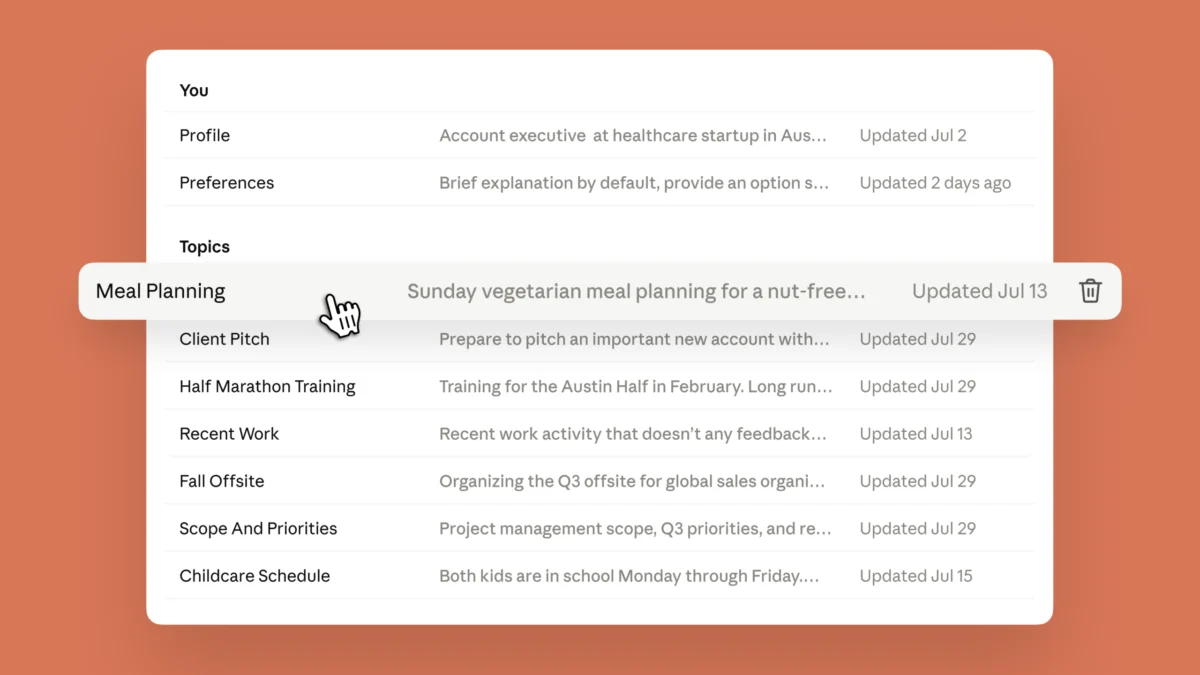
- Transparency and Control: Users now have the ability to inspect exactly what Claude has retained. A new management dashboard allows for the reading, editing, or manual deletion of specific memory entries.
- Real-Time Updating: Unlike previous iterations that summarized conversations at their conclusion, the new system updates memory dynamically as the chat progresses.
- Default Accessibility: The feature is being rolled out globally across Free, Pro, and Max tiers on web, desktop, and mobile platforms.
Chronology: From Static Chats to Dynamic Agents
The evolution of Claude’s memory reflects a broader industry trend toward "agentic AI"—systems that don’t just chat, but execute tasks autonomously.
Phase 1: The Chatbot Era
Initially, Claude, like its competitors, operated on a "session-based" model. Once a chat window was closed or a new one opened, the context was largely lost unless the user employed complex prompt engineering or long-context windows.
Phase 2: The Introduction of Cowork
When Anthropic launched Claude Cowork, it was designed as an agentic tool capable of navigating files, writing code, and executing multi-step workflows. However, it operated as a distinct environment from the standard chat. This created a friction point: users would brainstorm project strategy in a chat, then have to re-explain those strategies to Cowork to get them implemented.
Phase 3: The Integration (Current)
Tuesday’s announcement marks the convergence of these two paths. By treating "chat" and "work" as a unified cognitive experience, Anthropic has reduced the cognitive load on the user. The AI now acts as an evolving partner that matures alongside the user’s projects.

Supporting Data: Enhancing Productivity Through Continuity
The rationale for this update is rooted in the "contextual friction" observed in AI interaction. When a user spends hours refining a project—defining parameters, identifying constraints, and setting goals—the failure of the AI to remember those constraints in a new session represents a significant waste of human labor.
Anthropic provided a compelling use case: a user preparing for a corporate conference. Previously, a user would spend hours chatting with Claude about the event’s details—headcount, venue city, speaker rosters, and logistical constraints. When the user then switched to Claude Cowork to generate an agenda or email invitations, they were forced to re-input all these variables. Under the new system, Claude Cowork enters the workspace already "knowing" the event details. This reduction in redundancy is expected to cut administrative prep time by a significant margin, potentially saving users dozens of hours per month.
Official Responses and Safety Protocols
Anthropic has placed a heavy emphasis on privacy and user autonomy in the wake of this update. Recognizing that a "remembering" AI can be a double-edged sword, the company has implemented a tiered approach to data sensitivity.
Handling Sensitive Information
By default, Claude is programmed to ignore highly sensitive data, including:
- Government-issued identification (Social Security numbers, passport details).
- Criminal history.
- Immigration status.
- Data that violates Anthropic’s Acceptable Use Policy.
Regarding personal but sensitive information—such as religious beliefs, political affiliations, race, ethnicity, or health data—the AI will not store these by default. However, users are given the agency to "opt-in" to the storage of such information if they believe it improves the quality of their AI collaboration. When the system saves a sensitive data point, the user receives an explicit notification, ensuring they are always aware of what is being recorded.
"Our goal is to make Claude a more capable partner without compromising the safety or privacy of our users," a spokesperson for Anthropic noted. The ability for users to manually prune the AI’s memory acts as a "forgetting" function, which is critical for compliance in professional environments where data hygiene is paramount.
Implications: The Future of Human-AI Collaboration
The implications of this update are profound for the future of the digital workforce. By evolving Claude from a "tool" into a "colleague," Anthropic is setting a new standard for AI usability.

1. The Death of the "New Chat" Paradigm
For years, users have been conditioned to start "fresh" conversations to avoid context pollution. This update suggests that the need for this behavior is ending. As the AI grows more sophisticated in its memory management, the conversation history becomes an asset rather than a liability.
2. A Competitive Shift
This move positions Anthropic to better compete with agents that focus on deep integration into operating systems. By creating a seamless bridge between its chat and agentic capabilities, Anthropic is essentially building an "operating system for intent," where the AI remembers the "why" and the "how" of a user’s work, not just the current task.
3. Ethical Challenges and User Trust
While the update is a technological win, it raises important questions about long-term data retention. As AI models accumulate years of personal context, the definition of "user data" becomes increasingly complex. Anthropic’s move to expose the memory to the user—allowing them to edit or delete—is a necessary step in maintaining public trust. It transforms the AI from a "black box" that remembers everything into a transparent system that can be audited by its user.
4. Technical Hurdles for Mobile Integration
While the feature is robust, its success will hinge on the reliability of the mobile experience. Users on iOS and Android must update to the latest versions to access the unified memory. As the AI begins to rely on stored memories across platforms, the latency and synchronization speed between a user’s desktop and their mobile phone will become a critical performance metric for Anthropic.
Conclusion
The merger of Claude’s chat and Cowork memory systems is more than a quality-of-life improvement; it is a fundamental shift in how humans interact with large language models. By treating memory as an editable, transparent, and persistent resource, Anthropic is moving closer to the vision of a truly autonomous personal assistant. As the digital divide between "thinking" and "doing" shrinks, the users who leverage this persistent intelligence will find themselves significantly more productive, supported by an AI that finally understands them—not just in the moment, but over the course of their entire project lifecycle.