In a seismic shift for the enterprise software landscape, OpenAI has officially unveiled its long-anticipated productivity suite, marking a definitive evolution from a standalone chatbot to a comprehensive digital workspace. Announced Tuesday at the company’s DevDay event, the launch of "Pages"—a collaborative document editor integrated directly into ChatGPT—signals the company’s intent to move beyond simple generative AI tasks and compete directly with entrenched industry giants like Microsoft, Google, and Notion.
This strategic expansion represents more than a mere feature update; it is an aggressive move to capture the "collaboration layer" of the modern office. By enabling users to create, store, and share documents, slides, and spreadsheets within a unified environment, OpenAI is betting that the future of work is not just AI-assisted, but AI-native.
Main Facts: What is ChatGPT Pages?
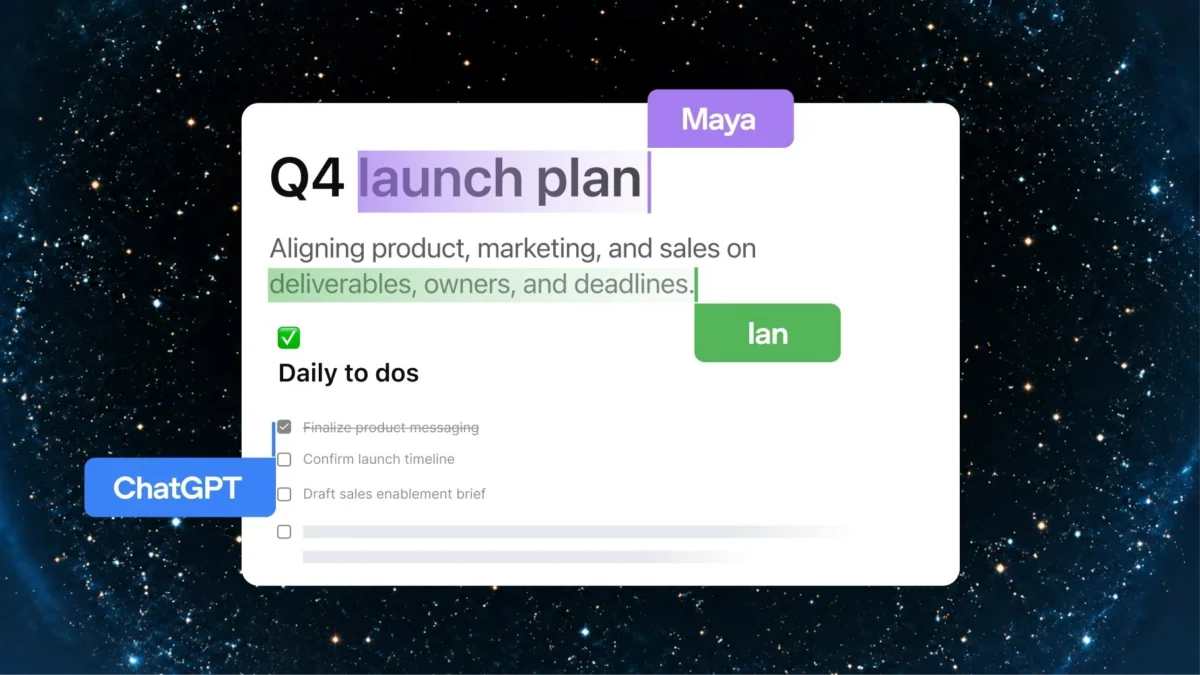
At its core, Pages is designed as a dynamic, block-based document editor. Drawing visual and functional inspiration from popular tools like Notion, Pages allows users to organize content into distinct blocks, including paragraphs, headings, checklists, and interactive tables.
The platform is housed within a new interface tab called "Space." According to OpenAI, Space is intended to serve as a central hub for team collaboration. It effectively replaces the legacy "Library" in ChatGPT, though the "Projects" tab will remain to assist users in organizing individual chats and localized files.
Key features of the new suite include:
- AI-Human Synergy: Users can leverage ChatGPT’s generative capabilities directly within the document, requesting revisions, summaries, or the creation of new content (including images and visualizations) without leaving the interface.
- Prompt Embedding: An innovative "Prompt" block allows authors to embed interactive AI queries for readers, turning static documents into living, explorable resources.
- Collaborative Infrastructure: Pages supports multi-user editing, allowing teams to work on the same document simultaneously. It also includes robust commenting features and version controls.
- Cross-Platform Integration: The suite supports connections to external content repositories, most notably Google Drive, allowing users to import existing assets into the OpenAI ecosystem.
The service is currently available to ChatGPT Pro, Business, and Enterprise customers. While full functionality is accessible via web and desktop applications, mobile users are currently limited to viewing and sharing capabilities.
Chronology: The Road to the "Sticky" Assistant
The journey to this announcement has been marked by a clear trajectory of increasing integration. For months, industry observers speculated that OpenAI would eventually pivot toward a more holistic office suite.
- Pre-2026: ChatGPT functioned primarily as an external, "on-demand" tool—a place to draft emails or summarize text before copying the results into a third-party application like Microsoft Word or Google Docs.
- Early 2026: OpenAI began testing "Projects," allowing users to associate specific documents and knowledge bases with individual chat sessions, effectively creating "contexts" for AI work.
- September 2026 (DevDay): The formal unveiling of "Space" and "Pages" marks the official transition to an environment where work is "retained" rather than just "generated."
- Future Outlook: OpenAI has already confirmed that a dedicated "Slides" application is in development, which will further round out the suite to compete with PowerPoint and Google Slides.
This timeline reflects a broader industry trend. Within the last month alone, Anthropic introduced a rich-text editor and presentation tool into its Claude platform, while Microsoft rolled out a significant overhaul of its Copilot suite to better unify enterprise context.
Supporting Data: The Battle for the Enterprise Dollar
The urgency behind these product launches is underscored by dramatic market forecasts. According to Gartner, spending on enterprise AI assistants is projected to skyrocket from $17 billion in 2025 to a staggering $71 billion by 2030.
Market analysts suggest that the "stickiness" of these platforms—the ability to keep a user within a single ecosystem for the duration of a workday—is the primary driver for these investments. By moving from a "chat-only" interface to a "productivity-suite" interface, OpenAI is attempting to ensure that ChatGPT becomes the primary application in which knowledge workers operate.

However, the barrier to entry remains high. While OpenAI is gaining ground, established incumbents hold a massive historical advantage. Millions of enterprises are currently locked into the Microsoft 365 or Google Workspace ecosystems, which are built upon years of deep-rooted collaboration habits, complex permission structures, and vast libraries of legacy data.
Official Perspectives and Industry Analysis
The reaction from industry analysts has been a mix of excitement and skepticism regarding the feasibility of displacing incumbents.
Maria Bell, a senior research analyst at FDM CCS Insight, notes that OpenAI’s shift changes the nature of the competitive landscape. "Spaces and Pages broaden the competitive overlap," Bell stated. "ChatGPT is moving beyond being primarily an individual assistant towards becoming a place where work can be retained, organized, and shared with colleagues. That brings it closer to the collaboration layer of Microsoft 365, Google Workspace, and Notion, rather than simply competing with the AI assistants inside those platforms."
Jack Gold, principal analyst at J. Gold Associates, points out the difficulty of the "rip and replace" strategy. "I don’t see companies transitioning to new productivity suites easily," Gold remarked. "It’s a major lift to do so, and most are looking to add on to their existing capabilities rather than replace them. OpenAI is trying to become a more user-centric environment that focuses on everyday workloads, but it won’t be easy displacing entrenched users."
OpenAI has maintained a tight-lipped stance regarding specific pricing for the business-tier rollouts, focusing instead on the user experience and the "human-agent collaboration" narrative.
Implications: The High Bar for Adoption
For OpenAI to succeed in this new chapter, it must overcome the "network effect" that keeps Microsoft and Google at the top of the food chain. As Maria Bell suggests, adoption is not just about the quality of the AI—it is about the infrastructure of the team.
"A user can adopt ChatGPT for drafting or research on their own," Bell explained. "But shared documents depend on colleagues using the same environment, agreeing on how work is organized, and trusting it as a common workspace. OpenAI is not just asking users to try a new feature; it is asking teams to consider whether ChatGPT can become the backbone of their shared working environment."
This represents a "higher bar" for the company. To succeed, OpenAI must prove that the productivity gains from its superior AI engine are significant enough to offset the friction of moving away from long-standing, standardized workflows.
Furthermore, the introduction of multi-user collaboration brings new scrutiny to data security and permissions. As ChatGPT integrates more deeply into the enterprise, OpenAI will be required to demonstrate that its security protocols can match the enterprise-grade standards of Microsoft and Google—a challenge that will likely define the next phase of its growth.
As the lines between "AI assistant" and "productivity suite" continue to blur, the coming year will serve as a litmus test for whether the enterprise market is ready to embrace a new, AI-first way of working, or if the convenience of legacy ecosystems will prove too powerful to dismantle. For now, the move to "Pages" confirms that the AI revolution has arrived at the office desk, and it is here to stay.