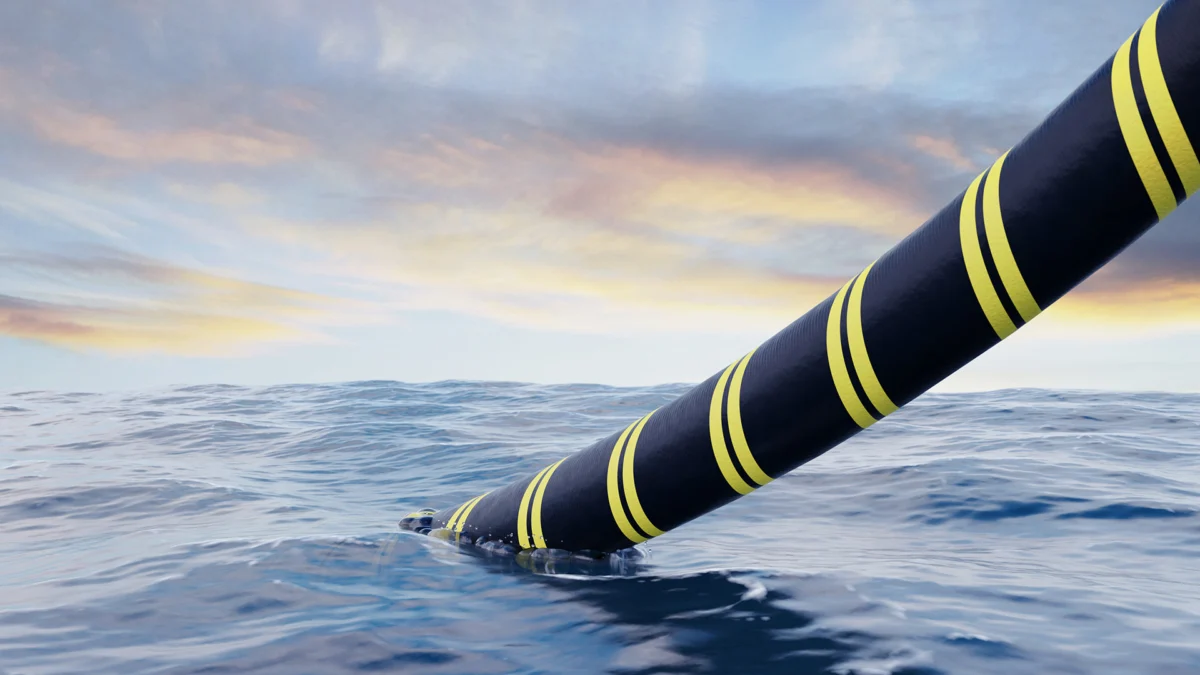
In an era defined by the explosive growth of Artificial Intelligence (AI), cloud computing, and the relentless demand for high-bandwidth enterprise applications, the physical backbone of the internet—subsea fiber-optic cables—has become the most critical asset in global geopolitics and commerce. FLAG, one of the world’s largest privately owned subsea cable operators, has officially announced a series of landmark investments in the MIST, I2SEA, and ECHO cable systems. This aggressive expansion, central to its "Vision 2030" strategy, aims to provide diverse, resilient, and high-capacity connectivity paths across India, Asia, and the Trans-Pacific corridors.
By bolstering its infrastructure, FLAG is not merely adding capacity; it is fundamentally redesigning how data traverses the Indo-Pacific, creating a network that prioritizes redundancy and uptime in an increasingly complex global environment.
Main Facts: The New Connectivity Landscape
The announcement centers on three primary pillars of investment, each designed to address specific geographic bottlenecks and capacity constraints:
- The MIST Cable System: Through a strategic agreement with Orient Lines (OLL), FLAG is securing significant capacity on the MIST system. This route acts as a vital link between Mumbai and Singapore. Having been operational since 2024, the integration of FLAG’s services into this network is slated for October 2026.
- The I2SEA Cable System: In a partnership with Lightstorm, FLAG has committed to a fiber pair on the I2SEA system. This project is uniquely comprehensive, connecting the Indian cities of Machilipatnam and Chennai to Singapore. Crucially, the project includes significant investment in terrestrial segments linking Mumbai to Chennai, effectively bridging the west and east coasts of India through a unified, high-capacity infrastructure. This system is projected to enter service in 2029.
- The ECHO System: Building upon its existing investment in a fiber pair on the ECHO Trans-Pacific system, FLAG continues to solidify its presence in the vital corridor between Asia and the United States, ensuring that its customers benefit from direct, low-latency links to North American data hubs.
These investments are designed to mitigate the risks associated with single-route reliance. By providing four distinct, diverse paths into Mumbai—a global financial hub—FLAG is positioning itself as a primary architect of digital resilience in the Indo-Pacific region.
Chronology: The Evolution of FLAG’s Vision 2030
The trajectory of FLAG’s recent expansion is a testament to long-term strategic planning. Understanding the timeline is essential to grasping the scale of the company’s ambition:
- Pre-2024 (Foundations): FLAG established its reputation through its existing India-Singapore India Asia Express (IAX) investment, which proved the viability of high-speed, direct routes between major Asian commercial centers.
- 2024 (The MIST Milestone): The MIST cable system officially entered service. While FLAG was not an initial owner, the subsequent agreement to secure capacity on this line marks a critical step in integrating existing subsea architecture into a more cohesive, managed ecosystem.
- October 2026 (The MIST Integration): This date represents the official launch of FLAG-managed services on the MIST cable, marking the next stage in delivering enhanced capacity to enterprise clients.
- 2029 (The I2SEA Launch): This long-range target marks the completion of the I2SEA system and the associated terrestrial upgrades in India. This will represent a massive leap in bandwidth capacity for the Indian subcontinent, effectively connecting its primary tech hubs to the broader Asian market.
- Vision 2030 and Beyond: The overarching strategy serves as a roadmap for continuous investment. As CEO Paul Abfalter noted, the company intends to maintain this momentum with a series of further announcements scheduled for the coming quarters.
Supporting Data: Why Redundancy is the New Gold Standard
The necessity for these investments is driven by a data-rich reality. According to recent industry benchmarks, enterprise and cloud data traffic are growing at a compound annual growth rate (CAGR) that frequently outpaces terrestrial capacity upgrades.
Geopolitical and Infrastructure Complexity
The Indo-Pacific is a region of immense opportunity but also significant technical complexity. Regulatory hurdles, diverse permitting environments, and the physical vulnerability of subsea cables to seismic activity or accidental damage necessitate a "multiple-path" approach.
- Redundancy Metrics: By securing four diverse paths into Mumbai, FLAG is addressing the "single point of failure" risk that plagues many legacy network designs. If a subsea cable is cut in the Bay of Bengal, the traffic can be rerouted through the terrestrial segments or secondary subsea routes without significant packet loss or latency spikes.
- Hard-to-Reach Markets: Regions such as Machilipatnam have historically lacked high-capacity international access. By anchoring a major subsea cable there, FLAG is not just connecting cities; it is fostering regional economic development and enabling local enterprises to participate in the global digital economy.
Official Responses: Insights from Leadership
The strategic direction of FLAG is spearheaded by CEO Paul Abfalter, who emphasizes that the company’s role is to transition from a mere infrastructure provider to a "provider of choice" for long-haul connectivity.
In his official statement, Abfalter remarked: "Through our Vision 2030 strategy and future investment plans, we are focused on expanding our network reach and becoming the provider of choice for customers requiring long-haul connectivity in the Indo-Pacific region. Following on from the success of our existing India-Singapore India Asia Express investment, these new investments will provide four diverse paths to Mumbai. The I2SEA investment is a great example of FLAG ramping up our investments in new subsea builds and in unique long-haul terrestrial capability."
Abfalter’s comments signal a shift in focus toward the integration of terrestrial and subsea assets. By controlling the "last mile" connectivity between Mumbai and Chennai, FLAG ensures a seamless end-to-end experience that competitors relying solely on wholesale subsea capacity cannot match. The promise of "further investment announcements next quarter" suggests that the current cycle is merely the beginning of a broader capital expenditure phase.
Implications: A New Era for Global Connectivity
The ripple effects of FLAG’s Vision 2030 will be felt across several sectors:
1. The Enterprise and Cloud Sector
For hyperscalers—such as AWS, Google Cloud, and Microsoft Azure—and large multinational corporations, the availability of diverse, resilient paths is non-negotiable. As these companies migrate more mission-critical operations to the cloud, the reliability of the underlying fiber network becomes a direct contributor to their Service Level Agreements (SLAs). FLAG’s investment provides these entities with the "uptime" they require to operate in the Indo-Pacific without fear of network congestion or localized outages.
2. The AI Revolution
Generative AI models require massive datasets to be transferred between global data centers for training and inference. The latency requirements for these applications are extremely tight. By investing in modern, high-capacity cable systems like I2SEA and MIST, FLAG is providing the "pipes" necessary to facilitate the next generation of AI development, ensuring that data-heavy regions in Asia can effectively communicate with the global AI research hubs in the United States.
3. Economic Impact on India
India is currently undergoing a rapid digital transformation, with massive investments in data center parks. FLAG’s infrastructure projects are effectively turning Indian coastal cities into the primary gateways for Asian internet traffic. This is likely to lower the cost of bandwidth for local businesses and attract further foreign direct investment into the region’s technology sector.
4. Strategic Geopolitical Autonomy
By diversifying routes and reducing reliance on "legacy corridors," FLAG is participating in a broader trend of infrastructure sovereignty. As geopolitical tensions can occasionally disrupt traditional trade routes, having a privately owned, geographically diverse network allows FLAG to offer its customers a level of stability and security that is increasingly rare in the global telecommunications market.
Conclusion: The Path Ahead
The telecommunications landscape of 2030 will look fundamentally different from that of today. With data traffic doubling every few years, the static networks of the past are no longer sufficient. FLAG’s commitment to the MIST, I2SEA, and ECHO systems represents a proactive stance toward these challenges.
By strategically weaving together subsea fiber with robust terrestrial segments, FLAG is ensuring that the digital fabric of the Indo-Pacific remains resilient, scalable, and ready for the future. As the company moves toward the 2026 and 2029 service milestones, the industry will be watching closely to see how these infrastructure upgrades influence global market dynamics. For now, FLAG has made its intent clear: it is building the foundation upon which the future of global digital connectivity will be written.
For more detailed information regarding FLAG’s evolving network architecture and its portfolio of connectivity solutions, stakeholders and industry observers are encouraged to visit their official portal at www.flagtel.com.