BEIRUT — The geopolitical landscape of the Middle East and South Asia has undergone a seismic shift with the formalization of the "Mecca Pact," a trilateral defense agreement signed on August 7 between Saudi Arabia, Turkey, and Pakistan. While headlines have focused on the pact’s collective security provisions, defense analysts argue that the true significance of the agreement lies in the creation of a sophisticated, integrated defense-industrial ecosystem designed to foster long-term strategic autonomy.
By merging Turkey’s burgeoning indigenous aerospace and robotics sector, Saudi Arabia’s massive capital reserves and "Vision 2030" industrialization mandate, and Pakistan’s extensive experience in military manufacturing and human capital, the three nations are moving to bypass the traditional reliance on Western defense procurement.
The Genesis of the Mecca Pact: A New Security Paradigm
The Mecca Pact is far more than a standard procurement agreement. Its core tenet—that an armed attack against one signatory constitutes an attack against all—marks a dramatic departure from the regional status quo. This "collective deterrence" clause, which many have likened to NATO’s Article V, serves as a direct response to the volatile security environment in the Gulf, where Saudi Arabia has faced persistent threats from regional rivals.
"The Mecca Pact should not be viewed simply as an arms-export agreement. It is much broader," explains Ali Bakir, a defense analyst and assistant professor at Qatar University. "It aims to facilitate joint investment in defense industries, major defense projects, technology transfer, local production, research and development, training, and the integration of complementary capabilities. Over time, this could transform the relationship from a buyer-seller model into a genuine defense-industrial partnership."
Chronology of the Agreement
- 2023: Turkish drone manufacturer Baykar signs its largest contract to export the Akinci unmanned combat aerial vehicle (UCAV) to the Saudi Navy and Air Force, signaling a thaw in bilateral defense relations.
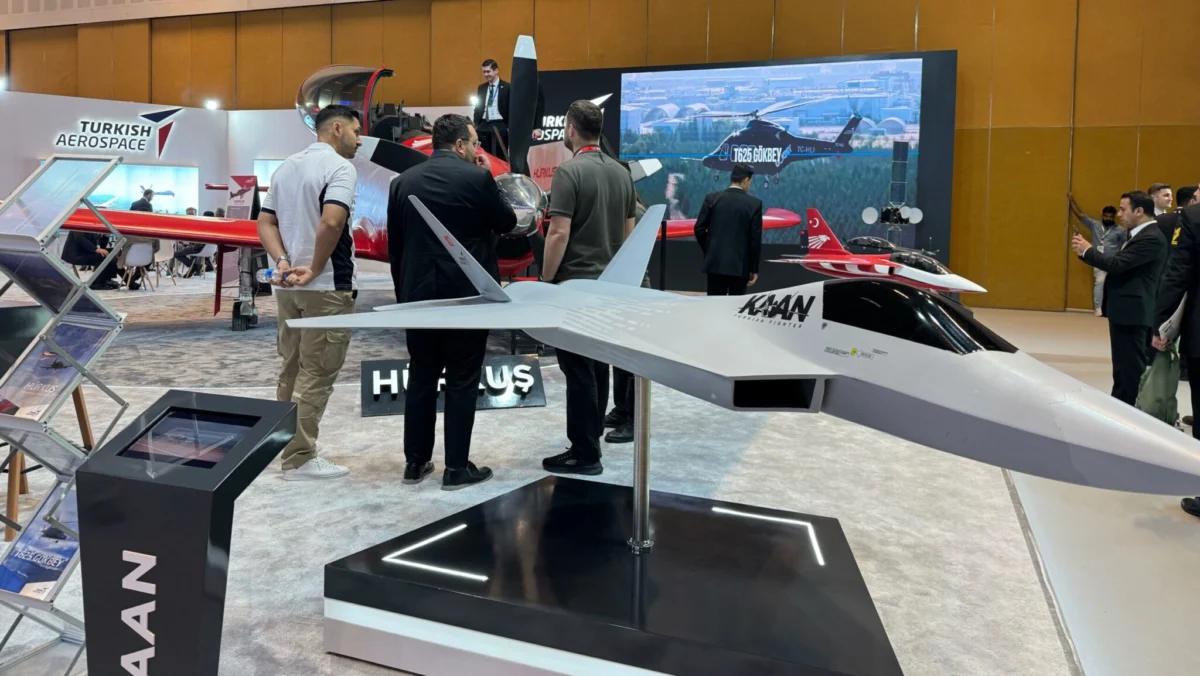
- February 2026: Turkish Aerospace Industries (TAI) CEO Mehmet Demiroglu confirms that negotiations are in the final stages regarding the inclusion of Saudi Arabia in the KAAN fifth-generation fighter program.
- August 7, 2026: Saudi Arabia, Turkey, and Pakistan officially ink the "Mecca Pact," codifying a trilateral defense partnership centered on industrial cooperation and mutual security guarantees.
- Current Status: The agreement awaits formal ratification by the Turkish Parliament, a move widely expected to pass without significant opposition.
Supporting Data: Why This Partnership Works
The economic and industrial logic behind the Mecca Pact is rooted in the specific needs of the signatories. Saudi Arabia, under the umbrella of Crown Prince Mohammed bin Salman’s Vision 2030, is aggressively pursuing the localization of 50% of its defense spending.
Serhat Süha Çubukçuoğlu, director of the Turkey program at TRENDS Research & Advisory, notes that Saudi Arabia is no longer content to simply import "black box" platforms from Western nations. "It wants to build domestic manufacturing, maintenance, and engineering capacity. Turkey is particularly well placed to support that goal because it can offer capable, combat-tested systems with fewer political restrictions and more flexible localization arrangements than many traditional Western suppliers," Çubukçuoğlu said.
The Role of Industrial Synergy
- Turkey: Provides the technological backbone, including drone swarming, advanced sensors, and fifth-generation combat aviation.
- Saudi Arabia: Provides the investment capital and the end-user requirements necessary to scale production and validate new systems in challenging operational theaters.
- Pakistan: Contributes specialized manufacturing expertise and a deep pool of military personnel experienced in operating and maintaining diverse, multi-national hardware, bridging the gap between Turkish design and Gulf deployment.
Albert Vidal, a research analyst at the International Institute for Strategic Studies (IISS), suggests that the pact acts as a "nudge" for Turkish firms. "Turkish firms have been working to penetrate the Saudi market for years, but successes have been limited. This pact institutionalizes the process, removing bureaucratic friction for companies looking to establish joint ventures," Vidal noted.
The "KAAN-Do" Attitude: Future Procurement Priorities
The most high-profile potential outcome of the Mecca Pact is the acceleration of Saudi participation in the KAAN fighter program. As Riyadh looks to modernize its air force, the prospect of co-producing a fifth-generation platform provides an alternative to the often-politicized F-35 program.
Beyond the KAAN, the focus is on building a layered air defense architecture. "Riyadh is increasingly interested in diversifying its suppliers and building greater redundancy," says gulf defense analyst Leonardo Jacopo Maria Mazzucco. "Turkish systems could have a role here, especially in the lower and middle layers: HİSAR-O could provide a medium-range option, while systems such as KORKUT and GÖRZ could address short-range and counter-UAV requirements."
Gokhan Tekin, director of international business development for the vehicle-producer FNSS, emphasizes the importance of standardization. "Relations between governments and institutions will grow even closer, and joint working groups will be established. Standardizing the systems used in military vehicles will also come onto the agenda. Products that work compatibly with each other under the same standards will likely be used."
Official Responses and Strategic Implications
When pressed on specific exports or the impact of the pact, representatives for major Turkish defense firms remained cautiously optimistic. Turkish Aerospace, in a statement to Breaking Defense, noted that the firm "will continue to provide solutions to the needs of Türkiye, as well as those of friendly and allied nations, through the advanced technologies and products it develops and manufactures."
Implications for the Global Defense Market
The implications of this pact extend far beyond the immediate signatories:
- Strategic Autonomy: The trilateral partnership creates a "defense bloc" that is less susceptible to the "strings-attached" procurement policies often employed by Washington, Berlin, or Paris. By creating an internal market, these three nations ensure that they can sustain their military capabilities even during periods of geopolitical isolation from the West.
- Market Competition: For Western defense contractors, the Mecca Pact represents a significant disruption. Turkish firms, once seen as secondary players, are now effectively subsidized by Saudi capital and integrated into a broader regional security framework, making them formidable competitors for future contracts in the Middle East, North Africa, and Central Asia.
- Regional Deterrence: The "collective defense" aspect of the pact fundamentally changes the risk-benefit analysis for any state contemplating aggression against Saudi Arabia. With the combined military might of Turkey (the second-largest army in NATO) and Pakistan (a nuclear-armed power) theoretically backing the Kingdom, the deterrence threshold has been significantly elevated.
Conclusion: A Long-Term Institutionalized Ecosystem
As the Mecca Pact transitions from a signed document to an active policy framework, the primary challenge will be the institutionalization of the partnership. While the rhetoric is strong, the real test will be the successful execution of joint research and development projects.
Ali Bakir remains convinced of the potential, noting that if the three nations successfully combine their financial resources, industrial capabilities, and human capital, they will create a "deeply institutionalized defense ecosystem." This would not only increase defense trade but also redefine the power dynamics of the region.
The Mecca Pact is not a temporary marriage of convenience; it is a calculated attempt to construct a sovereign defense infrastructure. By fostering a collaborative environment where technology is shared, production is localized, and security is collective, Saudi Arabia, Turkey, and Pakistan are signaling that the future of regional defense will be written in Riyadh, Ankara, and Islamabad—not in the boardrooms of Washington or the capitals of Europe. As ratification processes move forward, the global defense community will be watching closely to see if this ambitious trilateral vision can translate into concrete, battle-ready capabilities.