By [Your Name/Journalistic Desk]
As the global geopolitical landscape shifts toward an era of unprecedented technological volatility, the United States Air Force is fundamentally restructuring its approach to digital warfare. Acknowledging that the integration of artificial intelligence into state-sponsored cyber espionage has created an "inflection point" in national security, the 16th Air Force (Air Forces Cyber) has unveiled a comprehensive defensive campaign plan designed to neutralize threats that are faster, smarter, and more autonomous than ever before.
Lt. Gen. Thomas Hensley, commander of the 16th Air Force, articulated the urgency of this pivot during the Department of the Air Force Information Technology and Cyberpower conference in Montgomery, Alabama. The message was clear: the era of static network defense is over. In its place, the Air Force is implementing a dynamic, proactive, and layered defensive architecture designed to thwart AI-driven adversaries.
The Inflection Point: The Rise of Agentic AI
The primary catalyst for this strategic shift is the rapid emergence of "frontier AI models." Unlike the cyber threats of the last decade, which largely relied on human-operated exploits, the current frontier is dominated by autonomous, agentic AI capable of orchestrating complex, multi-stage attacks with minimal human intervention.
"Autonomous, agentic AI orchestrated attacks are possible today," Lt. Gen. Hensley noted during his address. "So we’ve got to harden our networks. When people say, ‘Hey, we’re at an inflection point,’ we are absolutely at an inflection point."
The velocity at which these technologies are evolving has caught many defense analysts off guard. Hensley emphasized that only six months ago, the specific capabilities of these frontier models were not part of the mainstream discourse. This speed of innovation provides a "first-mover advantage" to adversaries, forcing the U.S. military to rapidly pivot into the role of a "fast follower" that must secure its infrastructure before the secondary and tertiary waves of AI-enhanced attacks hit.
The Four Pillars of the Defensive Campaign
To counter these threats, the 16th Air Force has developed a four-pronged strategy. This framework, which complements an offensive cyber operations plan introduced last year, seeks to move beyond traditional firewalls and into the realm of active, intelligence-led defense.
1. Hardening and Blunting the Attack
The "bread and butter" of the strategy, this pillar focuses on the foundational security of military networks. This is a perpetual, high-intensity effort involving Airmen operating in Security Operations Centers (SOCs) and Network Operations Centers (NOCs).
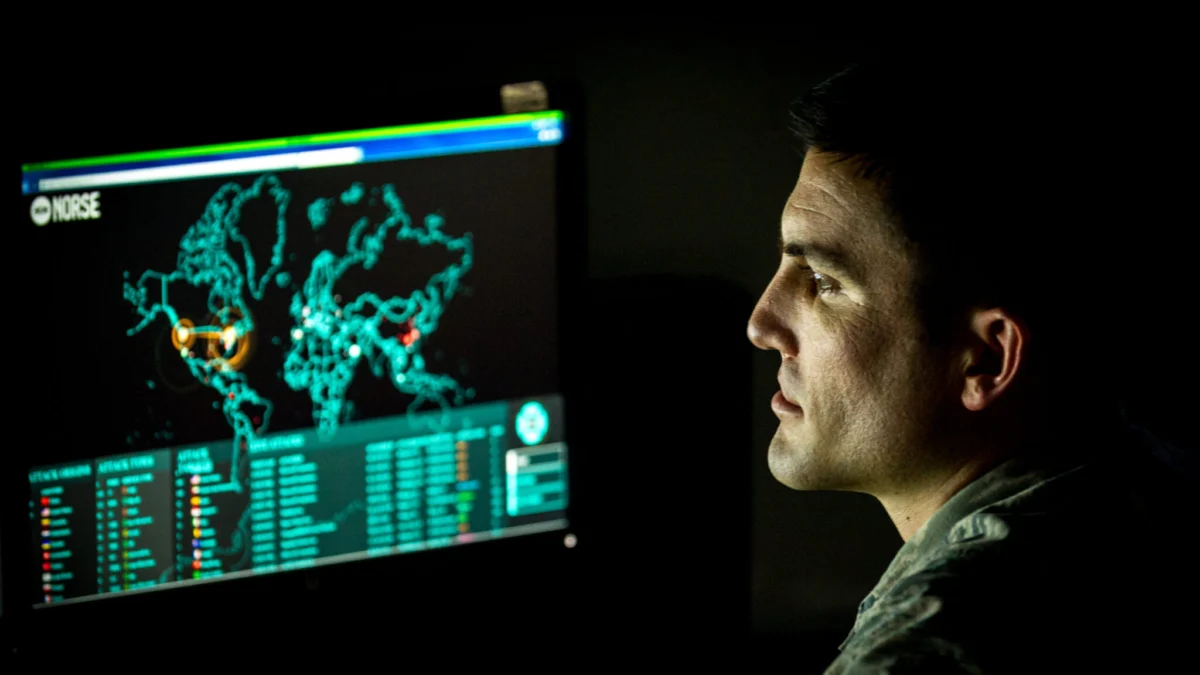
This layer is characterized by persistent monitoring and the deployment of Cyber Protection Teams (CPTs). These units do not wait for alarms to trigger; they utilize specialized, cutting-edge equipment to proactively "hunt" for adversaries already inside the perimeter. By identifying anomalies before they manifest as data exfiltration or system crashes, the Air Force aims to blunt the efficacy of an adversary’s initial breach attempt.
2. Deliberate Defense of Critical Nodes
Recognizing that not all networks hold equal strategic weight, the "deliberate defense" pillar mandates a prioritized security posture. The Air Force has identified specific systems that represent the backbone of national survival and power projection.
This includes, most notably, Nuclear Command, Control, and Communications (NC3) networks, as well as global logistics chains and critical infrastructure. By concentrating elite defensive assets on these high-value targets, the military ensures that even if a peripheral network is compromised, the "crown jewels" remain shielded from AI-driven automated probing.
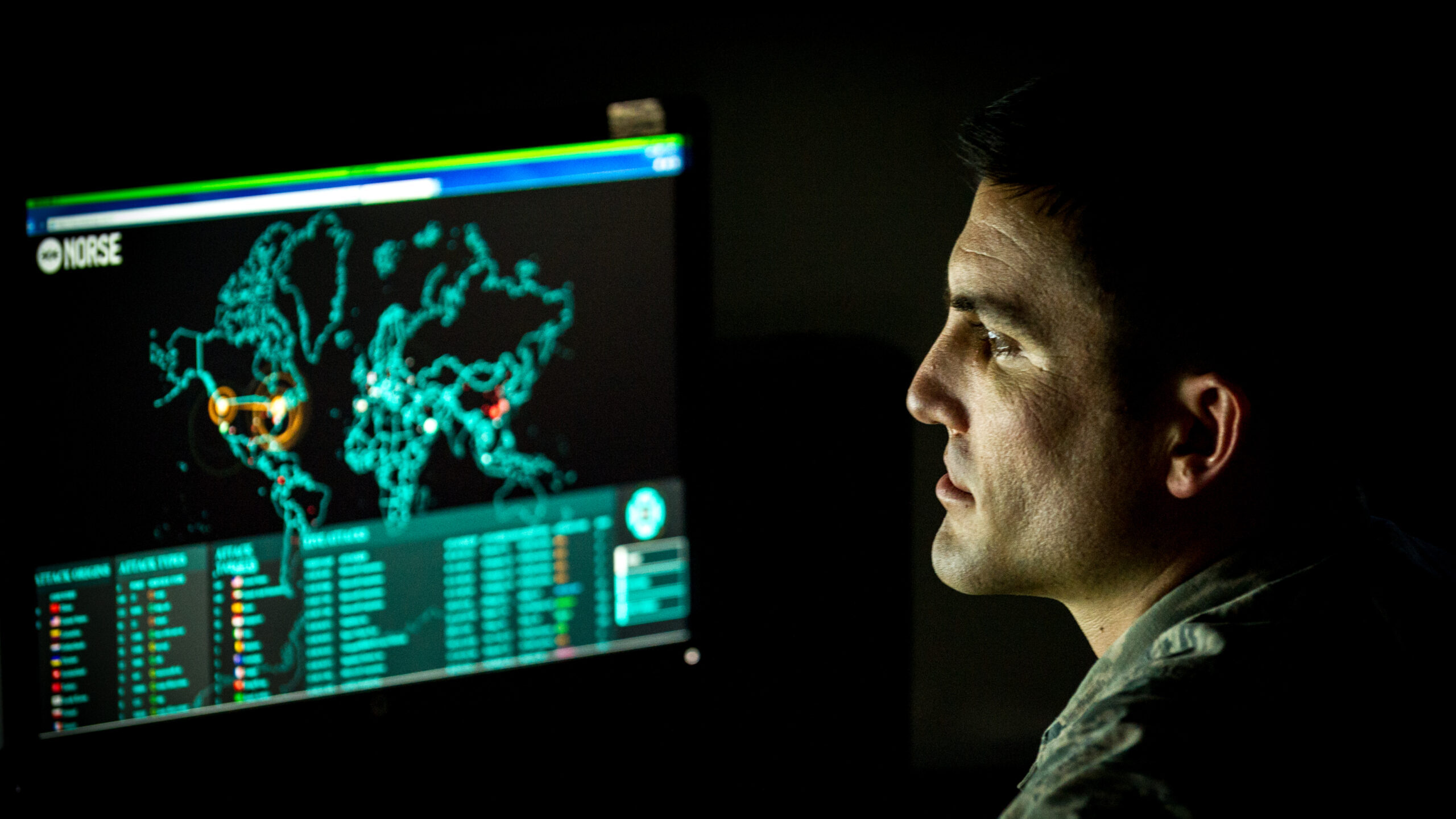
3. Proactive Cost Imposition
Perhaps the most aggressive component of the plan is the concept of "proactive cost imposition." The 16th Air Force is signaling a departure from purely reactive defense.
"We’re not just going to sit here and let the adversaries attack us without imposing some sort of cost against them," Hensley stated. This strategy involves active measures designed to degrade the adversary’s capability and morale. Tactics include:
- Deception: Confusing the adversary’s AI agents with "honey pots" and false data.
- Diversion: Routing hostile traffic into dead-end environments to waste the adversary’s time and computational resources.
- Retaliation: Engaging in active measures to attack the infrastructure being used by the adversary, effectively turning their own tools against them.
4. Defensive Architecture Design
The final pillar is a whole-of-Air Force integration project led by the Chief Information Officer (CIO). This involves a massive overhaul of how the Air Force handles identity and access. Key technologies being deployed include:
- Zero Trust Architecture: Moving away from the "castle and moat" mentality, Zero Trust assumes the network is already compromised and requires verification for every single request.
- Identity, Credential, and Access Management (ICAM): Implementing sophisticated multi-factor authentication to ensure that credentials cannot be easily spoofed by AI-driven phishing.
- Microsegmentation: Breaking the network into tiny, isolated zones so that even if an AI agent gains access to one segment, it is effectively "trapped" and unable to move laterally toward sensitive data.
Chronology of the Strategic Pivot
- Early 2023: Initial reports and military simulations begin to highlight the potential for AI to automate the discovery and exploitation of software vulnerabilities.
- Late 2023: The Air Force releases its offensive cyber operations campaign plan, signaling a more assertive posture in the cyber domain.
- Mid-2024: The proliferation of "frontier AI" models accelerates, with military analysts noting that adversarial nations are moving toward automated, self-healing, and self-directing malware.
- February 2025 (Present): Lt. Gen. Hensley formally outlines the defensive campaign plan, emphasizing the necessity of integrating zero-trust architectures and proactive cost-imposition tactics to counter the rapid development of second-mover advantage tools.
Official Responses and Strategic Implications
The shift toward an AI-resistant defense is not merely a technical upgrade; it is a profound change in military philosophy. The implications are far-reaching for both contractors and service members.
For the defense industrial base, this signals a massive shift in procurement priorities. The demand for automated, AI-driven diagnostic tools that can match the speed of an incoming attack is expected to skyrocket. Companies that can integrate zero-trust compliance into legacy military hardware will likely see their value proposition increase significantly.
For the Air Force, the human factor remains the most critical component. While the defense is becoming more automated, the need for skilled Cyber Warfare Operations journeymen—the professionals who monitor and manage these systems—is higher than ever. The Air Force is currently investing in training programs to ensure that their Airmen are not just operators of technology, but architects of digital defense who can out-think an AI agent.
Addressing the "Second Mover" Problem
A significant concern raised by Lt. Gen. Hensley is the "second-mover advantage." In the world of AI, the first company or nation to develop a groundbreaking algorithm takes the most risk, but the second mover can learn from those mistakes to build a faster, more efficient version.
The Air Force’s campaign plan is designed to negate this advantage. By building a modular and resilient architecture, the Air Force aims to make the "cost of attack" prohibitively high. If an adversary spends months developing an AI agent, and the Air Force’s defense architecture renders that agent obsolete within days through rapid software updates and network reconfiguration, the cost-benefit analysis for the adversary shifts.
Conclusion: A New Era of Vigilance
As the Air Force moves forward with this defensive campaign plan, the focus will remain on agility. The battlefield of the future will not be defined by physical distance, but by the speed of algorithmic decision-making.
By hardening its networks, prioritizing its most critical assets, imposing costs on those who dare to probe its defenses, and re-engineering its entire architectural foundation, the Air Force is positioning itself to not only survive in an age of AI-driven cyber warfare but to maintain operational dominance.
"We are at an inflection point," Hensley concluded. "But the steps we are taking today—moving toward zero trust, proactive defense, and deeper integration—will ensure that our networks remain secure, regardless of how advanced our adversaries’ AI models become."