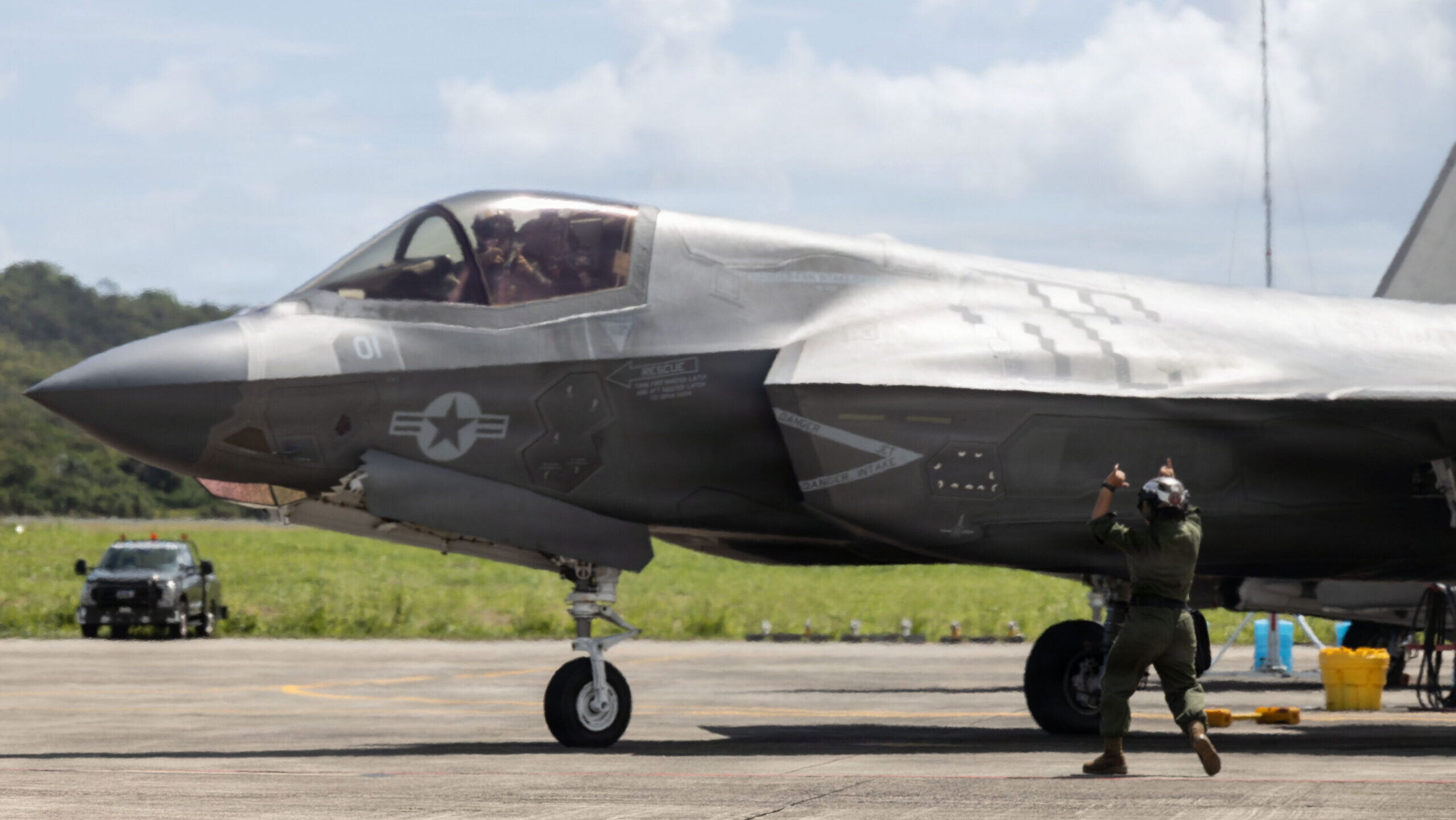
WASHINGTON — The F-35 Joint Strike Fighter program, the most ambitious and expensive weapons system in military history, continues to present a complex fiscal picture for the U.S. Department of Defense. According to a recently released Modernized Selected Acquisition Report (MSAR) covering 2025, the Pentagon is navigating a dual reality: the immediate cost to procure the aircraft is trending upward, while the long-term projected cost to keep the global fleet operational over the next six decades has seen a notable decline.
As the program shifts from a period of developmental volatility to full-rate production and global expansion, the fiscal narrative surrounding the Lockheed Martin-manufactured stealth fighter remains a point of intense scrutiny for lawmakers, military planners, and taxpayers alike.
Main Facts: The Billion-Dollar Tug-of-War
The latest MSAR data paints a stark contrast between near-term acquisition expenditures and long-term sustainment estimates. The Pentagon currently projects that the total cost to acquire the planned inventory of the three F-35 variants (A, B, and C) will reach $536.3 billion. This figure represents a significant increase from the $485.2 billion estimate provided in the 2024 report.
The $51 billion jump in acquisition costs is primarily attributed to two factors. Roughly $19 billion of this increase is tied to persistent development challenges, including engine refinements and the integration of sophisticated new hardware. The remaining $32 billion stems from procurement realities, including the urgent need for spare parts to address sluggish readiness rates and the acquisition of advanced radar systems.
Conversely, the "lifecycle" cost—the total bill for fuel, maintenance, staffing, and future upgrades over the next sixty years—has been revised downward. The Pentagon now estimates this total at $1.93 trillion, a reduction from the $2.06 trillion figure cited in the 2024 analysis. While still a staggering sum, the decline reflects successful "affordability initiatives" aimed at optimizing the sustainment of the global fleet.
Chronology of a Program in Flux
To understand the current fiscal state of the F-35, one must look at the program’s trajectory over the last several years. The F-35 has evolved from a developmental concept into a combat-proven backbone of the U.S. Air Force, Marine Corps, and Navy.
- 2023: The MSAR projected that the F-35A variant would remain in operation until 2088, setting a long-term sustainment benchmark.
- 2024: The Government Accountability Office (GAO) reported that the program’s lifetime price tag had surpassed the $2 trillion threshold, sparking public and congressional concern regarding the long-term viability of the fleet.
- 2025: The current MSAR reporting period, which marks the program’s transition into high-volume production and the normalization of global deliveries.
- 2026 (Present): The program faces a shortened operational horizon. Current projections now suggest the F-35A will fly until 2083—a five-year reduction in service life that paradoxically helps lower the total lifecycle cost by narrowing the window of required maintenance and support.
Throughout this period, the program has been plagued by delays in the "Block 4" modernization suite, which is intended to provide the aircraft with its most advanced combat capabilities. The "Technology Refresh 3" (TR-3) computing backbone, essential for these upgrades, remains uncertified for combat, leaving dozens of newly delivered jets restricted to training sorties.
Supporting Data: Understanding the Lifecycle Estimate
The $1.93 trillion lifecycle figure is, by the Pentagon’s own admission, an "educated guess." Estimating costs six decades into the future involves a dizzying array of variables, including inflation, fluctuations in fuel prices, labor costs for specialized technicians, and the evolving technological requirements of modern aerial warfare.
The Cost of Readiness
The increase in procurement costs is not merely a sign of inefficiency; it is a direct response to operational demands. As the F-35 fleet has aged, the lack of readily available spare parts has become a primary bottleneck. The $32 billion increase in procurement spending is heavily focused on rectifying these supply chain deficiencies. Furthermore, the decision to accept aircraft without the nose-mounted radar sensor—a stopgap measure necessitated by production delays—has complicated the integration process, requiring future retrofitting that adds to the overall program expense.
The "Affordability Initiatives"
The decrease in total lifecycle cost is credited to a series of internal efforts designed to streamline maintenance. By consolidating maintenance depots and optimizing the supply chain for the 19 international customers now operating the jet, the Joint Program Office (JPO) has managed to find efficiencies that were previously unrealized. These initiatives aim to lower the "cost per flying hour," a metric that has historically haunted the F-35 program.
Official Responses: Lockheed Martin and the JPO
Industry stakeholders maintain that the focus on price tags obscures the strategic value of the platform. In a statement provided to Breaking Defense, Lockheed Martin emphasized that the program has successfully moved past its most precarious developmental hurdles.
"The latest MSAR report shows the combat-proven F-35 program moving into full-rate production, resuming high-volume development deliveries, and growing globally," the company stated. "The hard work has shifted from proving the basic aircraft to executing major modernization, improving fleet readiness, and controlling long-term sustainment and integration costs."
The F-35 Joint Program Office (JPO) has similarly pushed back against the "trillion-dollar" narrative. In the report’s commentary, officials argued that the headline-grabbing lifecycle figures fail to account for the unique strategic deterrent value the F-35 provides. "The $2T price tag commonly reported in the media doesn’t come close to telling the whole story," the MSAR asserts. "The growing global demand speaks for itself. The F-35’s value proposition is unmatched."
Implications: A Shifting Strategic Landscape
The fiscal status of the F-35 program has profound implications for the future of U.S. national security and international relations.
Strategic Deterrence vs. Fiscal Responsibility
The F-35 is more than a fighter jet; it is a networked intelligence node. Its ability to process vast amounts of sensor data and share it across the joint force is its most significant advantage. However, as the Pentagon faces competing budget priorities—ranging from naval expansion to space-based assets—the $536 billion acquisition cost will continue to draw fire from fiscal hawks on Capitol Hill. The tension between the need for cutting-edge technology and the reality of a constrained budget will likely define the F-35 procurement debates for the remainder of the decade.
The Impact of Current Conflict
It is important to note that the current data, while comprehensive, is not absolute. The 2025 MSAR data omits the high operational tempo currently being experienced by F-35 squadrons involved in the ongoing conflict against Iran. Sustained combat operations accelerate the wear and tear on airframes, potentially shortening their lifespan or necessitating more frequent, expensive depot-level maintenance. Future reports will likely see upward pressure on sustainment costs as these operational realities are integrated into the models.
Global Interoperability
With 19 international customers, the F-35 is effectively the standard-bearer for Western air power. The program’s ability to control costs is not just a domestic issue; it is a matter of international diplomacy. If the U.S. cannot manage the sustainment costs of the F-35, it risks alienating key allies who have staked their national defense on the platform. Conversely, if the JPO succeeds in lowering the cost per flying hour, the F-35 will become an even more attractive option for potential future buyers, further cementing its role in global security architectures.
Conclusion: The Long Road Ahead
The F-35 program remains in a state of maturation. While the acquisition costs have risen due to necessary upgrades and supply chain fixes, the reduction in long-term lifecycle projections offers a glimmer of hope that the Pentagon is finally gaining control over the sustainment beast. However, until the Block 4 upgrades are fully certified and the TR-3 computing environment is operational, the program will continue to walk a fine line between its technological promises and its budgetary realities. For the F-35, the future will be defined not just by how it performs in the skies over contested territory, but by how effectively it can be maintained in the hangars of the future.