By Global Defense Correspondent
In a move that signals a significant shift in South American geopolitical and technological alignment, the Emirati defense titan EDGE Group has officially launched a pioneering Cyber Defense Centre of Excellence (COE) in partnership with the Brazilian Army. This initiative marks the first of its kind in the region, establishing a sophisticated nexus for digital warfare, infrastructure protection, and collaborative research and development.
The announcement, made from Beirut, underscores a deepening strategic entente between the United Arab Emirates and Brazil. By integrating government, industry, and academia into a single operational framework, the COE aims to elevate Brazil’s national cyber posture to international standards, mirroring the institutional success of entities such as the NATO Cooperative Cyber Defence Centre of Excellence.
Main Facts: A Tripartite Strategy for Digital Sovereignty
The newly established Cyber Defense Centre of Excellence is not merely a training facility; it is designed to function as an engine for national security innovation. According to the official joint statement released this week, the COE will operate under a tripartite model that seeks to break down traditional silos between state actors, commercial defense contractors, and the academic research community.
Key Objectives of the COE:
- Specialized Training: Providing advanced technical instruction for Brazilian Army personnel and federal institutions to handle modern, high-stakes cyber threats.
- Incident Response: Creating a rapid-reaction architecture to mitigate cyber-attacks against critical national infrastructure.
- Doctrine Development: Formulating modern cyber-warfare doctrines that reflect the reality of 21st-century hybrid conflict.
- R&D Innovation: Developing localized cyber-defense solutions, including software, encryption tools, and AI-driven threat detection systems.
EDGE CEO Hamad Al Marar emphasized the ambition of the project, stating, "Through this COE, we will combine advanced technology, operational expertise and shared knowledge to build lasting capability and position Brazil as a leading centre of cyber excellence in Latin America."
Chronology: Building the UAE-Brazil Defense Nexus
The establishment of the COE is the culmination of a multi-year effort by the UAE to pivot toward Latin America as a primary market for its burgeoning defense industry. The trajectory of this partnership illustrates a deliberate and methodical expansion.
- April 2023: EDGE Group officially signals its intent to make Brazil its primary regional hub by opening its first international office in the country. This move was widely interpreted by defense analysts as a bid to challenge established Western and regional incumbents in the Brazilian military market.
- Late 2023–2024: The partnership deepens through a series of tactical agreements. EDGE began collaborating on advanced weaponry, including the Mansup surface-to-surface anti-ship missile and various counter-drone technologies, signaling a move toward deep technology transfer.
- April 2026: EDGE inked a landmark agreement with the Brazilian Navy. This pact focused specifically on maritime cyber defense, establishing a framework to protect offshore assets and critical maritime communications, which served as a precursor to the broader Army-level collaboration.
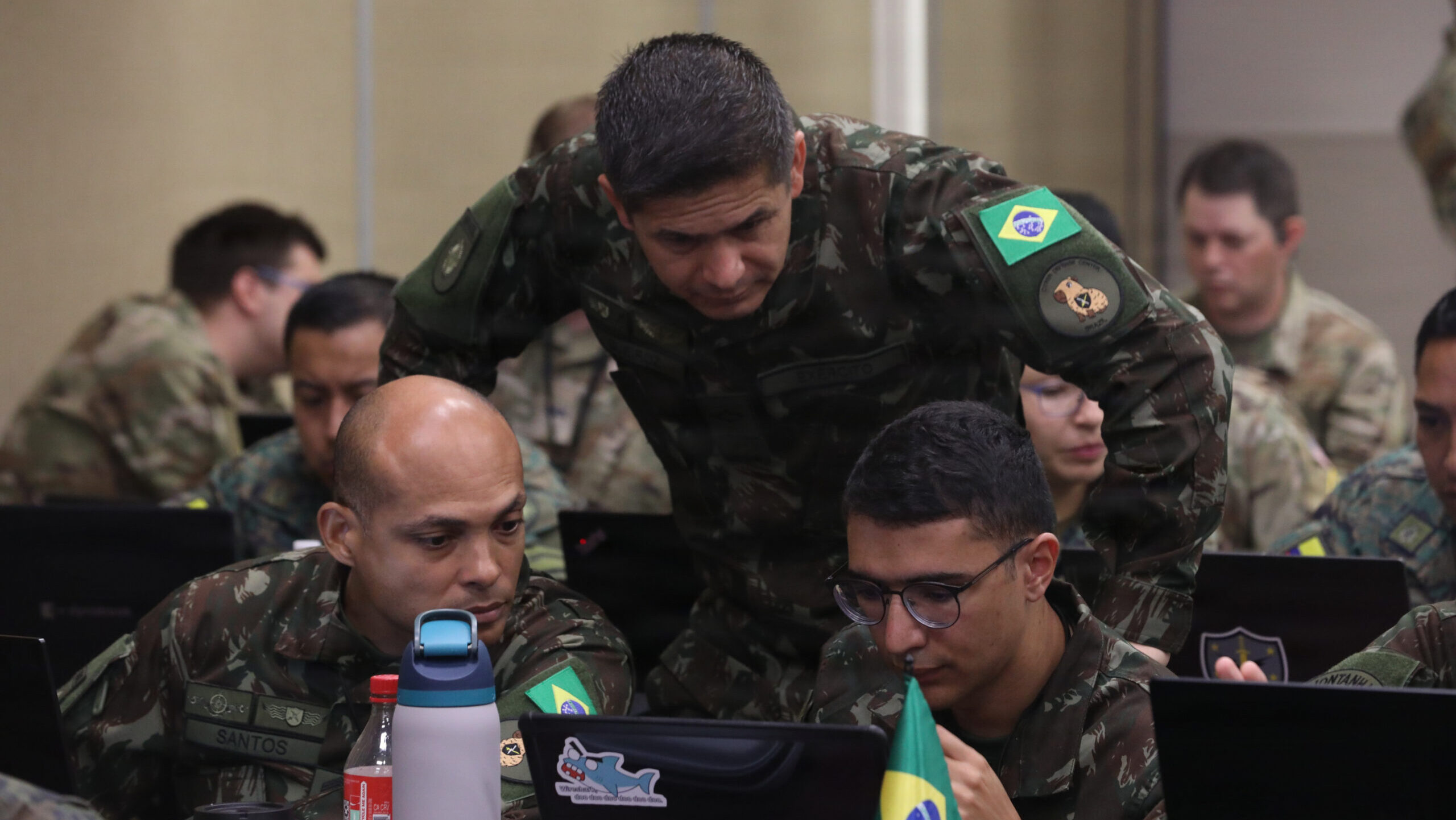
- July 2026: Brazilian Armed Forces personnel participate in high-level "Capture the Flag" (CTF) exercises during the Cyber Shield 2026 event in Little Rock, Arkansas. This underscored Brazil’s commitment to international benchmarking and interoperability with allied forces.
- August 2026: The official announcement of the Cyber Defense Centre of Excellence, marking the transition from transactional defense sales to long-term institutional partnership.
Supporting Data: Why Brazil? Why Now?
The choice of Brazil as a strategic partner for the UAE is backed by compelling economic and security incentives. As the largest nation in South America, Brazil faces a growing frequency of cyber-attacks targeting its energy sector, financial markets, and government databases.
The Technological Gap
Historically, Brazil has relied heavily on imported cyber-security solutions. By partnering with EDGE, the Brazilian Army intends to domesticate high-end capabilities. The UAE’s own rapid evolution in digital defense—fueled by massive state investment and the recruitment of global cyber talent—provides a blueprint for Brazil to emulate.
The Maritime and Infrastructure Factor
Brazil’s vast coastline and its reliance on maritime logistics for oil and gas exports make it a prime target for state-sponsored cyber espionage and disruption. The dual-track approach—securing the Navy’s maritime corridors and the Army’s terrestrial data networks—creates a comprehensive protective umbrella. The recent MoU with the Navy for maritime surveillance and reconnaissance, coupled with the new Army COE, suggests a holistic, "whole-of-government" approach to digital security.
Official Responses and Strategic Rationale
The leadership of both institutions has framed the COE as a "permanent, internationally benchmarked organization." By explicitly citing the NATO Cooperative Cyber Defence Centre of Excellence as a model, EDGE and the Brazilian Army are signaling that this is not a short-term project, but a foundational pillar of future military policy.
For EDGE, the move serves as a dual-purpose strategy:
- Commercial Expansion: It secures a long-term position within the Brazilian defense procurement ecosystem, ensuring that future software and hardware updates are sourced from the EDGE-led COE.
- Global Soft Power: By acting as a mentor in cyber defense, the UAE bolsters its credentials as a reliable, high-tech partner for emerging economies, effectively diversifying its influence away from traditional Middle Eastern theater constraints.
For the Brazilian Army, the partnership offers a shortcut to "leapfrogging" legacy technology. Instead of developing these complex capabilities in total isolation, the military gains access to the UAE’s global network of partnerships, including advanced research from European and Asian collaborators that currently feed into the EDGE ecosystem.
Implications: The Geopolitical Shift
The implications of this partnership are significant and reach far beyond the borders of Brazil and the UAE.
1. Realigning South American Security
Historically, the United States has been the primary provider of cyber-security and defense training to South American nations. The emergence of the UAE as a major partner in Brazil’s most sensitive national security sector—cyber defense—indicates a diversification of Brazil’s military partnerships. It suggests that Brasilia is moving toward a multi-aligned foreign policy where it seeks the best technology, regardless of whether it originates from traditional Western powers or rising global players.
2. The Rise of the "Global South" Defense Bloc
This partnership represents a growing trend of "South-South" defense cooperation. As countries like Brazil, the UAE, and potentially others look to reduce their dependence on specific geopolitical blocs, they are increasingly relying on each other for critical infrastructure. The COE is a manifestation of this trend, proving that nations in the Global South can now export high-level expertise and co-develop sophisticated security doctrines.
3. Cyber Warfare as a Deterrent
By focusing on "doctrine and capabilities," the COE is tacitly acknowledging that cyber warfare is the new frontier of regional deterrence. A nation that cannot defend its power grid, banking systems, or command-and-control networks is inherently vulnerable to coercion. By professionalizing its cyber-defense forces, Brazil is not just defending its data; it is strengthening its sovereignty.
4. Future Challenges
The success of this COE will depend on the sustainability of the tripartite model. Integrating the often-rigid bureaucracy of a national army with the agile, profit-driven culture of an Emirati defense giant and the academic rigor of Brazilian universities is a massive management challenge. Furthermore, as the center begins to produce proprietary defense solutions, it will face intense scrutiny regarding intellectual property and the potential for "backdoor" vulnerabilities—a common concern in international defense tech transfers.
Conclusion
The inauguration of the Cyber Defense Centre of Excellence is a watershed moment for Brazil’s military modernization. By embedding itself into the fabric of the Brazilian Army’s operations, EDGE Group has moved beyond the role of a vendor and into the role of a strategic partner.
As the world continues to grapple with the realities of hybrid warfare, where the line between peace and conflict is blurred by digital intrusion, the success of this center will likely be closely monitored by neighbors and global powers alike. Whether this partnership serves as a template for other nations seeking to bolster their cyber resilience remains to be seen, but one thing is clear: the digital battlefield of South America has a new, well-funded, and highly motivated architect.