
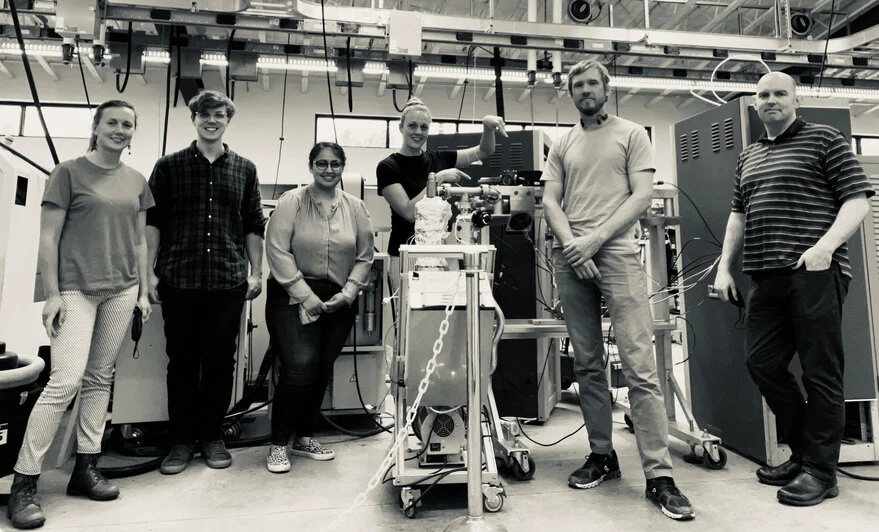
SAN FRANCISCO — In a milestone development for the global satellite communications and defense sectors, California-based aerospace startup Elve has officially qualified its 100-watt millimeter-wave (mmWave) Traveling Wave Tube Amplifier (TWTA) platform for spaceflight. This critical achievement, representing Technology Readiness Level 8 (TRL-8), positions the company to address one of the most persistent bottlenecks in modern aerospace engineering: the high cost, low availability, and manufacturing complexity of high-power, high-frequency amplifiers.
Supported by funding from the U.S. Space Force’s Small Business Innovation Research (SBIR) program, Elve did not simply qualify a single bespoke component. Instead, the company has successfully space-qualified an entire family of 100-watt products designed to withstand the harsh environmental rigors of Earth orbit. With an operational spaceflight scheduled within the next twelve months, Elve is poised to transition its technology from laboratory validation to active orbital service, promising to reshape how data is transmitted between satellite constellations and ground stations.
Main Facts: The TRL-8 Milestone and Technical Breakthrough
At the core of Elve’s recent announcement is the successful space qualification of its 100-watt millimeter-wave Space TWTA platform. Achieving TRL-8 status means the hardware has undergone rigorous environmental testing—including thermal vacuum (TVAC) cycling, vibration, shock, and electromagnetic compatibility testing—proving it can survive launch conditions and operate reliably in the extreme environment of space.
Key Details of the Qualification:
- Technology: 100-Watt Millimeter-Wave Traveling Wave Tube Amplifier (TWTA) platform.
- Milestone: TRL-8 Space Qualification, validating the hardware for operational space missions.
- Funding & Support: Financed in part by the U.S. Space Force SBIR program, alongside strategic backing from national security-focused venture capital firm In-Q-Tel.
- Timeline to Launch: Elve plans to deploy and validate its qualified amplifier on an operational, revenue-generating spacecraft—rather than a mere technology demonstrator—within the next year.
- Target Applications: High-throughput satellite (HTS) constellations, real-time Earth observation data downlinks, secure military communications, and deep-space telemetry.
Historically, millimeter-wave TWTAs have been highly specialized, handcrafted instruments reserved for flagship deep-space scientific missions due to their astronomical costs and long manufacturing lead times. Elve’s breakthrough lies in its ability to offer these high-frequency, high-power amplifiers at a price point and production scale that makes them viable for commercial megaconstellations and tactical military space architectures.
Chronology: From Academic Research to Space Qualification
The road to Elve’s TRL-8 milestone is rooted in years of advanced academic research, strategic federal partnerships, and venture capital injection.
[2020] Elve Founded by Dr. Diana Gamzina (UC Davis, SLAC, ESA Alumna)
  │
  ▼
[2021-2023] R&D Phase / Early Millimeter-Wave Prototype Development
  │
  ▼
[2024] Secures $15 Million Series A Funding to Scale Manufacturing
  │
  ▼
[August 2026] Achieves TRL-8 Space Qualification via Space Force SBIR
  │
  ▼
[Next 12 Months] Scheduled Launch on an Operational Spacecraft Mission
The Academic Foundation
Elve was founded in 2020 by Dr. Diana Gamzina, an expert in vacuum electronics and materials science. Dr. Gamzina’s academic and professional journey provided the ideal foundation for tackling the complexities of vacuum tube engineering:

- UC Davis Millimeter-wave Research Center: Dr. Gamzina earned her PhD in mechanical and aerospace engineering from the University of California, Davis, a premier institution for millimeter-wave technology.
- SLAC National Accelerator Laboratory & ESA: Her subsequent work at the Stanford Linear Accelerator Center (SLAC) and collaboration with the European Space Agency (ESA) deepened her expertise in RF micro-fabrication, vacuum electronics, and high-power amplifier design.
Commercialization and Capital Infusion
Recognizing that the satellite industry was shifting rapidly toward low-Earth orbit (LEO) constellations requiring massive bandwidth, Dr. Gamzina founded Elve to commercialize a new way of manufacturing TWTAs.
- In 2020, Elve began redesigning millimeter-wave amplifiers from the ground up, focus-shifting from artisanal hand-assembly to scalable, automated micro-fabrication techniques.
- In 2024, Elve raised $15 million in a funding round aimed at transitioning the company from prototype development to high-rate production. This capital allowed the company to expand its manufacturing facilities in California and accelerate its space-qualification testing program.
- In August 2026, Elve officially announced that its 100-watt mmWave platform had achieved TRL-8, clearing the path for its upcoming orbital debut on an active spacecraft.
Supporting Data: TWTAs vs. Solid-State Power Amplifiers (SSPAs)
To understand the significance of Elve’s achievement, it is necessary to examine the physics of RF amplification in space. Satellite operators have historically chosen between two primary technologies for RF power amplification: Solid-State Power Amplifiers (SSPAs) and Traveling Wave Tube Amplifiers (TWTAs).
| Parameter | Traveling Wave Tube Amplifiers (TWTAs) | Solid-State Power Amplifiers (SSPAs) |
|---|---|---|
| Power Efficiency | High (typically 45% to 65% electrical-to-RF efficiency) | Low to Moderate (typically 15% to 30% at millimeter-wave frequencies) |
| High-Frequency Performance | Excellent; maintains high power output at mmWave bands (Ka, V, E, W bands) | Degrades rapidly as frequency increases; requires power combining which adds loss |
| Thermal Dissipation | Concentrated; easier to reject heat to space via dedicated radiators | Distributed; requires complex thermal management across large PCB footprints |
| Historical Cost | Extremely High; handcrafted, low-yield manufacturing | Low to Moderate; mass-produced semiconductor fabrication |
| Manufacturing Scalability | Low (traditionally weeks or months per unit) | High (semiconductor foundry-compatible) |
| Elve’s Intervention | High efficiency and power, combined with automated, low-cost mass production | Not applicable to Elve’s vacuum-based architecture |
At millimeter-wave frequencies (typically defined as 30 GHz to 300 GHz, encompassing Ka, V, E, and W bands), SSPAs struggle to deliver the high power outputs required to overcome atmospheric attenuation, also known as "rain fade." To get 100 watts of RF power from an SSPA at these frequencies, an engineer must combine the outputs of many smaller solid-state chips, resulting in massive thermal generation, reduced electrical efficiency, and increased weight.
TWTAs, which utilize a vacuum envelope and an electron beam to amplify RF signals, are inherently more efficient and powerful at high frequencies. However, their adoption in commercial LEO constellations was previously limited by their cost and hand-built nature. By utilizing modern micro-fabrication techniques, Elve has bypassed the traditional manufacturing bottlenecks of TWTAs, offering vacuum-tube efficiency at a price point that commercial constellation operators can afford.
Official Responses and Industry Perspectives
The space qualification of Elve’s amplifier platform has drawn strong praise from both the company’s leadership and its key strategic partners.
Dr. Diana Gamzina, CEO of Elve, emphasized the transformative nature of high-power millimeter-wave technology for global connectivity:

“To interconnect the world, you need a lot of data to be able to go up as well as down from our satellite constellations. Having amplifiers at high power levels available at these millimeter-wave frequencies gives you a lot of bandwidth and unlocks access to high-data-rate connectivity.”
Dr. Gamzina also noted that these amplifiers are crucial for the next generation of Earth observation platforms:
“Millimeter-wave amplifiers will also help imaging satellites deliver data to the ground quickly.”
Jennifer Salmon, Elve’s Chief Product Officer, highlighted the rigorous engineering efforts required to achieve space qualification:
“Reaching this operational benchmark represents a pivotal moment for Elve and our stakeholders. The qualification has validated our hardware for the harshest environments, making mmWave power accessible at scale for modern space architectures. Moving to the final orbital demonstration is a step we are eager to take.”
Strategic investors have also recognized the national security and commercial implications of Elve’s technology. Abi Sivananthan, Vice President of Technology for In-Q-Tel—a non-profit venture capital firm focused on U.S. national security and allied intelligence capabilities—commented on the milestone:

“This space qualification readiness milestone positions Elve’s products for missions critical to the rapid, proliferated deployments required in space.”
Implications: Transforming the Space and Defense Sectors
The successful space qualification of Elve’s 100-watt millimeter-wave TWTA platform has deep implications for both commercial space systems and national defense architectures.
1. Enabling Proliferated LEO (pLEO) Constellations
Modern space architectures, such as the U.S. Space Force’s Proliferated Warfighter Space Architecture (PWSA), rely on hundreds of small satellites in low-Earth orbit working in tandem. For these constellations to function effectively, they must transmit massive amounts of data across inter-satellite links and down to tactical ground terminals. Elve’s low-cost, high-power TWTAs allow constellation designers to utilize V-band and E-band frequencies, which offer vastly more bandwidth than traditional, congested Ku- and Ka-band spectrums.
2. Eliminating the Earth Observation Downlink Bottleneck
As imaging satellites deploy higher-resolution optical, hyperspectral, and Synthetic Aperture Radar (SAR) sensors, they generate gigabytes of data per second. Currently, downlinking this data to Earth is a major bottleneck. Satellites are often forced to store data on board and wait until they pass over a dedicated ground station. High-power millimeter-wave transmitters can send data to the ground at gigabit-per-second speeds, allowing for real-time intelligence, surveillance, and reconnaissance (ISR) and faster response times for disaster relief, environmental monitoring, and agricultural analysis.
3. Disruption of the Aerospace Supply Chain
The space-qualified TWTA market has historically been dominated by a small handful of defense conglomerates. By introducing automated manufacturing techniques to vacuum electronics, Elve is disrupting this legacy supply chain. Lowering the unit cost of TWTAs makes high-efficiency, high-frequency transmitters accessible not just to government agencies and defense giants, but also to commercial startups, research institutions, and emerging spacefaring nations.
As Elve prepares for its upcoming orbital flight over the next year, the aerospace industry will be watching closely. A successful flight demonstration will confirm that Elve’s mass-producible, high-efficiency millimeter-wave amplifiers are ready to power the next generation of global communications, securing a faster, more interconnected future for assets both on Earth and in orbit.