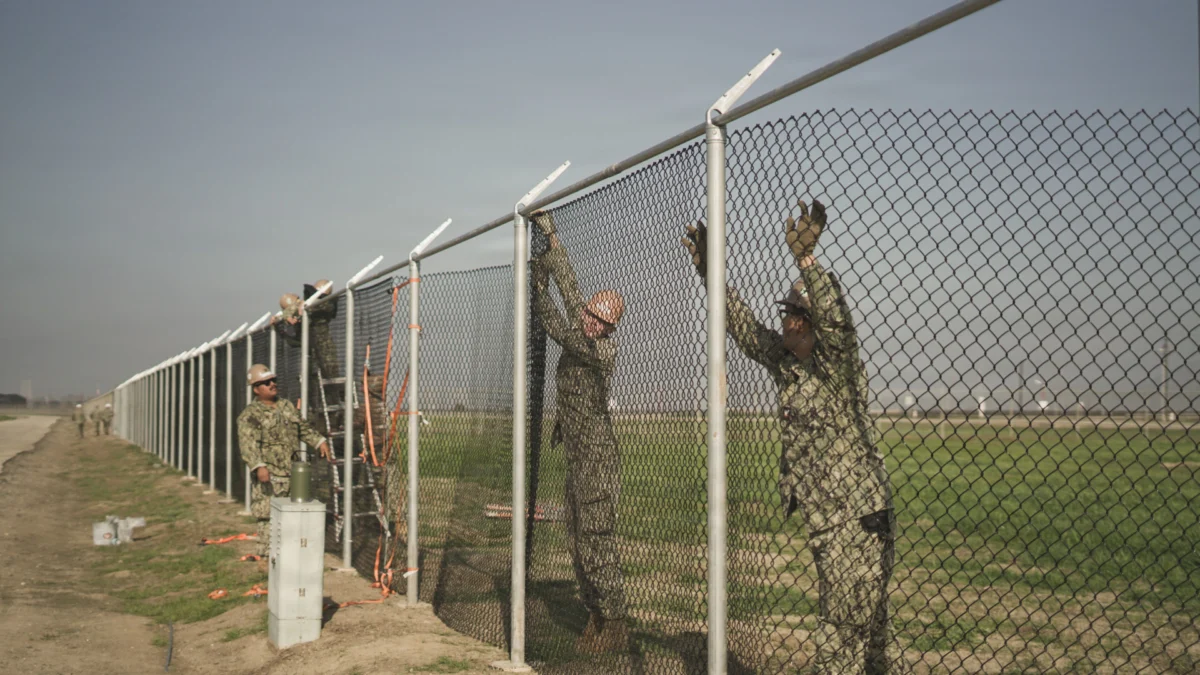
The traditional model of facility security—a paradigm defined by “gates, guards, and guns”—is rapidly becoming a relic of the past. As global geopolitical instability rises and the barrier to entry for advanced technology falls, the nature of threats to critical infrastructure has undergone a seismic shift. Today, security professionals are no longer just guarding a physical perimeter; they are managing a multi-domain, high-velocity landscape where the adversary can be a nation-state actor or a hobbyist with a $50 drone.
Securing facilities—whether they are domestic military installations, international embassies, or critical commercial infrastructure—requires a fundamental rethink of strategy. The solution, according to experts, lies in the convergence of AI-driven data analytics, sensor-agnostic integration, and a holistic, "layered" operational philosophy.
The Evolution of the Threat Landscape
For decades, security was a linear challenge: identify the perimeter, fortify it, and station personnel to intercept unauthorized access. However, modern conflicts, particularly those in Ukraine and the Middle East, have shattered this simplicity. We have entered the era of "asymmetric warfare," where the economics of defense have become dangerously imbalanced.
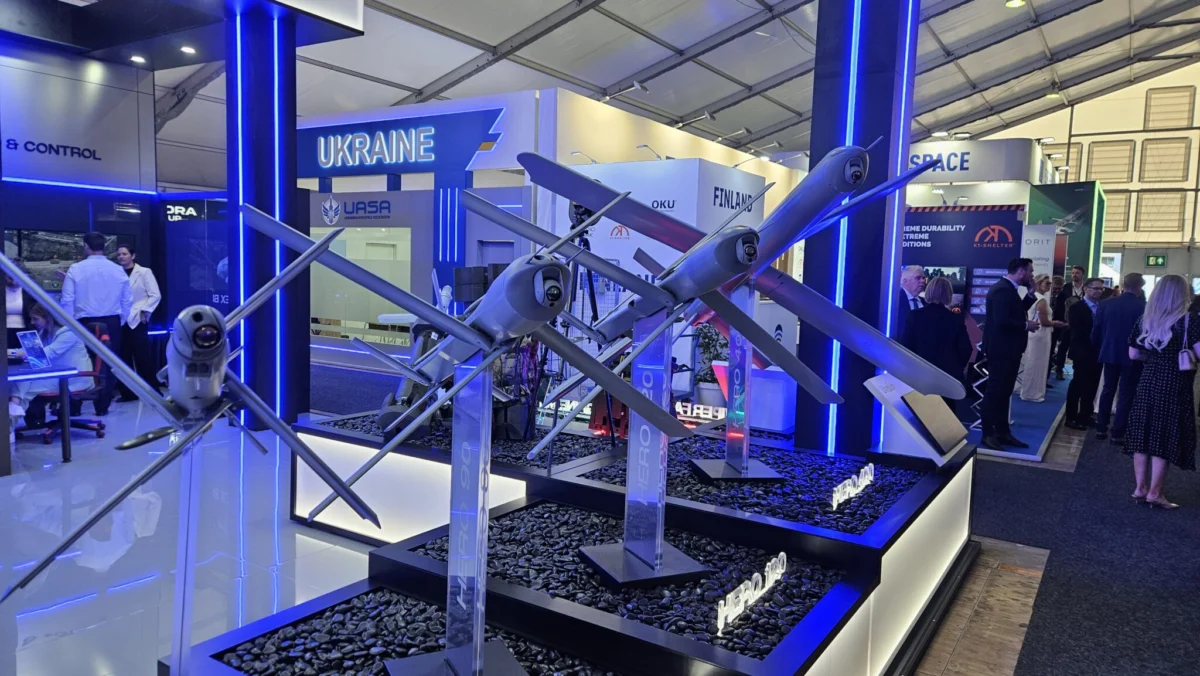
Adversaries are increasingly utilizing inexpensive, commercially available Unmanned Aerial Systems (UAS) to probe or attack hardened targets. When a $50 drone can force a response from a multi-million-dollar air defense system, the economic model of security collapses.
“You have all these cheap drones that can cost 50 bucks and you’re mitigating it with something that’s costing anywhere from $15,000 up to $4 million per round,” explains Jason Rahimitabar, Executive Vice President of Layered Extended Security Operations (LEXSO) at Constellis. “The economics just doesn’t work.”
This economic disparity is only part of the problem. The tactical reality is that drones—small, highly maneuverable, and difficult to detect—have effectively rendered the "fence line" obsolete. A drone can overfly a secure facility, hover, or conduct surveillance without ever triggering a traditional gate-guard alert. Recent incidents, such as repeated drone incursions over Barksdale Air Force Base, underscore that the threat is not just a theoretical concern for frontline combat zones; it is a present danger to domestic installations as well.
Chronology of Complexity: From Physical to Multi-Domain
The trajectory of security threats has moved from physical intrusion to a sophisticated, multi-domain environment.
- The Physical Era (Pre-2000s): Focused on perimeter hardening, physical access control, and human intervention.
- The Cyber Integration (2000s–2015): The introduction of networked security cameras and digital access control systems, creating the first, albeit siloed, electronic security footprints.
- The Multi-Domain Surge (2015–Present): The weaponization of drones, AI-driven cyber-attacks, and the targeting of “downstream” infrastructure.
Today, the "front line" has blurred. A facility is no longer just the building itself, but the digital and logistical network that keeps it running. Adversaries now target data centers, power stations, and communication hubs to paralyze a primary facility remotely. The 2024–2025 regional conflicts have highlighted how Amazon Web Services (AWS) data centers and regional energy grids have become legitimate tactical objectives for state-sponsored or proxy actors.
Supporting Data: The Information Overload Crisis
As the threat surface expands, the volume of data generated by sensors—LIDAR, radar, acoustic sensors, and optical cameras—has reached a saturation point. The primary challenge for modern security operations centers (SOCs) is no longer a lack of information, but the inability to process it effectively.
When a sensor detects a "blip," the operator must instantly determine if it is a bird, a hobbyist, or a hostile drone. False alarms are not merely inconvenient; they are expensive and can lead to "alert fatigue," where security personnel eventually ignore legitimate threats because they have been conditioned by a steady stream of noise.
The solution being deployed by systems like LEXSO involves an AI-driven, "sensor-agnostic" approach. By pulling data from diverse sources and funneling them into a single, unified operating picture, AI acts as a filter. It assesses "confidence levels"—correlating data from radar with visual confirmation from a camera and acoustic signatures from a microphone. This allows the human-in-the-loop to focus only on confirmed, high-probability threats, effectively reducing the signal-to-noise ratio.
Official Perspectives: The Holistic Approach
The consensus among security leaders is that the siloed approach to security budgets and management must end. Jason Rahimitabar of Constellis emphasizes that organizations are still too focused on the "front gate."
“We haven’t fully adapted to this complex environment in terms of realizing that the security posture of critical infrastructure is not ready, nor does it have budgets yet to be able to handle the threat we’re talking about,” Rahimitabar noted.
He argues that a facility must be viewed as an ecosystem. In a recent consultation, his team met with a client where the table included not only the head of security, but also representatives from fire safety, search and rescue (due to the facility’s proximity to a waterway), and IT security.
“If you don’t answer it as a holistic problem, then you’re actually losing sight of where the threat could be coming from and how best to mitigate,” Rahimitabar said. “Having all those stakeholders and not changing around the common operating picture on each of the stakeholders is important.”
Implications for Future Infrastructure
The shift toward a holistic, tech-integrated security posture has profound implications for how corporations and governments will allocate resources in the coming decade.
1. The Death of the "Static" Budget
Security is shifting from a capital expenditure (CapEx) model—buying a fence or a camera—to a dynamic operational expenditure (OpEx) model. Security now requires ongoing software updates, AI training, and adaptive threat modeling.
2. The Rise of Sensor Agnosticism
Because technology evolves so rapidly, organizations can no longer afford to be locked into proprietary hardware ecosystems. The future belongs to systems that can ingest data from any sensor, regardless of manufacturer, allowing the security posture to be updated as new hardware becomes available without replacing the entire backbone.
3. Cyber-Physical Convergence
The distinction between "cybersecurity" and "physical security" is disappearing. A drone attack is a physical manifestation of a cyber-linked threat, often controlled by software-defined protocols. Future security teams must be as comfortable with network vulnerabilities as they are with physical patrol routes.
4. The Human-AI Partnership
The goal of AI in security is not to remove the human, but to empower the human. By offloading the rote, high-speed data analysis to machines, security professionals can reclaim their primary role: critical decision-making. The "single pane of glass" interface, which displays a consolidated threat assessment, is the essential tool for the next generation of security operators.
Conclusion: Adapting to the New Normal
The threat environment has reached a level of maturity where the old "gates, guards, and guns" strategy is not just insufficient; it is an invitation for exploitation. As Rahimitabar points out, the adversaries are agile, multi-domain, and increasingly sophisticated.
To survive this era, organizations must embrace a security posture that is as adaptable as the threats themselves. This means moving beyond the perimeter, integrating all relevant stakeholders into a single operational picture, and utilizing AI to process the overwhelming influx of data. Security is no longer a static goal to be achieved—it is a continuous, dynamic process. Whether it is a military base or a commercial data center, the mission remains the same: identify the threat, assess the risk, and respond with precision, regardless of whether the attacker is in the air, on the ground, or in the digital cloud.