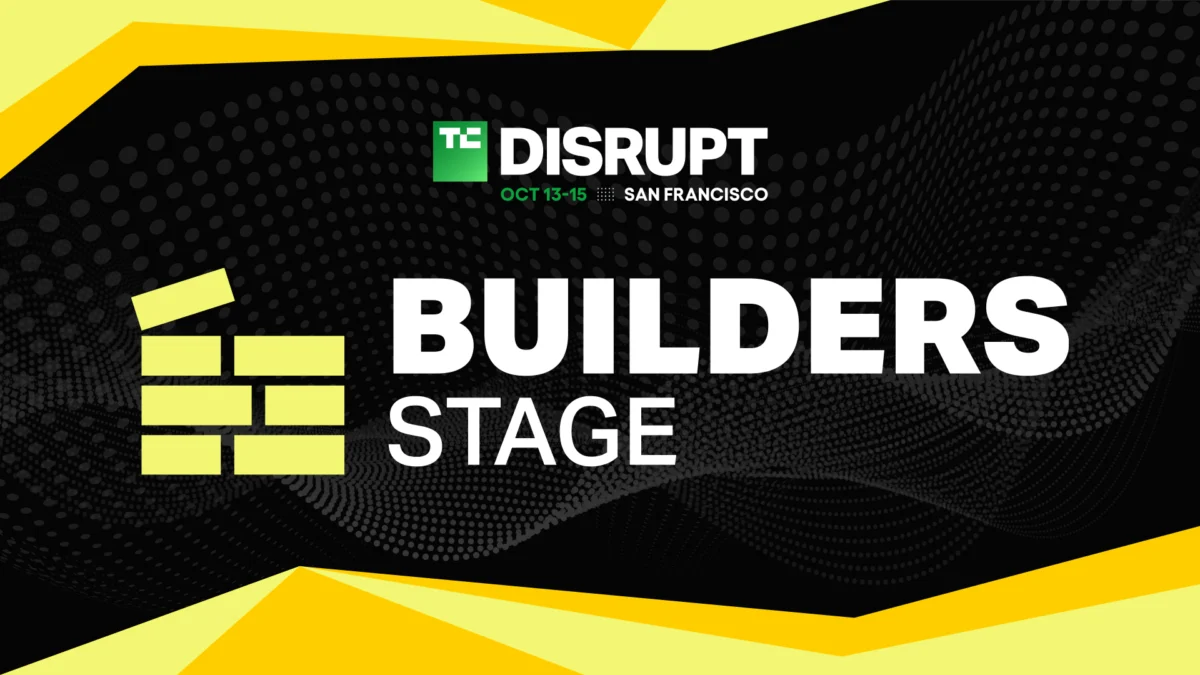
The landscape of entrepreneurship is undergoing a seismic shift. As the hype cycle surrounding generative artificial intelligence matures into an era of practical application, founders are facing a new reality: the old playbooks for scaling, fundraising, and talent acquisition are being rewritten in real-time. To address these complex, evolving challenges, the Builders Stage is returning as a cornerstone of TechCrunch Disrupt 2026, held at the iconic Moscone Center in San Francisco from October 13–15.
Designed specifically for the architects of the next generation of industry-defining companies, the Builders Stage serves as a bridge between raw innovation and sustainable, long-term growth. With over 10,000 attendees expected, including the brightest minds in venture capital, product management, and startup operations, this year’s program aims to provide more than just theory—it promises actionable intelligence for the most pressing issues in modern tech.
Main Facts: A Hub for High-Growth Strategy
The Builders Stage is one of six specialized tracks at TechCrunch Disrupt 2026, curated to help founders navigate the treacherous "middle ground" of the startup lifecycle: moving from a seed-stage concept to a Series A powerhouse and beyond.
The event is built on the premise that while building a product is a singular achievement, building a business is a recurring, multifaceted discipline. Attendees will hear from industry titans and rising stars alike, including Grant Lee (CEO and co-founder of Gamma), Leah Solivan (founder and general partner at Precedent.vc), and Robby Stein (VP of Product at Google), among a roster of distinguished speakers.
The sessions are designed to be candid and hyper-focused on operational realities. Rather than high-level visionary platitudes, the stage will host deep dives into go-to-market engines, the mechanics of capital efficiency, and the nuances of human resource management in an era where AI agents are increasingly augmenting—or replacing—traditional entry-level roles.
A Chronology of the Modern Startup: From Pre-Seed to Exit
The agenda for the Builders Stage is meticulously sequenced to mirror the trajectory of a startup’s lifecycle. By categorizing sessions by their strategic utility, TechCrunch has created a roadmap for founders regardless of their current growth phase.
Phase 1: The Zero-to-One Foundation
The event kicks off with foundational strategies for those still in the "pre-revenue" trenches. A standout session, "Winning Pre-Seed Without a Product," features industry veterans like Puneet Agarwal (True Ventures) and Austin Clements (Slauson and Co). Here, the focus is on the intangible assets that secure funding before a single line of production code is shipped: founder-market fit, narrative conviction, and the ability to articulate a massive market opportunity.

Phase 2: The Scaling Inflection Point
As companies transition from MVP to market penetration, the challenges shift from creation to survival. The session "The 90-Day GTM: Why $0–$10M ARR Is the New Baseline" addresses the compression of timelines in the current venture market. With experts like Tomasz Tunguz (Theory Ventures), the discussion will center on how AI-enabled execution is forcing companies to hit revenue milestones faster than ever before.
Phase 3: Maturing the Organization
Once a product has found traction, the focus turns to the "Second Act." The panel "So You’ve Got a Hit Product. How Does Your Company Do It Again?" explores the operational discipline required to turn a single successful product into a repeatable, multi-product engine. This session is critical for founders looking to avoid the "one-hit wonder" trap that stifles so many promising startups.
Supporting Data: Navigating the AI Paradox
The pervasive theme of the 2026 agenda is the integration of AI into every facet of the business. However, the Builders Stage is not just an AI hype factory. It is a critical examination of how AI has changed the rules of competition.
One of the most anticipated sessions, "How to Win When You’re Not Building AI," features Yuri Sagalov (General Catalyst). This panel acknowledges the "AI-obsessed" market environment and provides a counter-narrative: for many companies, the path to enduring value lies in disciplined execution, retention, and revenue quality, not merely in integrating a chatbot.
Conversely, for those embedded in the AI space, the panel "What Happens When OpenAI Ships Your Roadmap" provides a sobering look at defensibility. Speakers including Michel Tricot (Airbyte) and Linda Tong (Webflow) will dissect the existential threat posed by foundation models and discuss how founders can carve out moats in an ecosystem dominated by trillion-dollar incumbents.
Official Perspectives: The Investor’s Lens
The Builders Stage offers a unique opportunity for founders to get direct answers from the people who hold the purse strings. The "Ask the Investors" session is designed to be an audience-led forum. With a panel featuring Stacy Brown-Philpot (Cherryrock Capital), Alexa Von Tobel (Inspired Capital), and Carter Reum (M13), the session will strip away the mystery of the "Yes."
Investors will address the specific metrics that trigger funding in 2026, the red flags that cause immediate pass-throughs, and the shifting expectations regarding team structure and product development. This candid, unfiltered access is a hallmark of the Disrupt experience, designed to eliminate the information asymmetry that often disadvantages early-stage founders.

The Human Element: Founder Health and Culture
Perhaps the most distinctive aspect of this year’s Builders Stage is its acknowledgment of the psychological toll of entrepreneurship. In the session "Yes, It’s Hard to Be a Founder: An Honest Conversation," speakers including Nell Daly (Revenge Capital) and Dr. David H. Rosmarin (Harvard Medical School) will peel back the curtain on the "hidden costs" of scaling.
This session is a necessary pivot from the high-octane "hustle culture" that has historically dominated Silicon Valley, focusing instead on:
- Decision Fatigue: How to maintain cognitive performance under prolonged pressure.
- Identity Strain: The struggle of managing one’s self-worth against the volatile success of a company.
- Burnout Mitigation: Systems and habits for long-term endurance.
Implications: The Future of the Startup Ecosystem
The collective insights shared at the Builders Stage point toward a definitive conclusion: the "easy" era of startup building is over. The implications for the 2026-2027 cycle are clear:
- Capital is Selective: The days of "growth at all costs" are firmly in the past. Investors are pivoting toward capital efficiency and rapid paths to profitability.
- Talent is Hybrid: The definition of an "early team" is being rewritten as AI agents take over engineering and operational tasks, necessitating a focus on leadership and high-level strategy over brute-force coding.
- M&A as a Core Strategy: As the IPO window remains unpredictable, companies are now building with acquisition in mind from day one, treating potential exits not as a failure, but as a strategic competitive advantage.
Conclusion: Securing Your Place in the Future
TechCrunch Disrupt 2026 is more than a conference; it is a tactical manual for the future of industry. Whether you are a pre-seed founder struggling to find your first 1,000 customers or a Series A leader trying to manage a billion-user product, the Builders Stage offers the community, the contacts, and the expertise to help you navigate the next stage of your journey.
The clock is ticking toward the October 13 opening, and with ticket prices set to increase as the event approaches, now is the time for serious founders to secure their place. Join the 10,000+ peers at the Moscone Center and prepare to scale smarter, faster, and with more clarity than ever before.
Register for TechCrunch Disrupt 2026 today and save on your pass.
Note: TechCrunch may earn a small commission on purchases made through links in this article, supporting the continued production of independent, high-quality journalism for the startup community.