By Tech Insights Bureau
September 3, 2026
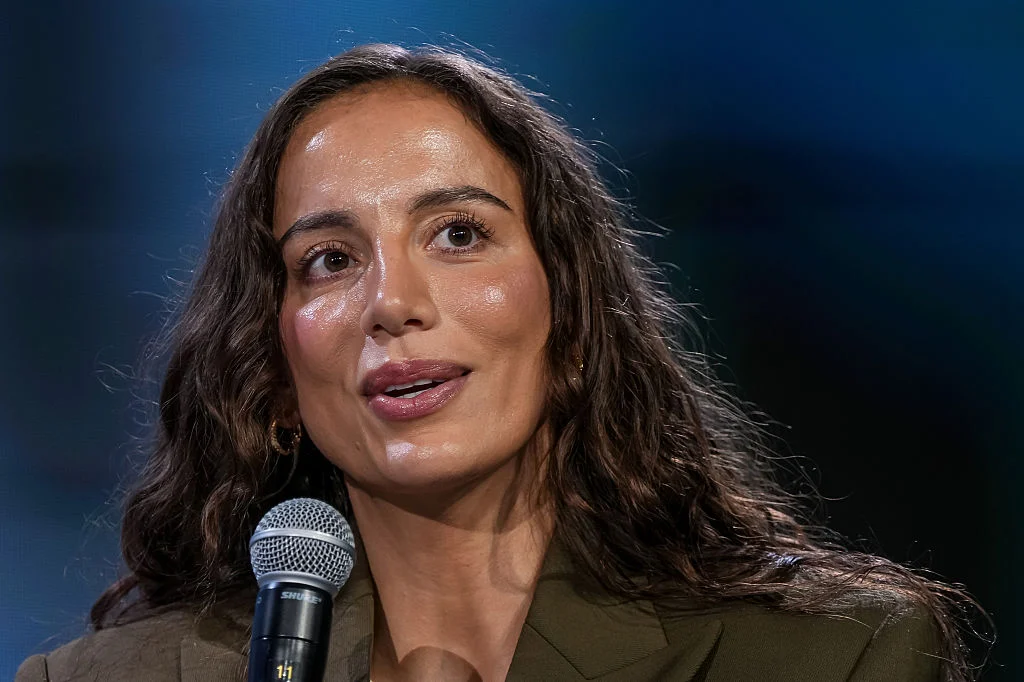
In the hyper-competitive landscape of artificial intelligence, few names have commanded as much attention as Thinking Machines Lab. Founded just last year by former OpenAI Chief Technology Officer Mira Murati, the startup has become a focal point for venture capital fervor. According to recent reports, the company is currently in advanced discussions to secure $1 billion in fresh capital, aiming for a valuation of at least $40 billion.
The potential funding round, which is reportedly being led by existing backer Accel, marks a critical inflection point for the startup. As the industry pivots from experimental chatbots to specialized, enterprise-grade AI infrastructure, the market is closely watching whether Thinking Machines can justify its astronomical valuation amid a shifting macroeconomic climate and internal personnel volatility.
A Chronology of Rapid Ascent
The trajectory of Thinking Machines has been nothing short of meteoric. When Mira Murati departed OpenAI—a move that sent shockwaves through Silicon Valley—the tech world anticipated a major follow-up project. She did not disappoint.
Early last year, Thinking Machines burst onto the scene with a record-shattering $2 billion seed funding round, one of the largest in history. That initial infusion, led by Andreessen Horowitz (a16z) with participation from industry heavyweights such as Nvidia, GV, Lightspeed, and Conviction Partners, valued the firm at $12 billion. At the time, investors were betting heavily on the "pedigree factor": the collective brainpower of Murati and her team of elite researchers who had previously spearheaded some of the most significant breakthroughs in generative AI.
Throughout late 2025, the company maintained an aggressive growth strategy, seeking to push its valuation toward the $50 billion mark. However, the current reported target of $40 billion suggests a tempering of expectations, reflecting a more cautious investment environment where growth is increasingly scrutinized against tangible, bottom-line performance.
Financial Realities and the "Revenue Multiple" Challenge
Central to the discourse surrounding this funding round is the company’s current financial health. Sources with knowledge of the firm’s internals indicate that Thinking Machines has reached an annual revenue run rate of over $100 million. While this is a significant milestone for a company less than two years old, it presents a complex narrative for investors.
At a $40 billion valuation, the company is trading at an extraordinarily high revenue multiple. In traditional software-as-a-service (SaaS) markets, such a valuation would be considered impossible to justify. However, the AI sector is currently operating under a different set of rules, where investors are pricing in "hyper-growth" potential and the assumption that these models will eventually form the backbone of the global digital economy.
The financial model relies heavily on the success of Inkling, an open-weight model introduced by the company in July. Unlike traditional subscription models, Thinking Machines has adopted a usage-based compute fee structure. By allowing clients to adapt these models on proprietary data via the "Tinker" platform, the company is positioning itself as a foundational layer for enterprise AI integration, banking on the idea that every major corporation will eventually need a bespoke, secure version of its own intelligent machine.
The Talent War: Navigating High-Profile Departures
While the capital flowing into Thinking Machines is significant, the company has faced a series of organizational hurdles that have fueled speculation about its long-term stability. The startup has seen several high-profile departures among its founding team.

Notably, Lilian Weng and Luke Metz—both considered architects of the firm’s early technical roadmap—have left the organization. Metz’s recent move back to OpenAI highlights a recurring trend in the AI talent war: the "revolving door" between major labs. These exits have raised questions about the company’s internal culture and the challenges of maintaining a cohesive research vision while simultaneously scaling for commercial dominance.
For a company built entirely on the reputation and intellectual capital of its founders, the loss of key personnel is more than just an operational hiccup; it is a signal that the initial "honeymoon phase" of the startup is over, and the pressure to deliver results is mounting.
Official Responses and Industry Skepticism
As of this writing, both Accel and Thinking Machines Lab have maintained a policy of silence, with neither party responding to requests for comment regarding the $1 billion raise. This lack of transparency is typical for high-stakes late-stage private rounds, but it leaves the market to fill the void with speculation.
Industry analysts are divided on the valuation. Some argue that $40 billion is a logical price for an "AI foundational player" in a world where compute power is the new oil. Others, however, warn of an "AI bubble" where capital is being allocated based on hype rather than sustainable unit economics. The fact that the target valuation has dropped from $50 billion to $40 billion in less than a year is, to some observers, a sign that the "easy money" phase of the AI boom is cooling down.
Strategic Implications for the Future of AI
What does this funding round mean for the broader ecosystem? If successful, the $1 billion injection will provide Thinking Machines with the massive compute resources necessary to train its next generation of models. In the current era of "compute-at-any-cost," the ability to secure chips and data center capacity is the primary barrier to entry.
Furthermore, the focus on Inkling and the Tinker platform indicates that the company is moving away from the "generalist" model space—currently dominated by OpenAI, Google, and Anthropic—and toward a more specialized, B2B-centric approach. By positioning itself as the infrastructure layer where companies bring their own data to train, Thinking Machines is attempting to create a "moat" that is harder to cross than a simple chat interface.
The Road Ahead
The coming months will be definitive for Thinking Machines. If the company closes this round, it will cement its status as a permanent fixture in the AI hierarchy. However, it must also prove that it can retain its top-tier talent and convert its $100 million revenue stream into a scalable, high-margin business.
For Mira Murati, this represents the ultimate test of her transition from a chief researcher and product lead to a CEO managing one of the most valuable private companies in the world. Investors, competitors, and the tech industry at large will be watching closely to see if the reality of the machine can match the magnitude of its valuation.
As the sector continues to evolve, the story of Thinking Machines serves as a microcosm for the entire AI industry: a high-stakes, capital-intensive race where the only thing more dangerous than the competition is the expectation of perfection. Whether this $40 billion valuation is a fair price for the future of intelligence or a relic of an overheated market remains to be seen.