The boundary between science fiction and reality has long been a porous one, with the creators of tomorrow’s technology often citing the dreamers of yesterday’s television as their primary inspiration. This synergy reached a symbolic zenith recently as the 60th anniversary of Star Trek was celebrated not in a Hollywood studio, but 250 miles above Earth aboard the International Space Station (ISS).
European Space Agency (ESA) astronaut Sophie Adenot, currently serving as a flight engineer for ISS Expedition 75, brought a piece of the final frontier into orbit, effectively bridging the gap between Gene Roddenberry’s utopian vision and the practical, collaborative efforts of modern space exploration.
A Tribute Among the Stars: The Mission
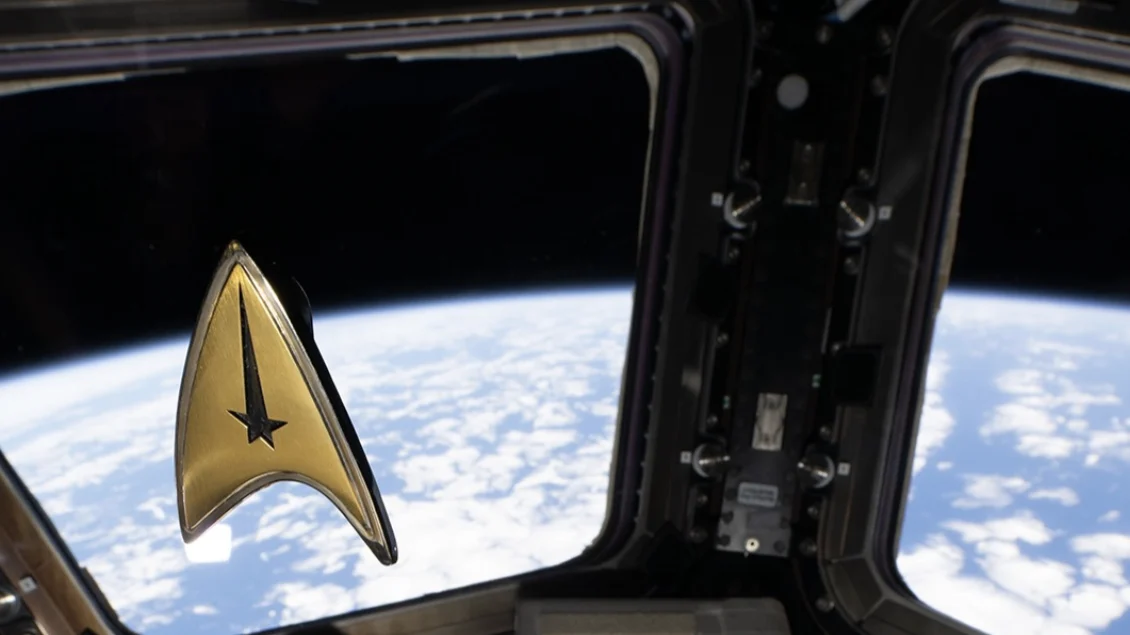
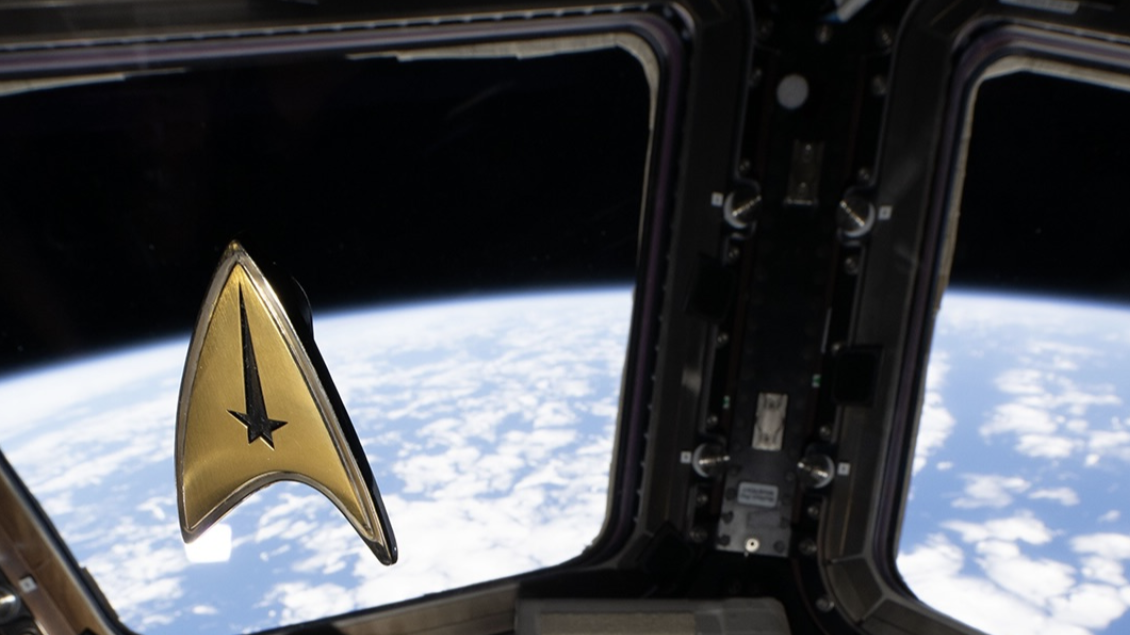
Among the essential scientific payloads and logistical supplies delivered to the orbiting laboratory for the current mission, a small, golden Starfleet delta badge stood out. The badge, iconic to the franchise and specifically reminiscent of the aesthetic seen in the latest series, Star Trek: Strange New Worlds, became a traveling companion for Adenot.
In a poignant display captured by ESA and shared across social media, the badge was photographed floating in the microgravity environment of the station’s Cupola module. The backdrop, showing the curvature of Earth against the velvet blackness of space, served as a powerful visual metaphor: the fictional explorers of the USS Enterprise have long inspired the real-world explorers of our time.
"It’s a small object, but it carries something bigger: sixty years of a story that taught us to dream about exploring together," the ESA noted in an official statement accompanying the imagery. This sentiment echoes the foundational ethos of the International Space Station—a structure that, much like the Enterprise, relies on international cooperation, scientific rigor, and a shared mission to push the boundaries of human capability.
Chronology of a Legacy: From 1966 to 2025
To understand the weight of this celebration, one must look at the timeline that brought humanity to this moment.
- September 8, 1966: Star Trek premieres on NBC. It introduces a multi-ethnic, multi-national crew working in harmony—a radical concept for 1960s television that prioritized meritocracy and scientific curiosity.
- The 1970s and 80s: As the Space Shuttle program took shape, the influence of Star Trek became undeniable. NASA even named its first prototype space shuttle Enterprise after a write-in campaign by fans of the show.
- 1998: The first module of the International Space Station, Zarya, is launched. The station becomes the physical realization of the "United Federation of Planets" ideal, proving that nations once at odds could work together for the advancement of human knowledge.
- February 13, 2025: Sophie Adenot launches to the ISS aboard a SpaceX Dragon capsule as part of the Crew-12 mission. Her tenure on the station represents the cutting edge of contemporary orbital research.
- Mid-2025: As the 60th anniversary of the franchise approaches, the "Starfleet" badge arrives on station, serving as a reminder of the long-term impact of speculative fiction on the trajectory of real-world spaceflight.
Supporting Data: The Convergence of Fiction and Science
The intersection of Star Trek and the ISS is not merely sentimental; it is rooted in the demographics and motivations of the aerospace workforce. According to surveys conducted by various space organizations, a significant percentage of engineers, physicists, and astronauts cite Star Trek as a primary motivator for entering STEM (Science, Technology, Engineering, and Mathematics) fields.
The ISS itself operates as a testbed for the kind of "cooperative exploration" Roddenberry championed. Since its inception, the station has hosted astronauts from over 20 nations. The scientific output is immense:
- Microgravity Research: Over 3,000 experiments have been conducted in fields ranging from fluid physics to human physiology.
- Commercial Partnerships: The advent of the SpaceX Dragon, which ferried Adenot to orbit, signals the transition from purely governmental spaceflight to a commercialized ecosystem, mirroring the "civilian-led" exploration seen in later Star Trek iterations.
- Educational Outreach: Initiatives like the "STEM on Station" program use the ISS to inspire the next generation, mirroring how Star Trek continues to recruit new fans and scientists every year.
Official Responses and Philosophical Alignment
In a video recorded within the Columbus laboratory module, Adenot wore the Starfleet badge on her ESA-issued flight shirt, offering a reflection on the nature of her work.
"For me, exploration and science are about curiosity and cooperation, daring to go a little farther together, learning from what we discover and build, and turning that knowledge into a better future for everyone," Adenot said.
The European Space Agency’s official commentary emphasized that the distinction between science fiction and science fact is thinner than many realize. Their statement, "Science fiction imagines the future. We build it," serves as both a mission statement for the agency and a tribute to the writers who dared to imagine a world where humanity overcomes its terrestrial divisions.
This echoes the words of Gene Roddenberry himself. In his 1976 recording, The Star Trek Philosophy, Roddenberry articulated a vision that feels particularly relevant in the modern geopolitical climate: "The whole show was an attempt to say that humanity will reach maturity and wisdom on the day that it begins not just to tolerate, but to take a special delight in differences in ideas and differences in life forms."
Implications for the Future of Exploration
The presence of a Starfleet badge on the ISS serves as more than a fan-service moment; it represents the "soft power" of science fiction in maintaining public interest in space exploration. As NASA and its international partners turn their sights toward the Artemis program—the goal of returning humans to the Moon and eventually reaching Mars—the cultural narrative of exploration remains vital.
The "Star Trek" Effect on Policy and Funding
Public support is the lifeblood of space agencies. By aligning the goals of space exploration with the optimistic, humanistic values of Star Trek, agencies like ESA and NASA can maintain a narrative that transcends technical jargon. The "Starfleet" ideal—that exploration is a moral imperative that requires peace and cooperation—is a powerful tool in advocating for the long-term funding required for deep-space missions.
The Next Generation of Astronauts
As we look toward the 2030s and beyond, the crew members who will walk on the Martian surface are likely currently in primary or secondary school. For them, the Star Trek legacy provides a roadmap. It offers a blueprint for how to behave in high-pressure, isolated environments, emphasizing leadership, empathy, and collective problem-solving.
A Unified Humanity
The ultimate implication of this 60th-anniversary celebration is a reminder of the "Overview Effect"—a cognitive shift reported by astronauts when viewing Earth from space. They often describe a sense of the planet’s fragility and the insignificance of national borders. Star Trek has provided the vocabulary to describe this shift for six decades. By bringing that symbol to the ISS, Adenot has solidified the station’s role as the current, tangible headquarters of humanity’s expansion into the cosmos.
As Adenot’s mission approaches its conclusion—with the arrival of the Crew-13 mission expected in the coming weeks—the badge serves as a silent witness to the daily, grinding, and glorious work of science. It reminds those on the ground that every scientific breakthrough, every successful docking, and every hour of research conducted in orbit is a step closer to the future that was once just a television show.
In the final analysis, the 60-year journey from a studio set in California to the cold, high-vacuum of space demonstrates that when humanity chooses to look upward with a sense of wonder and unity, the impossible often becomes the inevitable. The mission, as it has been for sixty years, remains simple: to explore, to discover, and to do it together.