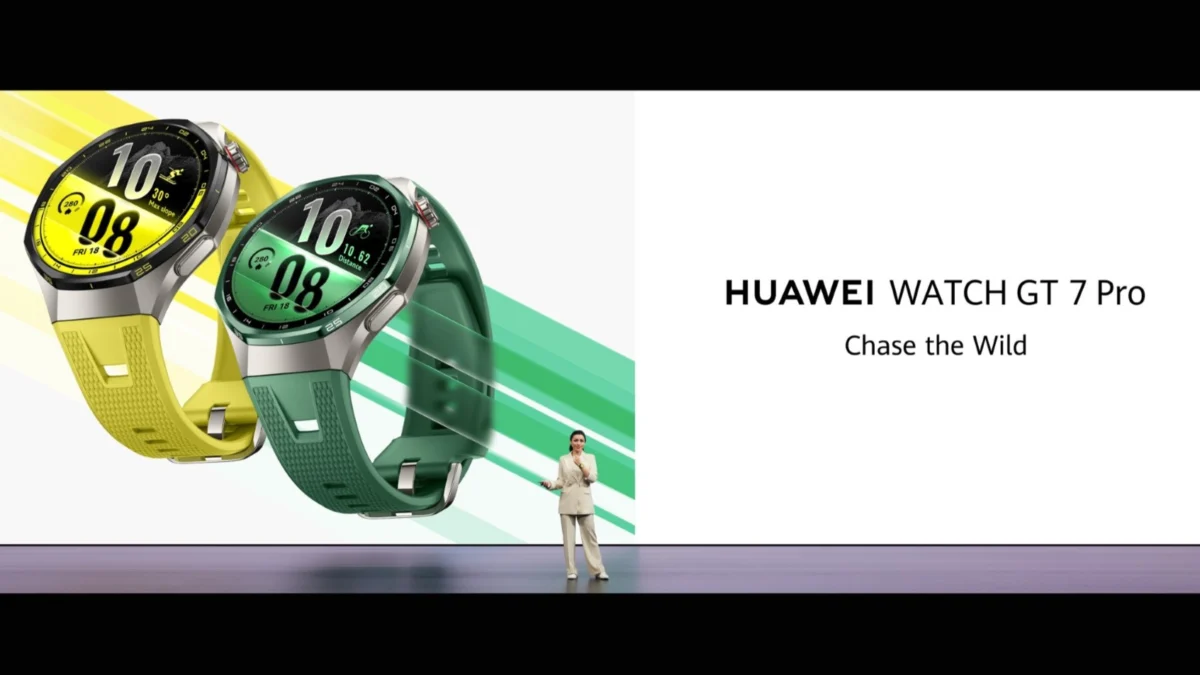
The landscape of consumer electronics is undergoing a seismic shift. For years, the smartwatch industry was defined by step counts, calorie burning, and notification management. Today, however, that narrative is being rewritten. Huawei, a global leader in the wearable space, is aggressively pivoting from consumer electronics toward a sophisticated health-monitoring ecosystem. This transition was center-staged at the recent "Chase the Wild" event in Munich, Germany, where the company unveiled its latest technological breakthroughs, including the Watch D3 and the Terve Research platform, signaling a new era of proactive, data-driven medicine.
The Convergence of Technology and Clinical Science
Huawei’s latest strategy positions the wearable device not as a standalone toy, but as a critical node in a broader health-monitoring network. The unveiling of the Watch D3 in Munich served as a physical manifestation of this ambition. Unlike standard wearables that rely on speculative estimation for health metrics, Huawei is doubling down on hardware-level validation.
The Watch D3 addresses the primary criticism leveled against the wearable industry: the lack of clinical precision. While many competitors rely on Photoplethysmography (PPG) to estimate blood pressure—a method often criticized for its susceptibility to external variables—Huawei has integrated a dual-layered approach. The D3 utilizes a miniature, high-precision pump and airbag system for conventional oscillometric measurements, supplemented by continuous PPG trend tracking. This hybrid methodology aims to balance the gold-standard reliability of a blood pressure cuff with the non-intrusive convenience of a modern smartwatch.
This is not merely an incremental upgrade; it is a fundamental shift in how the industry approaches user trust. By earning CE Medical Device certification for resting blood pressure, ambulatory blood pressure monitoring (ABPM), and post-exercise monitoring, Huawei is effectively bridging the gap between a consumer device and a medical instrument.
A Chronology of Innovation: The Road to the D3
To understand Huawei’s current position, one must look at the steady, deliberate trajectory of its research and development over the last four years.
- 2021: The Breakthrough. Huawei introduces the first-generation Watch D, marking the first time wrist-based blood pressure measurement was brought to a mass-market wearable. It established the baseline for the company’s intent to disrupt the status quo.
- 2024: The Rise of 24/7 Monitoring. The Watch D2 arrived with 24-hour Ambulatory Blood Pressure Monitoring (ABPM). This enabled users to track blood pressure fluctuations throughout the day and night, providing doctors with a comprehensive view of hypertension patterns.
- 2025/2026: The Refinement. The global launch of the Watch D3 on September 2, 2026, represents the maturation of this technology. By refining the hardware, Huawei managed to make the device 17.7% thinner and 9% lighter than its predecessor, while simultaneously optimizing the inflation frequency. The D3 uses four high-precision measurements during the day and three at night, effectively reducing the "cuff-inflation fatigue" that previously hindered user compliance with ABPM.
Supporting Data and the "Terve" Ecosystem
The true strategic brilliance of Huawei’s current approach lies in the Terve Research platform. Huawei has recognized that a device is only as valuable as the data it produces, and that data is only useful if it is actionable for the medical community.
Terve serves as an infrastructure layer designed to connect wearable-generated data with European academic and medical institutions. Funded by Huawei but managed independently by the medical technology firm Thryve, the platform provides a secure, regulatory-compliant environment for clinical trials.
Why This Matters:
- Closed and Open Studies: The platform allows for highly controlled studies with selected cohorts, or expansive, open studies where thousands of opt-in users contribute to a massive, anonymized dataset.
- Immediate Clinical Application: Terve is launching with two specific, high-impact studies: the first examines the health consequences of "social jetlag" and disrupted circadian rhythms, while the second investigates the causal link between exercise patterns and cardiovascular risk.
- The Feedback Loop: This creates a symbiotic relationship. Researchers gain access to real-world, longitudinal data that was previously impossible to collect at scale. In return, the insights derived from these studies are fed back into Huawei’s R&D, informing the next generation of algorithms and sensor technology.
Official Perspectives: Redefining the Human-Tech Interface
The leadership at Huawei is explicit about this shift. Rico Zhang, President of Huawei’s Smart Wearable and Health Product Line, frames the ambition as a move toward a "full-body system."
"From metabolic monitoring and active health management to brain activity sensing, wearables are no longer just about your wrist," Zhang stated during the Munich event. "We are moving toward a complete picture of your health, a system that monitors, understands, and responds."
This sentiment is echoed by Zhou Hong, President of Huawei Research Institute, Europe. According to Hong, the value of the wearable is in its ability to escape the clinical setting. "Wearable devices enable fast, convenient, and reliable multimodal measurements anytime and anywhere," he noted. "The potential for discovery is enormous, and the need has never been greater."
Beyond the Watch: The Broader Portfolio
While the Watch D3 is the flagship for health-tech, Huawei is also refreshing its broader lineup to cater to diverse user needs. The launch of the Watch GT 7 Series brings premium aesthetics—such as nano-tech ceramic bezels and titanium frames—together with high-performance tracking for niche activities, including ski mapping for over 3,000 resorts and advanced cycling metrics.
Simultaneously, the return of the Watch 6 Series to Europe highlights a commitment to a multi-tiered product strategy, offering AI-driven workout analysis and independent communication features. Furthermore, the launch of the Mate XT 2 smartphone, featuring the new Kirin 9050 Pro chip and integrated ECG analysis, demonstrates that Huawei intends to weave health-monitoring capabilities into the fabric of its entire mobile ecosystem, not just its wearables.
Implications for the Future of Healthcare
The implications of this shift are profound, both for the market and for global health.
1. The Commoditization of Fitness
As basic metrics like step counts and heart rate tracking become standard, the competitive advantage will no longer be found in "fitness" features. It will be found in "validation." Companies that can prove their data is medically accurate—through ISO standards and clinical certifications—will capture the loyalty of a health-conscious, aging global population.
2. Preventive Care at Scale
The most significant impact is the transition from reactive to preventive care. By providing users with continuous, longitudinal data, Huawei is empowering individuals to detect anomalies before they become emergencies. Whether it is an erratic blood pressure reading captured by the D3 or a cardiovascular risk pattern identified through a Terve-based study, the technology is moving the needle toward earlier intervention.
3. The Regulatory Hurdle
Huawei’s focus on ISO standards and CE Medical Device certification is a strategic hedge against the growing regulatory scrutiny in the tech sector. By aligning with medical authorities, Huawei is insulating itself from the "toy" categorization that often plagues wearable manufacturers.
4. A New Data Paradigm
Market research firms, such as Counterpoint Research, have already begun shifting their reporting metrics. It is no longer enough to track shipments and revenue; analysts are now measuring "health capability" as a core KPI for the industry. Sleep apnea detection, ECG, and blood pressure monitoring have become the new benchmarks for success.
Conclusion
Huawei’s current strategy is a masterclass in ecosystem building. By combining high-fidelity hardware, such as the Watch D3, with a robust research infrastructure like Terve, the company is positioning itself as an indispensable partner in the future of healthcare.
The wearable, once a simple accessory for the fitness enthusiast, is evolving into a personal health concierge. As the lines between consumer electronics and medical equipment continue to blur, Huawei’s investment in validation, research, and data-driven insights ensures it remains at the forefront of this digital health revolution. For the consumer, this promises a future where health is no longer an occasional check-up at a doctor’s office, but a continuous, understood, and managed component of daily life.