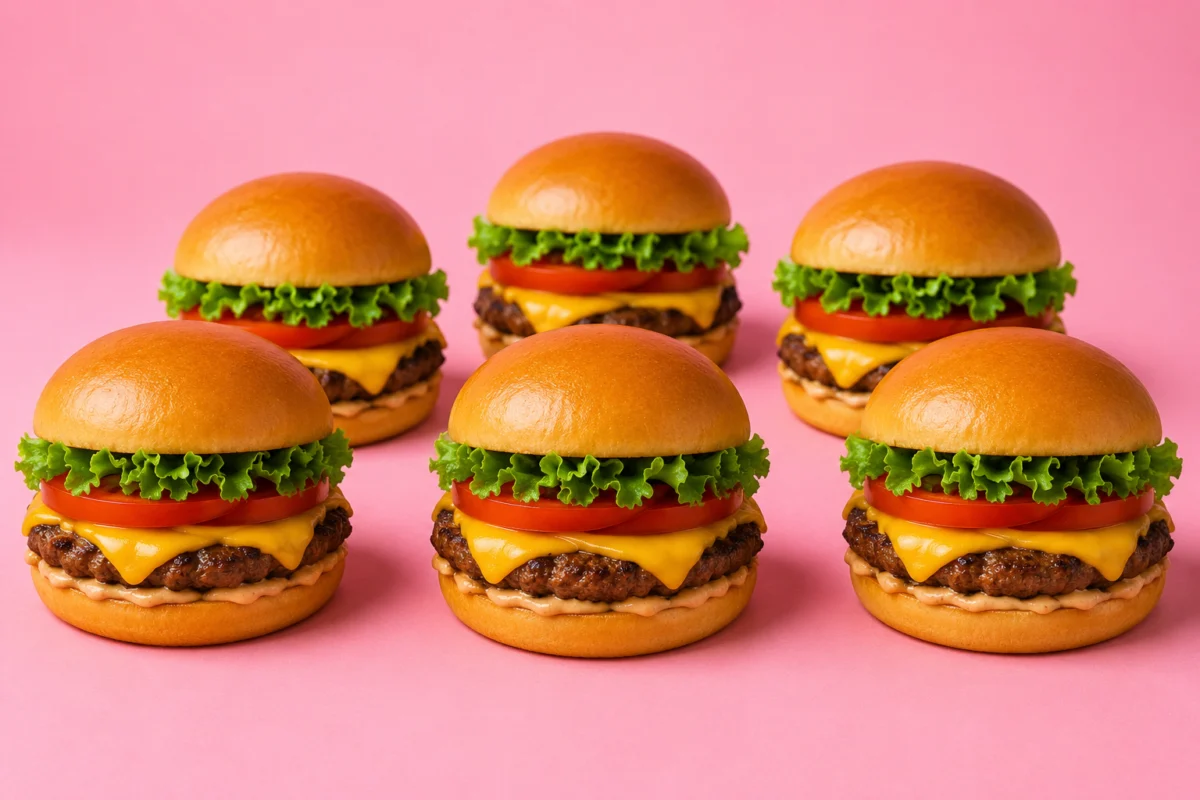
When you step into a neighborhood café today, you might experience a flicker of cognitive dissonance. You glance at the menu, searching for a bagel sandwich, but the photograph staring back at you feels… off. It is flawlessly symmetrical, impossibly smooth, and carries an aesthetic sheen that feels more like a rendering than a culinary reality. You aren’t losing your mind, and you aren’t being paranoid. You are witnessing the rise of the generative AI menu—a digital phenomenon that is quietly, and often unsettlingly, reshaping the visual landscape of the restaurant industry.
The Aesthetic of the Uncanny
We have entered an era where AI-generated imagery has become a convenient, cost-effective tool for business owners. By feeding a prompt into a model like Midjourney or DALL-E, a restaurant owner can bypass the expense of a professional food photographer. However, this shortcut has birthed a distinct "AI aesthetic" that often triggers a visceral, negative reaction in consumers.
These images are characterized by an extreme, synthetic "pleasingness." Ice cream scoops are perfectly spherical, cheese on a burrito bubbles with a consistency that mimics molten plastic rather than dairy, and shrimp are often depicted with impossible, tentacle-like anatomy that defies biological reality. These are not merely artistic choices; they are the result of machine learning models trained on a narrow set of idealized, high-gloss advertising images from the last decade.
"It’s almost like an alien trying to make a pizza without understanding its core principles," says Alex Lisle, CTO of Reality Defender, a startup specializing in content verification. The AI captures the appearance of food, but it lacks the internal logic of how ingredients interact, how textures should naturally fray, or how light should realistically strike a crust.
A Chronology of the "Slop" Menu
The transition toward AI-generated marketing materials did not happen overnight, but rather through a steady integration of large language models (LLMs) and diffusion models into small business operations.
- 2023–2024 (The Adoption Phase): As generative AI tools became publicly accessible, restaurant owners began experimenting with them to create social media graphics and digital menu boards. The low cost and high speed of generation made them an attractive alternative to traditional photography.
- Early 2025 (The Uncanny Valley Shift): Social media platforms, particularly X (formerly Twitter), began hosting a growing collection of "AI food fails." Users documented instances of menus featuring surreal, Lovecraftian culinary horrors, sparking a broader conversation about the quality and ethics of AI-generated content.
- Mid-2026 (The Feedback Loop): Researchers began to observe the phenomenon of "model convergence." As businesses updated their AI-generated menus repeatedly—tweaking prices or item names—the images underwent a process of degradation. Each subsequent edit pushed the visuals further toward a sterile, over-smoothed aesthetic, leading to the "slop" menus that now confuse customers.
Supporting Data: Why We Reject the "Fake"
The discomfort many feel isn’t just subjective taste—it is a measurable psychological response. A recent study from the University of Duisburg-Essen in Germany highlighted that AI-generated food images often land squarely in the "uncanny valley."
The researchers found that the closer an AI image gets to looking "real" without actually capturing the chaotic, messy, and organic nature of authentic food, the more disgust it elicits. Humans are evolutionarily hardwired to inspect food for freshness. When an image looks "too perfect," it triggers a subconscious alarm. We know, on a primal level, that the "perfect" bagel doesn’t exist in nature.
Furthermore, Lee Rainie, Director of the Imagining the Digital Future Center at Elon University, notes that AI models are inherently designed to "shave off the edges." To make an image "pleasing" or "non-offensive," models remove the idiosyncrasies that make food look delicious. The result is a homogenized, bland visual language that strips away the cultural and sensory identity of the cuisine it claims to represent.
The Peril of "Model Collapse" and Homogenization
One of the most significant concerns for the future of AI is the risk of "model collapse." This occurs when AI models are trained on data generated by other AI models, leading to a feedback loop of inbreeding.

"Model collapse is almost like mad cow disease," Lisle explains. "When you feed the outputs from one model back into itself, eventually the inbreeding becomes too much, and the whole thing collapses."
While current AI-generated menus might be experiencing "convergence"—a less severe form of degradation where the output simply becomes less accurate and more uniform—the long-term implications are clear. As these synthetic images proliferate online, they become the primary training data for the next generation of models. We are essentially teaching AI to make worse versions of the same mistakes, further diluting the quality of digital imagery.
Official Perspectives: The Trust Deficit
The implications of this trend extend far beyond the restaurant table. The ubiquity of synthetic media is causing a crisis of belief.
"Seeing and hearing has always been believing," Lisle notes. "Our court systems, our news media, and our public discourse are entirely tuned to the idea that the gold standard in evidence is recorded imagery. That is no longer the case. The world has fundamentally shifted."
If we cannot trust a photo of a sandwich on a menu, how can we trust images of political events, public figures, or emergency situations? The restaurant industry serves as a "canary in the coal mine." It demonstrates how quickly and aggressively AI can replace human-verified reality with a "good enough" simulation that lacks the nuance of the truth.
The Path Forward: Can Reality Be Saved?
For restaurants, the backlash is real. Customers are increasingly vocal about their dislike for AI-generated menus, with many viewing them as a sign of laziness or a lack of care for the culinary craft.
Some establishments are already pivoting back to real photography, realizing that the "uncanny" nature of AI imagery damages their brand rather than enhancing it. There is an emerging market for "authentic" content, where the messiness of a real meal—the crumbs, the uneven glaze, the slight imperfections—is marketed as a premium, human-made experience.
However, the pressure to cut costs remains. As long as AI tools remain free or cheap, the temptation to use them will persist. The solution may lie in better regulation of training data and a cultural shift in how we value human-authored content.
As we look toward the future, the "slop" menu may eventually be viewed as a temporary aesthetic glitch of the early AI era. But until then, the next time you look at a menu and feel that familiar, uncomfortable sensation of staring into a digital abyss, remember: you are not crazy. You are simply noticing the moment where the machine stopped trying to copy the world and started trying to replace it.