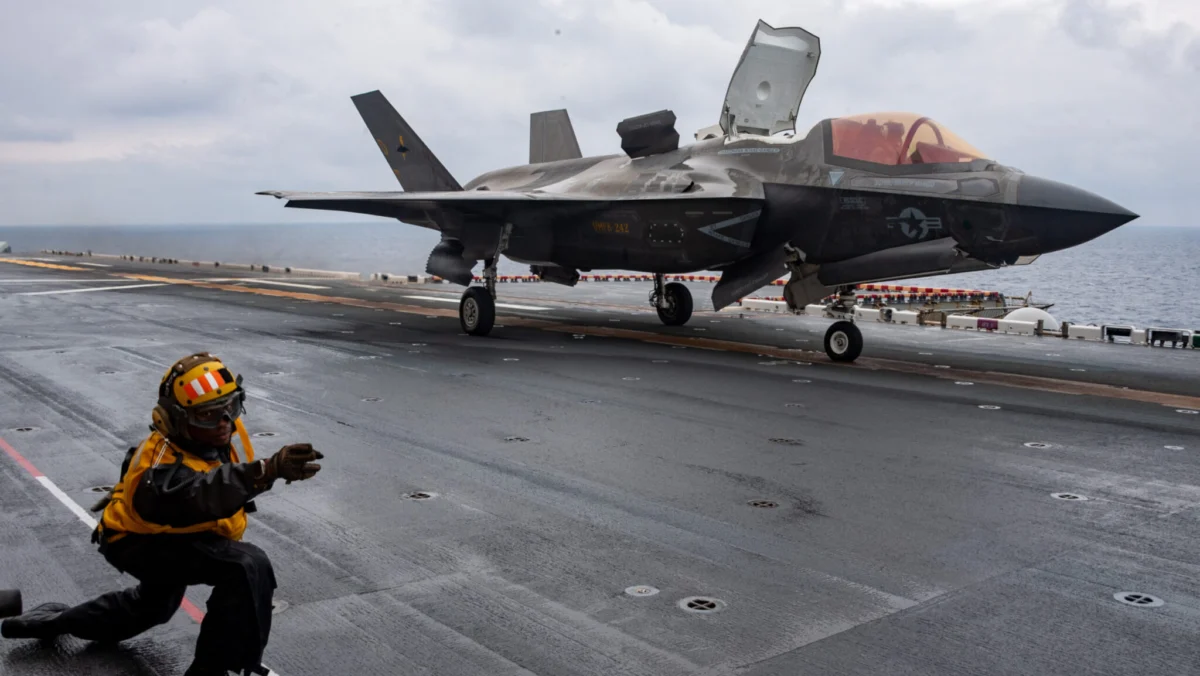
WASHINGTON — The F-35 Joint Strike Fighter, the cornerstone of the United States’ air superiority strategy and the most expensive weapons program in history, is facing a significant budgetary headwind. According to the Pentagon’s latest figures, the flyaway cost—the price tag for a completed aircraft ready for delivery—has risen by as much as 11 percent across all three primary variants.
As the program transitions into full-rate production, the rising costs of Lots 18 and 19 have cast a spotlight on the challenges of balancing rapid technological modernization, global inflation, and the logistical demands of a fleet that now spans 20 nations.
The Financial Breakdown: A Costly New Baseline
The Joint Program Office (JPO) confirmed that the average flyaway cost for the F-35A, the conventional takeoff and landing variant, has climbed to $92 million for the 18th and 19th production lots. This marks a sharp 11.5 percent increase from the $82.5 million price point established in the 2023-2026 production contracts.
The specialized variants have seen similar inflationary pressure. The F-35B, the short takeoff and vertical landing (STOVL) "jump jet" used by the Marine Corps, has seen its price rise to $121.4 million—an 11.4 percent increase from its previous $109 million valuation. The F-35C, the carrier-capable variant used by the U.S. Navy, experienced a more modest, though still significant, 8.5 percent increase, moving from $102.1 million to $110.8 million.
A Chronology of Escalation
The journey toward these current figures has been marked by a series of fiscal and operational hurdles.
- 2023–2024: The program began grappling with the dual pressures of global inflation and the rising costs of raw materials. During this period, the Pentagon and Lockheed Martin attempted to stabilize procurement contracts, though supply chain bottlenecks were already beginning to manifest.
- September 2025: The Pentagon and Lockheed Martin finalized a massive contract for 296 aircraft across Lots 18 and 19. At the time, the manufacturer argued that the price increases remained below the cumulative rate of inflation, framing the deal as a success in a volatile market.
- March 2026: The strain became visible internationally. Switzerland, citing the rising costs and broader budgetary concerns, officially trimmed its order by six aircraft, opting to shift focus toward other defense priorities. Simultaneously, reports emerged that the Pentagon was accepting new F-35 deliveries without their nose-mounted radars due to ongoing production delays with Northrop Grumman.
- Present Day: The program is now contending with the reality of these higher flyaway costs while simultaneously navigating a $50 billion increase in projected lifecycle costs.
Supporting Data and The "Hidden" Costs
The flyaway cost is a precise metric, but it is not the full picture. It encompasses government-furnished equipment (GFE) that exists outside of the primary Lockheed Martin airframe contract. This includes the high-performance F135 engine produced by Pratt & Whitney and the advanced sensor suites provided by various subcontractors.
The volatility in these costs is tied to several systemic factors:
- Inflationary Pressure: The cost of labor, specialized alloys, and electronic components has trended upward globally, impacting every tier of the F-35 supply chain.
- Modernization Requirements: The "Block 4" upgrade package, intended to keep the F-35 competitive against near-peer adversaries like China and Russia, has faced significant delays and cost overruns. The computing backbone of these upgrades, known as Technology Refresh 3 (TR-3), remains uncertified for combat, leaving dozens of jets in a "training-only" status.
- Readiness Demands: The Government Accountability Office (GAO) has frequently highlighted lackluster fleet readiness rates. To compensate, the Pentagon has requested billions in additional funding for spare parts and depot-level maintenance, further ballooning the long-term cost profile of the program.
Official Responses: Lockheed Martin and the Pentagon
Lockheed Martin’s stance remains one of pragmatic optimism. In response to the latest Modernized Selected Acquisition Report (MSAR), the company stated that the current data reflects a program moving from the instability of development into a mature, full-rate production phase.
"The report shows the hard work has shifted from proving the basic aircraft to executing major modernization, improving fleet readiness, and controlling long-term sustainment and integration costs," a company spokesperson reiterated. Lockheed maintains that when adjusted for the specific economic climate of the last three years, the airframe costs remain "consistent" with historical expectations.
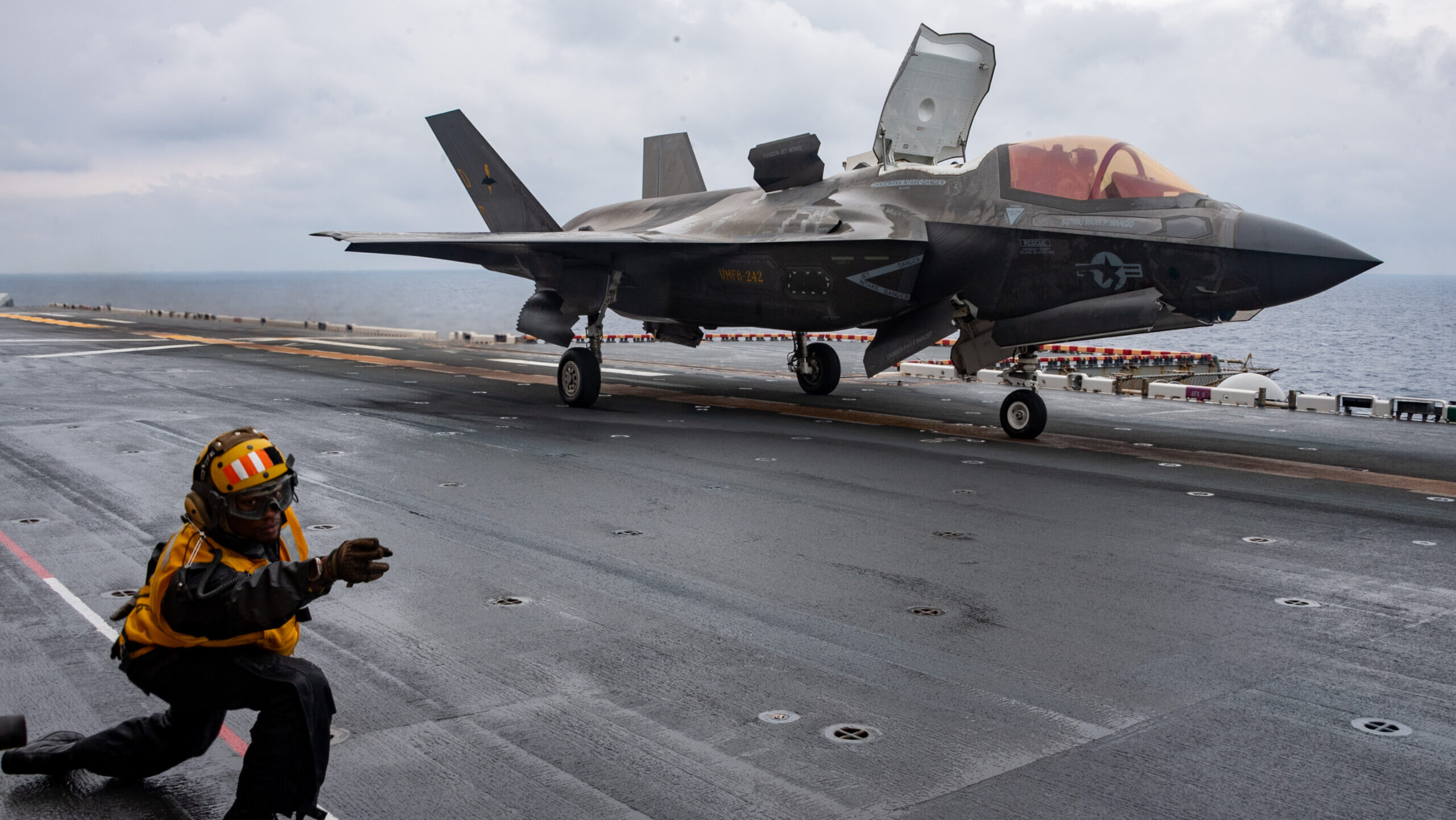
The Pentagon’s JPO has echoed this sentiment, suggesting that while the "sticker price" has moved upward, the aircraft remains the most capable platform in the world, and the price increases are an unavoidable consequence of delivering cutting-edge, modernized capabilities in an inflationary era.
Implications for Global Security and Defense Budgets
The upward trend in F-35 costs has profound implications for both the U.S. military and its international partners.
1. The Burden on the U.S. Defense Budget
With the F-35’s total lifecycle cost projected to be nearly $2 trillion, even small percentage increases in unit costs create massive ripples in the Department of Defense’s long-term planning. The need to balance the "buying" of new jets with the "sustaining" of existing ones means that money diverted to cover price hikes often comes at the expense of other modernization initiatives.
2. International Buy-In
For the 20 nations currently operating or procuring the F-35, these price hikes test the limits of their national defense budgets. The Swiss decision to cut their order is a bellwether; if other nations reach similar fiscal thresholds, it could jeopardize the economies of scale that the program relies on to keep unit prices from skyrocketing even further.
3. The Modernization Gap
Perhaps the most critical implication is the "readiness vs. capability" trade-off. By accepting aircraft that are incomplete—such as those delivered without the new radar or those waiting for TR-3 software certification—the Pentagon is forced to pay for "retrofit" costs down the line. This cycle of building, delivering, and then modifying creates a "hidden" secondary cost that complicates the Pentagon’s ability to forecast spending accurately.
Conclusion: The Path Forward
The F-35 program is currently in a state of transition. It is moving past the era of initial procurement and into a period defined by constant software updates, engine enhancements, and the necessity of maintaining a fleet that serves as the backbone of NATO’s air power.
While the 11 percent price jump is statistically significant, the Pentagon and Lockheed Martin remain committed to the current path. For policymakers, the challenge will be to ensure that these rising costs do not erode the strategic advantage the F-35 provides. As the program enters its third decade, the focus will likely shift from simply building the jets to ensuring that the multibillion-dollar investment yields the reliable, combat-ready force that was promised at the program’s inception.
The next few years will be a test of whether the program can finally move past its "modernization phase" and deliver the combat-ready capability that global commanders demand, or if the costs of keeping the world’s most sophisticated fighter flying will continue to outpace even the most generous defense budgets.