The United States Air Force’s ambitious transition from the aging E-3 Sentry Airborne Warning and Control System (AWACS) fleet to the modern E-7A Wedgetail has hit a critical budgetary impasse. Despite the Trump administration’s decision to move the program off the immediate chopping block, the responsibility for securing the aircraft’s future has shifted squarely onto the shoulders of Congress. As lawmakers scramble to reconcile fiscal constraints with national security imperatives, the E-7 program has become a focal point of intense legislative maneuvering and strategic debate.
Main Facts: The Transition to the Wedgetail
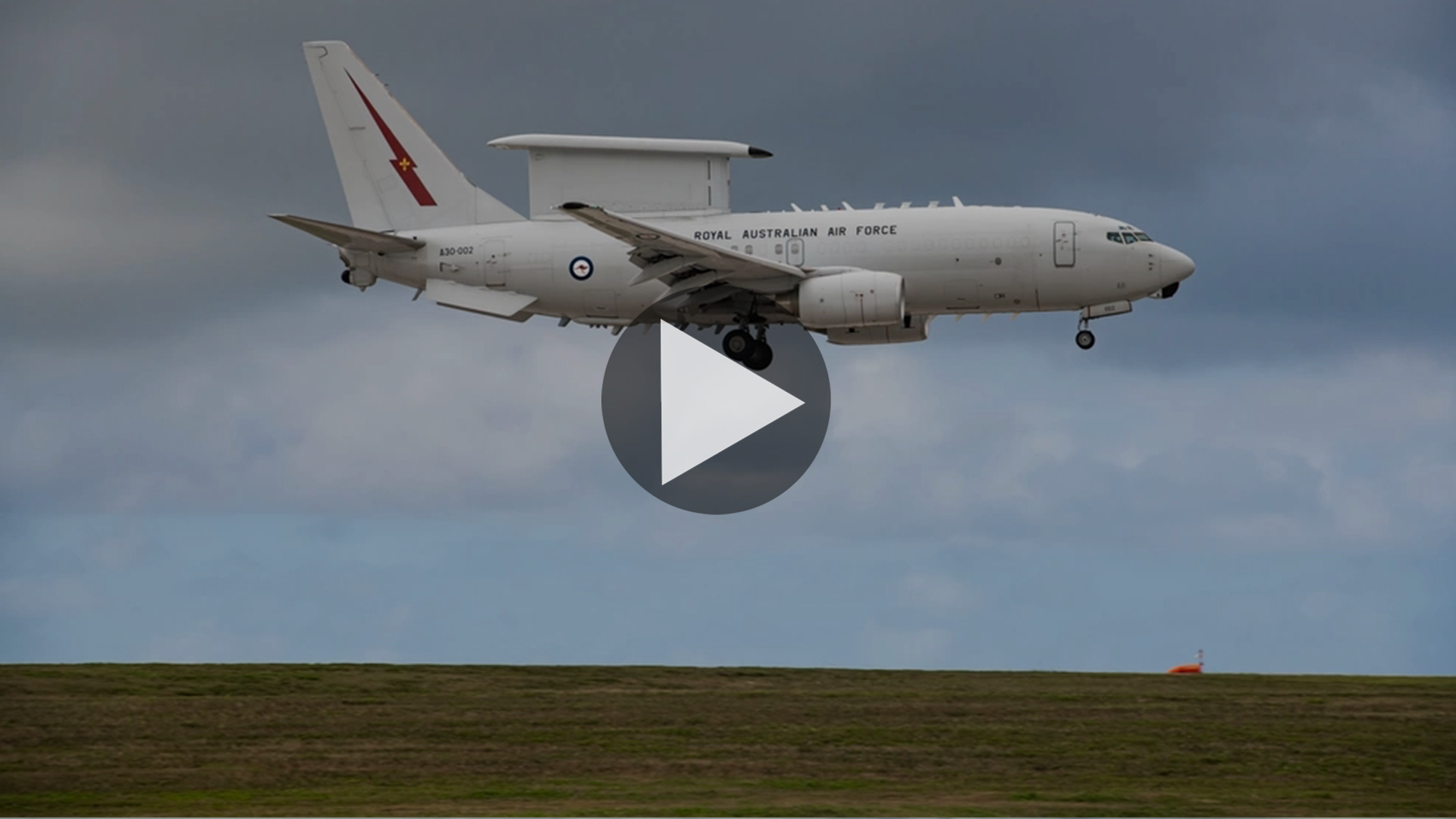
The E-7A Wedgetail, manufactured by Boeing, represents a generational leap in airborne early warning and control (AEW&C) capabilities. Designed to replace the Cold War-era E-3 Sentry—a platform that has served as the "eyes in the sky" for the U.S. military for over four decades—the Wedgetail utilizes an advanced Multi-role Electronically Scanned Array (MESA) radar. This technology allows the aircraft to track multiple aerial and maritime threats simultaneously with unprecedented precision.
The central tension currently surrounding the program is not one of technological doubt, but of fiscal prioritization. While the Air Force views the E-7 as an essential component of its modernization strategy to counter peer-level adversaries in the Indo-Pacific, the platform’s high procurement costs have triggered scrutiny within federal budgeting committees. Recent legislative moves, as highlighted in the latest episode of the Congressional Roundup, underscore a concerted effort by both chambers to secure stopgap funding and long-term fiscal support to prevent the program from stagnating.
Chronology of the Program’s Development
To understand the current volatility, one must look at the timeline of the E-7’s acquisition path:
- 2019-2021: The Air Force identifies a critical capability gap as the E-3 Sentry fleet faces increased maintenance costs and diminishing availability.
- 2022: The Department of the Air Force officially selects the E-7A Wedgetail as the replacement platform, opting for a derivative of the Boeing 737-700 airframe to expedite delivery.
- 2023: Early contract awards are finalized, with the Air Force detailing a multi-year procurement plan.
- 2024: Concerns regarding industrial base capacity and software integration delays begin to inflate initial cost estimates, leading to internal debates within the Pentagon regarding procurement schedules.
- 2025 (Early): The Trump administration initiates a review of high-cost defense programs, initially placing the E-7 under the microscope for potential budget reductions.
- 2026 (Current): Following a period of uncertainty, the administration shifts gears, effectively signaling that while the program is not cancelled, it must survive the grueling process of congressional budget amendments and authorization acts.
Supporting Data: Why the E-7 is Essential
The requirement for the E-7A is driven by the stark reality of the E-3 Sentry’s limitations. The E-3, based on the aging Boeing 707 airframe, is increasingly expensive to maintain, with "mission capable" rates dropping significantly over the last decade.
Strategic Advantages of the E-7A
- MESA Radar Performance: Unlike the rotating radar dish of the E-3, the E-7’s MESA system provides 360-degree coverage without moving parts, significantly reducing maintenance downtime and increasing reliability.
- Network-Centric Warfare: The Wedgetail is built to operate as a central node in the Joint All-Domain Command and Control (JADC2) architecture, seamlessly sharing data with F-35s, F-22s, and naval assets.
- Operating Cost Efficiency: By leveraging the global supply chain of the 737-700, the E-7 offers a more sustainable logistics footprint compared to the E-3, which relies on legacy components that are often out of production.
However, the cost of these advancements is significant. Recent congressional briefings suggest that the procurement of the full planned fleet could exceed original estimates by double-digit percentages, largely due to inflationary pressures in the defense industrial base and the need for incremental software upgrades to keep pace with evolving electronic warfare threats.
Official Responses and Political Maneuvering
The shift in the administration’s posture toward the E-7 has created a vacuum that Capitol Hill is currently attempting to fill. According to Daniel Woolfolk, Multimedia Director for Breaking Defense, the House and Senate are moving through a complex series of legislative maneuvers.
"The administration has essentially handed the baton to Congress," Woolfolk noted in the recent Congressional Roundup. "While the White House has walked back the idea of an outright cancellation, the funding is not guaranteed. We are seeing a flurry of amendments aimed at ensuring the E-7 program remains insulated from broader government shutdown risks."
Legislative Perspectives
- The House Armed Services Committee (HASC): Proponents in the HASC have argued that any delay in the E-7 program creates an unacceptable risk in the Pacific theater, where early warning is paramount. Their current strategy focuses on multi-year procurement authorizations that provide the Air Force with greater fiscal certainty.
- The Senate Appropriations Committee: Senators remain focused on oversight, demanding greater transparency regarding Boeing’s production milestones. While supportive of the platform, the Senate has signaled that "blind funding" is off the table, pushing for rigorous performance benchmarks before releasing full fiscal-year tranches.
Implications for National Security and Defense Strategy
The implications of the current budget battle are profound. If the E-7 program is forced into a series of stopgap funding measures, the result will likely be a "rate-of-production" slowdown. Such a delay would extend the service life of the E-3 Sentry well beyond its intended retirement, forcing the Air Force to spend millions on keeping obsolete aircraft in the air rather than investing in the future.
Tactical and Geopolitical Consequences
- Readiness Degradation: Prolonged reliance on the E-3 reduces the Air Force’s ability to operate in contested electromagnetic environments. The E-3 is increasingly vulnerable to modern long-range anti-access/area-denial (A2/AD) threats that the E-7 is better equipped to identify and evade.
- Allied Interoperability: The E-7 is already in service with the Royal Australian Air Force, the United Kingdom’s Royal Air Force, and the Republic of Korea Air Force. A delay in the U.S. procurement cycle risks decoupling the U.S. from its allies’ integrated early-warning networks, complicating joint operations in the Indo-Pacific.
- Industrial Base Resilience: The defense industrial base is currently stretched thin. A signal of instability regarding the E-7 program risks causing supply chain disruptions, as contractors may be hesitant to commit to long-term sub-tier investments without a solid federal funding commitment.
Conclusion: The Path Forward
The E-7 Wedgetail is widely considered the most important command-and-control platform in the Air Force’s modernization portfolio. The current congressional efforts to stabilize the program via budget amendments are not merely procedural; they are a vital safeguard against a dangerous gap in national surveillance capabilities.
As Congress navigates the remainder of the fiscal year, the success of the E-7 will serve as a barometer for the legislative branch’s ability to prioritize long-term strategic needs over short-term budgetary friction. With the E-3 Sentry nearing the end of its operational tether, the window to ensure a smooth transition is closing. The message from the defense community is clear: the E-7 must be treated as a foundational asset, not a line item to be negotiated in the eleventh hour.
For now, the program remains afloat, buoyed by bipartisan recognition of its necessity. However, until the budget is finalized and the procurement schedule is cemented by law, the Wedgetail will continue to fly through a storm of political uncertainty, its future tied to the complex and often unpredictable mechanics of Washington’s fiscal cycle.