
By Satellite Today Staff | August 27, 2026
In a significant leap forward for the burgeoning space economy, Kepler Communications and NorthStar Earth & Space have announced a comprehensive strategic partnership that seeks to fuse high-speed optical data relay with cutting-edge Space Domain Awareness (SDA). This collaboration, unveiled on Thursday, August 27, 2026, marks a pivotal shift in how orbital assets are monitored, managed, and utilized by global defense and commercial entities.
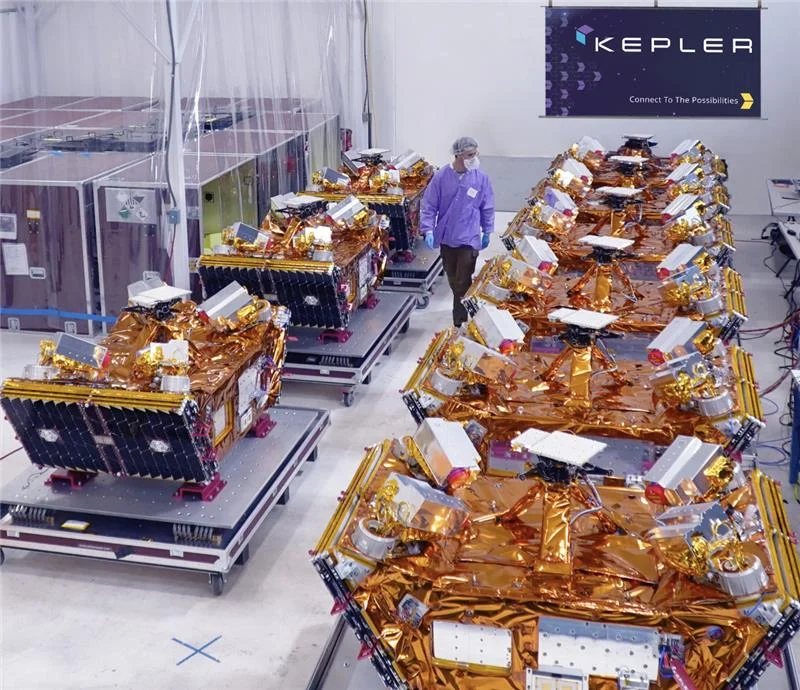
Under the terms of the agreement, NorthStar’s advanced optical SDA sensors and its proprietary Space Information & Intelligence (Si²) platform will be hosted directly on Kepler’s next-generation optical relay satellites. By integrating sensing capabilities directly into the data transmission backbone of the space environment, the two companies aim to provide unprecedented, real-time intelligence to a diverse roster of international clients.
The Convergence of Connectivity and Intelligence: Main Facts
The partnership is built on the premise that space is becoming increasingly congested and contested. As the number of satellites in Low Earth Orbit (LEO) grows exponentially, the need for persistent, high-fidelity tracking of orbital objects—from defunct rocket stages to active military assets—has become a top priority for national security agencies and commercial satellite operators alike.
Kepler Communications, known for its expertise in building robust, high-capacity optical relay networks, provides the physical "highway" for data. By hosting NorthStar’s sophisticated optical sensors on these nodes, the constellation transforms from a mere transmission network into an active "eye in the sky."
Key takeaways from the announcement include:
- Payload Hosting Agreement: NorthStar’s Si² platform and optical sensors will be integrated into the Kepler constellation architecture.
- Strategic Alignment: The partnership focuses on accelerating the deployment of orbital sensing capabilities.
- Intelligence Distribution: The integration allows for the immediate transmission of SDA data to end-users on the ground via Kepler’s optical relay links, effectively bypassing traditional latency issues associated with standard ground-station downlinking.
A Timeline of Collaborative Growth: Chronology
The alliance between Kepler and NorthStar is not an overnight development but the result of several years of strategic positioning within the aerospace sector.
- Early 2020s: Both companies established their market footprints. Kepler focused on the "internet in space" infrastructure, while NorthStar began developing its reputation as a pioneer in commercial SDA, leveraging sensors to track debris and active satellites.
- 2024-2025: NorthStar successfully demonstrated its Si² platform’s capabilities through various governmental contracts, proving the viability of its space-based surveillance model. Simultaneously, Kepler began scaling its optical relay constellation, moving beyond early testing phases to operational service.
- Early 2026: Initial discussions regarding the synergy between data relay and persistent monitoring began. Executives identified that the latency of traditional data relay was the primary bottleneck for real-time space intelligence.
- August 27, 2026: The formal announcement of the partnership, signaling the commencement of the payload integration phase for the upcoming launch cycle.
Powering the Next Generation of Sensing: Supporting Data and Technical Context
The technological requirements for modern Space Domain Awareness are immense. Traditional ground-based radar systems are limited by geography, weather, and the sheer distance to objects in high-inclination orbits. Space-based optical sensors provide a "God’s-eye view" that is essential for collision avoidance and threat detection.
The Role of Optical Relay
Kepler’s infrastructure utilizes optical inter-satellite links (OISL), which allow satellites to communicate with one another at the speed of light in a vacuum. By bypassing the need for a satellite to be in direct line-of-sight with a ground station to transmit data, Kepler’s constellation ensures that the intelligence gathered by NorthStar sensors is available to analysts in near real-time.
The NorthStar Edge
NorthStar’s Si² platform is designed to process massive amounts of raw optical data into actionable insights. By hosting this compute-intensive platform on the edge—on the satellite itself—the partnership minimizes the data volume that must be downlinked, focusing instead on delivering processed, critical intelligence.
The company currently maintains an impressive portfolio of clients:
- Defense: The Royal Canadian Armed Forces (RCAF) and the U.S. Space Force (via Joint Commercial Operations).
- Research and Development: DARPA’s ongoing initiatives.
- International Cooperation: The Luxembourg Space Agency and the European Space Agency (ESA).
Perspectives from the Helm: Official Responses
The leadership teams of both organizations emphasize that this partnership is about more than just technology; it is about setting a new standard for how space assets are utilized for the greater good of global security.
Mina Mitry, CEO of Kepler Communications, framed the partnership as the logical evolution of the "internet in space."
"Kepler’s constellation was built to enable real-time space applications and move mission-critical data from orbit to the people and programs who need it most," Mitry stated during the announcement. "Partnering with NorthStar demonstrates how integrated space infrastructure can accelerate the deployment of advanced sensing missions while delivering timely, reliable access to the data they generate."
While NorthStar’s executive leadership has not yet released a secondary follow-up, industry analysts point to the company’s dual-track approach—maintaining headquarters in Montreal while keeping a strategic base of operations in Virginia—as evidence of their intent to serve the U.S. defense market directly. By positioning their technology within the Kepler relay network, NorthStar is effectively future-proofing their service against the inevitable surge in orbital traffic expected over the next decade.
The Strategic Implications for Global Space Operations
The implications of this partnership are far-reaching and touch upon several critical areas of the space industry.
1. Enhanced Collision Avoidance
As the "Kessler Syndrome"—the theory that a chain reaction of collisions could render LEO unusable—becomes a growing concern, the ability to track small, maneuverable, or dark objects is essential. The Kepler-NorthStar integration provides a persistent monitoring capability that is currently unmatched by ground-based systems.
2. The Commercialization of National Security
For years, space intelligence was the exclusive domain of sovereign nation-states. This partnership underscores the shifting landscape where commercial companies provide the backbone for national security infrastructure. By utilizing a commercial constellation, governments can achieve higher revisit rates and lower costs than if they were to launch dedicated, single-purpose intelligence satellites.
3. Latency as a Competitive Advantage
In the context of military operations or emergency collision avoidance, every second counts. Traditional store-and-forward satellite systems, which hold data until they pass over a ground station, are becoming obsolete. The real-time nature of this new relay-enabled sensing architecture offers a decisive advantage for decision-makers who require instantaneous updates on the orbital environment.
4. Regulatory and Policy Shifts
This partnership will likely influence future discussions regarding "Rules of the Road" in space. As private companies gain better visibility into the activities of other nations’ satellites, transparency in orbit will increase. This could lead to more robust international norms regarding safe operations and responsible conduct in space, as "stealth" maneuvers become increasingly difficult to execute in a well-monitored environment.
Conclusion: A New Era for Orbital Stewardship
The collaboration between Kepler Communications and NorthStar Earth & Space is a hallmark of the maturity of the commercial space sector. By combining the "pipes" of the space internet with the "eyes" of advanced surveillance, the two companies are creating a symbiotic ecosystem that serves both commercial interests and national security imperatives.
As we look toward the final quarter of 2026 and beyond, the success of this initiative will likely serve as a blueprint for future infrastructure projects in orbit. In an era where space is increasingly recognized as a vital domain, the ability to observe, understand, and communicate data in real-time is the ultimate foundation for all future space exploration and utilization. Through this strategic alliance, Kepler and NorthStar have positioned themselves as the architects of this new, transparent, and highly connected orbital reality.