CALGARY, Alberta – In a significant escalation of international support for Kyiv, Canada and Ukraine have formalized a wide-ranging, 100-year defense partnership aimed at bridging the gap between Ukrainian battlefield ingenuity and Canadian industrial capacity. The agreement, announced during a high-level summit in Calgary on September 10, 2026, marks a pivotal shift in how Western allies approach the long-term sustainment of Ukraine’s war effort against Russia.
The deal encompasses the joint production of uncrewed aerial and ground systems, the development of sophisticated counter-drone technologies, and a massive influx of funding for priority munitions. For Kyiv, the timing is critical; as Russian missile and drone barrages continue to target civilian infrastructure and military positions, the requirement for sustained, high-tech supply chains has never been more urgent.
The Pillars of the Partnership: A Century of Cooperation
The "100-year partnership" announced by Canadian Prime Minister Mark Carney represents a departure from the short-term, incremental aid packages that have defined the conflict to date. By institutionalizing a government-to-government framework, Ottawa and Kyiv are moving toward a model of industrial integration.
"Canada and Ukraine are forging a long-term partnership to jointly produce uncrewed systems, counter-drone technologies, and priority munitions—combining Ukrainian battlefield experience with Canadian manufacturing, software, and artificial intelligence," Prime Minister Carney stated.
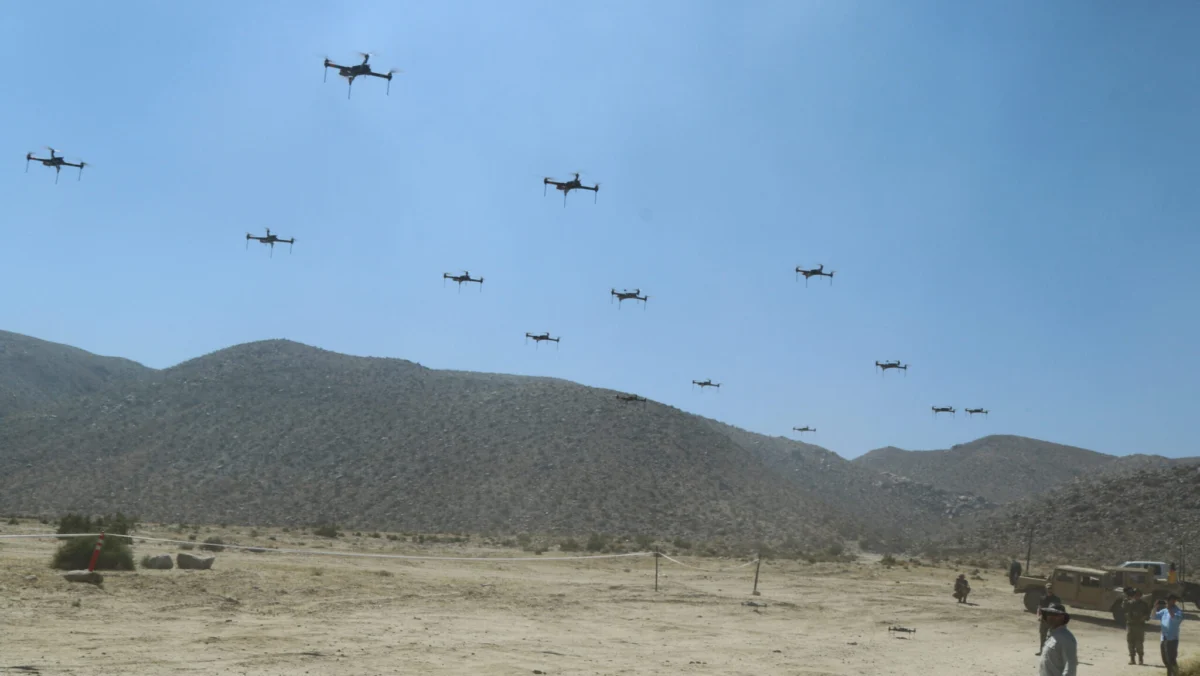
This strategic alignment is already yielding tangible results. A cornerstone of this cooperation is a new memorandum of understanding (MOU) between Canadian defense giant General Dynamics Mission Systems and Ukraine’s Green Tech Harvest. The partnership will focus on co-producing "Ukrainian-designed" drones—a move designed to scale up the production of combat-proven hardware using the advanced manufacturing standards of the Canadian defense sector.
Chronology: Building Toward a New Defense Architecture
The announcement in Calgary follows a rapid succession of defense initiatives throughout late summer and early autumn 2026:
- September 8, 2026: In Kyiv, Ukrainian Defense Minister Yevhenii Khmara revealed a sobering reality during a Ukraine Defense Contact Group meeting: the country faced a $27 billion funding shortfall for drone supplies, a critical gap in its ability to maintain tactical parity.
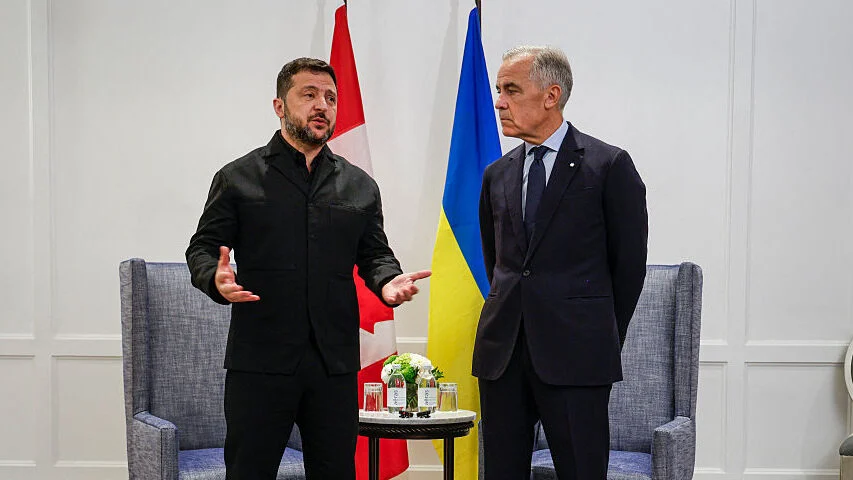
- September 10, 2026: Prime Minister Carney and President Zelenskyy meet in Calgary to sign the long-term cooperation agreement, signaling Canada’s commitment to fill gaps in air defense and drone production.
- September 11, 2026: Formal details regarding the "Defense Drone Initiative Marketplace" are released, outlining the creation of a centralized procurement portal to facilitate rapid, trusted supply chains.
Financial Commitment and Air Defense Surge
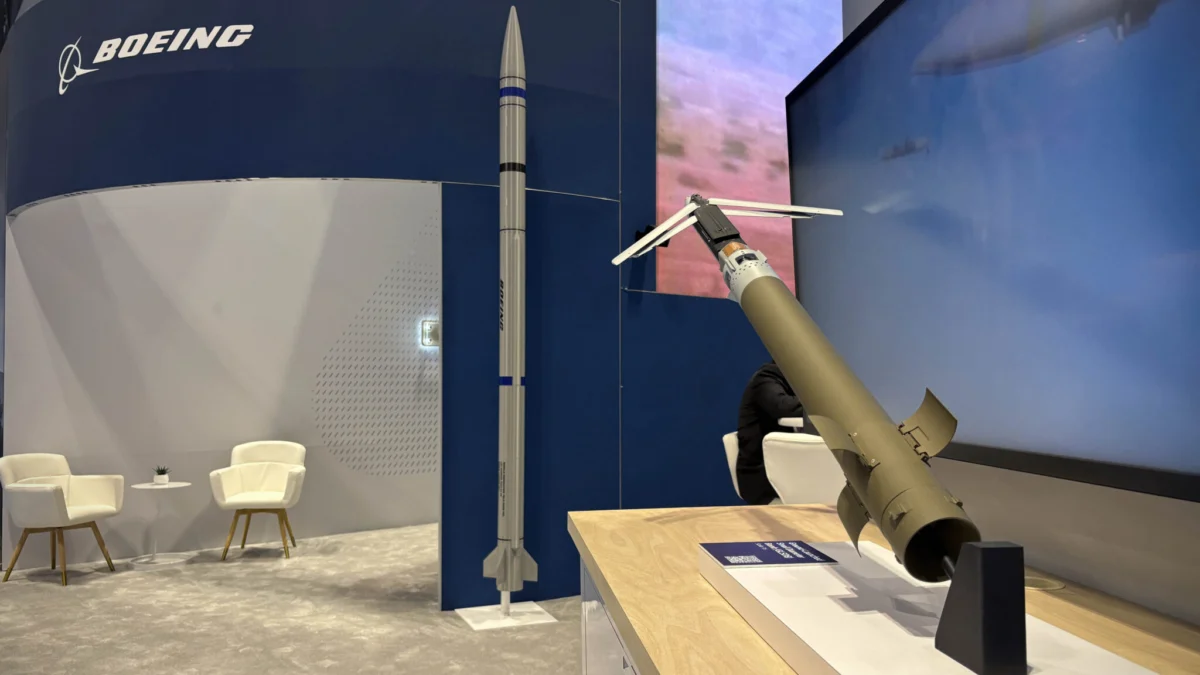
Beyond the production of uncrewed systems, Canada has pledged a significant financial package to bolster Ukraine’s aerial defenses. The $350 million allocation, channeled through the US-led Joint Ukraine Multinational Program (JUMPSTART), is specifically earmarked for the procurement of air defense interceptors.
This financial mechanism is designed to be agile, allowing allies to pool resources to purchase military equipment, services, and training based on Ukraine’s evolving operational requirements.
President Zelenskyy, addressing the significance of the package on social media, emphasized the human element of the partnership. "I am grateful to Canada for the new defense package. Above all, it will strengthen our air defense—both our Patriots and our combat aircraft," Zelenskyy wrote. He further highlighted that 21 Ukrainian pilots are currently undergoing advanced training in Canada, a key component of what he termed a "significant reinforcement" of Ukraine’s defensive capabilities.
The "Defense Drone Initiative Marketplace"
Perhaps the most innovative aspect of the new agreement is the launch of the Defense Drone Initiative Marketplace. Modeled after Ukraine’s highly successful Brave1 defense tech cluster—which has become a global benchmark for fast-tracking military innovation—the Canadian platform is designed to streamline the procurement process.
"The Defense Drone Initiative Marketplace Supply Arrangement will ensure the reliable, rapid, and continuous supply of drones for the Canadian Armed Forces and Coast Guard," Prime Minister Carney explained. By providing "privileged access to 400 trusted Canadian suppliers," the government aims to eliminate the bureaucratic bottlenecks that often delay the deployment of cutting-edge technology.
To jumpstart this initiative, the Canadian government has awarded $50 million in initial contracts to six national firms. These companies specialize in unmanned ground vehicles (UGVs) and sophisticated intelligence, reconnaissance, and surveillance (ISR) drones. The goal is ambitious: to increase the number of operational drones deployed by the Canadian Armed Forces tenfold, while simultaneously feeding the overflow into the Ukrainian supply chain.
Implications: A Shift in Global Defense Strategy
The implications of this agreement extend far beyond the immediate needs of the current conflict. By integrating the Ukrainian and Canadian defense industries, the two nations are creating a blueprint for "distributed manufacturing."
1. Scaling Battlefield Innovations
Ukraine’s war has been characterized by rapid iteration. A drone that works effectively today may be countered by electronic warfare systems tomorrow. By partnering with Canadian software and AI firms, Ukrainian designers can integrate advanced algorithms into their hardware faster, allowing for real-time updates to drone flight patterns, target acquisition, and electronic counter-countermeasures (ECCM).
2. Economic and Security Synergy
The agreement stipulates that 30% of the production of these joint drone ventures will be transferred directly to Ukraine. This provides Kyiv with a steady, reliable stream of hardware while allowing Canadian companies to achieve economies of scale. For Canada, the deal serves as a catalyst for its own defense industry modernization, moving the Canadian Armed Forces toward a more drone-centric posture.
3. Addressing Hybrid Threats
Canada’s additional $23 million commitment to combat "hybrid threats" addresses the non-kinetic aspects of the war. This funding is directed toward the Ukrainian police, national guard, and civilian defense sectors to enhance their ability to detect disinformation campaigns and protect vital digital infrastructure. This holistic approach recognizes that modern warfare is fought as much in the information space as it is on the front lines.
Challenges Ahead
While the agreement is being hailed as a milestone, analysts point to several hurdles. The first is the logistical challenge of scaling production to meet the $27 billion demand identified by Minister Khmara. While Canada’s $50 million initial investment is a strong start, it represents only a fraction of the total requirement for Ukraine to achieve long-term air and ground superiority.
Furthermore, the integration of Canadian manufacturing standards with Ukrainian designs requires deep technical interoperability. As the war continues to evolve, maintaining the security of these supply chains against Russian intelligence efforts will be a primary concern for both Ottawa and Kyiv.
Conclusion
The partnership between Canada and Ukraine represents a fundamental shift in how Western nations support frontline allies. By moving from simple equipment transfers to long-term industrial co-production, the Canada-Ukraine agreement acknowledges that the security of Eastern Europe is intrinsically linked to the industrial and technological capabilities of the West.
As President Zelenskyy prepares to return to the front, he does so with the promise of a more robust, sustainable, and technologically advanced pipeline of support. Whether this "100-year partnership" can provide the decisive edge needed to turn the tide of the conflict remains to be seen, but for now, it stands as a testament to the deepening resolve of Canada to see Ukraine through to victory.