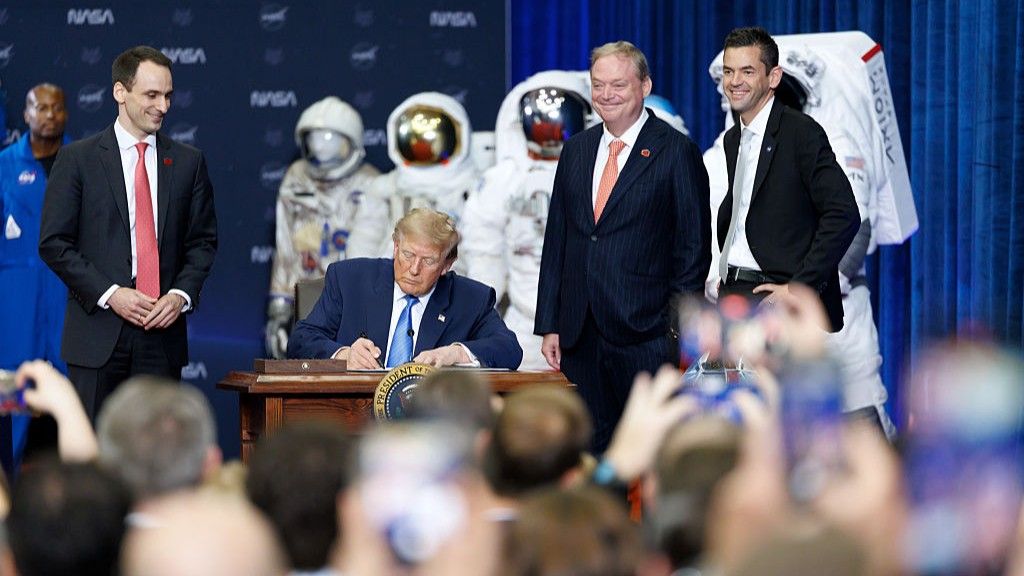
On August 28, 2026, during a high-profile visit to NASA’s Johnson Space Center in Houston, President Donald Trump signed an executive order that could fundamentally reshape the American approach to the final frontier. The directive calls for the establishment of a "United States Space Academy," a proposed institution intended to cultivate the next generation of leaders for NASA, the U.S. Space Force, and the burgeoning private space sector.
While the concept of a dedicated school for space professionals evokes images of the iconic Starfleet Academy from Star Trek, the reality of the proposal is far more complex. As a matter of national policy, the move represents a potential departure from the long-standing post-World War II separation between civilian scientific exploration and military strategic interests.
The Main Facts: What the Executive Order Proposes
At its core, the executive order does not instantly create a physical campus. Instead, it mandates the formation of a high-level commission tasked with evaluating the feasibility, structure, and mission of the proposed U.S. Space Academy. This commission is to be led by NASA Administrator Jared Isaacman and will include key figures such as the Secretary of Defense, the National Security Adviser, and the Director of the Office of Management and Budget.
The commission has a 120-day window to deliver a comprehensive report to the White House. According to the executive order, the academy’s mission would be to "develop a professional corps of civically grounded leaders prepared to advance American interests within the space domain."
President Trump has framed the academy as a peer to established service institutions like West Point, the U.S. Air Force Academy, and the U.S. Naval Academy. However, the order leaves significant ambiguity regarding whether the institution will be a military-run entity, a civilian NASA-led campus, or a hybrid structure that could potentially confuse the roles of federal agencies.
Chronology of U.S. Space Ambitions
The push for a space academy is the latest in a series of ambitious space-related actions initiated by President Trump. To understand the current proposal, one must look at the trajectory of American space policy over the last decade:
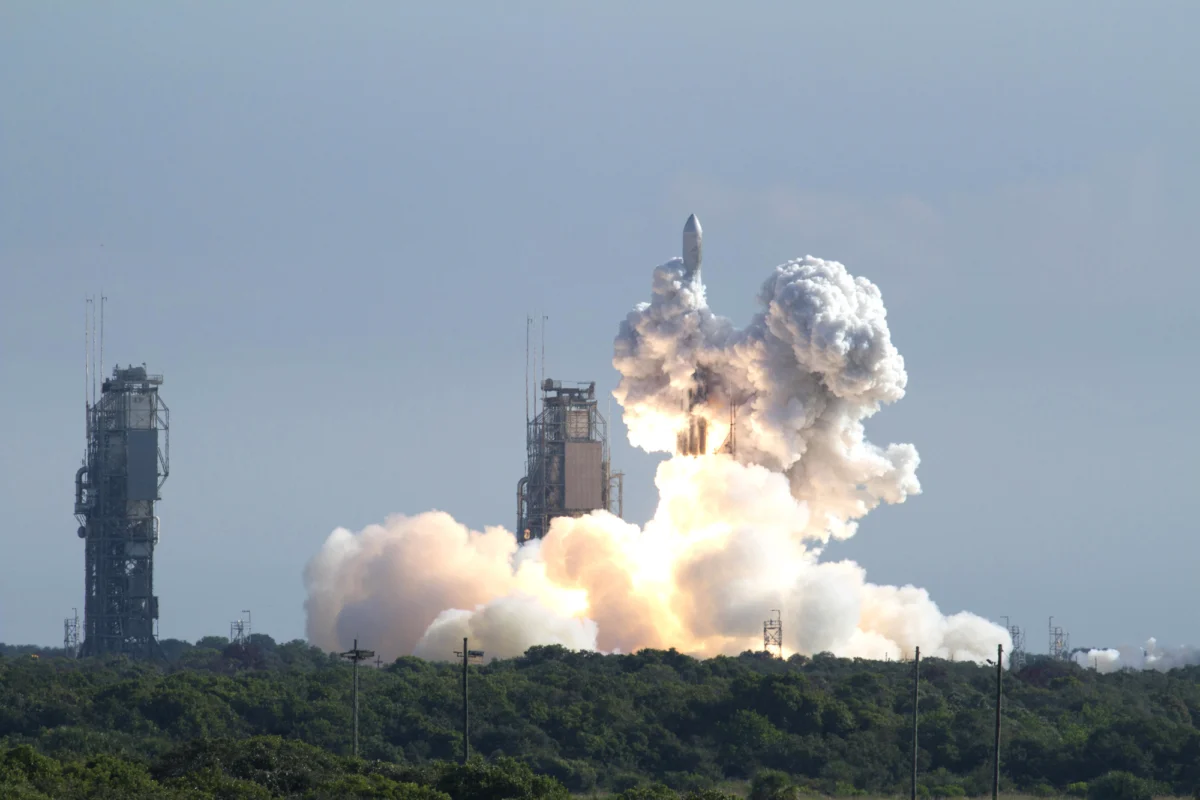
- 2017: President Trump officially established the Artemis program, signaling a shift in focus back to lunar exploration with the goal of returning human beings to the surface of the Moon for the first time since the Apollo era.
- 2018: The administration floated the idea of a dedicated "Space Force," a concept initially met with skepticism but eventually gaining political momentum as a necessity for protecting orbital assets.
- 2019: The U.S. Space Force was officially established as the sixth branch of the United States Armed Forces, marking the most significant military reorganization in decades.
- 2026: Following the success of the Space Force and the continued expansion of commercial spaceflight, the administration has now turned its attention to human capital, proposing the U.S. Space Academy to centralize the training of future space personnel.
Supporting Data and Economic Realities
The push for a centralized academy comes at a time when the space sector is experiencing explosive growth. Satellite constellations, such as SpaceX’s Starlink, have revolutionized global internet access, while the Global Positioning System (GPS) has become an indispensable backbone of the modern global economy.
However, the creation of a new federal academy is not merely a logistical challenge; it is an immense financial undertaking. While precise figures for existing service academies are difficult to isolate within the Department of Defense budget, members of Congress have previously estimated the operating costs of such institutions at approximately $1 billion annually.
For NASA, an agency that often faces discretionary budget cuts, funding a multi-billion-dollar academy could prove difficult. Unlike the Department of Defense, where service academies are considered essential for military readiness, NASA’s funding is subject to shifting political tides. If the academy is to be "NASA-led," as the order suggests, it would represent a historic shift in how the agency manages its resources and priorities, potentially diverting funds away from core scientific missions.
Official Responses and Congressional Hurdles
The reception to the proposal has been mixed. While some advocates of space expansion applaud the vision, former NASA officials and members of Congress have expressed concerns regarding the blurred lines between civilian and military interests.
The fundamental tension lies in the nature of the institutions. NASA is, by statute, a civilian agency dedicated to peaceful exploration and scientific discovery. The military service academies, by contrast, are designed to produce officers who understand the tactical and strategic realities of war. Critics argue that forcing these two distinct missions into a single academy could complicate international diplomacy and raise questions about the peaceful nature of American space exploration.
Furthermore, Congress holds the "power of the purse." Any move to establish a permanent academy requires legislative authorization and a dedicated stream of funding. Without clear support from lawmakers who may be wary of the costs or the bureaucratic implications, the executive order may remain a symbolic gesture rather than a foundation for a new institution.
Implications for Future Policy
The proposed U.S. Space Academy forces a long-overdue conversation about the future of the "civilian-military split" that has governed American space policy for over 65 years. Since the creation of NASA in 1958, the United States has largely maintained that space exploration should remain separate from the defense establishment to avoid the perception of militarizing the cosmos.
The Risk of Escalation
As space becomes increasingly crowded with both commercial and state-sponsored assets, the potential for friction grows. If the U.S. creates an academy that trains personnel for both civilian NASA roles and military Space Force roles, it risks signaling to the international community that the distinction between "scientific research" and "national defense" is eroding. In a climate where space debris, anti-satellite testing, and orbital security are sensitive topics, maintaining clear boundaries is essential to preventing misunderstandings that could lead to escalation.
The Education Question
There is also the question of academic superiority. Currently, the nation’s top universities—such as MIT, Caltech, and Georgia Tech—produce the world’s leading aerospace engineers and scientists. It remains unclear what specific curriculum a U.S. Space Academy could offer that is not already being provided by existing civilian institutions. Will the academy offer military-specific training? Will it focus on deep-space exploration, or will it prioritize orbital defense?
The Role of Private Industry
Finally, the involvement of the private sector remains a significant "known unknown." With commercial companies now driving the majority of launch activity and hardware innovation, any new academy would likely need to integrate closely with industry to ensure its graduates are prepared for the modern reality of spaceflight. If the academy fails to collaborate with the commercial sector, it risks becoming an ivory tower that is disconnected from the very industry it aims to serve.
Conclusion: A Starfleet for the 21st Century?
The vision of a U.S. Space Academy is undeniably compelling. It reflects a world where space is no longer just a destination for rare, heroic missions, but a daily, integral part of the global infrastructure. However, the path to creating such an institution is fraught with challenges—financial, legal, and geopolitical.
Before a single student can walk the halls of a U.S. Space Academy, policymakers must reconcile the conflicting mandates of civilian exploration and military necessity. They must determine if the academy will serve as a bridge between sectors or a barrier that further confuses America’s role in the cosmos. Until those questions are answered, the "West Point for Space" remains a dream that, while bold, requires a much more grounded plan to take flight.